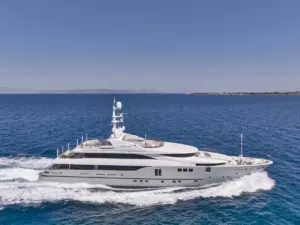
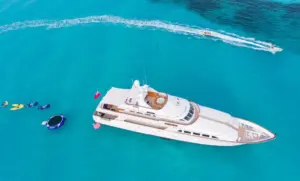
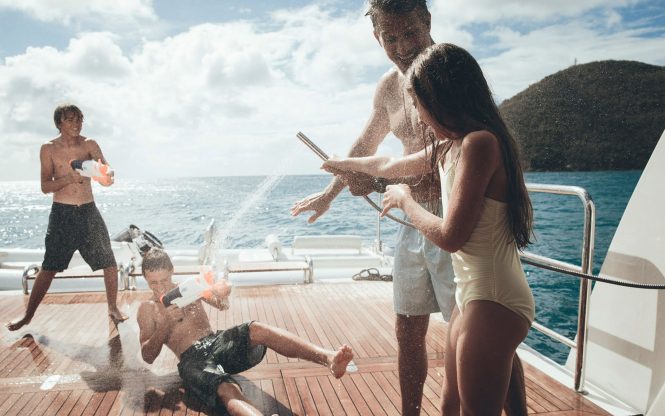
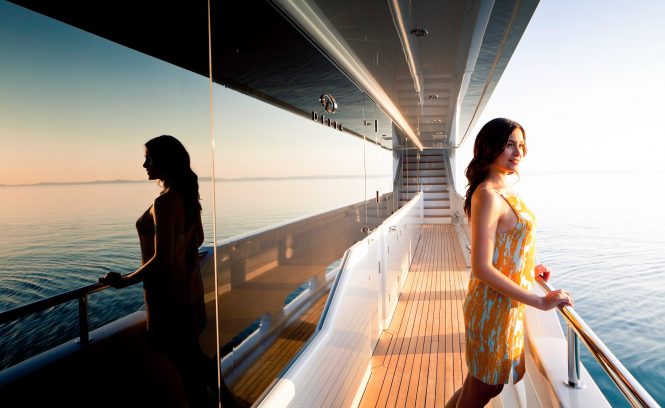
When planning a superyacht charter, the conversation naturally gravitates toward the intoxicating details of the high-end maritime experience. Guests pore over glossy brochures debating whether to cruise the crystal-clear azure waters of the Mediterranean or explore the remote, rugged archipelagos of the South Pacific. They meticulously review layouts to select the ideal vessel—weighing the benefits of a displacement hull against a planing yacht, a helipad against a sprawling beach club—and collaborate with private chefs and elite captains to curate unforgettable itineraries for family and friends.
While these visible, experiential elements shape the core of an exceptional luxury holiday, experienced travelers and industry veterans increasingly recognize that true peace of mind is forged behind the scenes. Beneath the glamour of champagne toasts and sun-drenched deck parties lies a complex legal, financial, and logistical framework.
Chief among these critical back-office considerations is charter insurance—a specialized, often misunderstood facet of luxury travel planning. To understand why an increasing number of high-net-worth charterers are prioritizing robust financial protection, we spoke with Hugo Jacquot, founder of Fort Insurance, a premier maritime brokerage specializing in the luxury yacht and superyacht sector.
As Jacquot reveals, the modern luxury travel landscape is undergoing a profound shift. Driven by macroeconomic uncertainties, evolving consumer expectations, and a desire for absolute control over significant capital investments, the demand for comprehensive charter protection has never been higher. This report explores the hidden liabilities of luxury maritime travel, the dangerous assumptions travelers make regarding standard insurance policies, and the groundbreaking innovations—from weather-triggered guarantees to flexible cancellation policies—that are transforming how the ultra-wealthy safeguard their voyages.
Detailed Chronology: The Shifting Paradigm of Luxury Travel Protection
To comprehend the current state of superyacht charter insurance, one must examine how the relationship between luxury travelers, brokers, and risk management has evolved over the past decade.
The Pre-2020 Era: Reactive and Rigid
Historically, superyacht chartering operated under a largely rigid, traditional paradigm. For decades, standard Mediterranean Yacht Brokers Association (MYBA) contracts governed the vast majority of high-end charters. These contracts outlined strict deposit schedules, cancellation penalties, and liability assignments.
In this era, insurance was largely viewed as an afterthought. High-net-worth individuals (HNWIs) typically relied on standard personal travel insurance, credit card perks, or high-value umbrella policies. The concept of specialized maritime charter insurance was largely confined to corporate entities or ultra-cautious principals undertaking transoceanic expeditions. "Cancel for any reason" (CFAR) coverage was practically non-existent or deemed financially prohibitive, treated as an unnecessary luxury in a booming, frictionless travel market.
The global COVID-19 pandemic served as a watershed moment for the luxury travel and charter sectors. Overnight, borders closed, international flights were grounded, and millions of dollars in charter deposits hung in the balance. The limitations of traditional contracts and standard travel insurance policies were brutally exposed.
During this period, many charterers discovered—often to their financial detriment—that standard travel policies explicitly excluded pandemics, government-mandated travel restrictions, and maritime-specific liabilities. The sheer volume of disputed claims, postponed itineraries, and strained relationships between clients, brokers, and yacht owners forced a systemic reassessment of risk. The industry realized that relying on a handshake and rigid standard contracts was no longer tenable in a volatile global climate.
The Modern Era of Tailored Risk Mitigation (2023–Present)
Today, the superyacht charter market operates in a radically different environment. Post-pandemic travelers—having witnessed unprecedented global disruptions—demand absolute flexibility, transparency, and financial certainty.
Specialist maritime brokers like Fort Insurance have stepped into this void, developing innovative, bespoke financial products designed specifically for the nuances of superyacht charters. Rather than treating insurance as a rigid, bureaucratic hurdle, forward-thinking brokerages are collaborating with underwriters to engineer dynamic policies that address modern pain points, such as unpredictable weather patterns driven by climate change, geopolitical instability, and complex cross-border logistics.
Supporting Context & Metrics: Unpacking the Hidden Liabilities of Superyacht Charters
Chartering a superyacht is vastly different from booking a luxury villa or a five-star resort suite. It involves navigating intricate maritime laws, flag state regulations, and multi-jurisdictional financial transactions. Yet, misconceptions regarding risk and liability remain widespread among even the most seasoned luxury travelers.
The Myth of Comprehensive Personal Coverage
One of the most pervasive misconceptions identified by Hugo Jacquot is the assumption that a yacht owner’s insurance policy automatically protects everyone on board from all potential losses or liabilities.
"Many charterers believe their travel insurance or personal umbrella policy will cover them," Jacquot explains. "In reality, those policies often exclude maritime liabilities, meaning there may be gaps in protection."
While a yacht owner’s hull and machinery (H&M) policy and protection and indemnity (P&I) insurance cover the vessel itself and third-party liabilities arising from the operation of the ship, they do not automatically cover personal injury sustained due to guest negligence, lost personal property, charter cancellation fees, or medical evacuations in remote international waters.
The Financial Scale of Modern Charters
To put the necessity of specialized insurance into perspective, one must examine the capital involved. Weekly base rates for mid-sized superyachts (40 to 60 meters) frequently range from $150,000 to over $600,000, excluding the mandatory Advanced Provisioning Allowance (APA)—typically 25% to 35% of the charter fee—which covers fuel, food, docking fees, and specialized requests.
When a client commits upwards of $500,000 to $1,000,000 for a single two-week holiday, the financial exposure is comparable to a major commercial investment. Add to this the complex logistics of private jet transfers, specialized security details, and pre-booked onshore excursions, and the potential financial loss of an unmitigated disruption becomes staggering.
The Rise of Objective Weather Guarantees
Climate volatility has introduced a new variable into luxury travel planning. Unseasonal storms, hurricanes, and extreme marine heatwaves can severely compromise a meticulously planned itinerary, forcing yachts to remain docked or alter routes away from prime cruising grounds.
Traditionally, claiming compensation for weather-related disruptions was a frustrating exercise fraught with ambiguous policy wording, inconsistent claims handling, and frustrating loopholes. However, innovative maritime brokers are introducing objective, data-driven insurance products.
These modern policies utilize meteorological data and predefined, objective thresholds (such as sustained wind speeds, wave heights, or named tropical storms) to automatically trigger compensation. This data-driven approach removes subjectivity from the claims process, offering clients immediate financial recourse without the traditional bureaucratic friction.
Official Insights: Perspectives from Fort Insurance
Navigating the intersection of luxury lifestyle and complex maritime insurance requires deep industry expertise and a client-first philosophy. In our discussion with Hugo Jacquot, founder of Fort Insurance, several core themes emerged regarding the psychology of the modern charterer and the future of maritime brokerage.
Advocating for the Client When It Matters Most
Insurance policies are ultimately judged not by their marketing brochures, but by their performance during a crisis. Jacquot emphasizes that for HNWIs—many of whom are chartering a vessel to mark a milestone birthday, a multi-generational family reunion, or a once-in-a-lifetime celebration—the human element of claims management is paramount.
"The clients who have experienced claims remember that we advocated for them," Jacquot notes. "They value being kept informed and understanding exactly what’s happening throughout the process."
When a disruption occurs—whether it is an unexpected medical emergency onboard, a mechanical failure requiring a substitution of vessel, or an unseasonal storm—timely, empathetic communication is just as critical as the financial payout. Fort Insurance’s approach prioritizes hand-holding and transparent advocacy, ensuring clients never feel abandoned in a foreign port.
Simplicity in a Complex Market
Specialist maritime insurance has historically suffered from an impenetrable lexicon of nautical and legal jargon. First-time superyacht charterers, in particular, find themselves overwhelmed by policy wordings that read like nineteenth-century maritime statutes.
Jacquot believes that simplicity is the ultimate sophistication in modern brokerage.
"The insurance products that exist for charterers are limited, so we have had to build or search for new ones that will deliver the best options for our clients," Jacquot states.
He adds: "We recommend policies to our clients because we fully understand how they work and are very keen to explain the cover. Understanding exactly what they are purchasing builds trust and confidence in the product."
This commitment to clarity aligns with a broader cultural shift within the ultra-high-net-worth segment. Today’s luxury consumers value radical transparency, ethical conduct, and trusted advisors who can distill complex technicalities into clear, actionable advice.
Future Outlook: The Evolution of Superyacht Risk Management
As the superyacht charter market continues to expand and evolve, the approach to risk management and insurance will undergo further transformation. Several key trends are poised to shape the sector over the coming decade:
1. Integration of Technology and Parametric Insurance
The success of weather-triggered guarantees points toward a broader adoption of parametric insurance models in the maritime sector. Unlike traditional indemnity insurance—which requires proof of actual financial loss—parametric insurance pays out a fixed amount based on the occurrence of a specific, verifiable event (e.g., a hurricane passing within a defined radius of a yacht’s planned coordinates). As predictive meteorological data and satellite tracking become more sophisticated, parametric policies will likely become a standard component of superyacht charter agreements.
2. Heightened Focus on Cybersecurity and Geopolitical Risk
Superyachts are increasingly sophisticated floating smart homes, equipped with advanced navigation systems, satellite communications, and proprietary onboard networks. Concurrently, HNWIs face complex geopolitical landscapes and rising concerns regarding digital espionage, physical security, and targeted disruptions. Future insurance products will likely expand beyond traditional hull, liability, and cancellation coverage to incorporate comprehensive cyber-risk mitigation, executive protection, and kidnapping/ransom (K&R) extensions tailored specifically for elite maritime travel.
3. The Broker as a Holistic Risk Consultant
The role of the traditional charter broker is expanding. While itinerary curation and vessel selection remain paramount, top-tier brokerages are forming strategic alliances with specialist risk advisors like Fort Insurance. This collaborative ecosystem ensures that clients receive holistic, 360-degree support that covers aesthetic desires and financial security in equal measure.
Conclusion
As CharterWorld frequently emphasizes, informed clients consistently make better charter decisions. While marine insurance and risk mitigation may lack the undeniable glamour of selecting a teak-decked sunlounger or tasting vintage champagne in international waters, understanding and securing the right protections is essential for a truly seamless holiday.
As the luxury charter market navigates an increasingly complex global landscape, the innovations in flexibility, transparency, and client advocacy championed by specialists like Hugo Jacquot and Fort Insurance offer a reassuring path forward. Whether you are a seasoned principal chartering yachts annually or embarking on your very first superyacht experience, the ultimate takeaway is clear: true luxury is not just about enjoying the extraordinary—it is about having the confidence and protection to navigate the unexpected with absolute peace of mind.
Special thanks to Hugo Jacquot, Founder of Fort Insurance, for sharing his invaluable insights and expertise for this report.