







Executive Overview
When conversations turn toward the decarbonization and electrification of modern agriculture, the discussion almost invariably converges on a single, heavy-duty piece of machinery: the tractor. Specifically, observers fixate on the massive, high-horsepower diesel workhorses that labor through grueling seasonal windows like planting and harvest. While replacing these mechanical giants represents a legitimate engineering frontier, anchoring the entire farm electrification strategy to them is a fundamental strategic error.
Agriculture is not a monolith; it is an amalgamation of diverse, highly specialized operational environments. Farms must cool milk, pump deep-well water, ventilate livestock facilities, manage precise thermal loads in greenhouses, dry harvested grain, and power stationary processing equipment. Each of these tasks demands unique energy quantities, power profiles, timing constraints, and grid infrastructures.
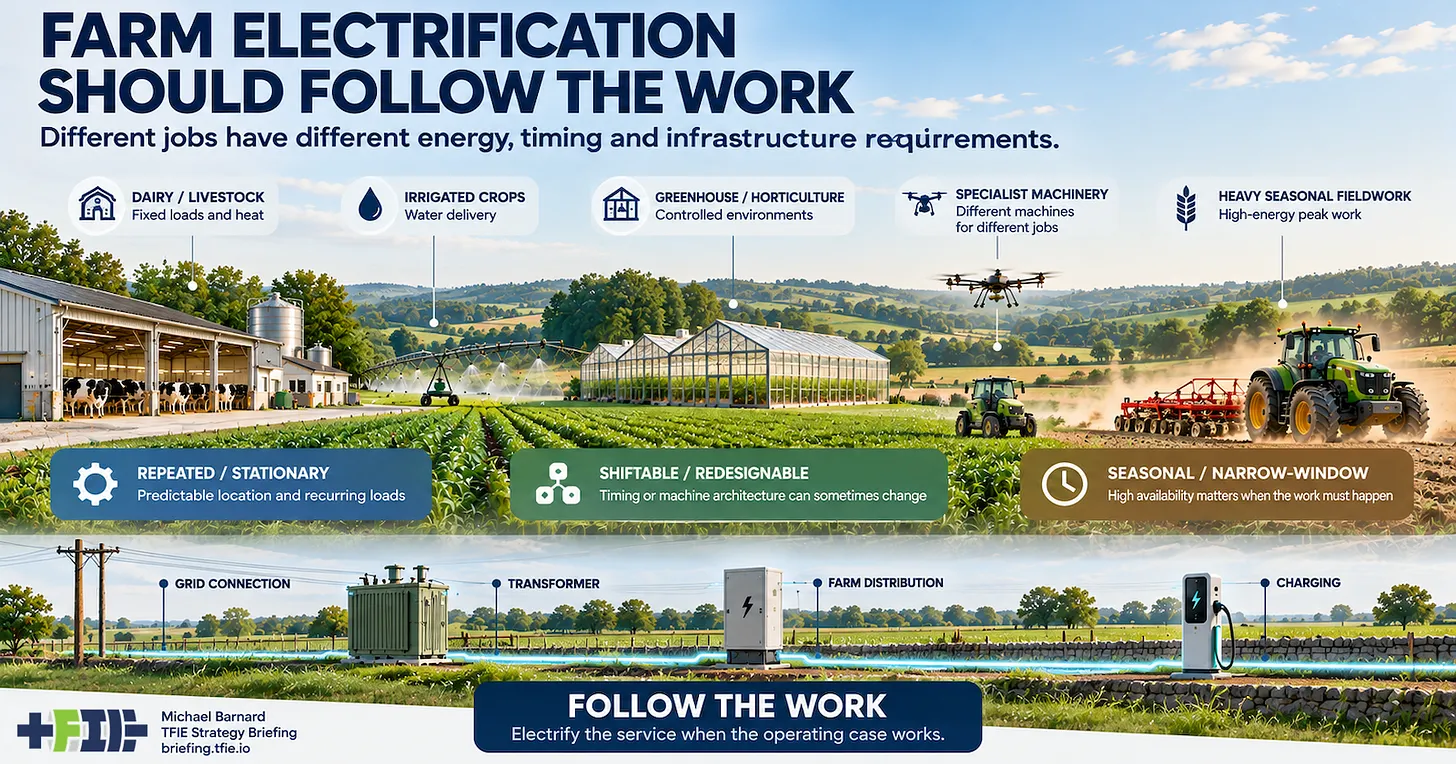
The reality that a heavy battery-electric tractor cannot yet seamlessly replace every 200-horsepower diesel engine tells us almost nothing about whether a dairy farm should still rely on fossil fuels for hot water, or whether an irrigation network requires diesel combustion to drive pumps. To successfully transition agriculture away from fossil fuels, industry planners, policymakers, and farmers must adopt a work-first framework. Electrification strategy should begin with the specific task the farm needs to perform rather than a wish list of electric mobile machinery.

Detailed Chronology: Evolving Perspectives on Agricultural Decarbonization
The impetus for a structural reassessment of agricultural energy use stems from recent rural volatility, highlighted by events such as the agricultural fuel protests in Ireland and across Europe. These disruptions underscored a precarious truth: the global food supply chain remains acutely vulnerable to fossil fuel price shocks, supply chain blockades, and diesel dependence.
Phase 1: The Diesel-Centric Impasse
Historically, initial attempts to evaluate farm decarbonization mirrored the automotive sector, focusing heavily on replacing mobile prime movers. Analysts cataloged the fuel consumption of heavy tractors, combines, and self-propelled sprayers, quickly running into the physical limitations of current battery chemistries. Energy density, high initial capital expenditures, and limited rural grid capacities made immediate, 1:1 replacements of heavy-duty field machinery economically prohibitive. This generated widespread skepticism about the feasibility of farm electrification as a whole.
Phase 2: Shifting Focus to Stationary and Operational Workloads
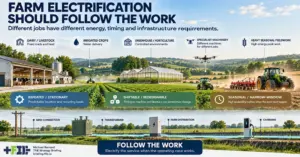
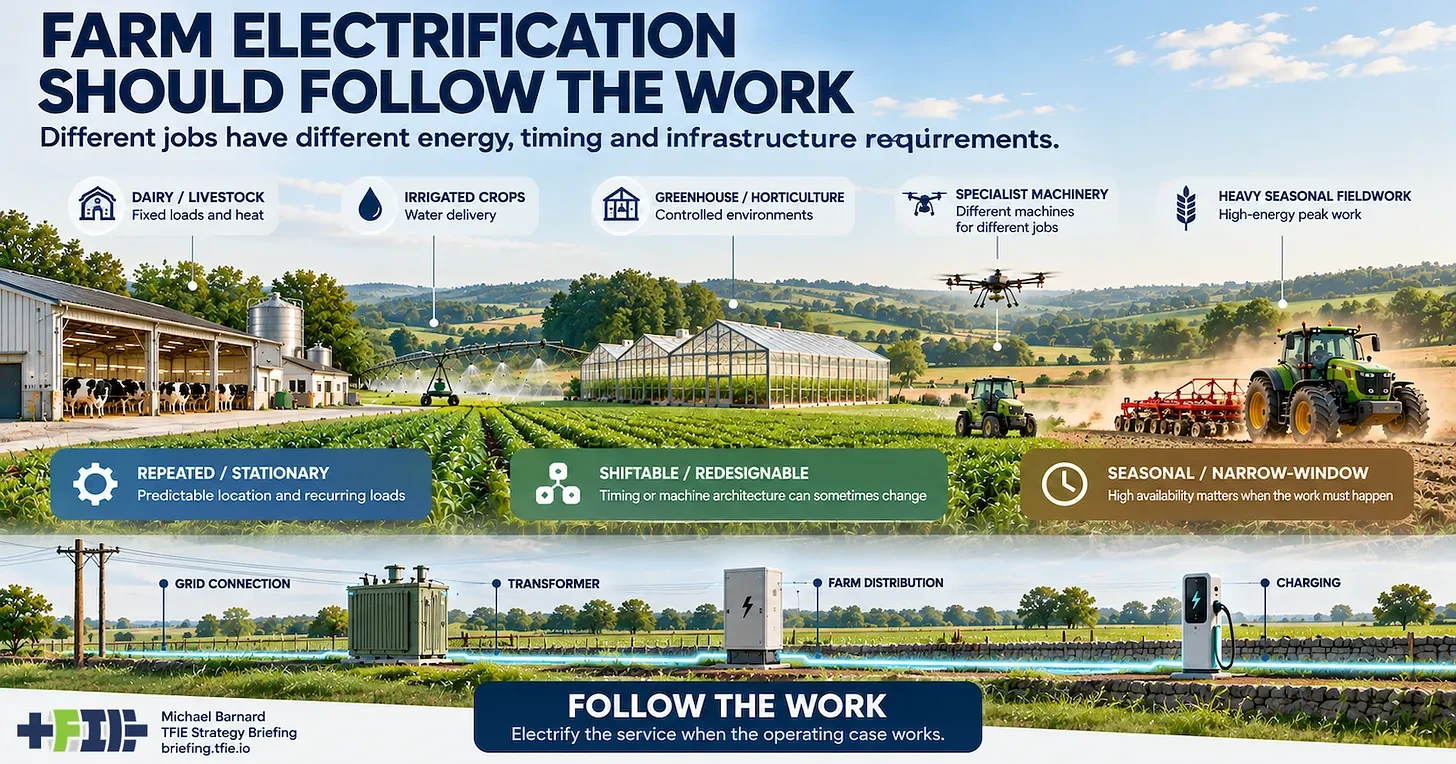
Recognizing the limitations of the "tractor-first" paradigm, agricultural engineers and energy strategists began untangling the distinct energy services required on working farms. This pivot separated agricultural loads into distinct categories:
- Stationary Loads: Milk cooling, ventilation, and piggery heating, which present predictable, high-load profiles ideal for mature electric technologies like heat pumps.
- Redesignable Services: Irrigation systems and greenhouse thermal management, where energy consumption can be optimized through smart scheduling, thermal storage, and variable-speed drives.
- Narrow-Window Seasonal Work: Heavy broadacre field operations requiring high peak power and extended runtimes, where diesel retention may temporarily remain the rational economic choice.
By shifting the analytical lens from propulsion to service delivery, a much more nuanced, highly achievable roadmap for agricultural electrification has emerged.

Supporting Context & Metrics: Data-Driven Realities of Farm Energy
A closer examination of on-farm energy metrics reveals that successful electrification requires rigorous financial and operational discipline, rather than broad, generalized assumptions about green technology.
The Solar Self-Consumption Trap on Dairy Farms
Consider the integration of photovoltaics (PV) on a typical dairy operation. According to models from agricultural authorities such as Teagasc, a baseline 100-cow dairy farm consumes approximately 25,000 kWh of electricity annually. Installing a 25 kWp solar array yields roughly 23,484 kWh per year.
At a superficial glance, annual accounting suggests near-complete energy independence, with generation covering 94% of consumption. However, without stationary battery storage, such a model typically utilizes only 30% of the generated solar energy on-site, exporting the rest under potentially unfavorable tariff structures.
Integrating a 12.5 kWh battery storage system increases self-consumption to 45%. Yet, under standard utility tariff models, the unsubsidized simple payback period can actually stretch from eight years out to ten. This scenario illustrates a vital lesson: annual energy balance is not synonymous with useful energy delivery. Batteries must be deployed to solve specific, quantifiable operational problems—such as mitigating peak demand, providing backup power, supporting rapid charging, or capitalizing on favorable tariff spreads—rather than merely inflating self-consumption percentages.
Stationary Thermal Loads: Low-Hanging Fruit
Conversely, stationary thermal applications offer exceptionally clear economic and environmental cases. Historical data from 800-sow pig-farming operations demonstrate that intensive heating requirements—such as continuous kerosene consumption for farrowing and weaner environments—can be dramatically optimized.
While specific equipment and installation costs fluctuate with inflation and supply chains, migrating from fossil-fueled thermal systems to mature electric heat pump architectures historically cuts annual energy costs by upwards of 70%, yielding rapid payback periods. These installations prove that many agricultural fossil-fuel challenges are simply conventional stationary thermal loads disguised as agricultural hurdles.
Irrigation, Groundwater, and Solar Integration
Irrigation provides another compelling case study. Massive global initiatives, such as India’s PM-KUSUM program, have deployed hundreds of thousands of standalone solar pumps and solarized agricultural feeders.
However, the core service is not merely "operating a solar pump"—it is delivering the precise volume of water at the required pressure and schedule without depleting local aquifers. Because solar power drastically reduces the marginal cost of pumping water, poorly governed systems risk accelerating groundwater depletion rather than simply substituting diesel emissions. Consequently, irrigation electrification must concurrently integrate energy pricing, variable-speed drives, water storage, and strict resource governance.
Mobile Machinery Realities: The Fendt e107 Vario
When evaluating mobile machinery, commercial models provide a reality check. Commercial electric tractors, such as the Fendt e107 Vario, feature bounded specifications: a 100 kWh battery, 55 kW of continuous power, and a 66 kW peak output. Field tests indicate runtime capacities spanning four to seven hours in partial-load applications (such as mechanical weeding or planting), while energy-intensive transport significantly shortens operating windows.
This does not signal the failure of electric mobile machinery; rather, it highlights the importance of matching equipment to its duty cycle. An electric tractor designed for lighter, specialized daily tasks can deliver immense commercial value without needing to replicate every high-energy function of a 300-horsepower heavy tillage tractor.
Official Perspectives and Strategic Frameworks
Industry analysts and agricultural economists emphasize that the infrastructure supporting the farm must be addressed in tandem with, or even ahead of, the machinery itself.

"Good farm-electrification strategy should begin with the work the farm needs performed, not with a shopping list of electric equipment."
The Infrastructure Trap
Rural grid connections, local distribution transformers, and heavy-duty charging capacities often require far more time to plan, permit, and construct than it takes to procure new farm machinery. Farms that wait for the "perfect" electric tractor to hit the market before upgrading their electrical supply risk discovering that the machinery is commercially ready years before the local grid can support its charging demands.
To avoid this bottleneck, infrastructure upgrades must precede equipment deployment. Dairy farms upgrading electrical capacity for heat pumps, refrigeration, and hot-water systems simultaneously build the electrical headroom necessary for future mobile machinery charging.
The Rise of Shared Services and Contractor Depots
Agricultural contractors represent a particularly fertile ground for electrification. Because contractor depots concentrate expensive equipment and accumulate high annual operating hours, they can amortize the high capital costs of electric machinery much faster than individual family farms. Furthermore, a single, robust industrial grid connection and centralized battery buffer at a contractor hub can efficiently service equipment utilized across multiple regional farms.
Future Outlook: A Phased Roadmap for Agricultural Decarbonization
Looking toward the horizon, the successful electrification of the agricultural sector will not be marked by a symbolic date when the final diesel tractor vanishes from the fields. Instead, it will be measured by the systematic, profitable reduction of fossil-fuel exposure while preserving—and enhancing—the cost, efficiency, and reliability of global food production.
Different agricultural sectors must execute distinct investment sequences based on their operational profiles:
- Dairy & Intensive Livestock: Prioritize milk cooling, hot water generation, heat recovery, ventilation, and automated feeding systems at the front of the investment queue.
- Irrigated Agriculture: Focus first on pump efficiency, intelligent scheduling, water storage, and robust local grid supplies.
- Greenhouses: Capitalize immediately on mature thermal electrification technologies.
- Broadacre Farming: Retain legacy diesel systems for heavy seasonal peaks while gradually integrating lighter electric utility vehicles, autonomous weeding robots, and shared contractor assets.
- Smallholder Systems: Focus initial energy access investments on essential post-harvest refrigeration, small-scale irrigation, and local processing capabilities.
Ultimately, policymakers must align support mechanisms with these binding constraints. Rather than simply subsidizing counts of electric machines, policy must reinforce rural distribution grids, incentivize shared-service contractor models, and tightly couple solar irrigation incentives with sustainable water management frameworks. The tractor will electrify when batteries, duty cycles, infrastructure, and economics converge—but the rest of the farm has every reason to move forward today.