







Executive Overview
Every seasoned angler and commercial fisherman understands that the marine environment is inherently volatile. While modern meteorological forecasting has advanced significantly, coastal and offshore weather systems possess an unpredictable capacity for rapid escalation. A routine morning fishing trip can transform into a high-stakes survival scenario within minutes. Sudden barometric drops, localized wind shifts, rapidly steepening wave profiles, and sudden visibility-drenching downpours test the absolute limits of both vessel engineering and human seamanship.
When a storm envelops a fishing boat, the instinct of many operators is to immediately slam the throttles forward, attempting to outrun the advancing front and race safely back to the slip. However, maritime safety experts, Coast Guard data, and on-water assistance organizations emphasize a fundamentally different approach: storm response is an exercise in calculated control, deliberate vessel handling, and risk mitigation, not raw speed.
Operating a fishing boat in heavy weather requires an intimate understanding of hydrodynamics, weight distribution, structural limitations, and emergency communication protocols. From managing high-impact wave crests and mitigating the severe dangers of beam seas to executing proper life jacket mandates and managing engine failures, the margin for error in heavy weather is razor-thin. This comprehensive analysis explores the operational imperatives, tactical maneuvers, and strategic precautions required to keep a vessel, its crew, and its passengers safe when caught offshore in a severe storm.
Detailed Chronology: Anatomy of a Rapidly Developing Marine Storm
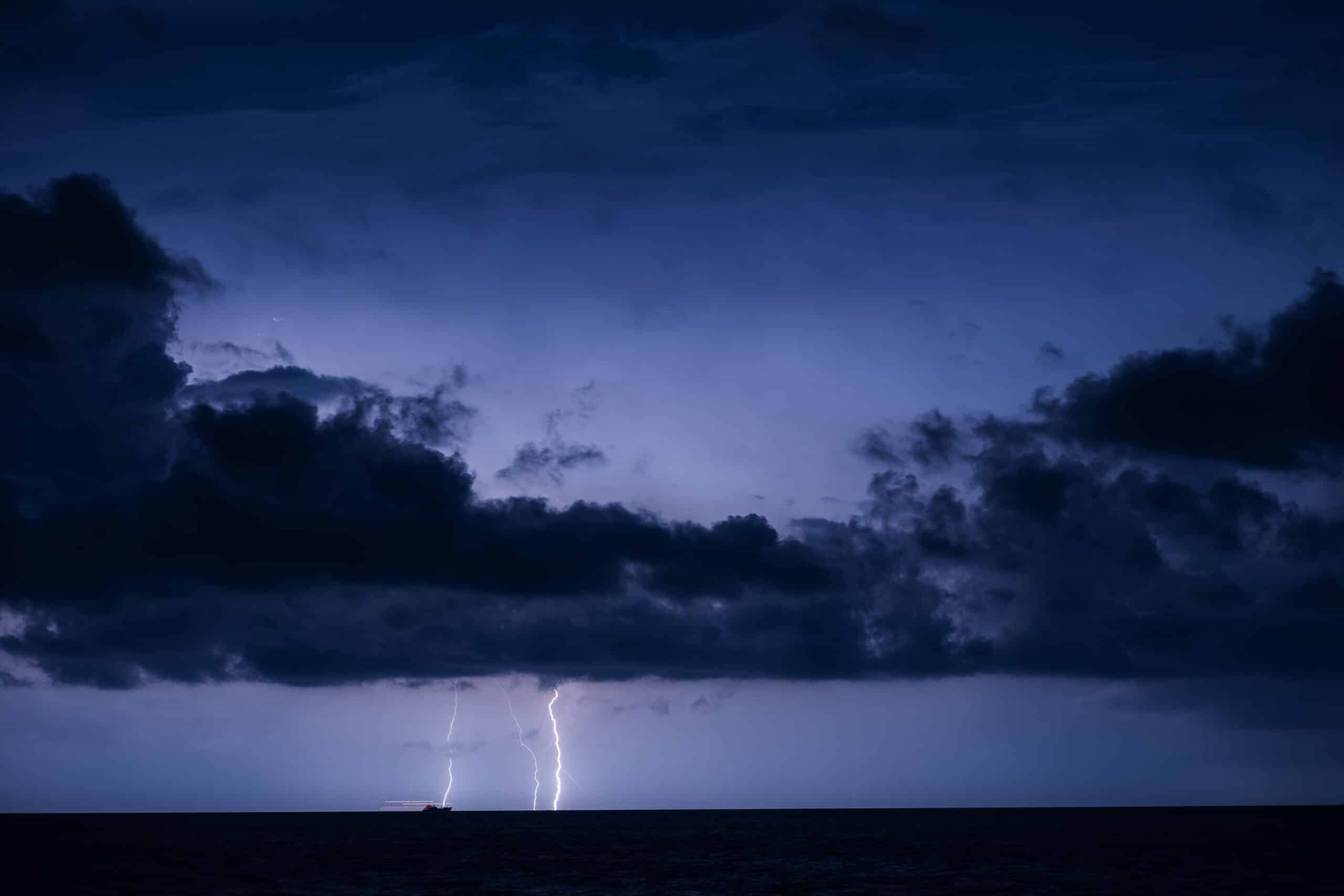
Understanding how a marine storm evolves helps contextualize why immediate, measured reactions are critical. A typical sudden severe weather event—such as a convective squall line or an unforecasted microburst—follows a predictable yet terrifyingly compressed timeline.
Phase One: The Pre-Squall Atmosphere and Atmospheric Warning Signs
Prior to the arrival of the storm proper, the marine environment often undergoes subtle shifts that demand heightened vigilance. Astute boaters monitor more than just the horizon; they watch barometric pressure trends, listen for VHF weather channels, and observe animal and insect behavior or distant cloud formations.
- The Calm Before: A sudden drop in air pressure coupled with an oppressive, dead calm or erratic, shifting breezes often precedes a major convective event.
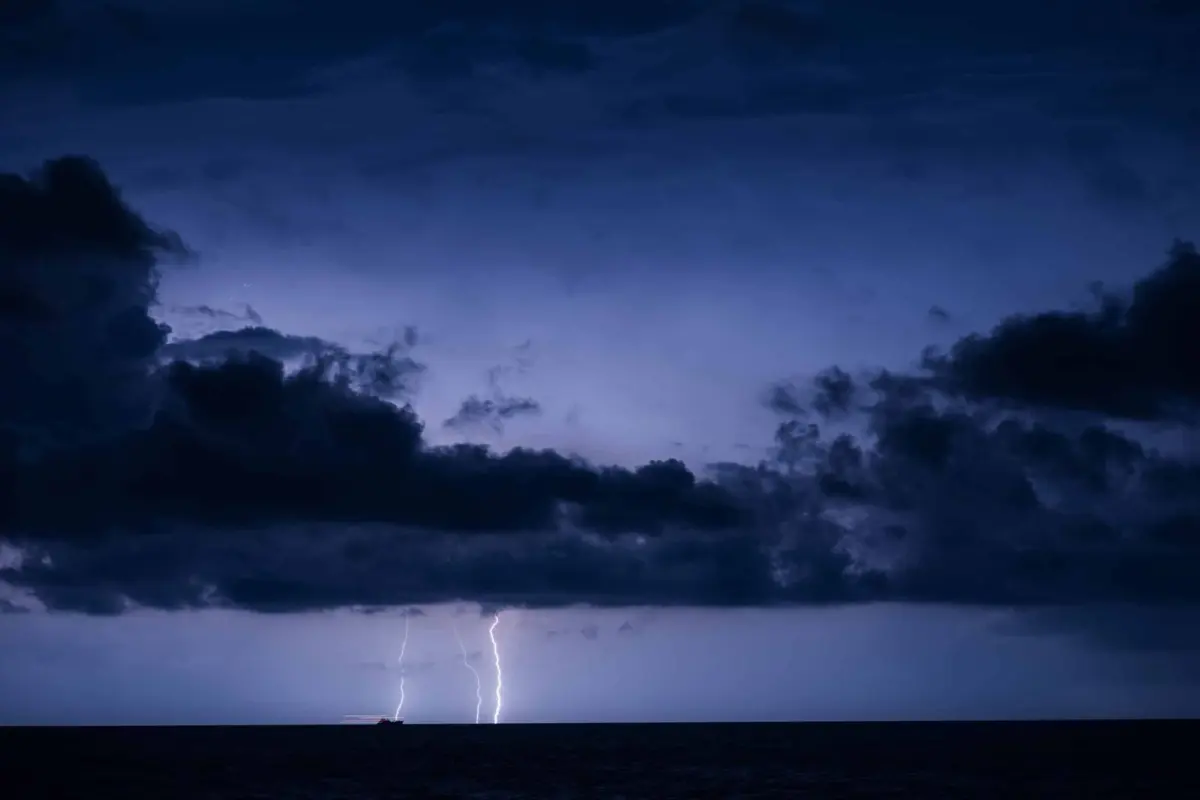
- Visual Cues: The rapid growth of towering cumulonimbus clouds, anvil-shaped cloud tops, or a dark, bruised-looking shelf cloud rolling across the horizon signal immediate atmospheric instability.
- Electronic Monitoring: Modern marine electronics, including multi-function displays (MFDs) with radar overlays and live weather tracking, can display precipitation intensity and vector movement, offering critical minutes of advanced warning.
Phase Two: The Onset of the Squall (Minutes 0 to 10)
When the front hits, conditions deteriorate exponentially within a very short window.
- Visibility Collapse: Torrential rain, sea spray, and fog reduce visibility to mere boat lengths. Navigation electronics and radar become primary sensory lifelines.
- Wind Shock: Wind speeds can jump from a gentle 10 knots to sustained gales of 35 to 50+ knots almost instantaneously.
- Sea State Transformation: Flat water or gentle swells are quickly whipped up into chaotic, short-period wind chop. Wave steepness increases drastically, creating treacherous breaking seas that test hull integrity and stability.
Phase Three: Peak Sustained Storm Conditions (Minutes 10 to 45)
This is the critical phase where structural stress, human panic, and navigational hazards peak.

- Vessel Strain: The boat is subjected to violent pitching, rolling, and yawing. Slamming into wave troughs places immense mechanical stress on hull-to-deck joints, stringers, and engine mounts.
- Control Challenges: Steering becomes erratic as waves attempt to broach the vessel or push it off course into dangerous waters or toward shallow shoals.
- Internal Hazards: Loose gear transforms into dangerous projectiles. Passengers, if unbuckled or unsecured, risk severe impact injuries or being washed overboard.
Phase Four: Post-Frontal Transition and Assessment (Post-Minute 45)
As the primary squall line passes, winds may shift direction abruptly (often by 90 to 180 degrees), and precipitation tapers off. However, this is not the time to lower defenses. Secondary squalls frequently trail the primary front, and confused, high-energy residual seas continue to pose significant capsizing hazards for hours.
Operational Directives: Immediate Tactical Responses on the Water
When caught in the teeth of a severe storm, the actions taken by the skipper within the first sixty seconds dictate the outcome of the voyage. The primary objective is maintaining hydrodynamic control of the vessel.
Reduce Speed and Maintain Steering Authority
The instinctive reaction to fear is acceleration. On the water, this reflex can be fatal. Running at high speeds in a heavy chop causes the boat to launch off wave crests and slam violently into troughs. This subjects the hull, fiberglass, gel coat, and engine transom to extreme g-forces, increasing the risk of structural failure, cracked stringers, or mechanical detachment.
- Finding SOG (Speed Over Ground): Dial back the throttles to a speed that allows the hull to ride comfortably over the waves without falling off crests or burying the bow.
- The Danger of the Bow Dive: If a boat runs too fast down the face of a steep wave, the bow can bury itself in the trough of the wave ahead (known as "bow-stuffed" or "steep-wave broaching"), shipping massive amounts of green water over the console and instantly stalling or capsizing the vessel.
- Navigating Wave Angles: Never run directly perpendicular (beam-to) into steep, breaking waves, as this drastically increases the rolling moment and the risk of a roll-over. Instead, take the seas on the bow at a comfortable 45-degree angle (quartering the seas), which allows the V-hull to slice through energy while maintaining directional stability.
Mandatory Life Jacket Protocol
In the chaotic environment of a storm, standard operating procedures must pivot to zero-tolerance safety standards.
[STORM DETECTED] ---> [REDUCE THROTTLE / ESTABLISH QUARTERING ANGLE]
                 ---> [MANDATORY DONNING OF COAST GUARD-APPROVED PFDs]
                 ---> [SECURE LOOSE GEAR / CLEAR COCKPIT]
---> [ENGAGE NAVIGATION ELECTRONICS & MONITOR POSITION]- Zero Delay: Waiting until the boat is pitching violently to search for life jackets under bunks or inside gunwale lockers is dangerous. Every soul on board must wear a properly fitted, Coast Guard-approved Personal Flotation Device (PFD) at the very first sign of threatening weather.
- Checking Security: Ensure all zippers, buckles, and crotch straps (where applicable) are secured. Inflatable PFDs must have their automatic and manual inflation mechanisms verified, and owners must ensure cartridges are charged.
- The Fatality Factor: Data from marine safety agencies consistently shows that the vast majority of boating fatalities during unexpected storms are not caused by direct vessel destruction, but by crew members entering the water without life jackets, suffering from cold water shock, exhaustion, or impact trauma.
Securing Cargo, Gear, and the Cockpit
Fishing boats are functional platforms loaded with heavy, unsecured gear: coolers, gaffs, tackle boxes, extra fuel cans, downriggers, and anchor rodes. In high seas, these items become hazardous projectiles.
- The Shift in Center of Gravity: A heavy 150-quart cooler sliding violently from port to starboard across a cockpit can dynamically alter the vessel’s center of gravity, working in tandem with a rolling wave to cause a sudden capsizing event.
- Clearing Escape Routes: Tripping hazards must be eliminated immediately. Lash down all deck chairs, store rods securely in vertical rocket launchers or cabin racks, and lock down fish boxes and livewells.
- Drainage Verification: Ensure all cockpit scuppers and self-bailing drains are completely clear of debris, bait scales, and plastic packaging to allow shipped water to evacuate rapidly.
Supporting Context & Metrics: Navigation, Electronics, and Infrastructure
Surviving a marine storm requires leveraging every tool available to modern mariners. When visibility drops to zero, captains must transition from visual piloting to electronic and tactical navigation.
Navigational Awareness and Electronics Management
A severe squall can obscure landmarks, buoys, and shorelines within seconds. Drifting off course into shallow water, rocky outcroppings, or congested commercial shipping lanes is a major secondary hazard.
- Radar and GPS Integration: Keep radar screens optimized for rain clutter suppression to track incoming squall cells and spot unlit navigation markers or other vessels. GPS chartplotters must be monitored constantly to ensure your drift vector does not place you in the path of lee shores.
- VHF Radio Protocols: Ensure your VHF radio is dialed to Channel 16 and your squelch is properly adjusted. Understand the limitations of your equipment; poor VHF range due to wave action, low antenna height, or atmospheric interference can severely hamper emergency transmissions. Knowing how to transmit a proper PAN-PAN (urgent) or MAYDAY (distress) call is essential.
- Navigating Congested Waters: In high-traffic zones like the Intracoastal Waterway (ICW) or busy inlet approaches, storms create a bottleneck effect as terrified boaters rush blindly toward bridges and marinas. Maintain an active radar watch and sound horn signals (one prolonged blast every two minutes in restricted visibility) to warn other operators of your position.
The Mechanics of Engine Failure in Heavy Weather
Operating under extreme mechanical strain in high seas dramatically increases the likelihood of propulsion failure—whether through fuel line contamination stirred up from tank bottoms, overheating due to clogged raw-water strainers, or electrical shorts.
- Immediate Post-Failure Actions: If the engine dies, the boat instantly loses forward momentum and directional control. Without forward thrust, the vessel will immediately swing broadside to the waves (beam seas).
- Preventing Broaching: In beam seas, the rolling force of breaking waves is maximized. To prevent catastrophic rolling, deploy a sea anchor or drift sock off the bow if you have one readily accessible. This acts as an underwater parachute, keeping the bow pointed into the weather while you diagnose the mechanical issue.
- Professional Assistance: If the motor cannot be restarted and the vessel is drifting toward danger, broadcast your coordinates immediately. In severe cases where boats become grounded, swamped, or structurally disabled, professional salvage and recovery services will be required once surface conditions permit safe operations.
Official Statements and Industry Insights
Marine safety authorities and maritime rescue organizations place heavy emphasis on pre-departure planning as the ultimate determinant of storm survival success.
Captain Sarah Jenkins, a 25-year veteran of coastal marine rescue operations, emphasizes that physical reaction during a storm is only half the battle:
"Ninety percent of successful heavy weather seamanship happens before the boat ever leaves the dock. Skippers who meticulously check their predeparture checklists, file detailed float plans with a reliable shore contact, and maintain their bilge pumps, dual batteries, and steering cables rarely find themselves facing unsurvivable odds on the water. When a squall hits, your equipment has to be 100% reliable because you won’t have time to fix a neglected fuel filter while hanging onto a pitching helm."
The U.S. Coast Guard auxiliary reinforces this perspective, highlighting that unpredictable weather accounts for a disproportionate percentage of search and rescue (SAR) missions nationwide:
"Boaters routinely underestimate the kinetic energy of a 40-knot squall line operating in shallow coastal bays or open ocean swells. Our data shows that vessels equipped with redundant communication systems, secured deck layouts, and crews wearing certified PFDs experience significantly lower rates of injury and hull loss. Discipline on the water saves lives."
Future Outlook: Technology and Training in Marine Storm Safety
As the marine industry looks toward the future, the integration of advanced technology and proactive education is reshaping how recreational and commercial anglers handle extreme weather.
Smart Marine Electronics and AI Forecasting
The next generation of marine electronics is moving toward predictive, real-time weather integration.
- Real-Time Cellular and Satellite Weather Feeds: Modern MFDs now feature integrated SiriusXM Marine and cellular-linked weather routing that downloads high-resolution Doppler radar, lightning strike indicators, and surface wind forecasts directly to the helm console.
- Automated Safety Systems: Wearable electronic crew-overboard (COB) transmitters, automated engine cut-off switches (wireless kill switches), and intelligent bilge monitoring systems are becoming standard equipment, drastically reducing response times if a crew member is thrown from the deck during a violent wave strike.
The Evolution of Boater Education
Technology alone cannot replace seamanship. State boating agencies, the U.S. Coast Guard Auxiliary, and organizations like Sea Tow are placing renewed emphasis on hands-on heavy-weather handling courses. By teaching boaters how to properly trim their hulls, manage wave dynamics, and execute emergency anchoring or sea anchor deployment in controlled training environments, the marine community is fostering a culture of preparedness.
Ultimately, surviving a sudden marine storm comes down to a blend of respect for nature’s power, rigorous adherence to safety gear protocols, and disciplined, unemotional decision-making. By prioritizing stability over speed, securing the deck, and maintaining constant situational awareness, boaters can ensure that even the most violent unexpected storm remains a harrowing adventure rather than a tragic statistic.