






Published by the Sea Tow Editorial Team | Updated August 2026
Executive Overview
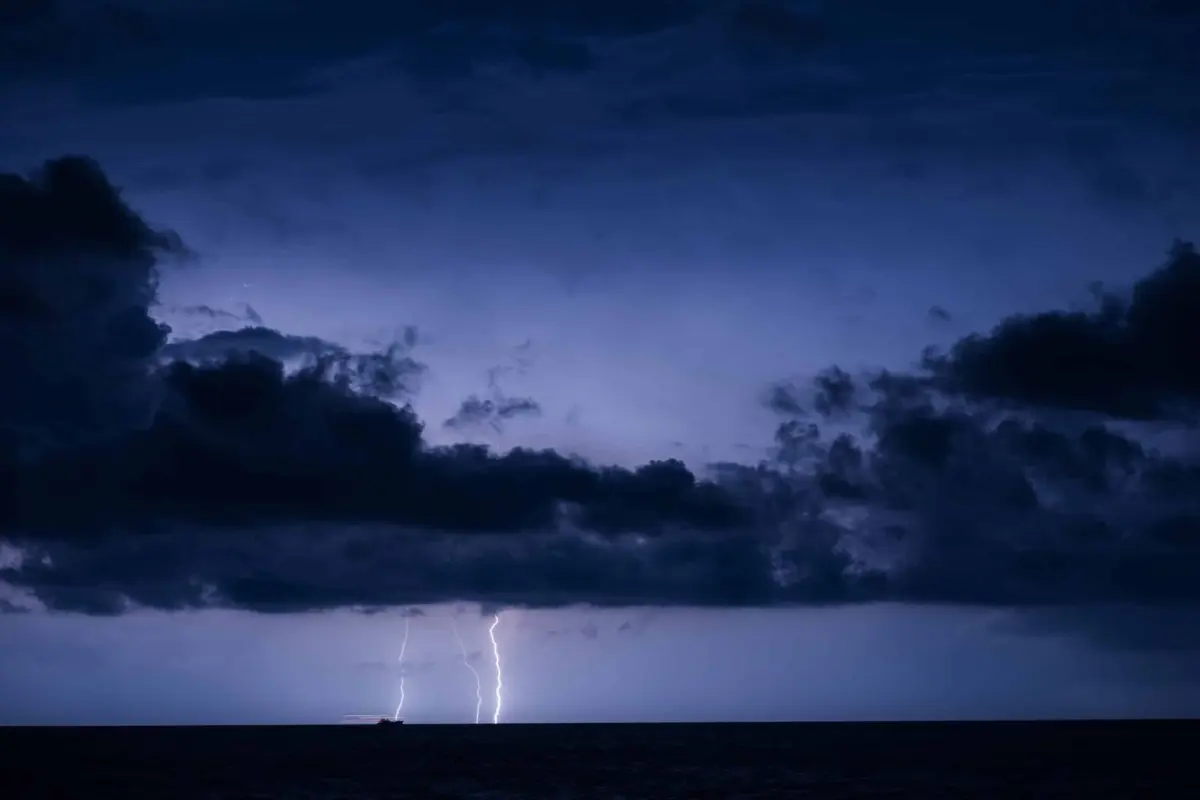
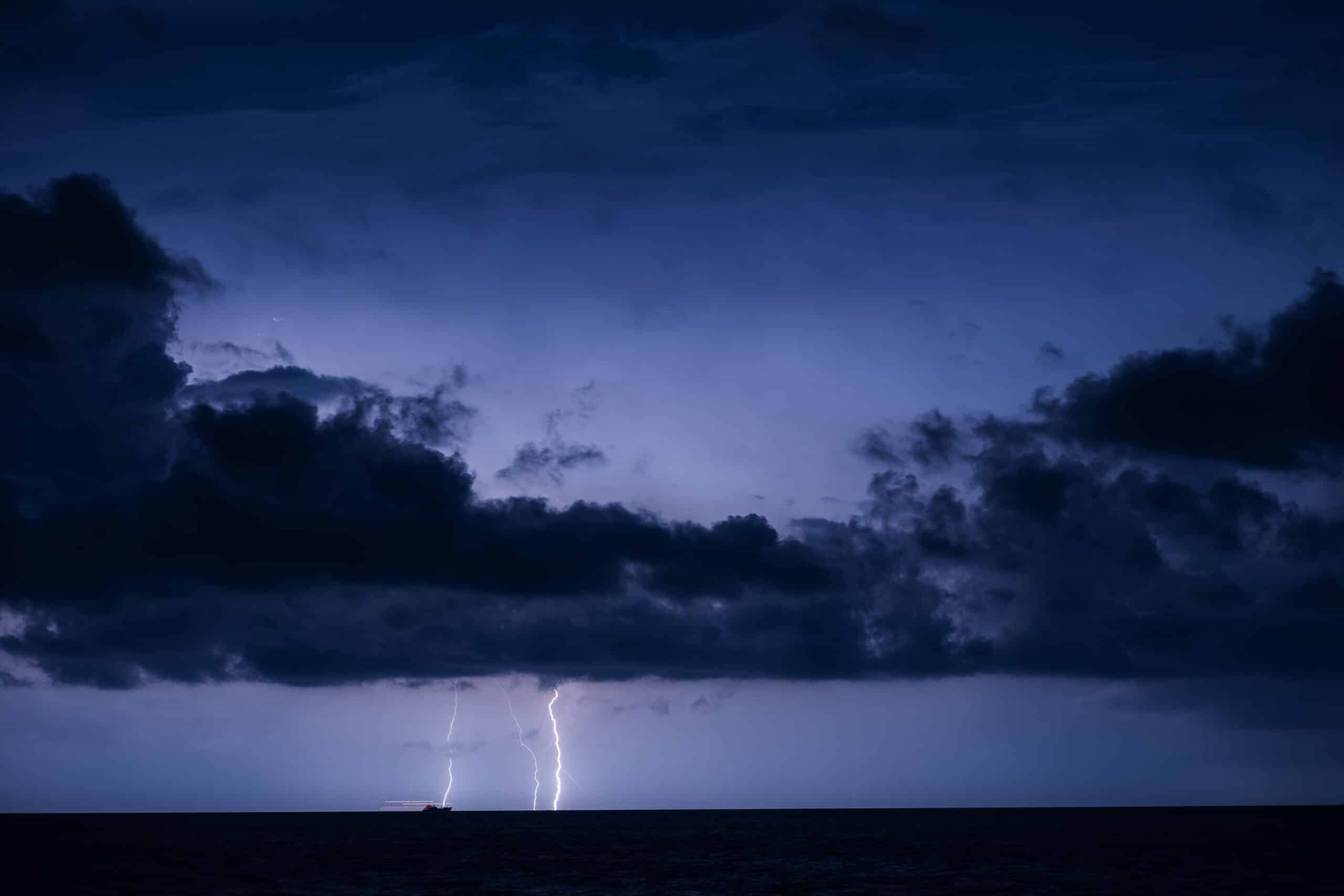
Modern meteorological forecasting has reached remarkable levels of precision, yet the aquatic environment remains inherently volatile. For recreational and commercial anglers alike, a pristine morning on the water can dissolve into a maritime emergency within minutes. Sudden wind shifts, towering wave fronts, rapidly dropping barometric pressure, and blinding squalls routinely catch even experienced boaters off guard. When a fishing boat is suddenly trapped in severe weather, the margin for error shrinks dramatically.
Maritime safety experts and on-water assistance providers emphasize a fundamental principle: storm response is a matter of calculated control, not frantic speed. The instinctual reaction of many skippers—throttling up the engines to outrun an approaching front and race toward the safety of a nearby dock—is frequently the most dangerous choice they can make. High-speed running in heavy chop exponentially increases structural stress on the hull, risks catastrophic engine mount failure, and dramatically raises the probability of broaching or capsizing.
This comprehensive report examines the critical protocols required when a vessel is caught unawares by severe weather. Drawing on decades of marine assistance data, safety engineering principles, and tactical seamanship, we explore the step-by-step procedures necessary to safeguard human life, protect the vessel against compounding damage, and manage emergency communication when the elements turn hostile.
Detailed Chronology: Tactical Steps When Storms Strike
When the horizon darkens and meteorological conditions deteriorate rapidly, a skipper’s actions must be immediate, methodical, and disciplined. Survival and vessel integrity depend upon executing a precise sequence of defensive maneuvers.
[STORM DETECTED]
       │
       ├──► 1. Reduce Speed & Avoid Perpendicular Wave Angles
       ├──► 2. Mandate Life Jackets & Check Weight Distribution
       ├──► 3. Secure Loose Gear & Clear Decks
       ├──► 4. Monitor Position, Electronics & VHF Range
       └──► 5. Manage Propulsion & Handle Engine Failure Scenarios
Phase 1: Reducing Speed and Managing Hull Dynamics
The immediate operational priority upon encountering a squall or heavy weather is dialing back propulsion. Reducing speed allows the skipper to maintain responsive steering control while preventing the hull from violently slamming into steep, closely spaced wave crests.
- The Dangers of High Speed in Chop: Pushing a fishing boat too fast through heavy seas places intense mechanical strain on the bow, stringers, and engine transoms. It also increases the risk of launching the boat over a crest and crashing deep into the trough below.
- Tackling Wave Angles: Skippers must never run directly perpendicular to severe waves if it compromises stability, particularly in smaller fishing vessels where beam seas can induce a dangerous roll. Instead, approach waves at a 45-degree angle (taking them off the bow quarter) to maintain a smooth, controlled ride.
- Understanding Squalls: Weather anomalies such as sudden squalls can intensify within minutes, causing visibility to plummet to near-zero while escalating wave heights rapidly. Slowing down early preserves tactical options.
Phase 2: Mandatory Life Jacket Enforcement
In the chaos of rising winds and violent vessel movement, searching for safety gear stored deep within cabin lockers is nearly impossible. Personal flotation devices (PFDs) must be donned proactively before conditions deteriorate.
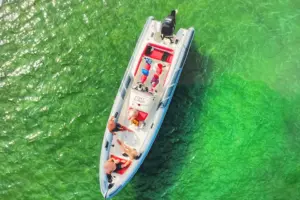
- Immediate Compliance: Every single soul on board must secure a properly fitted U.S. Coast Guard-approved life jacket immediately.
- Weight Distribution and Stability: Improper passenger placement is a primary contributor to vessel instability during heavy seas. Shifting bodies to the windward or leeward sides incorrectly can list the boat, reducing freeboard and inviting swamping.
- Addressing Fatalities Data: Statistical analysis of recreational boating fatalities consistently highlights two overwhelming factors: unexpected severe weather encounters and the failure to wear life jackets. Pre-departure planning—including filing a comprehensive float plan with someone on land—remains the first line of defense in ensuring prompt emergency response if conditions escalate beyond control.
Phase 3: Securing Gear and Clearing Decks
Fishing boats are uniquely vulnerable to weather-induced chaos due to the sheer volume of specialized equipment required on board. Unsecured tackle boxes, rods, coolers, anchors, and downriggers turn into heavy projectiles in rough water.
- Mitigating Tripping and Impact Hazards: Loose gear shifting across the deck alters the vessel’s center of gravity unpredictably and creates severe physical hazards for passengers trying to maintain their footing.
- Prioritizing Tidy Workspaces: Crew members should lock down tackle lockers, strap down ice chests, stow loose rods horizontally, and clear all deck space. Securing equipment early ensures that when emergency electronics or medical kits are needed, they can be accessed without delay.
Phase 4: Position Monitoring and Navigation Awareness
Gale-force winds and swift tidal currents can easily push a vessel off its planned track. Maintaining absolute spatial awareness ensures the boat does not inadvertently drift toward shallow shoals, jagged rocks, or congested shipping lanes.
- Relying on Electronics: When torrential rain and sea spray reduce visibility to a few boat lengths, skippers must back off the throttle further and rely heavily on marine electronics, including GPS chartplotters, radar, and sonar.
- Managing Communication Limitations: Operators must remain cognizant of environmental factors impacting VHF radio performance. Understanding issues related to poor VHF range ensures that communication breakdowns do not catch the crew off guard when a Mayday call becomes necessary.
- Navigating High-Traffic Arteries: In constricted and heavily trafficked waterways—such as the Intracoastal Waterway (ICW)—sudden storms cause extreme congestion as hundreds of vessels simultaneously rush for safe harbors, dramatically increasing the risk of collisions.
Phase 5: Anchoring and Propulsion Management
A common mistake made by distressed boaters is dropping anchor in deep, open water during a storm.
- The Risks of Open-Water Anchoring: In heavy seas, anchoring off the bow can cause the boat to pitch violently, swing unpredictably, or take boarding seas over the bow if the anchor rode pulls the bow down into an oncoming wave. Anchoring should only be attempted if absolutely necessary to prevent drifting into an immediate navigational hazard, and only if water depth and bottom holding conditions permit.
- Engine Failure Protocols: Losing propulsion during a severe storm transforms a difficult transit into a life-threatening crisis. Without engine power, the skipper loses the ability to control the vessel’s angle to incoming waves, exposing the craft to dangerous beam seas.
- Immediate Post-Failure Actions: If the engine fails, deploy a sea anchor or drift sock immediately off the bow to keep the vessel pointed into the weather, continuously monitor drift vectors, and immediately issue a Pan-Pan or Mayday call via VHF radio detailing your last known position.
Supporting Context & Metrics: The Reality of On-Water Emergencies
To understand why procedural discipline is vital, one must examine the operational realities of marine rescue and accident statistics. According to historical data compiled by maritime safety organizations, environmental factors and human error intertwine during sudden squalls.
Primary Factors in Severe Weather Boating Incidents:
[████████████████████] 42% - Sudden Weather Deterioration & Squalls
[███████████████     ] 31% - Lack of PFD Utilization
[██████████          ] 21% - Engine/Propulsion Failure in Heavy Seas
[██████ ] 6% - Improper Weight Distribution / Shifting Cargo- The Illusion of Speed: Statistically, boats attempting to outrun fast-moving weather fronts experience a significantly higher rate of structural impact damage, steering cable snaps, and passenger injuries due to violent slamming than those that reduce speed and ride out the chop defensively.
- The VHF Range Constraint: Studies on marine communications indicate that up to 35% of boaters in distress fail to establish immediate radio contact during squalls due to topography, antenna flexing, or battery depletion. Pre-storm checks on radio power and squelch settings are critical.
- Post-Storm Hidden Damage: Maritime insurance adjusters note that a substantial percentage of structural hull delamination and engine mount fractures go unnoticed immediately following a storm, manifesting weeks later as catastrophic mechanical failures.
Official Statements and Expert Guidance
Maritime authorities and marine rescue professionals consistently advocate for a proactive, safety-first mindset that begins long before a vessel leaves its slip.
"When a squall hits, your primary objective is not getting home by dinner—it’s keeping your crew safe and your hull intact. Speed kills in heavy chop. By throttling back, securing your deck, and squaring your boat up to the waves, you retain command of the vessel when nature tries to take the wheel."
— Senior Operations Coordinator, Sea Tow Services
Industry safety councils emphasize that preparation is holistic. Filing an accurate float plan with a family member, marina operator, or local authorities ensures that if communication fails and the vessel is overdue, rescue assets know precisely where to begin searching. Furthermore, maintaining an active membership with professional on-water assistance networks provides a vital safety net for salvage, towing, and recovery operations should the worst occur.
Post-Storm Protocol and Future Outlook
Once the squall line passes and meteorological conditions stabilize, the emergency is not officially over. Skippers must conduct a thorough, methodical inspection of their vessel before resuming normal operation.
Post-Storm Inspection Checklist
- Hull and Structural Integrity: Inspect the gunwales, stringers, and transom for stress cracks, gelcoat spider-webbing, or water intrusion.
- Bilge and Pump Operations: Check bilge compartments immediately. Excessive water accumulation indicates potential through-hull fitting stress or hatch seal failures.
- Mechanical and Steering Systems: Test the steering wheel for stiffness, listen for unusual engine vibrations, and check belt tensions.
- Electrical Systems: Verify that navigation lights, bilge switches, and GPS units are functioning properly after potential moisture intrusion.
Future Outlook for Marine Safety
As marine electronics evolve, future boating safety will increasingly rely on real-time radar integration, automated cellular/satellite weather alerting systems, and enhanced personal locator beacons (PLBs). However, technological advancements can never replace fundamental seamanship.
The unpredictable nature of coastal and inland waterways guarantees that sudden storms will remain an occupational hazard for anglers. By respecting the power of fast-moving squalls, adhering to strict life jacket protocols, securing loose gear, and prioritizing controlled seamanship over reckless speed, boaters can ensure they return safely to port long after the storm has cleared.