








Executive Overview
The ground transportation industry stands at a critical juncture. Rapidly shifting economic headwinds, evolving passenger expectations, regulatory adjustments, and technological advancements are rewriting the playbook for modern transit operators. In an environment where uncertainty has become the only constant, the difference between organizations that merely survive and those that achieve long-term prosperity often boils down to a single attribute: leadership.
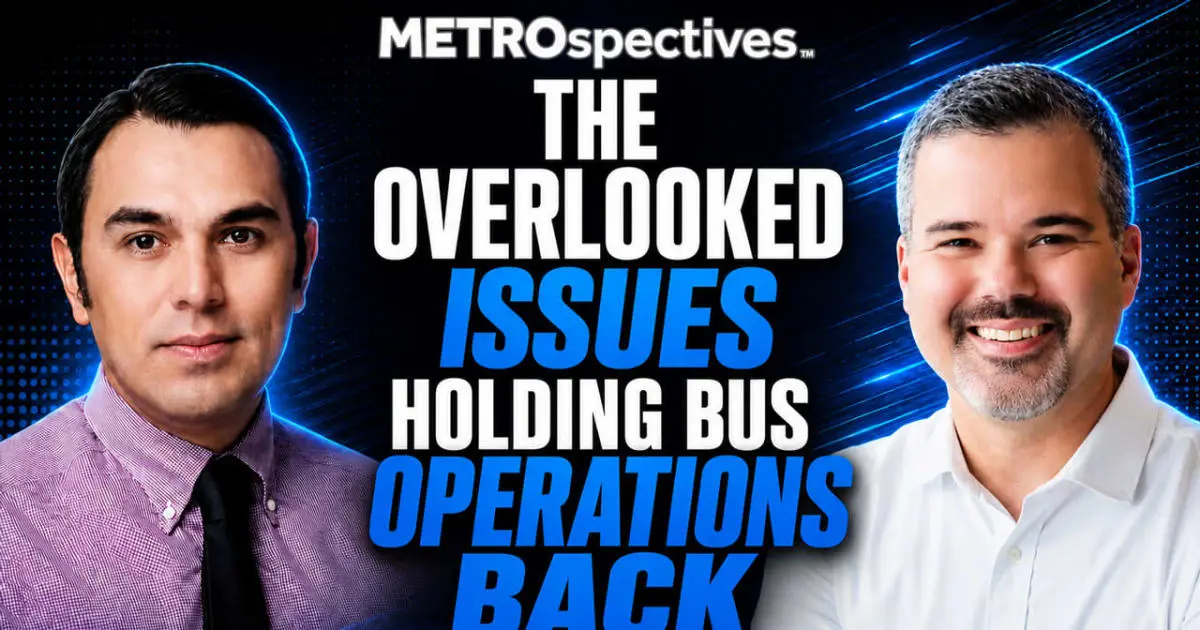
In a recent installment of METROspectives, METRO Executive Editor Alex Roman sat down with Brian Dickson, a towering figure in the transit sector and the founder of Bus Business Consultants and Ground Transportation Insights (GTI). Dickson brings a rare, multidimensional perspective to the table, having served as an operator, corporate executive, consultant, and industry observer throughout his career.
This comprehensive dialogue delves into the core tenets of modern leadership, the absolute necessity of maintaining organizational health, and the strategic art of creating options. Rather than advocating for reactive firefighting—a trap that swallows countless transportation businesses whole—Dickson presents a proactive framework. He argues that the healthiest organizations do not wait for challenges to manifest; instead, they deliberately engineer operational and financial flexibility to capitalize on emerging market opportunities.
This article explores the foundational themes of Dickson’s philosophy, examining how ground transportation leaders can cultivate resilience, optimize organizational health over the next twelve months, and future-proof their operations in a volatile economic landscape.
Detailed Chronology: The Evolution of Modern Ground Transportation Leadership
To understand where the ground transportation industry is heading, one must examine the evolutionary path that has brought operators to the present day. For decades, the transit sector operated on relatively predictable cycles. Fleet management, route optimization, labor relations, and capital expenditures followed well-trodden paths. However, the convergence of global economic disruptions, technological transformations, and shifting workforce dynamics has rendered traditional operational models obsolete.
Phase One: The Shift from Reactive Crisis Management to Strategic Foresight
Historically, many transit organizations fell into the trap of reactive management. When fuel prices spiked, budgets tightened, or driver shortages peaked, executives scrambled to implement short-term fixes. Brian Dickson’s journey through the industry—from the front lines of day-to-day operations to executive boardrooms and ultimately to consultancy—revealed the fatal flaw in this approach.
During the interview, Dickson reflects on the lessons learned from decades of observing operational turnarounds. He notes that organizations caught in a perpetual loop of firefighting eventually exhaust their human and capital resources. True leadership, Dickson emphasizes, requires stepping out of the day-to-day tactical weeds to build systems that absorb shocks before they materialize.

Phase Two: Redefining Organizational Health
During the middle chapters of his career, Dickson recognized that financial balance sheets alone do not dictate an organization’s viability. Organizational health encompasses culture, communication channels, operational transparency, and psychological safety among staff.
In the ground transportation sector, where safety and reliability are paramount, organizational health directly correlates with service delivery. A stressed, disconnected workforce leads to higher turnover, increased maintenance oversights, and compromised passenger experiences. Dickson’s consultancy work with Bus Business Consultants and GTI centers heavily on repairing these foundational cracks, ensuring that companies build healthy internal ecosystems capable of supporting external growth.
Phase Three: Cultivating Options in a Changing Market
The modern phase of the transportation industry is defined by the imperative to "create options." Dickson stresses that uncertainty paralyzes organizations that lack strategic choices. If an operator relies on a single revenue stream, a single client segment, or an inflexible fleet model, any market disruption can prove fatal.
By intentionally fostering financial reserves, cross-training personnel, diversifying service offerings, and adopting scalable technologies, leaders can buy themselves the most valuable commodity in business: time and optionality. When an unexpected industry shift occurs, operators with built-in options can pivot smoothly, transforming industry turbulence into a competitive advantage.
Supporting Context & Metrics: The State of the Ground Transportation Industry
To contextualize Brian Dickson’s leadership insights, it is vital to examine the macro-level pressures currently facing the ground transportation and bus industries.
The Workforce Crisis and Retention Metrics
One of the most persistent hurdles for transit operators over the past five years has been the severe labor shortage, particularly regarding commercial drivers and skilled diesel and electric technicians. According to recent industry data compiled by labor analysts, driver turnover rates across the motorcoach, transit, and school bus sectors have fluctuated between 20% and 40% annually.
This churn imposes staggering financial and operational costs on businesses:
- Recruitment Expenditures: Onboarding and training a single new driver can cost upwards of $4,000 to $10,000 when factoring in advertising, background checks, training hours, and administrative overhead.
- Lost Revenue: Unfilled shifts directly translate to cancelled routes, unfulfilled charter contracts, and strained client relationships.
- Burnout Amplification: When headcounts are chronically low, existing staff are forced to work excessive overtime, leading to fatigue-induced errors, absenteeism, and further attrition.
Dickson’s emphasis on organizational health addresses this crisis at its root. By fostering cultures of respect, open communication, and strategic support—often encapsulated in his philosophy that "kindness isn’t soft; it’s strategic"—operators can radically improve retention metrics. When employees feel valued and supported, turnover drops, resulting in immediate bottom-line savings and superior service reliability.
Economic Headwinds and Capital Expenditure Pressures
Beyond labor, ground transportation operators are navigating a complex economic maze characterized by:
- Inflationary Pressures: The costs of replacement parts, insurance premiums, tires, and maintenance supplies have risen dramatically, squeezing operating margins.
- The Zero-Emission Transition: Mandates and corporate sustainability goals are pushing fleets toward electrification and alternative fuel adoption. Procuring battery-electric buses (BEBs) or hydrogen fuel cell vehicles requires massive upfront capital investments, alongside the complex installation of charging infrastructure and workforce retraining.
- Insurance Volatility: Commercial auto liability insurance rates have surged across the board, making risk management and safety culture non-negotiable components of financial survival.
In light of these pressures, Dickson’s core message—creating options—takes on urgent financial significance. Operators who maintain disciplined cash reserves and flexible financing arrangements are far better positioned to absorb vehicle price hikes or invest in green technology at the optimal moment, rather than being forced into reactive, high-interest capital commitments.
Details from the conversation between METRO Executive Editor Alex Roman and Brian Dickson illuminate the practical applications of these leadership principles. Below are key excerpts and paraphrased insights from their dialogue on METROspectives.
On the Definition of Strategic Resilience
Alex Roman opened the discussion by asking how leaders can distinguish between genuine organizational strength and superficial stability. Brian Dickson noted that true resilience is invisible during good times but unmistakable during crises.
"The healthiest organizations in our industry don’t spend their time waiting for the next shoe to drop," Dickson explained during the podcast. "They build architectures that allow them to absorb shocks, pivot their assets, and lean into opportunities while their competitors are still scrambling to figure out what happened."
Dickson emphasized that resilience is not a static trait that a company either possesses or lacks; it is a daily discipline. It involves rigorous data analysis, honest self-assessment by executive leadership, and a willingness to challenge long-held operational assumptions.
On the Intersection of Compassion and Strategy
Addressing his widely discussed philosophy that empathy and firmness are not mutually exclusive in leadership, Dickson elaborated on the business case for compassionate management.
"In ground transportation, we deal with human lives every single day—both our passengers and our team members," Dickson stated. "There is a misconception that being a tough executive means ruling by fear or detachment. In reality, the most successful leaders understand that investing in the mental, emotional, and professional well-being of your people is the highest-yielding strategic investment you can make."
By treating employees with respect and providing clear career paths, organizations build the institutional trust necessary to weather difficult operational shifts.
On Preparing for the Next Twelve Months
When Roman pressed for actionable advice for operators looking ahead over the next year, Dickson outlined a three-step blueprint for building immediate optionality:
- Conduct a Comprehensive Operational Audit: Look beyond the balance sheet to evaluate workflow bottlenecks, communication breakdowns, and hidden areas of employee burnout.
- Diversify Revenue and Service Models: Avoid over-reliance on a single client type or contract. Explore charter expansion, specialized transit niches, or partnerships that can buffer against economic dips in core sectors.
- Prioritize Cash Flow Flexibility: Preserve capital reserves and establish flexible lines of credit. This ensures that when new technology, acquisition opportunities, or regulatory requirements emerge, the organization can act decisively.
Future Outlook: Positioning for Emerging Industry Opportunities
As the ground transportation sector looks toward the horizon, several transformative trends are set to redefine the landscape over the coming decade. Leaders who heed Brian Dickson’s counsel on organizational health and strategic optionality will be uniquely positioned to capture market share and drive innovation.
1. The Maturation of Mobility-as-a-Service (MaaS) and Tech Integration
The boundary lines between traditional fixed-route bus operations, on-demand microtransit, and private ground transportation are blurring. Passengers increasingly expect seamless, app-driven booking experiences, real-time tracking, and integrated multimodal journeys.
Operators who cultivate adaptable organizations will find it easier to integrate new software platforms, partner with municipal transit agencies, and deploy on-demand fleet management tools. Those mired in rigid, legacy operational structures risk losing relevance to more agile, tech-forward competitors.
2. Sustainable Fleet Transformations as a Competitive Edge
While the transition to zero-emission fleets presents immediate financial and logistical hurdles, it also represents a powerful differentiator. Corporate clients, universities, and municipal governments are increasingly prioritizing sustainability credentials when awarding major transit and charter contracts.
Operators who strategically plan their fleet electrification roadmaps—rather than waiting for mandates to force their hand—will secure long-term contracts and build brand equity as industry pioneers. Dickson’s philosophy of creating options ensures that these capital-intensive transitions are executed from a position of financial strength rather than desperation.
3. Elevating Leadership Pipelines
Perhaps the most critical factor in the future outlook of ground transportation is human capital. The industry is experiencing a generational shift as veteran executives and operators retire. Developing the next wave of visionary, resilient leaders is an urgent priority.
Organizations must invest in structured mentorship programs, continuous executive education, and inclusive workplace cultures that attract diverse talent to the transportation sector. By embracing Brian Dickson’s lessons on empathetic yet strategic leadership, companies can build self-sustaining leadership pipelines capable of guiding their enterprises through whatever economic or technological storms lie ahead.
Conclusion
Brian Dickson’s insights on METROspectives serve as both a timely warning and an inspiring roadmap for the ground transportation industry. In an era marked by labor constraints, economic volatility, and rapid technological change, the old ways of doing business are no longer viable.
By prioritizing holistic organizational health, rejecting reactive management in favor of intentional optionality, and leading with strategic empathy, transportation executives can build organizations that do more than simply endure—they can thrive.
To catch the full conversation with Brian Dickson and explore more insights from industry leaders, make sure to watch or listen to the latest episodes of METROspectives. Stay informed on the pulse of the transit industry by signing up for the METRO Express newsletter and connecting with METRO Magazine on LinkedIn, Facebook, and Twitter.