








Executive Overview
The architecture of public transit, commercial mobility, and infrastructure development across North America is undergoing a profound structural evolution. As agencies and manufacturers alike grapple with the dual pressures of technological modernization, electrification, and shifting urban travel patterns, executive leadership has emerged as the single most critical variable determining organizational resilience.
In this comprehensive edition of the People Movement report, we examine the recent high-level appointments, strategic realignments, and board-level transitions shaping the future of mass transportation. From commercial vehicle manufacturing giants to major metropolitan transit authorities and global engineering advisory firms, the movement of top-tier talent signals a definitive pivot toward accountability, operational transparency, and aggressive technological integration.
This quarter’s leadership shifts highlight several cross-cutting themes:
- The Electrification Imperative: Traditional commercial manufacturing powerhouses are securing executives with deep pedigree in zero-emission vehicle ecosystems, signaling a permanent departure from legacy internal combustion business models.
- Institutional Governance and Financial Integrity: Public transit agencies are prioritizing rigorous internal auditing, risk management, and compliance to restore public trust and manage complex capital projects efficiently.
- Sophisticated Stakeholder Engagement: Urban transit systems are elevating communications from a reactive public relations function to a proactive, strategic engagement discipline essential for rider retention and equity initiatives.
- Mega-Project Infrastructure Mastery: Engineering and advisory boards are integrating veteran capital-program directors to steer multibillion-dollar investments through regulatory, economic, and logistical headwinds.
By analyzing the backgrounds, mandates, and strategic implications of these key appointments—specifically at ABC Companies, Dallas Area Rapid Transit (DART), Denver’s Regional Transportation District (RTD), and STV—this report provides an authoritative overview of the minds charting the course for the next generation of transportation.
Detailed Chronology of Key Appointments
The past quarter has witnessed a wave of executive reassignments across the spectrum of passenger and commercial transit. Below is the detailed chronological mapping and professional profiling of the primary leaders stepping into pivotal roles.
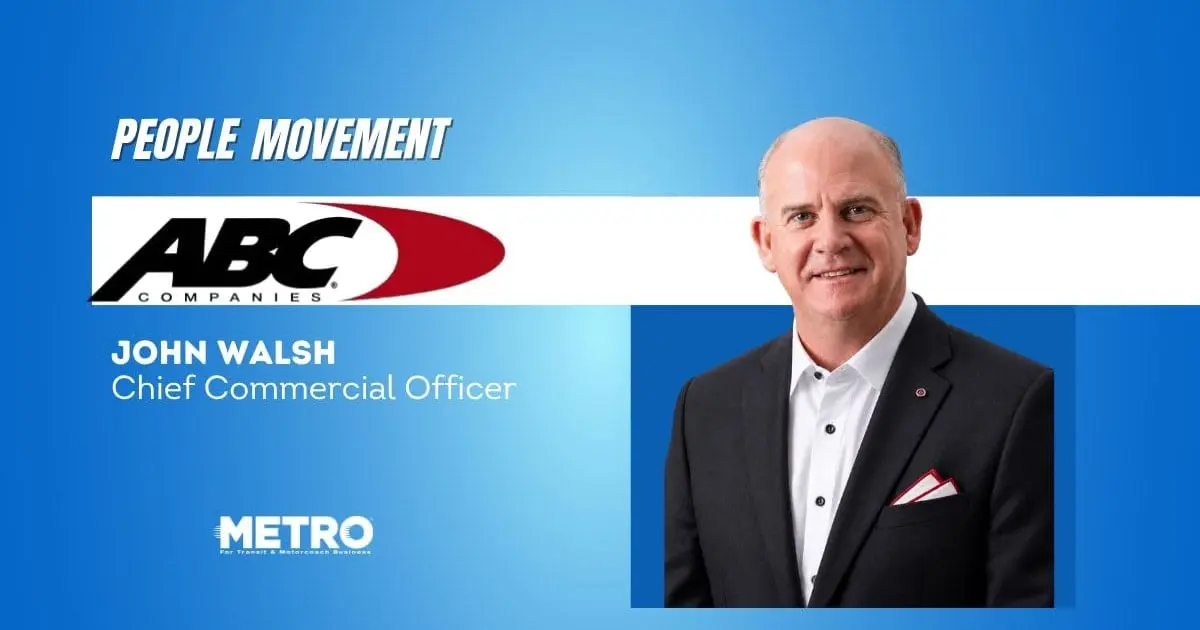
1. ABC Companies Appoints John Walsh as Chief Commercial Officer
- Effective Date: Current Quarter
- Sector: Commercial Motorcoach, Electric Transit, and Bus Manufacturing
- Mandate: Spearhead commercial strategy, scale vehicle sales, deepen customer engagement, and accelerate sustainable growth portfolios.
John Walsh’s transition to ABC Companies as Chief Commercial Officer marks a strategic alignment between the manufacturer’s legacy of service and the hyper-accelerated market demand for green fleet alternatives. Bringing more than 30 years of specialized leadership experience across the transit, motorcoach, and commercial vehicle industries, Walsh is uniquely positioned to steer ABC through its next growth phase.
Prior to joining ABC Companies, Walsh accumulated an impressive portfolio of high-impact executive roles. Most notably, he served as Chief Commercial Officer at Proterra, where he was instrumental in driving the market penetration of advanced electric transit solutions during a critical period of municipal fleet decarbonization. His leadership footprint also includes serving as President of EO Charging Americas, and President of REV Bus Group, where he oversaw a diverse portfolio of brands catering to municipal transit agencies, school districts, specialized mobility providers, and commercial freight sectors.
Walsh’s foundational career also features influential tenures at Davey Coach Sales and National Bus Sales & Leasing. At ABC, his purview will encompass the orchestration of comprehensive vehicle sales operations, strategic partnerships, and enterprise-wide business development. His mandate is clear: consolidate ABC’s market leadership while aggressively positioning the firm to capitalize on federal and state-level investments in zero-emission mass transit fleets.
2. Dallas Area Rapid Transit (DART) Names Mamatha Sparks Chief Audit Officer
- Effective Date: Current Quarter
- Sector: Public Mass Transit Agency
- Mandate: Direct internal modernization, drive financial and operational transparency, and oversee rigorous institutional auditing.
Dallas Area Rapid Transit (DART) has formally appointed Mamatha Sparks as its new Chief Audit Officer, reporting directly to the DART Board of Directors. Sparks steps into the role with more than two decades of rigorous public accounting, risk management, and government auditing expertise.
Sparks succeeds Chris Koloc, a DART stalwart who guided the agency’s audit functions for nearly two decades prior to his retirement. Sparks inherits a department at the heart of DART’s ongoing modernization efforts. In her new capacity, she will lead institutional initiatives designed to optimize internal controls, ensure fiscal accountability, and evaluate the operational efficiency of DART’s expansive multi-modal transit network.
Before joining DART, Sparks built a distinguished career within the City of Dallas Office of the City Auditor. Ascending through progressively demanding leadership positions, she directed complex, high-stakes performance audits spanning information technology infrastructure, municipal procurement, contract administration, public safety operations, and revenue generation. Known for her analytical rigor and process-improvement acumen, Sparks is expected to provide DART governance with the transparent oversight necessary to navigate modern regulatory and financial landscapes.
3. Denver RTD Taps Candace Smith as Chief Communications and Engagement Officer
- Effective Date: September 8
- Sector: Regional Public Transportation Authority
- Mandate: Overhaul and unify public relations, community outreach, customer care, and integrated marketing communications.
Denver’s Regional Transportation District (RTD) welcomed award-winning communications executive Candace Smith as its new Chief Communications and Engagement Officer (CCEO). Smith assumes leadership of RTD’s newly integrated Communications and Engagement Department, which consolidates public and media relations, community engagement, marketing initiatives, and customer care functions.
Smith brings a quarter-century of multi-sector experience spanning higher education, public mass transit, and investigative journalism. Most recently, she served as Senior Associate Vice Chancellor for Public Affairs and Strategic Communications at the University of Colorado Boulder. In that role, she directed crisis and issues management, media relations, and executive communications while acting as a principal advisor to university leadership on institutional reputation and complex stakeholder engagement.
Her extensive transit pedigree includes high-profile leadership tenures at the Washington Metropolitan Area Transit Authority (WMATA) and George Washington University, preceded by a robust career in print and broadcast journalism in Washington, D.C., and New York. At Denver RTD, Smith’s immediate priority is to bridge the gap between agency operations and public perception, fostering trust, improving rider communication channels, and driving customer acquisition across the regional network.
4. STV Appoints Khaled Naja, PE, to Advisory Board
- Effective Date: Current Quarter
- Sector: Infrastructure Engineering, Planning, and Construction Management
- Mandate: Advise executive teams and corporate boards on complex capital infrastructure investments and long-term strategic execution.
STV, a premier engineering, architectural, planning, and program management firm, announced the appointment of Khaled Naja, PE, to its Advisory Board. Naja brings decades of multidisciplinary leadership experience, specializing in guiding executive leadership teams through the structural complexities of megaproject delivery and long-term organizational strategy.
Naja currently serves as Chief Executive Officer of Core Group Partners, where he consults on global infrastructure, transportation systems, and capital development frameworks. His illustrious career includes executive commands across both public and private sectors: CEO of Cruise Terminals International, Chief Operating Officer of the Chicago Department of Aviation, and Executive Vice President of Dallas Fort Worth International Airport (DFW). In these capacities, he managed some of the nation’s most capital-intensive aviation and multimodal hubs.
An active leader within the engineering community, Naja is a past national board chair of the Construction Management Association of America (CMAA) and an inductee of the prestigious National Academy of Construction. His integration into STV’s advisory board bolsters the firm’s capacity to deliver visionary guidance on transformative infrastructure projects for transit agencies nationwide.
Supporting Context & Industry Metrics
To fully appreciate the weight of these leadership appointments, one must examine the macroeconomic and regulatory pressures currently facing the North American mobility sector.
The Electrification Wave and Commercial Realignment
The North American commercial bus and motorcoach market is experiencing a historic transition. Driven by the Federal Transit Administration’s (FTA) Low-No Emissions Grant Program—which has injected billions of dollars into municipal fleet electrification—manufacturers are under intense pressure to scale zero-emission vehicle (ZEV) production while maintaining vehicle reliability.
Industry analysts project that electric bus adoption will account for over 50% of new transit fleet procurements by the end of the decade. Leaders like John Walsh, with proven track records at Proterra and REV Group, are essential for traditional manufacturers transitioning from diesel-dependent architectures to zero-emission digital ecosystems.
Governance, Risk, and Public Trust
Public transit agencies are operating in an era of heightened fiscal scrutiny. Post-pandemic ridership recovery has forced agencies to reevaluate operating budgets, justify capital expenditures, and demonstrate absolute transparency to taxpayers and federal oversight bodies.
Appointments such as Mamatha Sparks at DART reflect an industry-wide recognition that internal auditing is not merely a compliance checkbox, but a strategic engine for operational efficiency. Modern transit agencies manage budgets scaling into the billions; ensuring that IT modernization, procurement contracts, and labor allocations are audited with uncompromising precision is paramount to long-term fiscal solvency.
The Communications Imperative in Urban Mobility
Public transportation is competing not just against private automobiles, but against shifting work-from-home paradigms and micro-mobility alternatives. Consequently, communication is no longer secondary to operations. Executives like Candace Smith at Denver RTD are tasked with rebuilding rider trust, addressing safety concerns transparently, and managing institutional crises in real time. Effective engagement directly correlates with rider retention, farebox recovery, and community buy-in for future expansion referendums.
Megaproject Delivery and Capital Investment
The Infrastructure Investment and Jobs Act (IIJA) has unlocked unprecedented capital for rail, transit, and aviation infrastructure. However, inflation, supply chain bottlenecks, and labor shortages have made megaproject execution perilous. The inclusion of seasoned advisors like Khaled Naja on engineering firm boards (such as STV) underscores the critical need for veteran leadership capable of bridging the gap between strategic planning and on-the-ground execution.
Official Statements and Industry Insights
The appointments detailed in this report reflect deliberate corporate strategies articulated by executive leadership and board members across the transportation ecosystem.
Regarding John Walsh’s appointment, executive leadership at ABC Companies emphasized that his arrival directly supports the company’s forward-looking growth trajectory:
"John brings an extraordinary depth of commercial expertise and industry foresight to our executive team. His proven ability to scale sustainable transportation solutions and deepen customer relationships aligns perfectly with our five-decade commitment to operational excellence and our aggressive strategy for the future of commercial mobility."
Reflecting on the modernization of institutional oversight, DART leadership underscored the strategic value of Mamatha Sparks’ audit background:
"Navigating the complexities of modern public transit requires absolute transparency, financial rigor, and proactive risk management. Mamatha’s extensive background in municipal and operational auditing ensures that DART remains accountable to the public we serve and well-positioned to execute our long-term strategic vision."
Highlighting the appointment of Candace Smith to spearhead community and media relations, Denver RTD officials noted the vital intersection of communication and public trust:
"Candace is an award-winning communicator whose career is defined by strategic clarity, crisis leadership, and deep stakeholder engagement. Her leadership of our consolidated Communications and Engagement Department will be instrumental in fostering open dialogue with our riders, our employees, and the communities across the Denver metropolitan region."
Commenting on the expansion of its advisory board, leadership at STV pointed to Khaled Naja’s unmatched proficiency in infrastructure development:
"Khaled Naja is a titan in infrastructure and capital program management. His strategic insight into complex, multi-billion-dollar investments will provide our clients and our executive team with invaluable guidance as we design and deliver the next generation of resilient transportation infrastructure."
Future Outlook: Navigating the Road Ahead
As the transportation sector looks toward the remainder of the decade and beyond, the success of public agencies and private manufacturers will hinge on the agility, foresight, and integrity of their leadership teams.
The convergence of decarbonization mandates, digital modernization, and historic infrastructure funding creates both extraordinary opportunities and complex vulnerabilities. Organizations that prioritize visionary commercial growth—exemplified by ABC Companies—will capture market share in the rapidly expanding zero-emission vehicle economy. Concurrently, transit agencies that anchor their operations in rigorous financial transparency and internal audit compliance, such as Dallas Area Rapid Transit, will safeguard public trust and optimize taxpayer-funded investments.
Furthermore, as urban transit networks contend with evolving commuter habits, the strategic communications expertise demonstrated by leaders like Candace Smith at Denver RTD will be indispensable for maintaining ridership and community support. Finally, engineering advisory frameworks bolstered by industry veterans like Khaled Naja at STV will ensure that complex capital projects are delivered on time, within budget, and to the highest standards of engineering excellence.
Ultimately, the individuals steering these organizations today are not merely filling executive seats; they are architecting the physical and digital mobility networks of tomorrow. As these leaders assume their new mandates, the transportation industry will watch closely to see how their strategic visions translate into measurable, long-term impact for communities across North America.