For seasoned backcountry enthusiasts, the allure of Canada’s remote provincial parks lies in their raw, untamed isolation. Yet, as climate change accelerates and dry seasons intensify, that very isolation can transform a dream wilderness expedition into a desperate fight for survival.
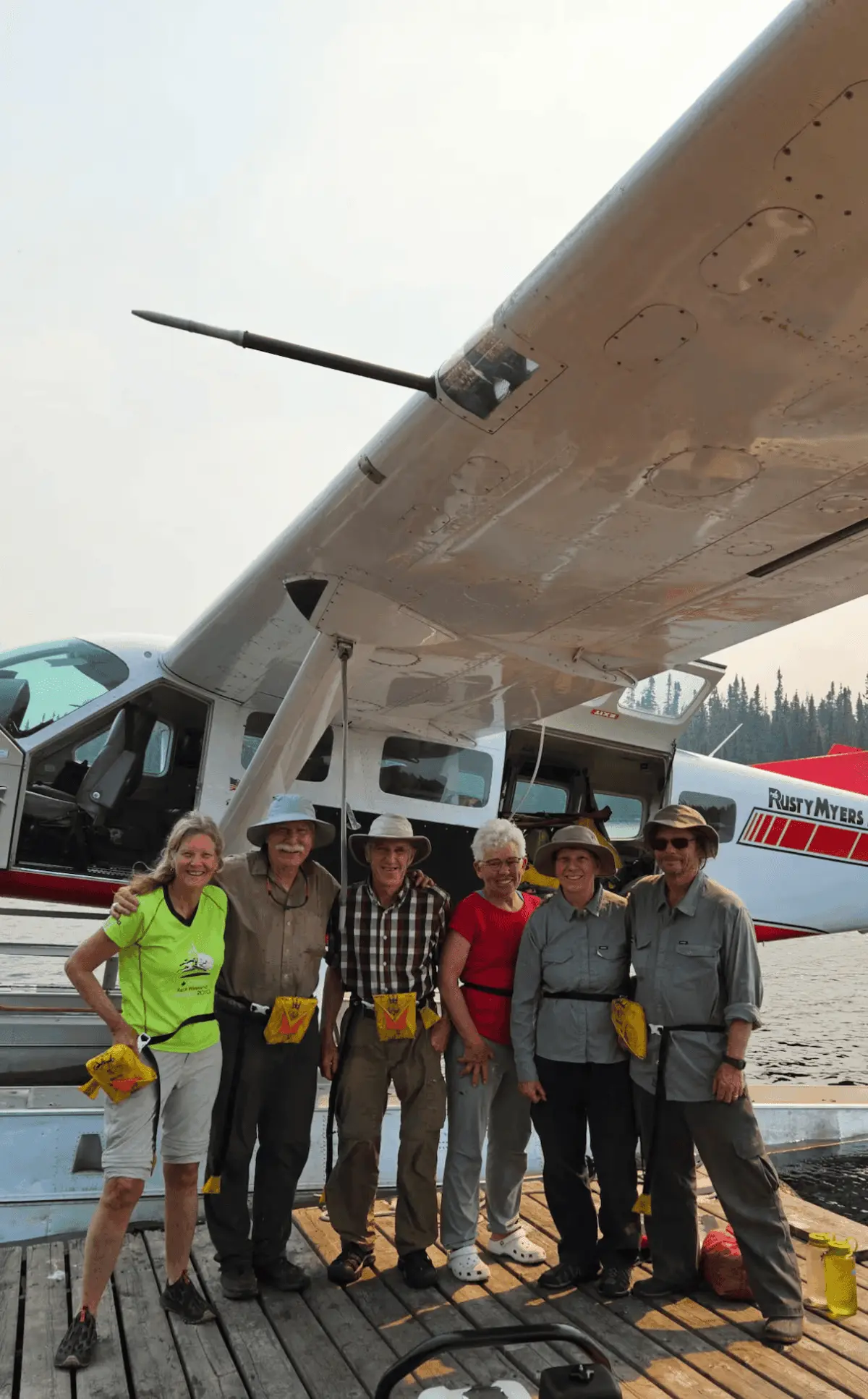
This summer, seventy-year-old Murray Muir and five paddling companions—all aged in their 60s and 70s—discovered just how quickly the North American wilderness can turn hostile. Embarking on a scheduled three-week expedition through the labyrinthine waterways of northern Ontario’s Wabakimi Provincial Park on July 7, the group expected to navigate pristine lakes, portage through dense boreal forests, and enjoy the profound quiet of the Canadian Shield. Instead, they found themselves trapped in a rapidly evolving crucible of fire, smoke, and unpredictable winds.
Boxed in by multiple active wildfires, cut off from immediate aerial rescue, and forced to hunker down on a tiny rock outcropping as nearby islands burst into flames, the group’s harrowing experience serves as a stark reminder of the escalating dangers facing backcountry travelers. Their story is more than a tale of survival; it is a masterclass in risk mitigation, psychological resilience, and the stark reality that in the deep bush, self-reliance remains the ultimate safety net.
Detailed Chronology: Seven Days from Solitude to Survival
The Journey Begins
The expedition launched under familiar northern skies on July 7. Muir and his five companions, bonded by decades of collective outdoor experience, mapped out a route designed to test their stamina while offering deep immersion into Wabakimi Provincial Park’s remote ecosystems. For the first four days, the trip progressed according to plan—a rhythmic cycle of paddling, navigating rocky portages, and setting up camp beneath expansive canopies of pine and spruce.
The Spark: Day Five
The meteorological turning point arrived on day five. A massive, dry lightning storm swept across the region, bringing intense electrical activity but virtually zero precipitation. In the arid tinderbox of the northern Ontario boreal forest, lightning strikes without rain are the primary catalyst for catastrophic lightning-ignited wildfires. While the paddlers noticed the sudden shift in weather, they initially continued along their route, unaware that microscopic embers were already smoldering in the surrounding timber.
The Walls Close In: Day Seven
By the seventh day of the trip, the atmosphere had visibly altered. The horizon, usually crisp and clear, was choked with an oppressive, yellow-gray pall of smoke. Recognizing that conditions were deteriorating, the group decided to set up camp early on Grayson Lake, hoping to monitor the situation and evaluate their next moves.
However, peace was short-lived. Shortly after finishing dinner, the acoustic reality of a modern wildfire shattered the evening calm.
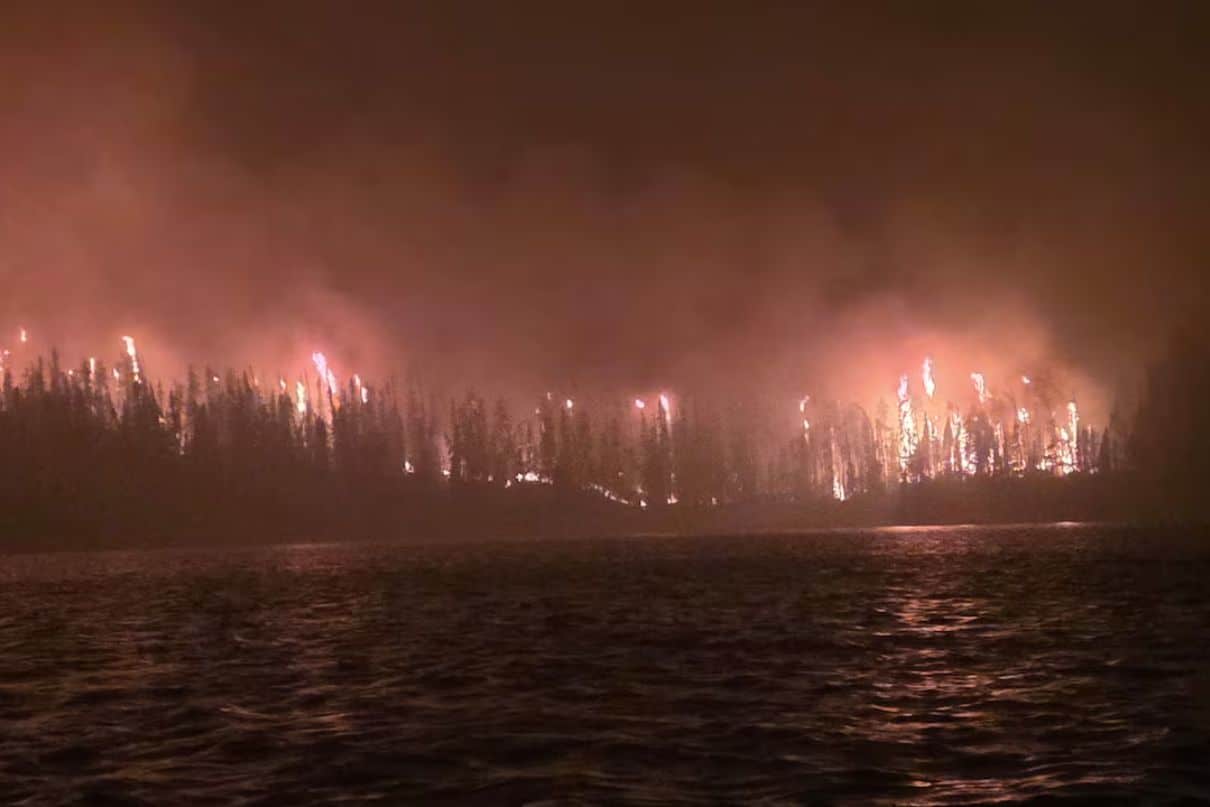
"It got smoky to the north, and then we heard this freight train sound," Muir recalls. "It’s just like really roaring. And then we could see the flames leaping on the treetops."
Realizing they were in immediate peril, the group abandoned their camp with practiced urgency. They packed their gear, secured their watercraft, and fled onto Grayson Lake, seeking refuge from the advancing wall of fire.
Trapped: The Night at "Salvation Point"
Earlier in the day, after first detecting the smoke, the group had checked their Garmin inReach satellite communicator. The digital updates confirmed their worst fears: wildfires were burning to their north, east, and south. Strong, erratic winds slammed the area, preventing them from paddling to the larger section of Grayson Lake, which served as a designated floatplane pickup zone.
Blocked by fire on one side and fierce winds on the other, the group retreated to a small, exposed rocky point jutting into the lake—a barren spit of land they would grimly christen "Salvation Point."
As night fell, a sudden, violent wind shift altered the fire’s trajectory, sending a wall of flame straight toward the islands directly in front of their position.
"And that’s when things got the most scary," Muir says. "So for a while, we were getting rained down by big flakes of ashes. And along with the trees bursting into flames in front of us, there was a real surge in the wind. It just blew like crazy. And it whipped up the waves in front of us."
Recognizing that radiant heat and airborne embers could ignite their gear—or worse, them—the group took drastic defensive measures. They waded into the icy waters of the lake, completely dunking themselves, and splashed water over their nylon packs and equipment to prevent flying sparks from burning through their vital supplies.
What followed was a sleepless, agonizing night of psychological endurance.
"Every once in a while, some trees would get ripping and burning, and the sky would light up, and then you’d try to relax, and then you’d think, oh, gee, how close is it getting?" Muir reflects.
The Exodus and Rescue
Dawn broke on a scorched landscape. Miraculously, "Salvation Point" remained one of the very few pockets on Grayson Lake untouched by the direct path of the flames, largely protected by the thermal buffer of the surrounding water.
Leaving the smoking ruins of their vicinity, the group paddled out to the larger, accessible section of Grayson Lake. They made their way to a local lodge, where they established temporary camp and waited out the remainder of the evacuation window. Two days after triggering their emergency SOS, a charter floatplane finally pierced the smoky haze to lift them out of the danger zone.
Supporting Context & Metrics: The Changing Face of Backcountry Fire
The Mechanics of Boreal Wildfires
The terrifying "freight train" sound described by Muir is a well-documented phenomenon in fire science. As a wildfire consumes dense timber, it creates its own localized weather system. Superheated air rises rapidly, creating a massive updraft that draws in fresh oxygen from the surrounding environment. This sudden influx of air generates high-velocity wind currents and a deep, continuous roar akin to a heavy locomotive traveling at high speed.
In boreal ecosystems dominated by black spruce, jack pine, and balsam fir—tree species packed with highly flammable resins—fires can spread at terrifying speeds, jumping water bodies via flying embers and crowning through the upper canopy in a matter of seconds.
The Illusion of Instant Rescue
Muir’s experience highlights a critical, often misunderstood aspect of modern backcountry safety technology: satellite communication does not equal instant extraction.
While devices like the Garmin inReach are invaluable lifelines, emergency services cannot bend the laws of physics. When dense smoke blankets a region, zero-visibility conditions force aviation authorities to ground all water-bombers, reconnaissance aircraft, and rescue helicopters.
"Just because you activate [the SOS function], it doesn’t mean it’s going to happen," Muir warns. "It might not happen for a day or two days. Pretty well have to take care of yourself out there in the bush."
Risk Management Protocols for Paddlers
Outdoor education organizations, such as the National Outdoor Leadership School (NOLS), emphasize that backcountry travelers must prioritize self-preservation strategies long before rescue teams can arrive.
Seek Safe Zones: If trapped by a wildfire, paddlers should seek out natural firebreaks. These include previously burned areas (where fuel has already been consumed), boulder fields, expansive meadows, or—best of all for paddlers—large bodies of water.
Maintain Distance: As Muir noted, having a significant water buffer is often the deciding factor in survival. "I was just so glad that we had 300 meters of water between us and the flames. I think that’s the secret."
Air Quality and Health: Inhaling toxic particulate matter from wood smoke poses severe respiratory risks. NOLS guidelines advise avoiding prolonged or heavy physical exertion if visibility drops below three miles. Increasingly, outdoor experts recommend packing lightweight N95 respirators into backcountry first-aid kits.
Redundant Route Planning: When entering the backcountry during periods of elevated fire danger, itineraries must be flexible. Trips should incorporate multiple escape routes, diverse exit points, and pre-identified water bodies capable of accommodating floatplane landings.
Official Statements and Industry Insights
Reflecting on the unprecedented nature of the fire season, wilderness safety experts emphasize that traditional backcountry planning paradigms must adapt to a warming climate.
Brooke Orte of NOLS notes that environmental conditions demand a fundamental shift in how adventurers approach trip execution:
"If fire danger is high or there are fires currently burning, make sure your plan includes multiple routes with a variety of exit points from the area."
Furthermore, safety advocates stress that calling off a trip, while deeply disappointing to enthusiastic groups, is always a valid and responsible decision. The speed at which modern wildfires can outpace human movement renders rigid itinerary adherence a potentially fatal gamble.
Future Outlook: Navigating the New Normal in the Backcountry
As North America experiences longer, more intense fire seasons, stories like Murray Muir’s will likely cease to be anomalies and instead become part of the baseline reality for wilderness recreation.
For provincial park authorities, outfitters, and recreational paddlers, the implications are profound. Enhanced real-time satellite tracking of smoke and fire vectors, stricter fire bans, and improved emergency communication infrastructure will become standard components of remote expedition planning.
Yet, as Muir and his companions proved on the shores of Grayson Lake, technology and planning are only as effective as the people wielding them. Cool heads, situational awareness, and the psychological fortitude to endure a night of fire and ash are what ultimately separates a tragedy from a story told decades later.
For these six senior paddlers, the waters of Wabakimi Provincial Park tested their limits in ways they never anticipated—proving that even at seventy years old, the human spirit of adventure, paired with pragmatic survival instincts, remains as resilient as the northern wilderness itself.