





Executive Overview
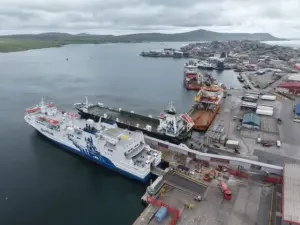
In a major move for European short-sea shipping, ferry operator Scandlines has initiated a capital expenditure program exceeding €25 million to overhaul and electrify its passenger and vehicle ferry, SCHLESWIG-HOLSTEIN. The vessel has officially arrived at shipyard facilities in Klaipėda, Lithuania, to undergo a comprehensive engineering retrofit that will transition its propulsion architecture from a conventional hybrid setup to an advanced plug-in hybrid system.
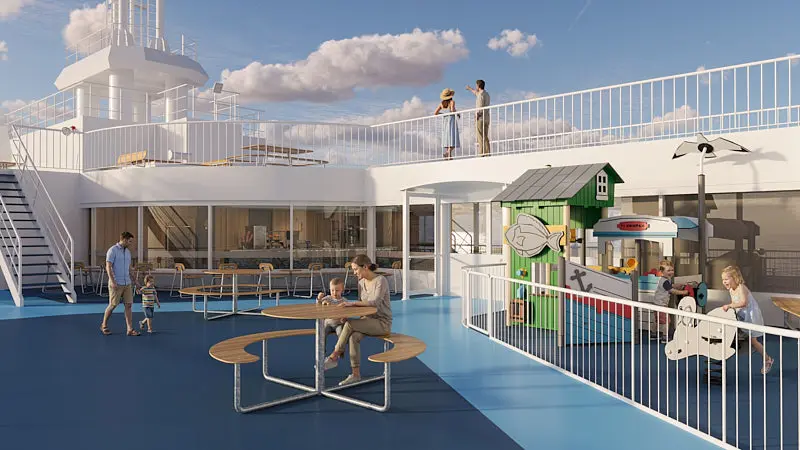
The strategic retrofit will enable SCHLESWIG-HOLSTEIN—a core asset serving the vital 18.5-kilometer maritime corridor between Puttgarden, Germany, and Rødby, Denmark—to draw the overwhelming majority of its operational energy directly from land-based renewable energy grids. Beyond its engine room and power distribution grid upgrades, the multi-million-euro project encompasses a total redesign of the ship’s passenger infrastructure across Decks 5 and 6. This interior modernization will feature upgraded dining facilities, contemporary retail outlets, redesigned lounge spaces, and optimized passenger flow architectures to elevate the passenger experience.
The vessel is scheduled to complete shipyard integration, sea trials, and re-commissioning tests in time to return to commercial service towards the end of 2026. This initiative serves as a major milestone within Scandlines’ broader corporate decarbonization roadmap, which targets zero direct emission fleet operations on the Fehmarn Belt by 2030 and complete corporate operational net-zero status by 2040.
+-------------------------------------------------------------------------+
|                    PROJECT AT A GLANCE: M/F SCHLESWIG-HOLSTEIN          |
+-------------------------------------------------------------------------+
| Investment Vol:      Exceeding €25 Million                              |
| Shipyard Location:   Klaipėda, Lithuania                                |
| Operational Route:   Puttgarden (DE) – Rødby (DK) [Fehmarn Belt]        |
| Scope of Work:       Propulsion conversion (Hybrid to Plug-in Hybrid)   |
|                      Complete refit of Passenger Decks 5 & 6            |
| Primary Objective:   Majority energy consumption via shore-power grid   |
| Expected Re-entry:   Late 2026                                          |
| Strategic Target:    Zero direct emissions by 2040 (Fehmarn route 2030) |
+-------------------------------------------------------------------------+
Detailed Chronology
The conversion of SCHLESWIG-HOLSTEIN represents the next phase in Scandlines’ decade-long operational evolution from traditional internal combustion marine engines to fully electrified marine transit.
       2013–2014                      2022–2024                    LATE 2024–EARLY 2025              LATE 2026
+-----------------------+      +-----------------------+      +-----------------------+      +-----------------------+
| Initial Hybridization | ---> |  Shore-Power Grid &   | ---> | Shipyard Arrival in   | ---> | Commercial Redelivery |
| Early battery buffer  |      |  "Futura" Fleet Plan  |      | Klaipėda for Refit    |      | Target operational    |
| systems operational   |      | Shore infrastructure  |      | Major conversion work |      | zero-emission transit |
+-----------------------+      +-----------------------+      +-----------------------+      +-----------------------+
Phase 1: The Hybrid Pioneer Era (2013–2014)
Over ten years ago, Scandlines began equipping its double-ended ferries operating on the Fehmarn Belt with large-scale battery banks. The original hybrid configuration utilized diesel generators combined with lithium-ion batteries to balance propulsion loads (peak-shaving), optimizing fuel efficiency and reducing local air pollution. SCHLESWIG-HOLSTEIN was among the early vessels to receive this foundational technology, serving as a operational prototype for marine battery applications.
Phase 2: Shore-Power Infrastructure & Fleet Planning (2022–2024)
While early hybrid systems generated electrical energy via onboard diesel generators operating at optimal loads, true decarbonization required direct utilization of green grid energy. Scandlines invested heavily in land-side electrical infrastructure, establishing high-voltage transformer substations and automated charging arms at both the Port of Rødby and the Port of Puttgarden. Concurrent with the construction of its new zero-direct-emission freight ferry FUTURA, Scandlines laid the technical foundation to upgrade its existing double-ended passenger ferries into true plug-in hybrids.
Phase 3: Shipyard Arrival and Conversion Execution (Late 2024 – Present)
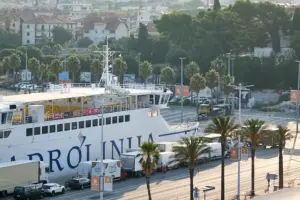
SCHLESWIG-HOLSTEIN has officially yielded its slot on the Fehmarn Belt sailing schedule and transit to shipyard facilities in Klaipėda, Lithuania. The complex retrofitting process involves removing legacy auxiliary equipment, expanding the ship’s energy storage system (ESS) rooms, installing high-capacity marine transformer units, and routing heavy-duty high-voltage power lines through the vessel’s hull. Simultaneously, interior construction teams will strip and rebuild Decks 5 and 6.
Phase 4: Systems Integration, Sea Trials, and Re-commissioning (2026)
Following structural, electrical, and interior modifications in Klaipėda, SCHLESWIG-HOLSTEIN will undergo extensive harbor acceptance trials (HATs) and sea acceptance trials (SATs). These tests will stress-test the interaction between the high-capacity battery management systems, fast-charging shore interfaces, dynamic positioning, and propulsion distribution networks. The vessel is targeted to re-enter scheduled commercial service between Germany and Denmark toward the end of 2026.
Supporting Context & Metrics
Maritime Engineering: The Mechanics of Plug-in Propulsion
The transformation from a basic hybrid system to a plug-in hybrid architecture requires a fundamental overhaul of the vessel’s power management dynamic.
CONVENTIONAL HYBRID SCHEME:
[ Diesel Generators ] ---> [ Variable Engine Load ] ---> [ Battery Buffer (Peak Shaving) ] ---> [ Electric Motors ]

PLUG-IN HYBRID SCHEME:
[ Shore Power Grid ]  ---> [ Ultra-Fast High-Voltage Charging Arm ] ---> [ Massive Battery Banks ] ---> [ Electric Motors ]
                                                                                   ^
[ Onboard Diesel Generators ] -----------------------------------------------------+ (Standby / Emergency Load Only)
In a traditional hybrid ferry setup, internal combustion engines generate the primary electricity, while onboard batteries store excess output to assist during high-demand manoeuvres. Under the upgraded plug-in hybrid model:
- Primary Energy Storage: The capacity of the onboard energy storage systems (ESS) is expanded, utilizing energy-dense marine lithium-ion battery chemistries engineered for fast charge-discharge cycles.
- Shore-to-Ship Power Transfer: Automated fast-charging systems located at the Rødby and Puttgarden ferry berths connect to the vessel within seconds of docking. Delivering high voltage at multi-megawatt rates, these systems can fully recharge the ship’s battery array during standard 15-minute passenger loading and unloading turnarounds.
- GenSet Minimization: Onboard diesel generators are relegated to secondary, backup, or emergency roles, allowing the vessel to run nearly 100% on green electricity during its ~45-minute crossing.
+--------------------------------------------------------------------------+
|                  FEHMARN BELT ROUTE & TECHNICAL METRICS                  |
+--------------------------------------------------------------------------+
| Distance across Fehmarn Belt:         18.5 km (approx. 10 nautical miles) |
| Standard Transit Time:               ~45 minutes                         |
| Average Berth Turnaround Time:       15 minutes                          |
| Shore-Power Integration:             Automated megawatt fast-charging    |
| Target Operational Energy Source:    Offshore Wind & Solar Grid Power    |
+--------------------------------------------------------------------------+
Interior Architecture: Modernizing Decks 5 and 6
The €25+ million investment goes beyond propulsion upgrades to include a comprehensive rebuild of the vessel’s primary passenger spaces on Decks 5 and 6. The redesign targets several operational and customer-facing enhancements:
+--------------------------------------------------------------------------+
|                       DECK 5 & 6 REFURBISHMENT SCOPE                     |
+--------------------------------------------------------------------------+
| Area                 | Key Upgrades & Changes                            |
+----------------------+---------------------------------------------------+
| Retail Facilities    | Expanded floorplan, modernized duty-free shopping |
|                      | layout, integrated digital point-of-sale systems  |
+----------------------+---------------------------------------------------+
| Dining & Cafés       | New kitchen infrastructure, modern seating,       |
|                      | updated food hall & grab-and-go options           |
+----------------------+---------------------------------------------------+
| Passenger Lounges    | Ergonomic seating, quiet zone divisions,          |
|                      | ubiquitous charging ports, panoramic seating      |
+----------------------+---------------------------------------------------+
| Passenger Flow       | Widened stairwell access, re-engineered corridors |
|                      | to reduce boarding/disembarkation bottlenecks     |
+----------------------+---------------------------------------------------+
By re-engineering the layout of Decks 5 and 6, Scandlines aims to increase guest throughput, reduce embarkation bottlenecks, and boost onboard retail revenue during short 45-minute transits.
Official Statements
Fleet Modernization and Environmental Commitments
Addressing the strategic significance of the SCHLESWIG-HOLSTEIN conversion, executive representatives from Scandlines emphasized the alignment between infrastructure investment and corporate sustainability:
"Investing over €25 million in the retrofitting of SCHLESWIG-HOLSTEIN is a clear demonstration of our commitment to sustainable maritime operations along the Fehmarn Belt. By converting the vessel into a high-capacity plug-in hybrid, we are drastically cutting our operational reliance on fossil fuels. This project brings us a step closer to our goal of zero direct emissions on the Rødby-Puttgarden route by 2030, while setting a new baseline for guest comfort across our modern passenger decks."
— Scandlines Corporate Management
Commentary from technical partners and shipyard representatives in Klaipėda highlighted the engineering complexity of retrofitting operational vessels:
"Converting a complex double-ended passenger ferry from a standard hybrid configuration into a high-voltage plug-in hybrid platform requires precise structural and electrical engineering. Integrating multi-megawatt fast-charging systems and expanded energy storage modules within an existing ship hull—while concurrently executing a full-scale refurbishment of Decks 5 and 6—demands meticulous execution. We are proud to support Scandlines in delivering this project."
— Shipyard Engineering Leadership, Klaipėda
Future Outlook
The conversion of SCHLESWIG-HOLSTEIN is part of a broader transformation across the European short-sea shipping market, driven by changing regulatory frameworks, evolving infrastructure competition, and corporate sustainability targets.
+-----------------------------------------------------------------------+
|                    REGULATORY & REGIONAL IMPACT MATRIX                |
+-----------------------------------------------------------------------+
| Driver                 | Operational & Financial Consequence           |
+------------------------+----------------------------------------------+
| EU ETS for Maritime    | High direct-emission penalties make electric |
|                        | propulsion financially advantageous.         |
+------------------------+----------------------------------------------+
| FuelEU Maritime        | Mandates progressive intensity reductions    |
|                        | in onboard fuel greenhouse gas emissions.    |
+------------------------+----------------------------------------------+
| Fehmarn Belt Tunnel    | Requires ferry operations to deliver a high- |
| Fixed Link Competition | speed, zero-emission, premium service.       |
+------------------------+----------------------------------------------+
Regulatory Compliance & Maritime Decarbonization
The European Union’s regulatory framework for maritime shipping has tightened significantly. The integration of maritime transport into the EU Emissions Trading System (EU ETS) alongside the implementation of the FuelEU Maritime initiative imposes financial penalties on vessels reliant on conventional fossil fuels.
By powering its fleet with renewable grid electricity drawn from regional Baltic and North Sea offshore wind installations, Scandlines protects its network against carbon compliance costs, ensuring long-term price stability for freight and passenger transport.
Navigating the Fehmarnbelt Fixed Link Competition
The impending completion of the Fehmarnbelt Fixed Link—an 18-kilometer immersed tunnel connecting Denmark and Germany—will introduce direct competition for rail and vehicular traffic across the corridor.
To maintain its market share, Scandlines is positioning its maritime operations as a sustainable, premium alternative to tunnel travel. Rather than competing purely on speed, the ferry line emphasizes zero-emission transport coupled with high-end passenger amenities, high-quality dining, and open-sea space. Converting SCHLESWIG-HOLSTEIN directly supports this commercial defense strategy.
               SCANDLINES DECARBONIZATION ROADMAP

    2013-2019             2024-2026             2030                  2040
+---------------+     +---------------+     +---------------+     +---------------+
| Hybrid Fleet  |     | Plug-in Fleet |     | Net-Zero      |     | Full Net-Zero |
| Integration   | --> | Modernization | --> | Fehmarn Belt  | --> | Corporate     |
| (Peak Shave)  |     | (Shore Power) |     | Operations    |     | Operations    |
+---------------+     +---------------+     +---------------+     +---------------+
Strategic Blueprint for Baltic Maritime Routes
The successful return of SCHLESWIG-HOLSTEIN to service in late 2026 will mark a key milestone in Scandlines’ corporate commitment to operate zero direct emission vessels across the Fehmarn Belt by 2030, and reach absolute zero direct emissions corporate-wide by 2040.
As maritime operators worldwide look to meet international climate mandates, the retrofitting of existing short-sea fleets—exemplified by the SCHLESWIG-HOLSTEIN project—provides a practical blueprint for transforming mature marine assets into zero-emission vessels.