






Executive Overview
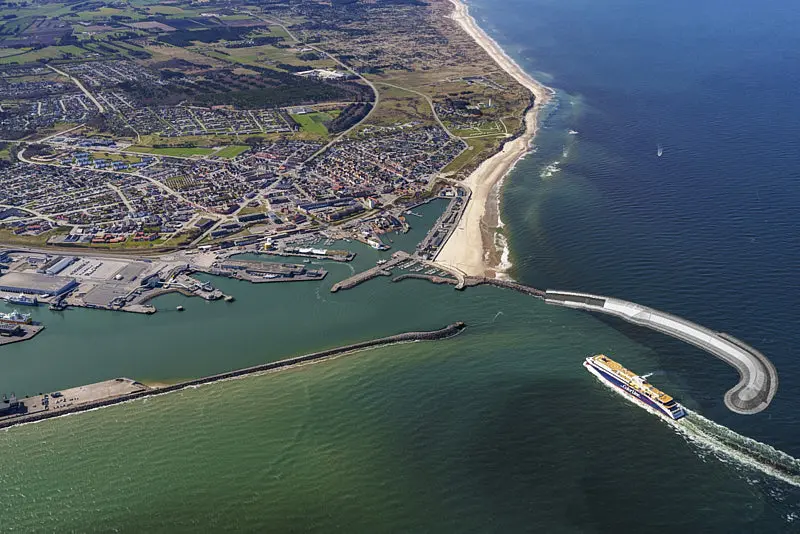
In a decisive move destined to reshape the maritime infrastructure of Northern Europe, the Hjørring Municipal Council has formally approved a comprehensive DKK 740 million (approximately €99.2 million) loan guarantee dedicated to the major extension of the Port of Hirtshals’ western breakwater (Vestmolen). This municipal endorsement marks the official greenlight for one of the most significant marine engineering and infrastructure upgrades in the North Jutland region in recent decades.
Under the approved development framework, the port’s western breakwater will be extended seaward by approximately 350 meters into the unpredictable waters of the Skagerrak. The strategic imperative behind this capital-intensive expansion is threefold: significantly upgrading navigational safety, expanding maneuverability for modern deep-draft vessels, and eliminating weather-induced operational disruptions for crucial international ferry and cargo services.
+-----------------------------------------------------------------------------------+
|                        PORT OF HIRTSHALS EXPANSION AT A GLANCE                   |
+-----------------------------------------------------------------------------------+
| Total Municipal Loan Guarantee : DKK 740 Million (~€99.2M)                         |
| Primary Infrastructure Focus    : Extension of Western Breakwater (Vestmolen)     |
| Structural Extension Length     : ~350 Meters                                     |
| Construction Timeline           : Mobilization 2027 | Completion 2029–2030          |
| Primary Strategic Goals         : - Hydrodynamic Wave Attenuation                 |
|                                   - Elimination of Weather-Related Cancellations  |
|                                   - Accommodation of Larger Eco-Design Ferries    |
|                                   - Integration with CO2/CCS Logistics Infrastructure |
+-----------------------------------------------------------------------------------+
By altering the local hydrodynamic landscape, the extended breakwater will substantially attenuate wave energy at the harbor entrance. This will safeguard vessel transits during severe North Sea winter storms that have historically threatened port accessibility. Construction activity is slated to begin in 2027, with full operational handover scheduled between 2029 and 2030. Beyond immediate safety and logistical enhancements, this project underpins a broader strategic ambition: cementing Hirtshals’ position as a resilient, climate-adapted maritime gateway and a pivotal hub for green energy transition initiatives, including carbon capture and storage (CCS) transport networks across Northern Europe.
Detailed Chronology
The municipal council’s approval of the loan guarantee represents the culmination of years of rigorous oceanographic modeling, economic feasibility studies, and stakeholder consultations designed to future-proof the Port of Hirtshals.
PROJECT TIMELINE & MILESTONES

 [2021–2023] ──► Hydrodynamic Studies, Master Planning & Initial Design
      │
 [2024–2025] ──► Municipal Approval (DKK 740M Guarantee) & Detailed Engineering
      │
 [2025–2026] ──► Environmental Impact Assessment (EIA) & Global Procurement
      │
 [2027]      ──► Structural Mobilization & Marine Construction Commences
      │
 [2029–2030] ──► Final Stone Placement, Testing & Commissioning
Phase 1: Conceptualization and Hydrodynamic Modeling (2021–2023)
Prior to municipal intervention, the Port of Hirtshals initiated extensive studies to evaluate long-term weather trends, wave climate evolution, and shipping industry demands. Advanced hydrodynamic computer simulations and physical wave basin testing were conducted to analyze how changing wave patterns impact the current outer harbor layout. The findings consistently highlighted the vulnerability of the harbor entrance to heavy westerly and north-westerly swells, establishing the clear necessity of extending the western breakwater by 350 meters.
Phase 2: Municipal Review and Financial Guarantee Approval (2024)
Recognizing the port’s role as an economic engine for the region, the Hjørring Municipal Council subjected the funding proposal to multi-stage financial and risk evaluations. Following rigorous scrutiny of the port’s long-term business plan, revenue projections, and asset management strategies, the council voted to approve the DKK 740 million loan guarantee. This municipal backing allows the port authority to secure competitive, long-term financing arrangements required for large-scale marine construction.
Phase 3: Detailed Engineering, Environmental Permitting, and Tendering (2025–2026)
With municipal backing secured, the project transitions into a comprehensive design and permitting phase. Over the next 24 months, detailed structural engineering designs will be finalized, environmental impact assessments (EIAs) will undergo public review, and marine construction permits will be processed through national maritime and environmental authorities. International tendering processes will also be launched to select specialized marine engineering contractors capable of executing complex deep-water rock placement and caisson installation in the demanding North Sea environment.
Phase 4: Marine Construction and Breakwater Erection (2027–2029)
Heavy offshore construction is scheduled to break ground in 2027. Work will involve dredging, foundational seabed preparation, underwater rock berm construction, and the placement of high-density armor rock alongside pre-fabricated concrete armor units or caissons. Construction activities will be synchronized with seasonal sea-state windows to ensure safe, efficient marine operations.
Phase 5: Testing, Operational Integration, and Final Delivery (2029–2030)
The final phase will encompass the integration of navigation aids, environmental monitoring systems, and berth safety infrastructure. Following rigorous stress testing under active weather conditions, the extended Vestmolen will be fully commissioned, completing a key milestone in the port’s long-term master plan.
Supporting Context & Metrics
+---------------------------------------------------------------------------------+
|               KEY METRIC BREAKDOWN: PORT OF HIRTSHALS EXPANSION                 |
+---------------------------------------------------------------------------------+
| Metric                          | Value / Impact                                |
+---------------------------------+-----------------------------------------------+
| Total Municipal Guarantee       | DKK 740,000,000 (~€99.2 million)               |
| Length of Breakwater Extension  | ~350 meters                                   |
| Primary Hydrodynamic Benefit    | ~30–40% Reduction in Entrance Wave Energy     |
| Construction Mobilization Target| Q1/Q2 2027                                    |
| Targeted Completion Window      | 2029 – 2030                                   |
| Primary Commercial Beneficiaries| Color Line, Fjord Line, Smyril Line, Freight  |
| Regional Infrastructure Purpose | Skagerrak Transit, Green Fuels, CCS Transport |
+---------------------------------------------------------------------------------+
Hydrodynamic Reality: Navigational Vulnerability in the Skagerrak
The Port of Hirtshals occupies a unique, highly exposed geographical position at the northernmost point of Jutland, directly facing the open waters of the Skagerrak. While this offers optimal geographical proximity to Scandinavian markets, it exposes the harbor entrance to severe oceanographic dynamics.
North-westerly gale-force winds frequently create severe wave action and strong cross-currents right at the port entrance. Under severe conditions, these forces can push large commercial ferries and cargo vessels toward the outer breakwaters during critical maneuver phases. Extending the western breakwater by 350 meters fundamentally changes these mechanics:
- Wave Attenuation: The extended breakwater creates a physical barrier that intercepts and dissipates incoming swell energy before it can reach the sensitive basin entrance.
- Expansion of the Calm Water Basin: The modification extends the sheltered outer approach zone, giving ship captains and maritime pilots a significantly larger safety margin to align their vessels when entering or exiting under heavy weather conditions.
- Reduction of Service Interruptions: Uncontrolled wave agitation in the inner harbor frequently leads to broken mooring lines, difficult ramp alignments, and operational cancellations. The breakwater extension is engineered to reduce entrance wave energy by up to 40%, ensuring year-round, schedule-reliable port calls.
HYDRODYNAMIC WAVE DISSIPATION MODEL

    [ UNPROTECTED OPEN SEA / SKAGERRAK ]
         Rough Swells & Cross-Currents
                   │    │    │
                   ▼    ▼    ▼
           ======================  ◄── NEW 350M BREAKWATER EXTENSION
                               /      (Dissipates & diverts wave energy)
                              /
                             /
              ▼              ▼
       [ CALMED OUTER APPROACH ZONE ]  ◄── Extended Safe Maneuver Space
                     │
                     ▼
       [ INNER HARBOR & FERRY BERTHS ] ◄── High Operational Reliability
Economic Anchors: Cargo, Passenger Capacity, and Regional Trade
The Port of Hirtshals is far more than a localized transit point; it serves as a critical national logistics corridor connecting Denmark, Norway, the Faroe Islands, and Iceland.
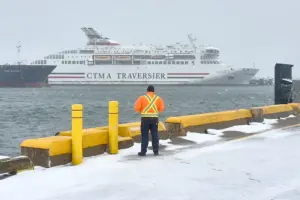
- Ferry Operations: Major international operators—including Color Line, Fjord Line, and Smyril Line—run daily passenger and freight services out of Hirtshals to destinations such as Kristiansand, Larvik, Stavanger, Bergen, Tórshavn, and Seyðisfjörður. These routes move millions of passengers and hundreds of thousands of heavy goods vehicles (HGVs) every year.
- Perishable Goods & Supply Chains: Hirtshals is one of Scandinavia’s premier seafood hubs. Efficient, uninterrupted ferry operations are vital for high-value salmon and whitefish supply chains arriving from Norway and the North Atlantic, destined for mainland European markets via Denmark’s motorway network.
- Growing Vessel Dimensions: Next-generation passenger and cargo vessels feature larger drafts, extended lengths, and higher windage surface areas (making them more susceptible to lateral wind drift). The physical expansion of the harbor entrance ensures that Hirtshals can comfortably accommodate these larger, more modern vessels without imposing operational restrictions.
The Green Transition: Carbon Capture, Energy Hubs, and Eco-Fuels
The breakwater extension also plays a critical supporting role in Denmark’s ambitious climate goals and the decarbonization of Northern Europe’s industrial sector.
Hirtshals is positioning itself as a central hub for Greenport Scandinavia, a initiative centered on Carbon Capture, Utilization, and Storage (CCS). Under this initiative, captured CO2 from regional industrial plants and European emitters will be transported to Hirtshals, stored temporarily, and shipped offshore for permanent geological storage beneath the North Sea bed.
Safe, calm, and reliable harbor conditions are essential for handling specialized liquid CO2 carrier vessels and bunkering eco-fuels like green methanol and e-ammonia. By mitigating severe wave action at the harbor entrance, the DKK 740 million breakwater investment guarantees the operational stability needed to attract complex, long-term energy transition projects.
Official Statements
The approval of the loan guarantee by the Hjørring Municipal Council highlights a shared strategic vision among municipal leaders, port executives, and industry stakeholders.
Spokesperson, Hjørring Municipal Council:
"Our decision to approve the DKK 740 million loan guarantee reflects a firm commitment to the economic resilience and future growth of our entire municipality and North Jutland. The Port of Hirtshals is an indispensable economic motor for our region. By enabling this critical infrastructure upgrade, we are ensuring maritime safety, supporting local employment, and securing our municipality’s strategic role in international logistics for generations to come."Executive Leadership, Port of Hirtshals Authority:
"We welcome the trust and financial backing demonstrated by the Hjørring Municipal Council. Extending the western breakwater by 350 meters addresses long-standing oceanographic challenges that have impacted our harbor entrance during severe weather. This investment will deliver immediate dividends in navigational safety, operational reliability, and commercial capacity, allowing us to serve our ferry and freight partners with uncompromised excellence."Industry Representative, Maritime & Logistics Sector:
"Predictability is the lifeblood of modern logistics. When winter storms disrupt ferry schedules at Hirtshals, the impacts ripple across European supply chains—from seafood logistics to cross-border manufacturing. Eliminating weather-induced port closures through this breakwater extension gives ship operators and logistics companies the reliability required to invest in larger, greener, and more efficient fleet assets."
Future Outlook
The municipal approval of the DKK 740 million loan guarantee sets in motion a transformative transition for the Port of Hirtshals. Between now and the expected completion window of 2029–2030, the project will move through detailed design, environmental reviews, procurement, and heavy marine engineering.
+-----------------------------------------------------------------------------------+
|                           LONG-TERM STRATEGIC IMPACTS                             |
+-----------------------------------------------------------------------------------+
| Operational Reliability | Near-zero weather-induced ferry cancellations.          |
| Fleet Accommodations    | Direct capacity for next-generation, high-windage ships.|
| Economic Resilience     | Anchors Northern Jutland as Scandinavia's prime gateway.|
| Energy Leadership       | Underpins European CCS and green fuel transportation.    |
| Climate Adaptation      | Protects port infrastructure against rising sea levels. |
+-----------------------------------------------------------------------------------+
Future-Proofing Against Climate Change
As North Sea storm patterns intensify due to global climate shifts, robust coastal defense infrastructure becomes increasingly critical. The design of the 350-meter extension will incorporate climate adaptation factors, including engineered crest heights capable of handling projected sea-level rise and wave run-up over a 50-to-100-year operational lifecycle. This proactive design philosophy ensures that public capital invested today remains resilient against mid-to-late 21st-century environmental pressures.
Reinforcing Scandinavia’s Cross-Border Freight Gateway
Upon completion in 2029 or 2030, the enhanced western breakwater will solidify Hirtshals’ status as a primary logistics artery connecting Nordic economies to mainland Europe. By reducing operational risks, eliminating winter downtime, and offering expanded capacity for modern, low-emission commercial vessels, Hirtshals is well-positioned to capture market share in North Sea freight transit, seafood distribution, and emerging green energy supply networks.
Through calculated financial planning, municipal consensus, and advanced marine engineering, the Port of Hirtshals is poised to navigate a changing oceanographic and economic landscape—transforming a geographical exposure into an enduring strategic advantage.