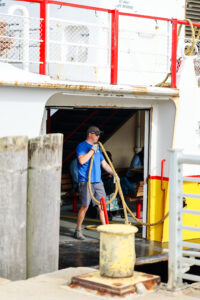
Beneath the deceptively quiet surface of a brisk New England February, Portland, Maine’s historic Casco Bay Lines (CBL) is undergoing a profound structural evolution. While winter mornings along the docks bring a subdued rhythm—islanders wrapped in heavy wool drinking hot coffee on less-crowded ferries, and neighbors exchanging familiar nods in the terminal—behind the scenes, a dynamic new leadership team is steering the organization into an ambitious future.
The year 2026 marks a watershed moment for the vital marine transit provider. Following the retirement of a legendary half-century fixture, Casco Bay Lines has systematically transitioned its operational command to a trio of seasoned mariners. This new era is helmed by newly appointed General Manager and Chief Executive Officer Ben Dinsmore, bolstered by the promotion of Operations Manager Mike Bryand and Assistant Operations Manager Pat Donovan.
Together, these leaders embody a delicate, highly prized balance within Maine’s maritime culture: a deep respect for institutional legacy paired with forward-thinking adaptability. As Casco Bay Lines continues to balance the modernization of its fleet and facilities with its foundational promise as a year-round community lifeline, this leadership shift ensures that the human heart of the operation remains as steadfast as the tides.
Detailed Chronology: Honoring the Past While Charting the Future
To truly understand the weight and significance of Casco Bay Lines’ 2026 leadership team, one must look back at the monumental legacy they were chosen to continue.
The End of an Era: Celebrating Nick Mavodones
Last fall, Casco Bay Lines marked the end of an extraordinary chapter with the retirement of Nick Mavodones, who dedicated an astonishing 47 years of service to the company. Mavodones’ departure was not merely a personnel change; it was the closing of a living archive of Portland’s working waterfront history. His remarkable career was immortalized in a comprehensive video profile by News Center Maine’s cultural and community program, 207.
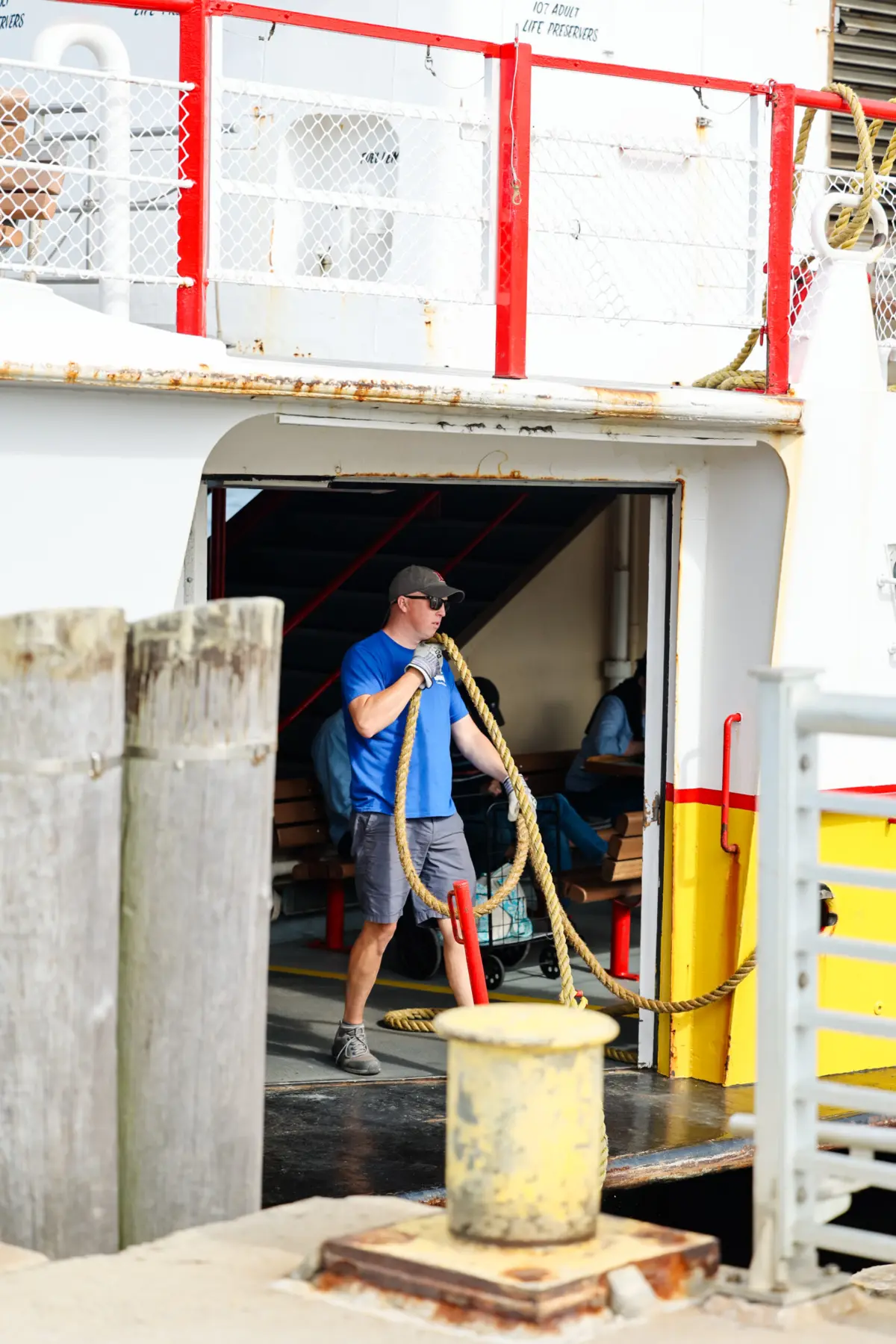
Mavodones’ journey with Casco Bay Lines began in 1978 when he was hired as a teenage deckhand. During an interview with 207, Mavodones reflected on the grueling physical demands of maritime labor during the late 1970s and 1980s—an era before automated hydraulic lifts and modernized freight-handling systems transformed dockside logistics.
"Freight would get rolled out on a cart close to the boat, and unless the tide was perfect, we lifted or threw it onto the boat," Mavodones recalled. "We moved everything from 94-pound bags of cement to cases of milk to lumber and coal."
Demonstrating exceptional leadership and an innate grasp of seamanship, Mavodones thrived in the demanding environment. He earned his captain’s license and was promoted to vessel captain by the remarkably young age of 21. By the 1990s, he stepped ashore to assume the critical role of Operations Manager. For decades, this linchpin position required him to supervise every facet of daily transit: comprehensive vessel maintenance, passenger and community relations, personnel recruitment, safety compliance, and continuous coordination with the United States Coast Guard.
A Competitive Search for Successors
When Mavodones’ retirement finally approached, Casco Bay Lines faced the daunting task of filling a vacancy defined by nearly half a century of unmatched institutional knowledge. The organization initiated a rigorous public search, casting a wide net to find a candidate capable of upholding high operational standards while guiding the ferry service into a modern regulatory and technological landscape.
The search ultimately led inward to a familiar and deeply trusted face: Mike Bryand. Raised on nearby Peaks Island, Bryand possessed an intimate, lifelong understanding of Casco Bay’s waters and community needs. Prior to stepping up, Bryand had already spent three years cutting his teeth as Assistant Operations Manager under Mavodones’ direct mentorship—which itself followed an impressive 33-year tenure as a CBL captain and deckhand.
When the Assistant Operations Manager role subsequently opened up following Bryand’s promotion, Casco Bay Lines launched another extensive public search. This process culminated in the selection of Pat Donovan, a 20-year CBL veteran whose recent years were spent serving as a vessel captain. With young children now enrolled in school, Donovan welcomed the chance to pivot from the unpredictable hours of frontline navigation to a strategic shore-side leadership role.
Supporting Context & Metrics: The Anatomy of a Marine Lifeline
Casco Bay Lines is far more than a commercial transit option or a scenic tourist excursion; it is an indispensable public utility. For the year-round residents of Peaks Island, Great Diamond Island, Little Diamond Island, Long Island, Chebeague Island, and Cliff Island, the ferry system functions as the literal highway connecting them to mainland employment, education, healthcare, and commerce.
Institutional Knowledge as Operational Armor
The transition to a new management tier in 2026 introduces fresh perspectives, yet the operational framework remains firmly anchored in decades of localized experience. As Mike Bryand noted during the transition, the core identity of Casco Bay Lines remains intact despite physical expansion.
"This is a new era, in the sense that we have new people in upper levels of management," Bryand observed. "लेकिन this is very much the same Casco Bay Lines. We’ve grown; we’ve added bigger boats and a new terminal, but this is still a small community. With so many people working here for so long, we have a huge amount of institutional knowledge to build upon."
This deep well of institutional knowledge acts as a buffer against the unique operational vulnerabilities inherent to coastal Maine operations—including severe winter nor’easters, thick coastal fog, shifting ice packs in the bay, and the complex logistics of supplying isolated island micro-economies.
The Shift from Sea to Shore
For Pat Donovan, transitioning from the wheelhouse of a ferry to the administrative offices of the operations team represents a profound lifestyle change, albeit one met with enthusiasm.
"It’s definitely a different life," Donovan remarked with a smile. "On the boats, there’s no typical nine-to-five. You’re either working late or getting up very early. This role brings more consistency—and a new kind of challenge."
Donovan’s 20 years of hands-on navigation experience ensures that upper management will not be making decisions in a vacuum. Every policy, schedule adjustment, and maintenance protocol will be vetted by individuals who have personally docked vessels in high winds, managed crowded holiday passenger rushes, and navigated the exact navigational hazards facing the fleet on any given day.
Official Statements: Leadership Perspectives
At the apex of this newly structured operational pyramid sits General Manager and CEO Ben Dinsmore, who officially assumed leadership last September. Dinsmore’s appointment brought a uniquely tailored pedigree to Casco Bay Lines, uniting corporate marine management with an authentic, multi-generational connection to Maine’s coastal culture.
Ben Dinsmore: Roots in the Working Waterfront
Growing up along the rugged coast of Maine as the son of a Maine State Ferry Service captain, Dinsmore’s vocational DNA was shaped by the sea. His professional resume reflects elite competency across multiple sectors of the maritime industry: he has commanded large commercial vessels, supervised complex new vessel construction projects, and held executive leadership roles in marine operations.
Furthermore, Dinsmore previously owned R.E. Thomas Marine Hardware, a renowned Downeast Maine engineering enterprise specializing in the manufacture of high-grade marine driveline components utilized by a wide array of commercial vessels—most notably the iconic Maine lobster boat.
Reflecting on his appointment and the ethos guiding his administration, Dinsmore shared his perspective on the unique responsibility carried by Casco Bay Lines:
"Growing up on the coast of Maine, I developed a deep respect for the working waterfront and island communities," Dinsmore stated. "I understand the seasonal rhythms of life on the islands and the unique challenges they bring. Casco Bay Lines is more than a ferry service; it’s a lifeline, a connector of communities, and a reflection of the people who call these islands home."
A Unified Front for 2026 and Beyond
The synergy between Dinsmore, Bryand, and Donovan creates a formidable leadership triad. Each member brings distinct strengths:
Ben Dinsmore provides macro-level executive vision, industrial engineering expertise, and strategic corporate oversight.
Mike Bryand delivers comprehensive operational mastery, intimate local geography, and historical continuity derived from a lifetime spent on Casco Bay.
Pat Donovan supplies tactical, frontline perspective, bridging the gap between deck-level realities and administrative planning.
Future Outlook: Navigating the Horizon
As Casco Bay Lines moves further into 2026, the organization is poised to confront the future from a position of profound strength and stability. While the departure of figures like Nick Mavodones initially sparked questions about how an institution could replace half a century of accumulated expertise, the methodical promotion of homegrown talent has thoroughly answered those doubts.
Looking ahead, the leadership team faces a series of forward-looking initiatives. These include ongoing investments in fleet modernization to improve fuel efficiency and passenger capacity, continuous upgrades to passenger terminal infrastructure to better serve peak summer tourist waves alongside steadfast winter commuters, and proactive adaptation to evolving environmental and safety regulations set by federal and state authorities.
Yet, despite technological upgrades and administrative evolution, the core mission of Casco Bay Lines remains steadfast. It is a service built on human connection, reliability, and mutual trust among neighbors.
For the islanders boarding the morning boats in the crisp February air, the faces in the wheelhouse and behind the administrative desks may have changed, but the commitment to safely bridging the water between Portland and its island communities remains absolute. As passengers and local residents navigate the Portland terminal in the months ahead, they are invited to greet the new leadership team—Ben, Mike, and Pat—as they continue the proud, enduring legacy of Maine’s maritime heritage.