






Executive Overview
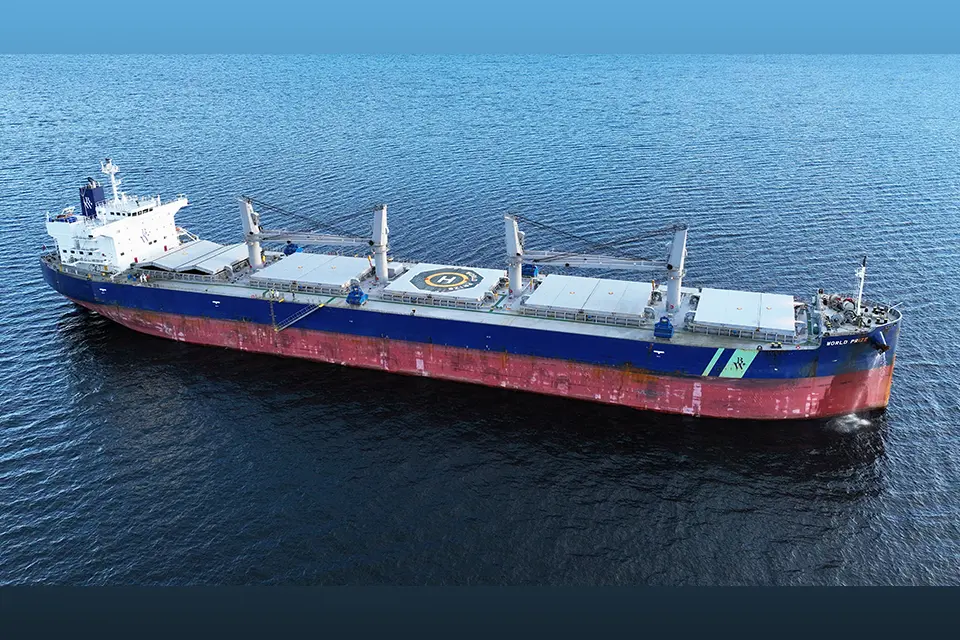
The United Kingdom’s Marine Accident Investigation Branch (MAIB) has officially published its comprehensive accident investigation report regarding the tragic man overboard incident that claimed the life of a crew member aboard the Isle of Man-registered bulk carrier World Prize. The fatal event, which occurred on October 14, 2025, has reignited critical industry-wide discussions surrounding open-ocean safety protocols, emergency response times, crew exhaustion, and the inherent risks faced by seafarers operating massive commercial vessels in dynamic marine environments.
The investigation was conducted by the MAIB acting on behalf of the Isle of Man Administration. This jurisdictional cooperation is facilitated by an established Memorandum of Understanding (MoU) between the MAIB and the Red Ensign Group Category 1 registries, which include the Isle of Man, the Cayman Islands, Bermuda, and Gibraltar. Through this cooperative framework, the UK’s premier marine accident watchdog lends its extensive technical expertise, forensic resources, and investigative independence to support flag states within the Red Ensign Group in maintaining the highest standards of maritime safety and regulatory compliance.
While the full report—accessible via the official government portal—outlines the exhaustive sequence of events, operational factors, and subsequent safety actions taken by the vessel’s operators, the broader implications of the World Prize tragedy extend far beyond a single vessel or a solitary maritime administration. This incident serves as a sobering reminder of the unforgiving nature of the marine environment and underscores the relentless vigilance required to protect human life aboard commercial shipping fleets navigating the globe’s most treacherous waters.

Detailed Chronology of Events
The Voyage and Operational Context
On the morning of October 14, 2025, the World Prize, a large bulk carrier flying the flag of the Isle of Man, was underway on a routine commercial voyage. Operating under standard maritime protocols, the vessel’s crew was engaged in routine maintenance and navigational duties typical for a transoceanic bulk carrier. The weather conditions, sea state, and operational tempo initially presented no immediate, out-of-the-ordinary hazards, though the open ocean inherently demands strict adherence to Personal Protective Equipment (PPE) mandates and safety harnesses when personnel work near unprotected deck edges.
The Critical Incident
At a yet-to-be fully detailed juncture during the shift, a crew member found themselves working on the open deck of the World Prize. According to the MAIB’s findings, a catastrophic failure in either positioning, environmental safeguarding, or procedural compliance led to the individual falling overboard into the open sea.
The transition from a secure deck environment to a man overboard (MOB) situation happens in mere fractions of a second. However, the cascading sequence of reactions required to save a life in the open ocean relies on instantaneous detection, immediate alarm raising, and flawless execution of recovery drills. In the case of the World Prize, the initial loss of the crew member triggered an immediate crisis response from the bridge team and off-duty crew members alike.
Emergency Response and Search Operations
Upon the realization that a crew member was in the water, the bridge team executed immediate emergency maneuvers, including sounding the general and man overboard alarms, releasing lifebuoys equipped with self-igniting lights and smoke signals, and marking the vessel’s GPS position to establish a datum point for the search and rescue (SAR) grid.
Despite the prompt initiation of recovery protocols—involving turning the massive bulk carrier around, deploying rescue watercraft, and scanning the ocean surface under harrowing conditions—the sheer scale of the ocean, combined with factors such as drift vectors, sea state, and visibility, severely hampered the operation. External maritime rescue coordination centers were alerted, and neighboring vessels, along with specialized aviation assets where available, were mobilized to assist in the exhaustive search grid.
Tragically, despite the concerted efforts of the ship’s crew and coordinated international search and rescue authorities, the operation transitioned from a rescue mission to a recovery effort. The crew member’s life could not be saved, highlighting the terrifyingly narrow window of survival for individuals who fall overboard from large commercial vessels into deep, cold, or turbulent waters.
Supporting Context & Metrics: The Global Threat of Man Overboard Incidents
To fully appreciate the gravity of the World Prize incident, it is essential to contextualize it within the broader landscape of maritime safety metrics. Man overboard incidents represent one of the most feared and lethal emergencies in the commercial shipping sector.
Statistical Realities of Life at Sea
According to historical data compiled by maritime safety organizations, including the International Maritime Organization (IMO) and various flag-state investigators, man overboard scenarios account for a disproportionate percentage of fatalities at sea. While cargo shifts, engine failures, and structural fires present catastrophic vessel risks, personal falls from decks, gangways, and accommodation ladders remain leading causes of individual fatalities among seafarers.
| Metric Category | Industry Average / Context | World Prize Incident Specifics |
|---|---|---|
| Primary Cause of Death | Drowning, hypothermia, physical trauma | Open-ocean fall from bulk carrier |
| Recovery Window | Often under 10–15 minutes in cold water | Dependent on drift, sea state, and detection time |
| Investigating Body | MAIB (on behalf of Isle of Man Administration) | UK MAIB via Red Ensign Group MoU |
| Vessel Type | Bulk Carrier (Global Fleet) | Isle of Man Registered Commercial Bulk Carrier |
The Mechanics of Vulnerability on Bulk Carriers
Bulk carriers like the World Prize are characterized by expansive deck layouts, massive hatch covers, and high freeboards. When crew members are required to perform routine maintenance—such as chipping rust, painting, securing cargo gear, or checking ballast tanks—they often operate in exposed areas subject to wind-shear, sea spray, and sudden vessel movements.
- High Freeboard Challenges: Recovering a person from the water onto a vessel with a high freeboard (the distance from the waterline to the main deck) is physically demanding and mechanically complex. Standard rescue boats or scramble nets must be deployed with absolute precision.
- Fatigue and Human Factors: Long working hours, watchkeeping schedules, and the physical toll of manual labor at sea significantly degrade cognitive alertness and motor coordination. Fatigue is frequently cited by the MAIB as a latent root cause in occupational accidents.
- Environmental Factors: Unpredictable swells, wind gusts, and sudden weather shifts can compromise the footing of even the most experienced seafarers, making continuous lifeline usage non-negotiable yet occasionally neglected under time pressure.
Official Statements and Institutional Roles
The Role of the MAIB and the Red Ensign Group
The investigation into the World Prize tragedy was spearheaded by the UK Marine Accident Investigation Branch. Operating independently of commercial, political, or regulatory pressures, the MAIB’s statutory purpose is to determine the circumstances and causes of marine accidents with the sole objective of improving safety at sea—not to apportion blame or liability.
Because the World Prize is registered in the Isle of Man, the investigation was conducted under the auspices of the Isle of Man Administration. This partnership is anchored by the formal Memorandum of Understanding (MoU) between the MAIB and the Red Ensign Group Category 1 registries (Isle of Man, Cayman Islands, Bermuda, and Gibraltar). This collaborative framework ensures that smaller or crown-dependent registries have access to world-class investigative resources, forensic naval architecture, and human factors analysis, thereby raising the safety standards across the entire British shipping ecosystem.
Accessing the Full Report
Maritime professionals, safety managers, shipowners, and researchers seeking granular technical details can access the complete documentation through the official government portal via the published link: MAIB Report on the Man Overboard from the Bulk Carrier World Prize.
The report contains a comprehensive breakdown of the sequence of events, an analysis of the safety management system (SMS) in place aboard the vessel, human factors contributions, and the specific corrective actions taken by the ship managers in the wake of the tragedy.
Future Outlook: Industry Implications and Preventive Horizons
The publication of the World Prize accident investigation report must not merely serve as a retrospective accounting of a tragedy; it must act as a catalyst for proactive change across the international maritime sector.
Enhancing Technological Safeguards
The maritime industry is witnessing a rapid evolution in safety technology. Future outlooks within ship management emphasize the integration of next-generation man overboard detection and tracking systems:
- Personal Locator Beacons (PLBs): Mandating that every crew member working on deck wear an integrated AIS-enabled or DSC-enabled PLB attached to their work vest can drastically reduce search times by transmitting precise GPS coordinates directly to the ship’s bridge the moment the device hits the water.
- Automated Vision Systems: Emerging artificial intelligence (AI) and infrared camera systems mounted on vessel superstructures are being trialed to automatically detect objects falling overboard, bypassing human reliance on visual line-of-sight lookouts.
Strengthening Safety Culture and Procedural Compliance
Technological upgrades, however, are only as effective as the safety culture governing their use. The lessons emerging from the World Prize investigation reinforce the need for a zero-tolerance approach to complacency regarding personal protective equipment.
Ship operators, safety officers, and masters must continuously evaluate their Safety Management Systems (SMS) to ensure that:
- Dynamic Risk Assessments are genuinely performed before any over-side or near-edge work commences.
- Fall Arrest Systems are rigorously inspected, maintained, and enforced without exception, even during tight operational turnaround times.
- Drill Frequency and Realism are elevated, ensuring that crew members train regularly for rapid deployment of rescue craft under simulated adverse weather conditions.
Conclusion
The loss of a life aboard the World Prize on October 14, 2025, is a profound tragedy that leaves grieving families, colleagues, and an entire maritime community grappling with its absence. By laying bare the systemic and operational vulnerabilities that contributed to this disaster, the MAIB report provides the blueprint necessary to prevent future recurrences. It is now incumbent upon shipowners, operators, regulatory bodies, and seafarers alike to heed the lessons of the World Prize, transforming hard-earned insights into permanent, life-saving standards across the global oceans.
Media Enquiries and Official Contact Information
For accredited journalists, broadcast networks, and maritime media outlets seeking further information regarding the MAIB investigation, the following official communication channels remain open:
- Office Hours Media Enquiries: 01932 440015 (Telephone only, available during standard operating hours)
- Out of Hours Media Enquiries: 0300 7777878 (Dedicated emergency line for urgent journalistic inquiries outside of normal office hours)