






Executive Overview
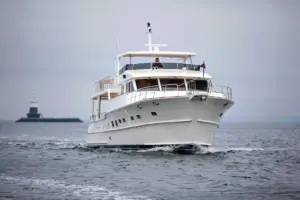
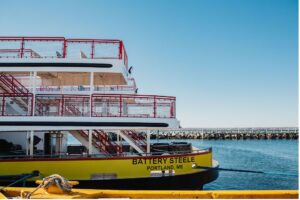
The waters of the Atlantic Ocean are currently carrying a vessel that represents a generational leap forward for public transportation in northern New England. The Battery Steele—Casco Bay Lines’ highly anticipated, state-of-the-art flagship ferry—has officially commenced its historic voyage up the New England coastline toward its permanent home in Portland, Maine. Measuring 164 feet in length, this robust steel vessel is far more than a routine fleet upgrade; it is a pioneering engineering marvel. As one of the very first public passenger ferries in the United States to utilize a cutting-edge diesel-electric hybrid propulsion system powered by advanced battery technology, the Battery Steele stands at the vanguard of a national movement toward decarbonizing domestic maritime operations.
Set to officially dock in Portland later this summer, the ferry will undergo a rigorous phase of final commissioning, regulatory inspections, and comprehensive crew training before welcoming its first passengers in the fall. Once operational, it will primarily service the vital, high-traffic commuter and tourism route connecting downtown Portland to Peaks Island, eventually stepping in to replace the aging Machigonne II.
Beyond its sleek design and advanced engineering, the Battery Steele embodies a powerful convergence of local heritage and environmental stewardship. Named in honor of the historic military fortification on Peaks Island—once one of the largest coastal artillery installations in the United States—the vessel bridges decades of local history with modern ecological responsibility. By transitioning away from conventional diesel-mechanical operations to a predominantly battery-powered transit model, Casco Bay Lines is poised to slash its carbon footprint by an estimated 800 metric tons of carbon dioxide annually. This comprehensive review examines the journey of the Battery Steele, the technological innovations powering its maiden voyage, the historical significance of its namesake, and the broader implications of its deployment for the future of sustainable coastal transportation.
Detailed Chronology: From Rhode Island Shipyards to the Open Atlantic
The realization of the Battery Steele is the culmination of years of meticulous strategic planning, naval architecture, and inter-state maritime collaboration. The project’s timeline highlights the dedication required to bring a first-of-its-kind vessel from blueprint to reality.
Fleet Evaluation and Conception
The journey began long before the first plate of steel was cut. Recognizing the aging profile of their existing fleet and the pressing need to align with municipal and state climate goals, Casco Bay Lines initiated a comprehensive Fleet Evaluation Project. The objective was clear: design a vessel capable of meeting the rigorous demands of year-round Maine weather, heavy commuter traffic, and vehicle transport, while drastically reducing greenhouse gas emissions. Partnering with renowned naval architects at the Elliott Bay Design Group, engineers set out to design a ferry optimized specifically for the navigational and environmental realities of Casco Bay.
Construction and the North Kingstown Launch
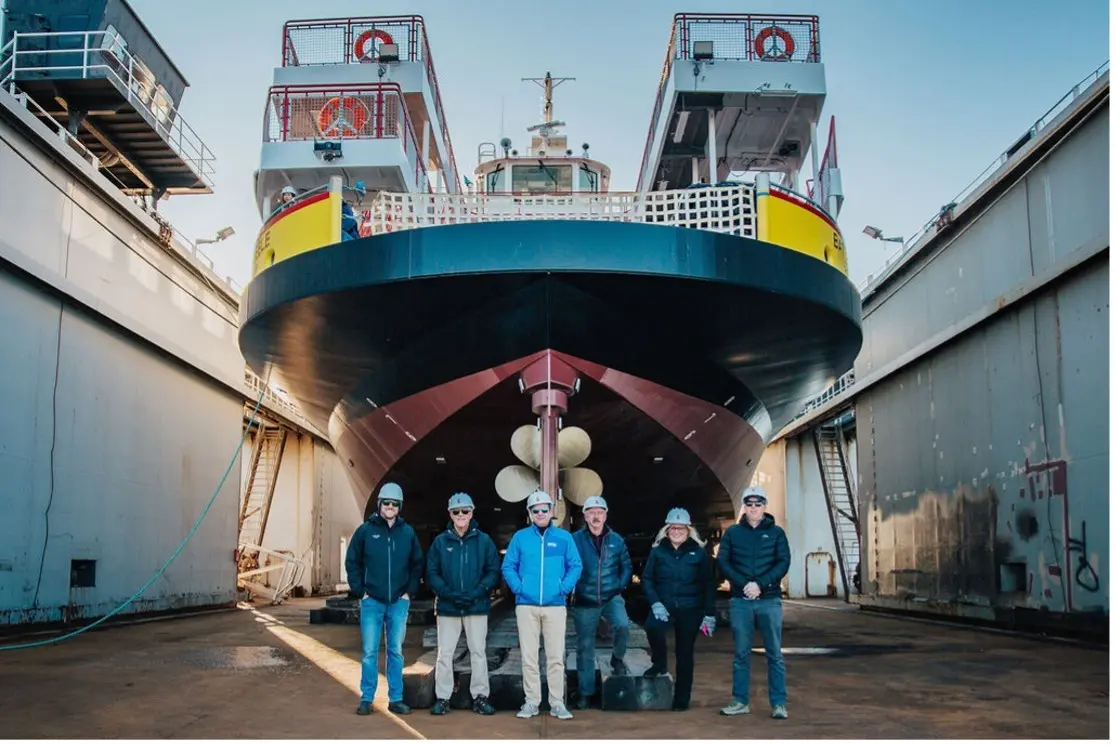
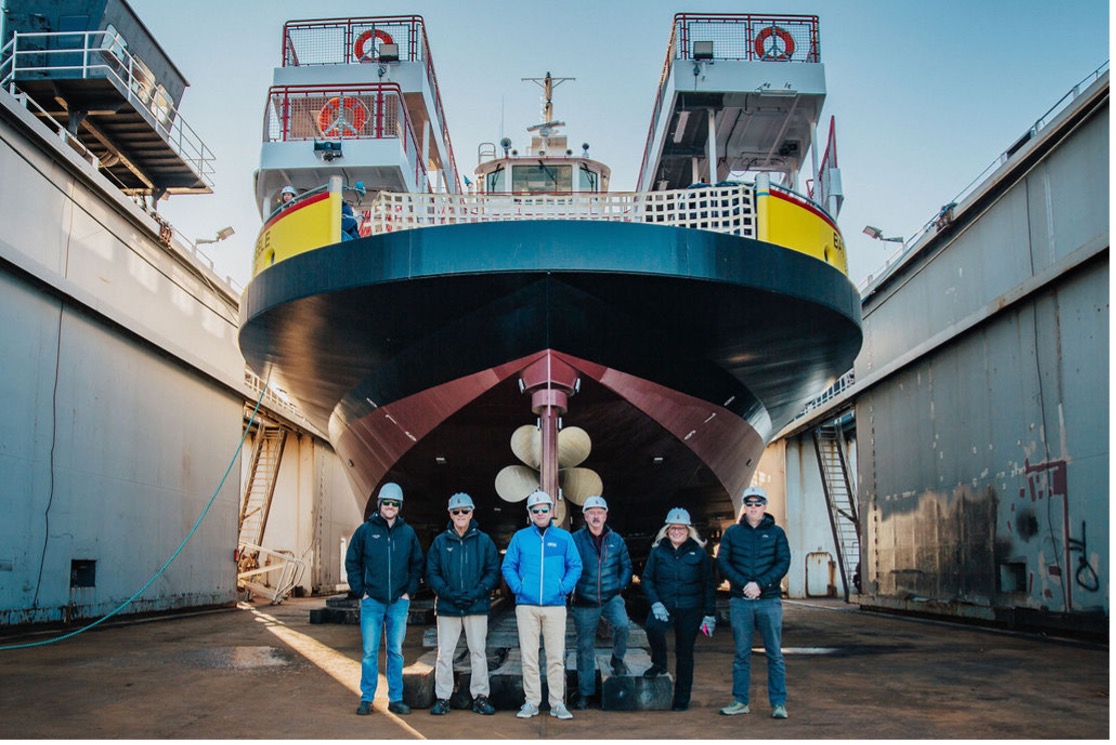
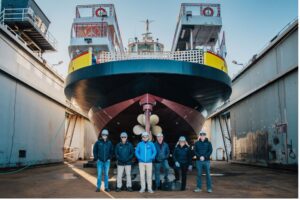
With architectural designs finalized, construction rights were awarded to Senesco Marine, a premier shipyard located in North Kingstown, Rhode Island, known for its exceptional craftsmanship and adherence to rigorous maritime standards. Over the course of many months, skilled shipwrights, welders, and electrical engineers brought the vessel to life, integrating complex hybrid power systems into a durable steel hull.
The milestone moment arrived in early April, when representatives from Casco Bay Lines traveled to Rhode Island for the official vessel launch. In keeping with maritime tradition, the event was celebrated with the ceremonial smashing of a champagne bottle across the hull, christening the ship Battery Steele. This event marked not only the successful structural completion of the ferry but also a major milestone for New England shipbuilding, establishing Senesco Marine and Casco Bay Lines as early adopters of commercial electric marine propulsion.

The Atlantic Transit and Summer Arrival
Following final outfitting and dockside testing in Rhode Island, the Battery Steele recently entered the Atlantic Ocean. Its current transit up the coast of New England represents a crucial delivery phase managed by experienced marine delivery crews. Upon its arrival in Portland later this summer, the vessel will transition into its final preparation phase. This will include shoreside infrastructure integration—specifically linking with newly installed high-capacity charging systems at the Portland terminal—alongside extensive navigational trials and mandatory crew certification processes. Fall 2024 remains the targeted window for the ferry to officially integrate into the active Casco Bay Lines rotation, carrying both passengers and vehicles on the iconic Peaks Island run.
Supporting Context & Metrics: Engineering a Revolution on Casco Bay
The technical specifications of the Battery Steele underscore a massive leap forward in maritime engineering. For decades, passenger ferries have relied heavily on traditional diesel-mechanical engines that, while reliable, generate substantial noise, vibration, and greenhouse gas emissions. The Battery Steele redefines this paradigm through its sophisticated diesel-electric hybrid architecture.
Propulsion and Energy Architecture
At the heart of the vessel’s propulsion system is an advanced configuration of high-capacity marine-grade lithium-ion batteries paired with clean-burning backup diesel generators. Unlike traditional setups where diesel engines turn the propellers directly, the Battery Steele’s system utilizes electrical energy stored in its onboard battery banks to drive the electric propulsion motors.
This design affords the vessel exceptional operational flexibility:
- Zero-Emission Docking and Transit: The ferry is designed to operate primarily on battery power during its standard runs across Casco Bay. This significantly curtails the immediate discharge of pollutants in and around the sensitive marine ecosystems of Portland Harbor and Peaks Island.
- Shoreside Charging Infrastructure: To support its daily schedule, the vessel will utilize shoreside charging stations installed at the Portland terminal. These chargers will replenish the battery banks during passenger loading and unloading periods, ensuring the vessel maintains a full charge throughout the operating day.
- Redundancy and Reliability: Recognizing the severe winter weather conditions unique to Maine, onboard backup generators are integrated into the system. These generators ensure absolute operational reliability, guaranteeing that the vessel can maintain its schedule even during extended periods of heavy grid demand or severe weather.
Environmental Impact and Community Benefits
The environmental dividends of this technological shift are profound. Casco Bay Lines projects that the Battery Steele will prevent up to 800 metric tons of carbon dioxide ($CO_2$) emissions annually. To put this figure into perspective, it is equivalent to removing approximately 170 passenger vehicles from the road each year.
Beyond raw carbon metrics, the transition yields immediate, tangible improvements for passengers, crew, and shoreline residents:
- Acoustic Mitigation: Electric propulsion systems operate with substantially less noise and vibration than traditional diesel engines. Commuters and tourists will experience a noticeably quieter, smoother ride across the bay.
- Air Quality Improvements: Eliminating the constant rumble and exhaust fumes of idling diesel engines at docks directly improves local air quality for residents and visitors on both the Portland waterfront and Peaks Island.
- Economic and Structural Longevity: Built with a durable steel hull measuring 164 feet, the vessel is engineered to withstand the demanding wake, ice, and tidal conditions of the North Atlantic, ensuring decades of reliable service for the Casco Bay community.
Official Statements & Local Significance
The naming of the Battery Steele is far more than a nod to maritime tradition; it is a deliberate tribute to the cultural and historical fabric of Peaks Island.
Honoring a Historical Landmark
Constructed during World War II as part of the Harbor Defenses of Portland, Battery Steele was one of the largest and most heavily armed coastal artillery installations in the United States. Designed to house two massive 16-inch naval guns capable of firing projectiles miles out to sea, the fortified concrete structure stands as a monumental reminder of a turbulent global era.
Over the decades following its decommissioning, the site evolved. Through dedicated community preservation efforts initiated in the 1990s, the former military installation transformed from a restricted zone into a cherished public open space. Today, Battery Steele serves as a sanctuary for outdoor exploration, historical reflection, and community connection.
Perspectives from Casco Bay Lines Leadership
In statements released surrounding the vessel’s construction and launch, leadership at Casco Bay Lines emphasized the emotional and philosophical alignment between the ferry’s namesake and its mission.
"Naming our newest vessel Battery Steele was a deliberate choice to honor our region’s rich history while boldly facing our environmental future," noted project representatives during the Rhode Island christening ceremony. "The historic fort represents resilience, community pride, and a deep connection to the land and water of Peaks Island. By bestowing this name upon our most advanced, eco-friendly ferry, we are channeling that exact same spirit—honoring our past while investing in a cleaner, more sustainable future for Casco Bay."
Community stakeholders and Peaks Island residents have similarly embraced the vessel’s identity, viewing the name as a validation of the island’s unique character and historical importance within the broader Greater Portland metropolitan area.
Future Outlook: Setting the Standard for American Maritime Transit
The deployment of the Battery Steele marks a watershed moment not only for Casco Bay Lines, but for the broader landscape of public maritime transportation in the United States. As municipal transit authorities nationwide face increasing pressure to meet aggressive carbon reduction mandates, the successful launch and operation of a high-capacity electric-hybrid ferry in a demanding New England marine environment serves as a critical blueprint for the industry.
Transforming the Casco Bay Fleet
As the Battery Steele completes its transit, arrives in Portland, and undergoes final commissioning ahead of its autumn rollout, its performance will be closely monitored by transportation officials across the country. Once integrated into the daily route between Portland and Peaks Island—and ultimately assuming the workload of the retiring Machigonne II—the vessel will prove the commercial and operational viability of large-scale battery-electric marine transit.
Furthermore, the integration of shoreside charging infrastructure at the Portland terminal establishes a foundational framework that can be expanded. As Casco Bay Lines continues its long-term fleet evaluation and modernization initiatives, the lessons learned from the Battery Steele project will undoubtedly inform the future replacement and retrofitting of additional vessels in the fleet.
A Beacon of Sustainable Innovation
Ultimately, the story of the Battery Steele is one of harmonious integration: bridging the gap between historical heritage and cutting-edge technology, between the industrial demands of a busy ferry service and the ecological fragility of Casco Bay.
As passengers board the vessel this fall for the brisk crossing between downtown Portland and Peaks Island, they will step onto a floating testament to forward-thinking engineering. In an era where the impacts of climate change are increasingly visible along our coastlines, the Battery Steele offers a tangible beacon of hope—proving that with vision, collaboration, and innovative design, our historic waterways can be preserved and protected for generations to come.
For continuous updates regarding the progress of the Battery Steele, delivery schedules, and detailed insights into the overarching Fleet Evaluation Project, community members and transit enthusiasts are encouraged to visit the official Casco Bay Lines Fleet Evaluation Project page.