







Executive Overview
A formidable and persistent nor’easter battering the United States Atlantic seaboard has thrown regional maritime and cruise operations into disarray. The severe weather system, characterized by gale-force winds, heavy precipitation, and turbulent marine conditions stretching from Virginia up to Canada and across to Bermuda, has forced major adjustments across multiple cruise lines. Among the hardest hit is Royal Caribbean International, which has seen at least three of its prominent vessels significantly disrupted.
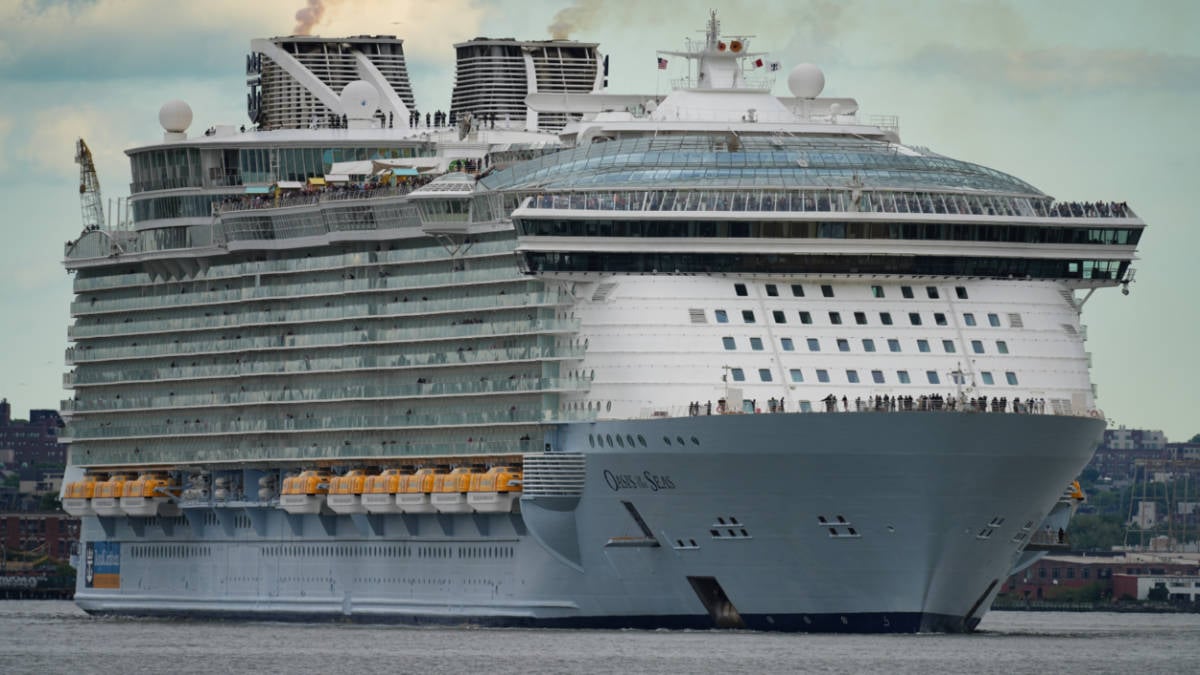
The most recent casualty of the storm’s wrath is the Oasis of the Seas, one of the largest and most technologically advanced cruise ships in the world. Returning from a 7-night Bahamas cruise that originally departed the New York metropolitan area on Sunday, September 20, 2026, the 5,606-guest behemoth has been forced to delay its return to Cape Liberty, New Jersey, by a full 10 hours. Rather than docking during the early morning hours, the mega-ship must now contend with a compressed turnaround schedule that impacts thousands of disembarking passengers and threatens to cascade delays onto the subsequent voyage.
This disruption is far from an isolated incident. The ferocious storm has paralyzed local port infrastructures and created treacherous sea states, forcing cruise executives to make difficult real-time decisions regarding passenger safety, itinerary rerouting, and logistical management. From shortened calls in Bermuda to radical southward pivots toward the Bahamas, the nor’easter has underscored the vulnerability of even the most sophisticated modern cruise liners to extreme coastal weather events.
As cruise lines scramble to mitigate passenger inconvenience, offer financial compensations, and recalibrate travel logistics, the maritime industry faces a stark reminder of the unpredictable nature of autumnal Atlantic weather systems. This comprehensive report details the chronology of the Oasis of the Seas delay, the cascading effects on passenger travel, financial reimbursement protocols, and the broader fleet-wide disruptions impacting the cruise sector along the Eastern Seaboard.
Detailed Chronology: The Oasis of the Seas Disruption
The sequence of events leading to the delayed arrival of the Oasis of the Seas began to unfold late in the week as meteorological models confirmed the intensification of the nor’easter off the U.S. East Coast. By Saturday, September 26, 2026, as the ship prepared for the final leg of its round-trip voyage from Cape Liberty, New Jersey, unfavorable weather and compromised port operations made an on-time arrival untenable.
Notification and Onboard Communications
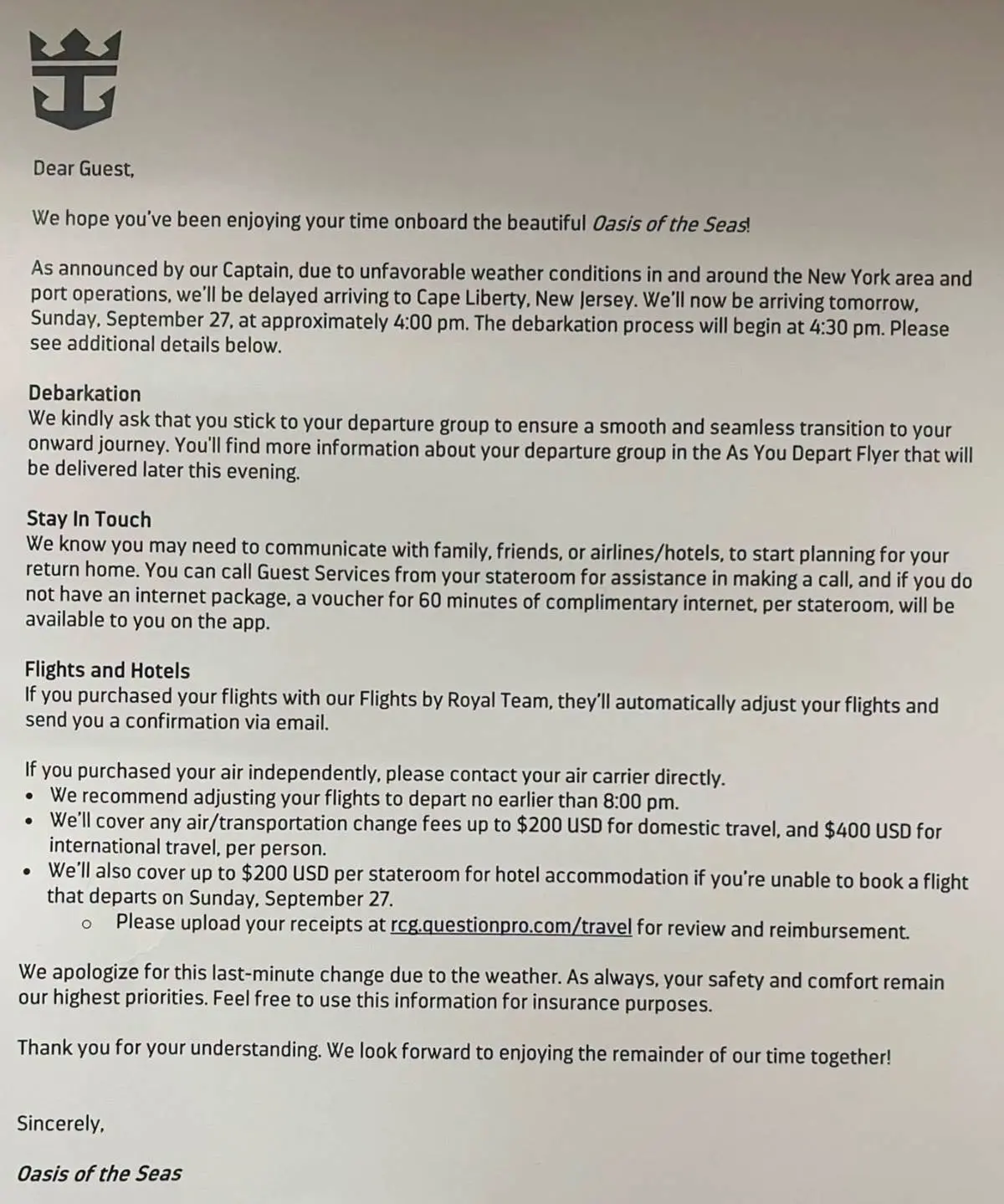
Passengers currently vacationing onboard were officially notified of the schedule adjustment on Saturday afternoon. The confirmation was delivered simultaneously through public address (PA) announcements made by the ship’s master and via formal letters delivered directly to individual staterooms.
The official Royal Caribbean notification read:
"Due to unfavorable weather conditions in and around the New York area and port operations, we’ll be delayed arriving to Cape Liberty, New Jersey. We’ll now be arriving tomorrow, Sunday, September 27, at approximately 4:00 pm. The debarkation process will begin at 4:30 pm."
Originally slated to glide past the Verrazzano-Narrows Bridge and berth at Cape Liberty Cruise Port at approximately 6:00 AM on Sunday, the ship’s tardy arrival forced a complete overhaul of the terminal’s processing schedule.
The Logistical Nightmare of Turnaround Day
Managing a prompt turnaround for a vessel carrying upwards of 5,600 guests is a monumental logistical undertaking under normal circumstances. Compressing the debarkation and embarkation window by 10 hours transforms a smooth operation into a high-pressure race against the clock.
With debarkation now delayed until 4:30 PM, port personnel and shipboard crew members face an extraordinarily tight timeline to clear the vessel of its current guests, execute deep sanitization protocols, provision the ship, and process the incoming wave of passengers for the subsequent 7-night Bahamas itinerary. To facilitate a streamlined process, Royal Caribbean strongly urged all guests to strictly adhere to their assigned debarkation groupings and time slots.
Passenger Communication and Connectivity Support
Recognizing that a 10-hour delay would throw post-cruise travel itineraries into chaos, Royal Caribbean implemented a series of immediate support measures for those onboard:
- Complimentary Internet Access: Guests without an existing internet package were provided a special promotional voucher granting 60 minutes of complimentary Wi-Fi access per stateroom via the official Royal Caribbean app.
- Direct Communication Access: Recognizing that digital interfaces might not suffice for complex travel emergencies, passengers were permitted to contact Guest Services directly from their stateroom telephones to coordinate urgent phone calls to airlines and family members.
Supporting Context & Metrics: Navigating Travel Adjustments and Financial Relief
A delay of this magnitude inevitably creates a domino effect for travelers’ flights, ground transportation, and hotel reservations. To cushion the blow for affected passengers, Royal Caribbean established clear guidelines and robust financial reimbursement frameworks for both independent and cruise-line-booked travel.
Airfare Adjustments: Cruise-Booked vs. Independent
The management of flight alterations depends heavily on how the passenger booked their air transportation:
- Fly/Cruise Packages: For guests who purchased their airfare directly through Royal Caribbean’s air program, the cruise line took proactive measures. Flights are being automatically adjusted to align with the ship’s new arrival time, with confirmation details dispatched directly to individual passenger email addresses.
- Independent Airfare: Passengers who arranged their own flights face the burden of contacting their respective airlines directly. Royal Caribbean strongly advised independent travelers to seek out and secure replacement flights scheduled to depart no earlier than 8:00 PM on Sunday evening to ensure adequate transit time from Cape Liberty to regional airports such as Newark Liberty International (EWR), John F. Kennedy International (JFK), or LaGuardia (LGA).
Comprehensive Financial Compensation and Reimbursements
To alleviate the financial anxiety associated with missed flights and unexpected overnight stays, Royal Caribbean instituted a generous reimbursement policy covering change fees and lodging:
| Expense Category | Maximum Reimbursement Limit | Conditions / Details |
|---|---|---|
| Domestic Flight Change Fees | Up to $200 (USD) per person | Applicable to domestic flights impacted by the Sunday arrival delay. |
| International Flight Change Fees | Up to $400 (USD) per person | Applicable to international flights impacted by the Sunday arrival delay. |
| Hotel Accommodations | Up to $200 per stateroom | Available for guests unable to secure flights departing on Sunday, September 27, requiring an overnight stay in the New Jersey/New York area. |
These financial safeguards are designed to ensure that guests are not unfairly penalized out-of-pocket for weather-induced disruptions beyond their control.
Impact on the Subsequent Sailing
The ripple effects of the Oasis of the Seas delay do not stop at disembarkation; they directly impact the upcoming voyage as well. The ship’s scheduled Sunday, September 27 departure kicks off another weeklong Bahamas cruise featuring scheduled calls at Port Canaveral, Florida, as well as Nassau and Royal Caribbean’s private island destination, Perfect Day at CocoCay.
While cruise executives have confirmed that the embarkation process for the new set of guests will also be delayed, precise boarding times and potential itinerary modifications had not been formally finalized at the time of publication. The cruise line has committed to communicating any structural changes to incoming passengers as soon as updated logistical plans are verified.
Fleet-Wide Impact: Three Royal Caribbean Ships Upended
While the plight of the Oasis of the Seas has captured significant attention, it represents only one facet of a broader operational crisis for Royal Caribbean. At least three major vessels within the fleet have been forced to implement radical itinerary changes, extended stays, or total course reversals to evade the ferocity of the nor’easter.
1. Independence of the Seas – Chained to the Pier in New Jersey
Independence of the Seas was originally scheduled to depart Cape Liberty, New Jersey, on Saturday, September 26, embarking on a 5-night autumn getaway featuring an extended overnight stay in the picturesque destination of Bermuda.
However, with gale-force winds and churning seas threatening the vessel’s safe transit across the open Atlantic, cruise leadership elected to keep the ship safely secured to the pier in New Jersey through Saturday night. The vessel remained docked overnight, delaying its departure to Sunday, September 27, and resulting in a substantially shortened call in Bermuda.
2. Vision of the Seas – A Dramatic Southward Pivot
Perhaps the most dramatic operational pivot was executed by Vision of the Seas. The ship was originally scheduled to set sail on Thursday, September 24, from Baltimore, Maryland, on a 9-night Canada and New England cruise—an itinerary custom-designed to showcase the changing autumn foliage of the Northeast.
Anticipating severe storm conditions right along the northern coastal track, Royal Caribbean made the preemptive decision to hold the ship in Baltimore overnight. When Vision of the Seas finally slipped away from the pier on Friday, September 25, it executed a complete about-face: abandoning the New England and Canada itinerary entirely to race south toward the sun-drenched waters of the Bahamas. By pivoting thousands of miles away from the storm’s path, the cruise line successfully prioritized guest comfort and safety, substituting chilly gales for tropical warmth.
Industry-Wide Aftershocks
Royal Caribbean is not alone in grappling with the meteorological anomaly. Major players across the commercial cruise sector—including Carnival Cruise Line and Norwegian Cruise Line—have confirmed various itinerary modifications, slow-downs, and storm-avoidance reroutings. Furthermore, maritime analysts note that luxury and niche operators such as Cunard, Virgin Voyages, Silversea, and Celebrity Cruises are closely monitoring sea states from Virginia up to Atlantic Canada and Bermuda, ready to alter course at a moment’s notice.
Future Outlook & Industry Implications
The disruption caused by this powerful nor’easter serves as a timely reminder of the vulnerabilities inherent in maritime tourism during the transitional shoulder seasons. As climate patterns shift and weather systems display increased volatility, cruise lines are increasingly relying on advanced meteorological forecasting, flexible deployment models, and robust communication frameworks to safeguard their fleets.
Technological and Logistical Adaptations
Modern cruise ships are marvels of marine engineering equipped with advanced radar, satellite communication arrays, and stabilizer systems designed to weather formidable seas. However, as the events involving Oasis of the Seas, Independence of the Seas, and Vision of the Seas demonstrate, the primary bottleneck during severe weather is frequently not the structural seaworthiness of the vessel itself, but rather port infrastructure, safe harbor access, and turnaround logistics.
When a mega-ship like Oasis of the Seas is delayed by 10 hours, it tests the limits of port authority coordination, tugboat availability, customs processing, and stevedore scheduling. Moving forward, major homeports along the U.S. Eastern Seaboard may need to invest in more resilient infrastructure and flexible scheduling protocols to handle weather-induced bunching of maritime traffic.
Managing Passenger Expectations in the Era of Climate Volatility
For travelers, the incident highlights the critical importance of travel insurance and flexible booking practices. Cruise lines are increasingly expected to absorb secondary costs—such as the $200 hotel and $200–$400 flight change reimbursements demonstrated by Royal Caribbean in this instance. Nevertheless, the stress of interrupted vacations, missed work commitments, and complex flight re-bookings remains a persistent challenge for the industry.
As the nor’easter gradually dissipates and marine conditions normalize along the Atlantic coast, the affected Royal Caribbean vessels are expected to resume their standard operational tempos. Yet, the week of September 20–27, 2026, will long be remembered as a masterclass in crisis management, proving that when Mother Nature flexes her muscles across the Atlantic, adaptability is the ultimate currency at sea.