






Executive Overview
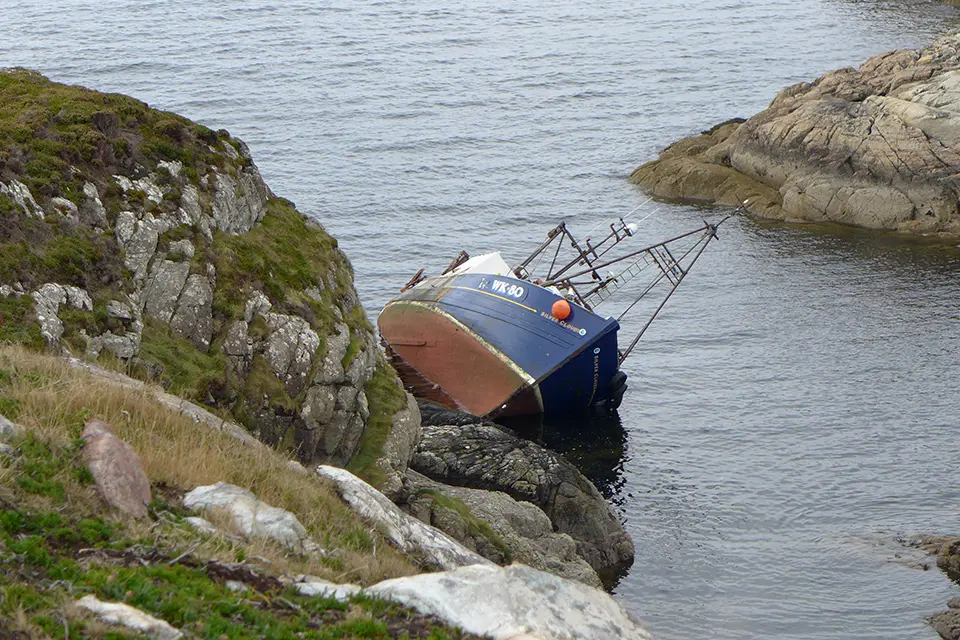
Maritime authorities have officially released their comprehensive accident investigation report detailing the harrowing sequence of events that led to the grounding and ultimate catastrophic loss of the Scottish commercial fishing vessel Silver Cloud II (WK 80). The incident, which unfolded in the early hours of 14 October 2025, occurred near Rubha Rodha, in the vicinity of Lochinver, Scotland—a stretch of coastline known for its unforgiving underwater topography, rapid tidal streams, and volatile weather patterns.
The loss of the Silver Cloud II marks yet another sobering milestone in the ongoing efforts to safeguard commercial fishing crews operating within the demanding waters of the United Kingdom. While the primary directive of the Marine Accident Investigation Branch (MAIB) and associated regulatory bodies is the identification of systemic vulnerabilities rather than the attribution of blame or civil/criminal liability, the findings of this report offer critical lessons for the wider maritime community.
This in-depth investigative feature examines the newly published documentation, unpacking the operational context of the voyage, the immediate factors that precipitated the grounding, the subsequent emergency response, and the broader implications for navigational safety and vessel management within the UK fishing fleet. By scrutinizing the anatomy of this maritime casualty, industry stakeholders hope to prevent similar tragedies from recurring along the perilous Atlantic approaches of the British Isles.

Detailed Chronology of the Incident
To fully understand how a modern commercial fishing vessel transitions from routine operations to a total hull loss, investigators must reconstruct the timeline with forensic precision. Although the official report outlines the precise sequencing of events leading up to the grounding at Rubha Rodha on 14 October 2025, the narrative is built upon bridge logs, electronic chart plotters, vessel monitoring systems (VMS), and testimonies from the surviving crew members.
Preparations and Departure
The Silver Cloud II (WK 80), a well-maintained and commercially active fishing vessel registered in the United Kingdom, had prepared for a routine operational sortie. Commercial fishing in the waters off the northwest coast of Scotland requires rigorous planning due to the intricate geography of sea lochs, hidden reefs, and strong coastal currents. In the hours preceding the incident, the vessel undertook standard pre-departure checks, securing gear, verifying fuel and provisioning, and ensuring that all primary navigational suites were powered and operational.
As the vessel cleared port and set a course toward its designated working grounds near Lochinver, the bridge team operated under typical conditions for the time of year. However, as maritime veterans understand all too well, the transition from open water to coastal navigation demands unremitting vigilance. The intricate coastline around Rubha Rodha presents a complex mosaic of navigational hazards, where minor deviations from a planned track can have instantaneous, irreversible consequences.
The Approach to Rubha Rodha
In the dark, pre-dawn or early morning hours of 14 October 2025, the Silver Cloud II found itself navigating the coastal waters adjacent to Rubha Rodha. Investigators have meticulously mapped the vessel’s trackline during this critical phase, analyzing the interplay between human decision-making, bridge resource management, and automated navigation tools.
As the vessel closed with the shoreline, a confluence of environmental and operational factors began to narrow the margin of safety. Coastal waters in this region are heavily influenced by local bathymetry—shallow ledges and submerged rock formations that lie waiting just beneath the surface. The investigation report sheds light on the specific operational pressures the crew faced as they navigated toward the incident site, examining how course alterations, look-out duties, and the interpretation of radar and electronic chart displays factored into the vessel’s trajectory.
The Grounding Event
At a critical juncture during the transit, the Silver Cloud II made unintended contact with the seabed at Rubha Rodha. The impact was immediate and severe, compromising the integrity of the hull and exposing the vessel’s internal spaces to the relentless ingress of seawater. Groundings of this nature often generate immense structural shockloads, twisting frames, buckling plating, and fracturing internal bulkheads.
Upon realizing that the vessel had grounded, the skipper and bridge crew initiated immediate emergency protocols. In maritime emergencies, the first few minutes are vital. The crew was forced to rapidly assess the extent of the damage, evaluate the stability of the vessel, and determine whether the hull could be refloated or if the situation demanded immediate abandonment.
Subsequent Loss and Abandonment
Despite the crew’s frantic efforts to mitigate flooding, activate bilge pumping systems, and stabilize the vessel, the damage sustained during the initial impact proved insurmountable. The relentless press of the sea, coupled with the vessel’s compromised buoyancy and stability, sealed its fate. The Silver Cloud II was subjected to progressive flooding, leading to a complete loss of electrical power and propulsion.
Faced with the imminent sinking of the vessel and the compounding hazards of a hostile marine environment, the decision was made to abandon ship. Emergency life-saving appliances were deployed, and distress communications were transmitted to HM Coastguard. The successful rescue and evacuation of the crew prevented what could easily have been a catastrophic loss of life, even as the vessel itself slipped beneath the waves. The total loss of the Silver Cloud II left a profound mark on the local fishing community and triggered the comprehensive MAIB investigation that culminated in today’s published findings.
Supporting Context & Metrics
To appreciate the gravity of the Silver Cloud II incident, it is essential to examine the broader operational landscape of the UK fishing industry, historical casualty data, and the specific geographic challenges posed by the waters off Lochinver.
The Perils of the Northwest Scottish Coastline
The northwest coast of Scotland, encompassing Lochinver and the surrounding sea lochs, is internationally renowned for its breathtaking scenery, but it is equally infamous among mariners for its navigational hazards. The coastline is jagged, deeply indented, and exposed to the full fury of Atlantic weather systems. Prevailing winds, heavy swells, and rapid tidal streams complicate every transit, demanding absolute precision from commercial operators.
Navigation in these waters relies heavily on a combination of electronic navigation systems (such as ECDIS, GPS, and radar) and traditional visual pilotage. However, reliance on technology can sometimes foster a false sense of security. Small rocky outcrops, uncharted hazards, and rapid changes in depth require constant cross-referencing and robust bridge teamwork. Rubha Rodha, specifically, has long been recognized as a hazardous obstacle requiring wide berths and meticulous track-keeping.
Fishing Vessel Safety: A Statistical Overview
Commercial fishing remains one of the most hazardous land- or sea-based professions in the world. According to long-term safety data compiled by maritime authorities, fishing vessels experience a disproportionately high rate of fatalities and total losses compared to other sectors of the commercial shipping industry.
- Groundings and Collisions: Navigational accidents, including groundings, contacts, and collisions, account for a significant percentage of reported marine casualties. While many groundings result in minor structural damage, a subset—such as the loss of the Silver Cloud II—escalate rapidly into total hull losses due to the high-energy nature of rocky impacts.
- Human Factors: Extensive research by the MAIB consistently demonstrates that the vast majority of maritime casualties involve human factors. These are rarely attributable to reckless negligence; rather, they are the complex product of fatigue, high workloads, distractions, single-person bridge operations, and lapses in situational awareness.
- Vessel Vulnerability: Fishing vessels are unique in that they must balance the requirements of a stable working platform with cargo-handling capabilities and endurance at sea. When a hull is breached, the presence of open working decks, fish holds, and machinery spaces can accelerate progressive flooding, drastically reducing survival time.
Regulatory Framework and Oversight
The operation of UK-registered fishing vessels is governed by stringent maritime regulations enforced by the Maritime and Coastguard Agency (MCA) and influenced by international conventions. These regulations dictate structural standards, stability criteria, safety equipment carriage requirements, and mandatory training for skippers and crew.
However, regulatory compliance alone cannot eliminate all operational risks. The dynamic nature of fishing means crews frequently push into marginal weather or navigate confined waters under pressure to secure catches. Reports such as the one released today serve as vital diagnostic tools, bridging the gap between statutory rules and the realities of day-to-day operations at sea.
Official Statements
The publication of the accident investigation report has drawn commentary from key figures within the marine safety and search-and-rescue communities. These statements underscore the primary objective of the investigation: fostering a culture of continuous learning and safety enhancement across the fleet.
A senior spokesperson for the Marine Accident Investigation Branch emphasized the thoroughness of the inquiry and the invaluable cooperation of the vessel’s crew, local operators, and HM Coastguard during the evidence-gathering phase:
"The grounding and subsequent loss of the Silver Cloud II is a stark reminder of the unforgiving nature of the marine environment, particularly along challenging coastal routes such as those near Lochinver. Our investigators have worked tirelessly to reconstruct the sequence of events and identify the underlying factors that contributed to this casualty.
"It is crucial to emphasize that our mandate is strictly non-punitive. We do not investigate to assign blame or liability, but rather to understand why accidents happen so that we can prevent them from happening again. The lessons contained within this report regarding passage planning, bridge resource management, and situational awareness are applicable to every vessel operator navigating UK waters. We urge skippers and owners to review these findings closely and apply them to their own operational safety management systems."
Representatives from local fishing associations and safety groups have also echoed these sentiments, highlighting the emotional and economic toll that the loss of a vessel inflicts on tight-knit coastal communities. Industry leaders have stressed that while fishing is inherently perilous, the widespread dissemination of safety lessons remains the most effective tool for protecting lives and livelihoods.
Future Outlook & Recommendations
As the maritime community absorbs the findings of the Silver Cloud II report, attention turns toward proactive measures designed to enhance safety, improve navigational practices, and mitigate the risks associated with coastal fishing operations.
Enhancing Passage Planning and Bridge Management
One of the core takeaways from maritime groundings is the absolute necessity of robust, comprehensive passage planning. Modern electronic navigation systems offer incredible capabilities, but they must be utilized as part of a multi-layered approach to bridge watchkeeping.
- Comprehensive Track Verification: Skippers and bridge teams must ensure that planned routes are thoroughly checked against large-scale charts, accounting for all known navigational hazards, tidal offsets, and contingency anchorages.
- Active Monitoring: The transition from deep water to coastal pilotage requires a heightened state of alert. Utilizing parallel indexing, clearing bearings, and frequent cross-fixes ensures that the vessel remains strictly on its intended track, even in the event of electronic sensor anomalies.
- Bridge Resource Management (BRM): Promoting an open bridge culture where any crew member feels empowered to question the vessel’s heading or speed—regardless of hierarchy—is essential for preventing single-point navigational errors.
Technological Advancements and Safety Equipment
The evolution of marine electronics continues to provide powerful tools for collision avoidance and positional awareness. Enhanced electronic chart display and information systems (ECDIS) featuring automated audible and visual alarms for off-track deviation and shallow water can serve as critical last lines of defense. Furthermore, the mandatory carriage and proper maintenance of Emergency Position-Indicating Radio Beacons (EPIRBs), personal locator beacons (PLBs), and modern life-raft systems remain non-negotiable pillars of crew survival when catastrophic hull breaches occur.
Continuous Training and Safety Culture
Regulatory bodies, training providers, and fishing federations must continue to collaborate on delivering accessible, practical safety training for commercial fishermen. Simulators that replicate coastal navigation hazards, emergency response drills, and damage control exercises help instill muscle memory and preparedness that prove invaluable when crises strike at sea.
Contact and Access Information
For members of the press, maritime professionals, and members of the public wishing to examine the full technical findings, data tables, and safety recommendations, the complete accident investigation report into the loss of the Silver Cloud II (WK 80) is publicly accessible via the official government portal (MAIB Investigation Report).
Media representatives seeking further commentary or official statements regarding this publication may direct telephone enquiries to the designated media lines:
- Office Hours (Monday to Friday): 01932 440015
- Out of Hours / Emergency Media Line: 0300 7777878
As the commercial fishing fleet continues its vital work harvesting the seas around the British Isles, the lessons learned from the Silver Cloud II will stand as a crucial guidepost, ensuring that the sacrifices of the past contribute to a safer, more resilient maritime future.