









Executive Overview
On his first day in office, Mayor Zohran Mamdani stood before New York City and made a sweeping ideological promise. Replacing the "frigidity of rugged individualism with the warmth of collectivism," he vowed that City Hall would actively marshal its institutional power to materially improve the daily lives of everyday New Yorkers. More than seven months into his tenure, that philosophy was put to a peculiar test—one that instantly exposed the fraught intersection of individual choice and systemic government accountability in urban America.
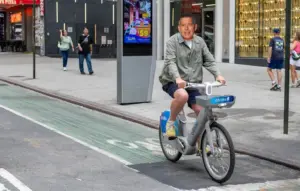
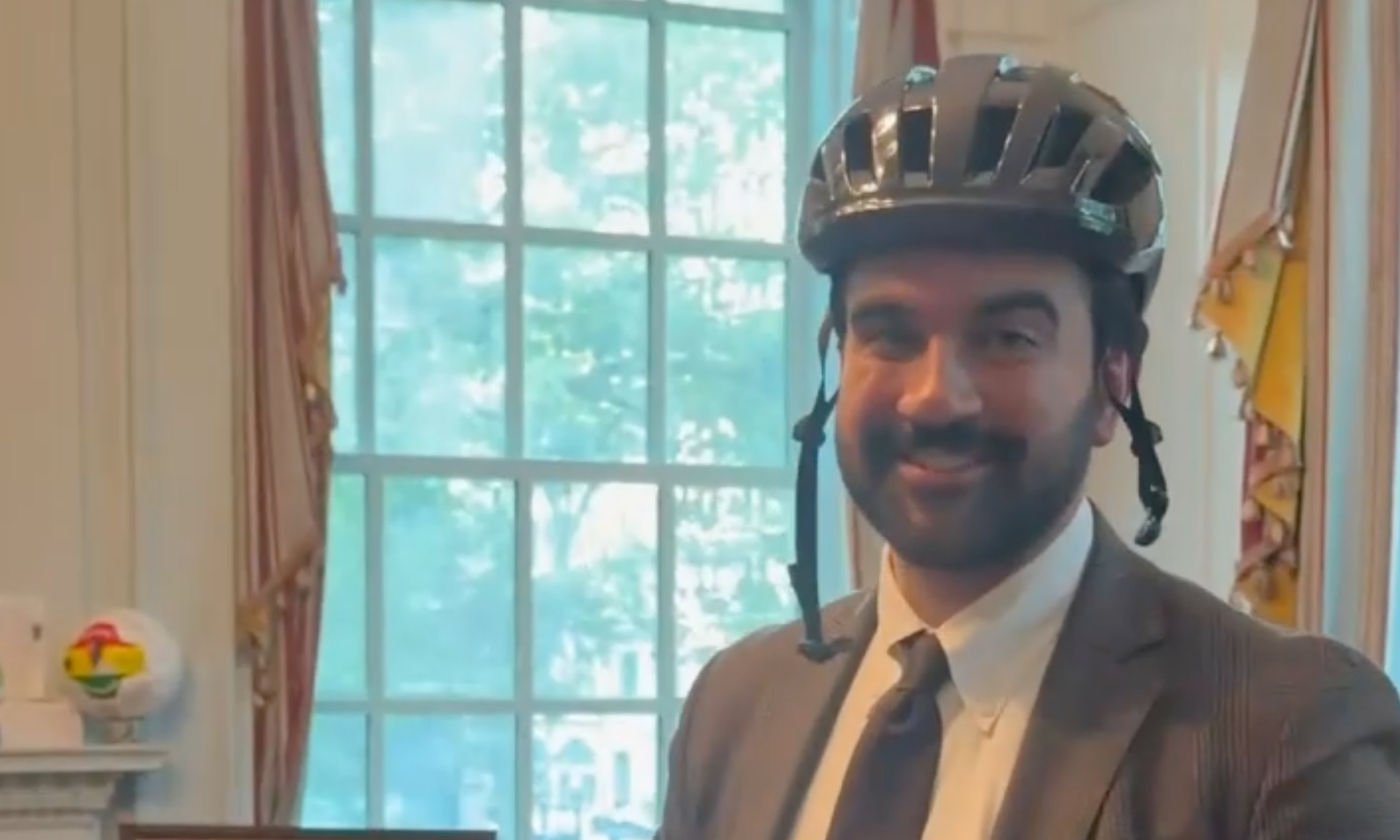
In mid-August, Mamdani published a short, vertical-format video across social media announcing a seemingly innocuous personal lifestyle change: he would begin wearing a bicycle helmet during his frequent Citi Bike commutes across the five boroughs. Responding to the persistent appeals of his constituents, the mayor smiled to the camera and admitted, “You’re right, I’ve gotta do better. Safety first, New York. See you out there.”
The clip went viral on X, formerly Twitter, racking up 26 million views. Mainstream media outlets and public figures gushed over the mayor’s approachability, while the New York Department of Transportation (DOT) seized the moment to advertise its routine free helmet giveaways. To many, the video was a masterclass in modern political communication—a charming endorsement of cycling, public health, and urban mobility that highlighted the protective affection New Yorkers hold for their globally famous mayor.
Yet, beneath the wave of online adoration lay a fierce debate among urban planners, street safety advocates, and grieving families. The timing of Mamdani’s viral announcement could not have been more discordant. Just as the mayor championed the virtues of personal protective gear, three motorists struck and killed three separate cyclists across Brooklyn, the Bronx, and Queens within a span of less than a week. None of the offending drivers have been arrested or even identified by the NYPD. At least two of the dead cyclists—both wearing helmets—were utterly defenseless against the kinetic mass of three-ton motor vehicles.
This tragic juxtaposition has reignited a contentious debate over the "helmet narrative." Critics argue that political focus on individual gear shifts the burden of survival onto vulnerable road users, deflecting attention away from the state’s absolute responsibility to engineer safe streets and prosecute dangerous driving. While safety advocates universally acknowledge that helmets save lives in low-speed falls or single-bike accidents, they contend that treating helmets as a primary shield against traffic violence is a dangerous fallacy. As New York City grapples with an alarming rate of vehicular carnage, Mayor Mamdani’s administration finds itself walking a tightrope between encouraging personal protective habits and delivering the systemic, structural overhauls required to keep the city’s streets safe.
Detailed Chronology: A Week of Carnage
The policy debate sparked by the mayor’s helmet video was tragically grounded in real-world blood and asphalt. On the exact day Mamdani posted his viral video, two separate hit-and-run crashes claimed the lives of two New York City cyclists. Within days, a third cyclist was killed under eerily similar circumstances, transforming an online debate over headgear into a stark referendum on the structural failures of the city’s transportation network.
The Death of Paulina Tec Choc
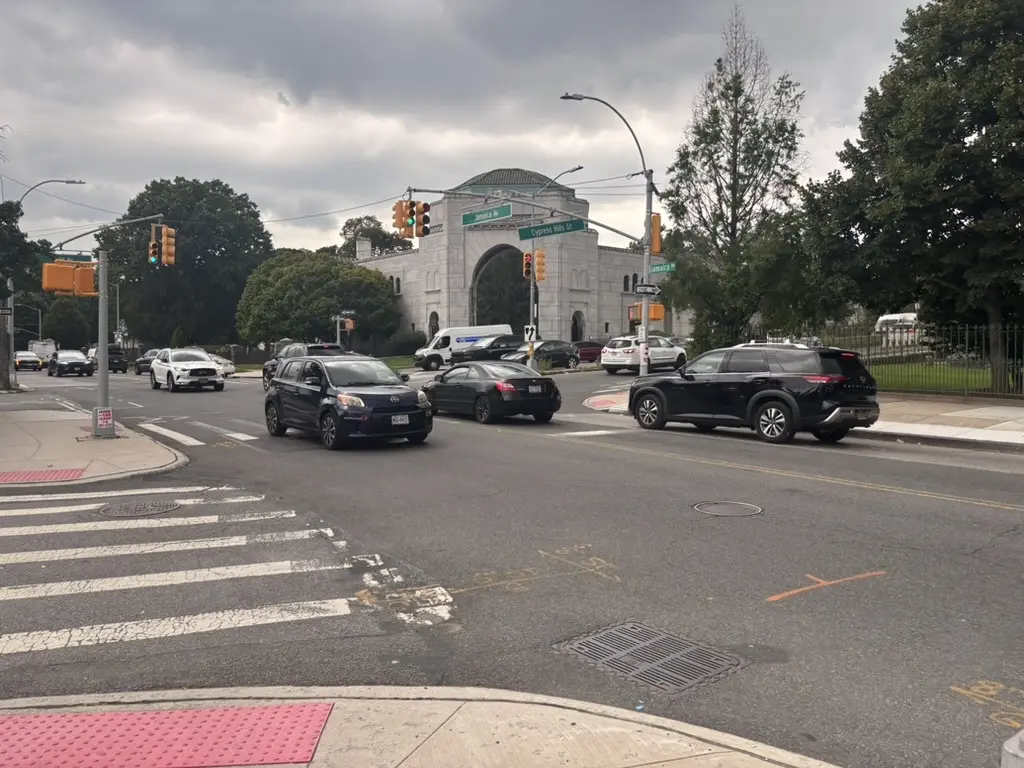
At approximately 5:50 a.m. on the day of the mayor’s announcement, 29-year-old Paulina Tec Choc was waiting on her e-bike at the corner of Jamaica Avenue and Cypress Hills Street in Brooklyn. Without warning, a motorist struck her from behind, running her over before fleeing the scene into the pre-dawn darkness.
Tec Choc, who was wearing a helmet, suffered catastrophic trauma to her head and body and was pronounced dead at a nearby hospital. Her employer, Osman Cevallos, confirmed her habitual safety precautions: “She always wore a helmet.”
A historical review of the intersection reveals a grim pattern of systemic negligence. Over the preceding five years, the corner of Jamaica Avenue and Cypress Hills Street recorded 57 reported crashes that injured 29 people, including three cyclists and four pedestrians. Although the DOT’s official map designates Cypress Hills Street as home to a protected cycling lane, the physical infrastructure abruptly devolves into mere paint at the exact intersection where Tec Choc was killed. The remainder of the corridor functions as a classic "car sewer"—characterized by wide roadways, slip lanes, and two-way traffic configuration designed to prioritize vehicular velocity over human life.
The Murder of Angelo Camero
Hours later, just before 9:30 p.m., a second fatal collision struck the Bronx. At the intersection of Bruckner Boulevard and Longwood Avenue, a speeding BMW motorist blasted through a red light, triggering a multi-vehicle chain reaction. The impact killed 51-year-old Angelo Camero, a father of five who was cycling home after a hard day’s work, and injured a 37-year-old woman trapped inside another vehicle.
While the intersection features a sidewalk-level two-way bike path, it is entirely ringed by wide, hostile arterial roadways that practically induce reckless speeding. Department records indicate that 139 collisions have occurred at this precise location since 2022, resulting in 120 injuries—including three additional cyclists, a pedestrian, and 113 motorists and passengers.
The Loss of Mamadou Diallo
Before the city could process the first two tragedies, a third cyclist fell victim to vehicular violence. Mamadou Diallo, a 40-year-old Brooklyn resident who was also wearing a helmet, was legally executing a left turn at East 54th Street and Avenue I when the driver of a BMW sedan slammed into him.
Although this specific intersection boasts a lower statistical frequency of crashes—registering five collisions over five years, including injuries to a pedestrian and a cyclist—its lack of protective physical infrastructure near an active school zone leaves vulnerable road users completely exposed. This architectural oversight mirrors the broader reality across southern Brooklyn, where post-industrial road designs continue to prioritize rapid vehicular throughput at the expense of community safety.
Supporting Context & Metrics: The Anatomy of a Flawed Narrative
To understand why the mayor’s helmet video provoked such intense pushback from street safety purists, one must examine the complex psychology and history of helmet campaigns in Western infrastructure.
Academic literature and urban mobility data consistently demonstrate that helmet fixations often mask deeper systemic failures. Jessie Singer, an author and investigative journalist who has extensively documented preventable deaths and victim-blaming in traffic violence, argues that society is perpetually distracted by the illusion that personal responsibility can insulate individuals from systemic hazards.
"We are as a nation eternally distracted by the idea that personal responsibility can save us so that we can excuse widespread preventable death," Singer noted. "Helmets are great. Helmets serve a practical function of protecting your head if you fall off your bike and hit the asphalt—[but] even the manufacturers of helmets will tell you that they’re not made [to protect cyclists from] cars."
The International Contrast
The divergence between personal gear and structural safety becomes glaringly apparent when comparing American cities to their European counterparts. In cycling capitals like Copenhagen and Amsterdam—where city planners design streets with physical barricades, raised crosswalks, and narrow lanes that force motorists to drive at human speeds—people rarely wear helmets. Yet, their crash and injury rates remain exponentially lower than those in major U.S. metropolitan areas.
Conversely, public health studies reveal a paradoxical trend: people are far more likely to wear protective gear in countries where cycling is demonstrably less safe. A landmark 2017 study argued that American cities routinely weaponize helmet campaigns to deflect liability, coupling them with car-first policies that actively undermine long-term bike safety investments and enshrine a culture of "unfettered automobility." Furthermore, data from Canadian provinces that enforce strict mandatory helmet laws shows no corresponding drop in severe injury or fatality rates.
The E-Bike Factor and NYC Realities
In New York City, the post-pandemic boom in e-bikes and battery-powered mobility devices has introduced a new layer of complexity. These heavier, faster vehicles have driven an uptick in emergency room visits for head and orthopaedic injuries.
Advocates like Ben Furnas, executive director of Transportation Alternatives, emphasize that helmets serve a legitimate, vital purpose—particularly when operating electric devices capable of high speeds. Clinical research indicates that properly fitted helmets reduce the risk of traumatic brain injury by up to 88 percent.
However, transit analysts and safety coalitions stress that while helmets mitigate the severity of incidental falls, they are functionally useless against the physics of a 6,000-pound SUV traveling at 40 miles per hour. As city streets absorb an influx of high-velocity delivery vehicles and sprawling sport utility vehicles, the primary driver of mortality remains aggressive car culture, not unhelmeted heads.
Official Statements: Navigating the Political Tightrope
The backlash to the mayor’s video forced the Mamdani administration to articulate a nuanced defense that attempts to bridge the gap between individual hygiene and sweeping institutional reform.
Jeremy Edwards, a spokesperson for Mayor Mamdani, issued a statement defending the administration’s dual-track approach to mobility safety:
"New Yorkers shouldn’t have to choose between wearing helmets that help protect against head injuries and infrastructure designs that reduce fatalities and ensure that everyone is protected when using our roads. This administration is providing both, and we will continue to do so."
The administration points to tangible policy shifts enacted since Mamdani took office. In stark contrast to the car-centric paralysis of his predecessor, Eric Adams, the Mamdani administration has aggressively revived and accelerated several crucial bike and bus lane projects that were previously shelved or watered down.
Urban advocates have acknowledged this political good-faith effort while maintaining a healthy skepticism regarding messaging. Doug Gordon, co-host of The War on Cars podcast, encapsulated the frustration of many pedestrian and cyclist advocates:
"I’d rather he’d keep the focus on institutional solutions to this public health crisis. There’s almost never good timing for an elected official to post a helmet video in a city where you have an average of one or two cyclists or pedestrian fatalities every other day."
Ben Furnas offered a more conciliatory perspective, viewing the video as an imperfect yet net-positive normalization of cycling:
"I thought the mayor’s video was cute and I actually see it as his mainstreaming of bicycling… As much as I see all of the problems with the helmet discourse, I appreciate that Mamdani is willing to say, ‘I’m listening to what you all are complaining about.’"
Future Outlook: The Fight for Institutional Reform
As the shockwaves of mid-August’s fatal crashes reverberate through City Hall, the political calculus for Mayor Mamdani has entered a delicate phase. Grassroots organizations are refusing to let the conversation stall on the accessories of cycling.
In direct response to the deaths of Paulina Tec Choc, Angelo Camero, and Mamadou Diallo, Transportation Alternatives organized a high-profile "die-in" protest at City Hall Park. Activists are demanding that the administration move beyond symbolic gestures and roll out an aggressive, citywide emergency infrastructure plan to overhaul deadly intersections before winter sets in.
The structural challenges ahead are immense. New York City’s arterial road network was largely engineered in the mid-20th century to funnel suburban commuters through dense urban neighborhoods at high speeds. Dismantling this car-supremacist design requires political capital, fierce battles with entrenched local commercial interests, and an NYPD willing to aggressively track, arrest, and prosecute hit-and-run motorists who currently operate with near-total impunity.
For Mayor Mamdani, the viral video proved his uncanny ability to connect culturally with millions of digital constituents. But the true measure of his administration will not be found in the metrics of social media engagement or the quality of his Citi Bike attire. It will be decided on the concrete of Brooklyn, the Bronx, and across the five boroughs—where the warmth of collectivism must ultimately translate into physical concrete, protected lanes, and ironclad legal protections that ensure no New Yorker’s life is cut short on their way home.