





Executive Overview
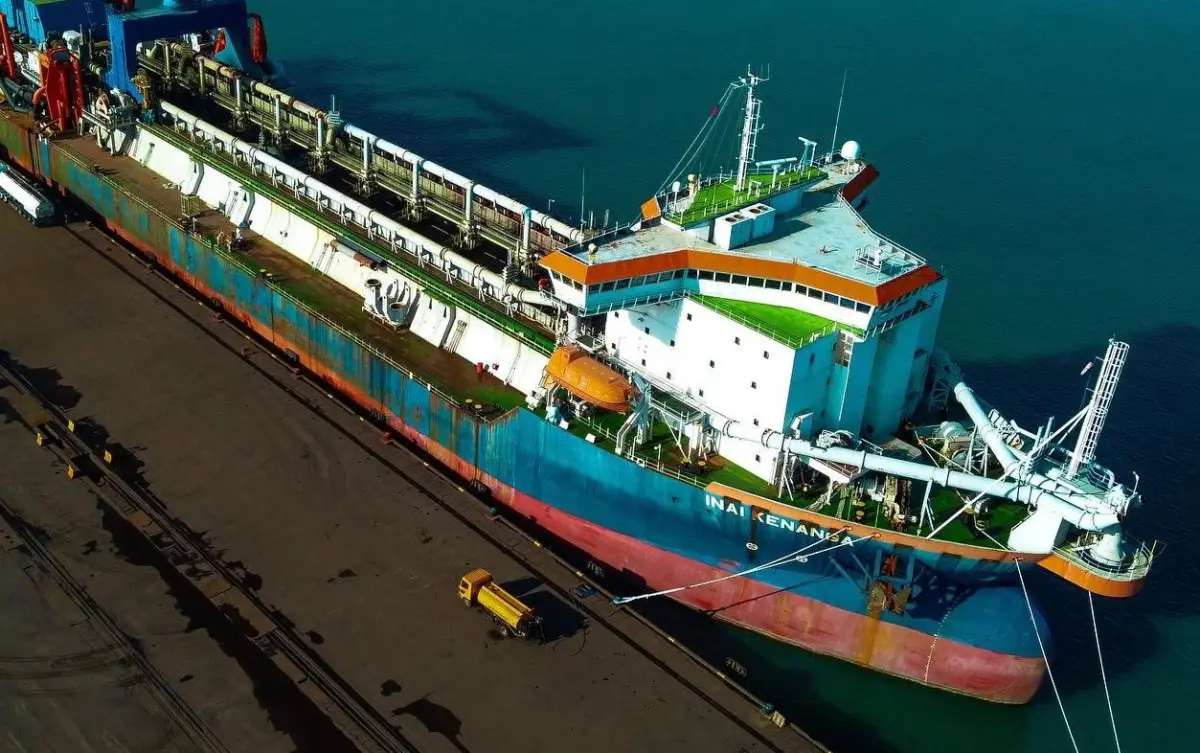
In a landmark transaction that signals a major realignment of maritime assets in the Asia-Pacific region, Malaysia-headquartered Keyfield International Bhd has officially announced the acquisition of the mega trailing suction hopper dredger (TSHD) Inai Kenanga for $24.7 million. This high-value, opportunistic purchase not only rescues a premier piece of marine engineering from the complex financial fallout of its previous owner’s receivership but also serves as Keyfield’s definitive, high-stakes entry into the highly competitive global dredging and land reclamation industry.
The Inai Kenanga, a colossal vessel constructed in 2016 with a staggering hopper capacity of 32,205 cubic meters, was historically recognized as the largest dredger in Asia and the third-largest globally. For Keyfield International—traditionally known for its robust foothold in offshore accommodation and marine support vessels—this strategic diversification represents an aggressive expansion of its operational horizons. Funded entirely through internal cash reserves without the need for external borrowings, the transaction highlights Keyfield’s financial resilience, balance-sheet strength, and opportunistic agility.
This comprehensive report examines the multifaceted dimensions of the acquisition. It details the corporate context of the purchase, explores the engineering pedigree and historical significance of the Inai Kenanga, analyzes the financial mechanisms that enabled a debt-free transaction, and evaluates the broader market implications for the Asia-Pacific capital dredging, coastal protection, and land reclamation sectors.
Detailed Chronology: From Maritime Giant to Receivership and Acquisition
The Genesis of a Super-Dredger (2016)
When the Inai Kenanga rolled out of the shipyard in 2016, it sent shockwaves through the international maritime and coastal engineering communities. Commissioned during a period of aggressive maritime infrastructure development in Southeast Asia, the vessel was engineered to tackle ultra-scale capital dredging, deep-water port deepening, and massive land reclamation projects. With a massive 32,205-cubic-meter hopper capacity, the ship was built to perform at unprecedented scales, minimizing transit times and maximizing sediment relocation efficiency. For several years, it served as a cornerstone asset for complex marine engineering works across Malaysian waters, proving its mettle in some of the region’s most demanding geographical and environmental conditions.
Financial Distress and the Fall into Receivership
Despite its technical brilliance and operational capacity, the economic realities of the global maritime sector—compounded by fluctuating infrastructure spending, project delays, and heavy capital expenditure burdens—eventually caught up with the vessel’s previous owner, Inai Rimba Sdn Bhd. Over the subsequent years, financial headwinds mounted, culminating in Inai Rimba entering judicial receivership.
When a maritime asset of this magnitude enters receivership, it typically triggers a complex web of legal, financial, and logistical hurdles. Creditors seek liquidity, courts appoint receivers to manage asset liquidation, and prospective buyers must navigate a labyrinth of maritime liens, maintenance backlogs, and regulatory clearances. However, for well-capitalized firms with an appetite for strategic diversification, receiverships often present once-in-a-generation opportunities to acquire tier-one assets at a fraction of their replacement cost.
The Opportunity and Keyfield’s Intervention (August 2026)
Enter Keyfield International Bhd. Recognizing the unparalleled value proposition presented by the distressed sale, Keyfield’s executive leadership moved decisively. On August 26, 2026, the company broke market silence to announce the execution of the $24.7 million purchase agreement for the Inai Kenanga.

According to corporate disclosures, the transaction was structured to bypass the typical labyrinth of syndicated loans and high-interest maritime financing. By leveraging Keyfield’s robust internal cash reserves, the company secured the vessel cleanly and swiftly, insulating the acquisition from the macroeconomic volatility of high-interest-rate environments. This calculated gamble transforms what was a distress liquidation for Inai Rimba into a transformative, value-accretive milestone for Keyfield International.
Supporting Context & Metrics: Engineering Marvel Meets Market Economics
To fully grasp the magnitude of Keyfield International’s latest acquisition, one must examine the engineering specifications of the Inai Kenanga alongside the macro-level dynamics of the global dredging and coastal protection markets.
Vessel Specifications and Operational Capabilities
The Inai Kenanga is not merely a workboat; it is a floating industrial metropolis designed for heavy-duty marine civil engineering. Key technical metrics defining the mega-TSHD include:
- Year of Build: 2016
- Vessel Type: Trailing Suction Hopper Dredger (TSHD)
- Hopper Capacity: 32,205 cubic meters ($CBM$)
- Historical Standing: Upon delivery, it held the title of the largest dredger in Asia and the third-largest worldwide.
- Core Functions: Deep-water capital dredging, maintenance dredging, land reclamation, and coastal protection works.
The Economics of Sub-Market Valuation
A brand-new trailing suction hopper dredger of this scale commands a price tag running well into the hundreds of millions of dollars, factoring in advanced dredging automation, specialized pumping systems, draghead technology, and hull architecture. Acquiring the Inai Kenanga for $24.7 million represents an extraordinary discount relative to its replacement value.
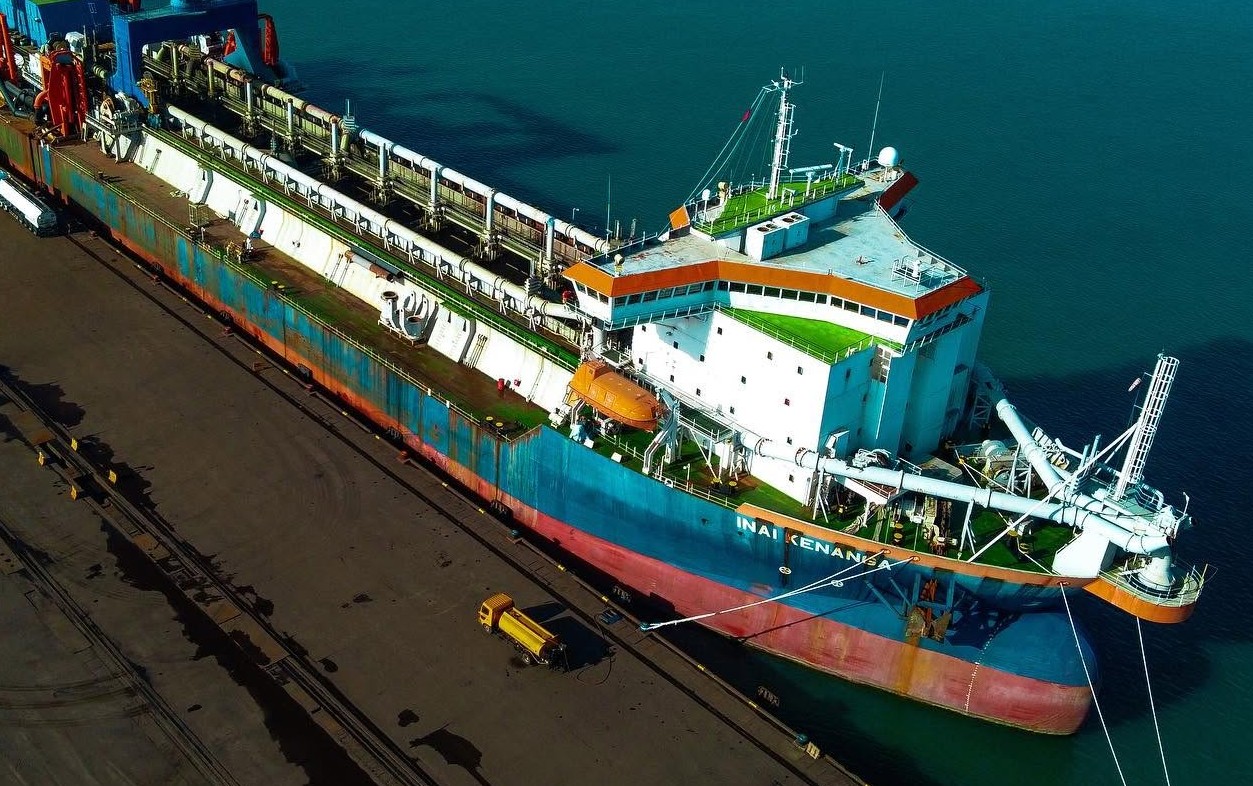
This deep discount is the direct result of the previous owner’s insolvency rather than any inherent obsolescence in the vessel itself. Because TSHDs of this caliber feature long operational lifespans—often spanning decades when subjected to rigorous maintenance regimes—Keyfield has essentially secured a world-class revenue-generating asset at a basement-level capital expenditure (CapEx) threshold. This low entry cost significantly compresses the vessel’s payback period and enhances its internal rate of return (IRR) once deployed into active service.
Market Tailwinds: Infrastructure, Land Reclamation, and Climate Resilience
The timing of Keyfield’s acquisition aligns with surging regional demand across several key sub-sectors:
- Capital Dredging and Port Expansion: Across South Central Asia and the broader Asia-Pacific region, nations are racing to upgrade their deep-sea ports to accommodate ultra-large container vessels (ULCVs). This requires extensive channel deepening and turning basin enlargement.
- Land Reclamation: Rapid urbanization and industrialization in coastal Southeast Asia continue to drive massive land reclamation initiatives, requiring mega-dredgers capable of moving millions of cubic meters of sediment over extended distances.
- Coastal Protection: Climate change adaptation strategies—including shoreline reinforcement, artificial island creation, and flood defense barriers—are elevating the demand for specialized dredging assets equipped to handle large-scale sand and gravel relocation.
Official Statements and Corporate Strategy
The acquisition has sent ripples through the maritime and financial sectors, prompting official commentary from Keyfield’s executive suite regarding the strategic rationale underpinning the move.
Datuk Darren Kee Chit Huei on Financial Discipline and Vision
In his official address to the market, Datuk Darren Kee Chit Huei, Group Chief Executive Officer and Executive Director of Keyfield International Bhd, emphasized both the opportunistic nature of the deal and the financial strength of the acquiring entity:
"With the former owner of Inai Kenanga having entered receivership, we were presented with a unique opportunity to acquire this asset at well below market value. Leveraging the strength of our balance sheet, this acquisition will be funded through our internal cash—hence not requiring any borrowings."
This statement underscores two critical pillars of Keyfield’s corporate philosophy:
- Opportunistic Agility: The ability to move quickly when high-value distress assets become available allows Keyfield to bypass standard, protracted bidding wars and negotiate favorable terms.
- Balance Sheet Prudence: By refusing to take on debt to finance the acquisition, Keyfield shields itself from debt-service obligations, preserving liquidity and maintaining financial flexibility to fund future vessel mobilizations, retrofitting, and operational overheads.
Transitioning from Offshore Support to Mega-Dredging
Industry analysts view this move as a calculated diversification strategy. While Keyfield has historically built its reputation in the offshore oil and gas support sector—providing accommodation work barges and vessels to upstream energy players—the offshore market is notoriously cyclical. Entering the dredging industry opens up an entirely new vertical tied closely to government-backed infrastructure spending, civil engineering, urbanization, and long-term coastal development projects. This diversification insulates Keyfield from the volatility of single-sector reliance while positioning it to capture high-margin government and municipal contracts.
Future Outlook: What Lies Ahead for Keyfield and the Inai Kenanga
As the ink dries on the $24.7 million acquisition agreement, attention immediately shifts to the operationalization of the Inai Kenanga. Integrating a vessel of this size into a fleet that is transitioning into a new industry vertical presents both immense opportunities and complex operational challenges.
Near-Term Priorities: Inspection, Reactivation, and Compliance
Before the Inai Kenanga can resume commercial operations, Keyfield’s technical teams will need to undertake comprehensive hull, mechanical, and electrical inspections. Given that the vessel spent time under receivership, bringing it back to peak operational readiness will likely involve:
- Dry-Docking and Class Surveys: Rigorous classification society re-evaluations to ensure full regulatory compliance, structural integrity, and safety certification.
- System Overhauls: Servicing the massive dredge pumps, trailing suction pipes, swell compensators, and bottom-dump hopper valves.
- Crew Recruitment and Training: Mobilizing specialized maritime personnel, dredging masters, hydrographic surveyors, and specialized deck crews experienced in operating ultra-large TSHDs.
Long-Term Strategic Horizons
Looking toward the late 2020s and beyond, the deployment of the Inai Kenanga is expected to unlock significant revenue streams for Keyfield International. Potential avenues for deployment include:
- Bidding for Mega-Projects: Competing directly against established global dredging heavyweights for major port expansion and channel deepening tenders across the Asia-Pacific and South Central Asian theaters.
- Strategic Partnerships: Collaborating with regional civil engineering conglomerates and government bodies tasked with executing large-scale land reclamation and national infrastructure master plans.
- Fleet Expansion: Depending on the utilization rate and profitability of the Inai Kenanga, this initial acquisition could serve as a pilot project, paving the way for Keyfield to further expand its footprint in the marine dredging and infrastructure sector.
Conclusion
Keyfield International’s acquisition of the mega-TSHD Inai Kenanga for $24.7 million is a masterclass in opportunistic corporate finance and strategic diversification. By capitalizing on a competitor’s distress to acquire a world-class asset at a fraction of its true value—and doing so entirely debt-free—Keyfield has engineered a transformative leap forward. As the Inai Kenanga prepares to re-enter active service, Keyfield stands poised to redefine its corporate identity, transitioning from a regional offshore support provider into an influential heavyweight in the global dredging, coastal protection, and land reclamation arena.