











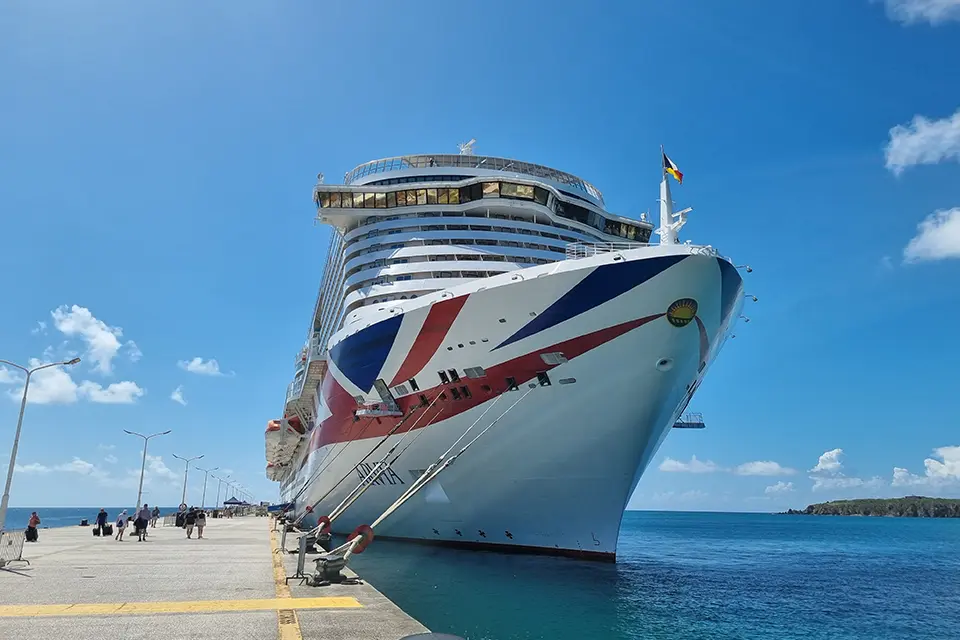
Executive Overview
Maritime authorities have officially released a comprehensive safety investigation report detailing a fatal incident involving a crew member aboard the Bermuda-registered passenger cruise vessel Arvia. The tragic event occurred on October 26, 2025, while the mega-cruise ship was underway in open waters, transiting from its departure port of Southampton, United Kingdom, toward Santa Cruz de Tenerife in the Canary Islands, Spain.
The formal inquiry was spearheaded by the United Kingdom’s Marine Accident Investigation Branch (MAIB). Although the Arvia operates under the flag of Bermuda—a prominent member of the Red Ensign Group (REG)—the investigation was conducted on behalf of the Bermuda Ship Registry. This cross-jurisdictional collaboration was executed in strict accordance with an established memorandum of understanding (MoU) between the MAIB and various REG member administrations, ensuring rigorous, independent oversight of maritime safety standards on international vessels.
The publication of this report brings renewed scrutiny to occupational health and safety protocols within the contemporary cruise industry, highlighting the inherent operational hazards faced by maritime workers even aboard ultra-modern, state-of-the-art passenger liners. As the global cruise sector experiences unprecedented post-pandemic expansion, questions surrounding crew welfare, onboard safety enforcement, and emergency response readiness remain at the forefront of international maritime governance.
Detailed Chronology of the Voyage and Incident
Departure from Southampton
On the morning of October 26, 2025, the Arvia cast off from its berth at the port of Southampton, England, embarking on a routine scheduled voyage bound for the Canary Islands. The departure followed standard pre-voyage safety checks, passenger embarkation procedures, and routine briefings for the ship’s extensive multi-national crew. The weather conditions at the outset of the journey were logged as typical for late October in the English Channel and the Bay of Biscay, with standard maritime transit protocols in effect.
The Critical Incident
As the vessel journeyed south toward the warmer waters of the Atlantic, an operational activity on board tragically went awry. While specific operational details of the task have been closely examined by investigators, the incident culminated in a fatal injury sustained by a crew member. Immediate internal emergency protocols were triggered, and the ship’s onboard medical team responded rapidly to administer emergency medical interventions. Despite the prompt deployment of onboard life-saving measures, the crew member succumbed to their injuries while the ship was still thousands of nautical miles from its destination.
Response, Notification, and Port Arrival
In accordance with international maritime law and the safety management system (SMS) mandated by the International Safety Management (ISM) Code, the vessel’s master immediately notified relevant maritime authorities regarding the fatality. Communication was established with the United Kingdom Coastguard, the Bermuda Ship Registry, and the MAIB.
While maintaining its course toward Santa Cruz de Tenerife, the vessel coordinated with authorities to ensure that upon arrival in the Canary Islands, local forensic, medical, and investigative agencies could board the ship to conduct preliminary inquiries, secure evidence, and facilitate the repatriation protocols for the deceased crew member. The tragic event cast a somber shadow over the voyage, prompting grief counseling services to be made available to both passengers and crew members upon arrival in Tenerife.

Supporting Context and Metrics
The Vessel: Arvia
The Arvia is a premier vessel within the global cruise fleet, representing the pinnacle of modern naval architecture and passenger amenities. Commissioned recently to cater to the booming demand for transatlantic and Mediterranean leisure cruising, the vessel boasts massive gross tonnage, towering several decks high, and possesses the capacity to carry several thousand passengers alongside a large international workforce.
Modern cruise ships of the Arvia’s scale operate essentially as floating cities. They integrate complex mechanical, electrical, hotel, and logistical operations that run twenty-four hours a day. Consequently, the operational environment for crew members is fast-paced, high-pressure, and multifaceted, requiring strict adherence to occupational safety procedures across diverse functional departments—from deck and engine operations to technical maintenance and hotel services.
Regulatory Framework: The Red Ensign Group and the MAIB
The investigation into the Arvia incident underscores the complex regulatory matrix governing international shipping.

- The Flag State: Bermuda is a Category 1 British Red Ensign Group (REG) shipping register. As the flag state, Bermuda holds ultimate legal responsibility for ensuring that vessels flying its flag comply with international conventions, such as the International Convention for the Safety of Life at Sea (SOLAS) and the Maritime Labour Convention (MLC).
- The Investigation Authority: Because the Bermuda Ship Registry maintains formal agreements with the UK government, the Marine Accident Investigation Branch (MAIB) frequently acts as the investigative body for marine casualties involving Red Ensign Group vessels when requested or agreed upon via established protocols. The MAIB operates independently of commercial pressures and regulatory bodies, focusing solely on determining the underlying causes of accidents and issuing safety recommendations to prevent recurrence.
Occupational Safety Metrics in the Cruise Industry
While passenger safety on cruise ships receives intense public scrutiny, maritime labor organizations—such as the International Transport Workers’ Federation (ITF)—frequently emphasize that crew safety requires equal, if not greater, regulatory vigilance. Working environments on mega-ships involve heavy machinery, hazardous chemicals, high-voltage electrical systems, overhead working environments, and dynamic sea states.
Historical data from international maritime agencies consistently indicates that crew members face higher statistical risks of occupational injury compared to shore-based industrial workers. Incidents involving slips, trips, falls, machinery entanglement, and enclosed space entry remain primary areas of concern for safety investigators globally.
Official Statements and Regulatory Analysis
Insights from the MAIB Report
The newly published MAIB report provides an exhaustive breakdown of the human, operational, and systemic factors that contributed to the fatality on board the Arvia. While the report does not apportion civil or criminal liability—as this falls outside the independent investigative mandate of the branch—it meticulously traces the sequence of events leading up to the tragedy.
Investigators evaluated several key areas:
- Task Planning and Risk Assessment: Whether the specific task being undertaken by the crew member was adequately risk-assessed prior to commencement.
- Supervisory Oversight: The level of instruction, supervision, and safety monitoring in place during the execution of the work.
- Safety Equipment and Procedures: The availability, condition, and correct usage of personal protective equipment (PPE) and safety gear.
- Human Factors: Considerations of fatigue, communication barriers within a multi-national crew, and operational pressures common in the fast-paced cruise environment.
Stakeholder Responses
Representatives for the vessel’s operators expressed profound sorrow over the loss of their team member, emphasizing that the safety, health, and well-being of all crew and passengers remain their highest operational priority. In official statements released following the publication of the report, management confirmed their full cooperation with the MAIB and the Bermuda Ship Registry throughout the investigative process.
Furthermore, industry bodies have noted that lessons learned from the Arvia investigation will be disseminated widely across the global maritime fleet. Ship operators are expected to review their existing safety management systems, particularly regarding high-risk operational tasks performed while vessels are actively underway at sea.
Future Outlook: Implications for Maritime Safety
Enhancing Onboard Safety Culture
The publication of the MAIB report on the Arvia incident serves as a critical catalyst for systemic reflection within the international cruise industry. Tragedies at sea invariably prompt a re-evaluation of how safety management policies are translated from paper manuals into daily operational realities on the deckplates and below decks.
Key areas targeted for future improvement across the sector include:
- Dynamic Risk Assessment Training: Ensuring that crew members at all levels possess the authority and confidence to halt work if safety parameters change or appear unclear.
- Communication Protocols: Overcoming linguistic and cultural barriers among multi-national maritime workforces to ensure clear, unambiguous safety briefings and task handovers.
- Technological Safeguards: Integrating advanced safety monitoring systems and automated hazard-detection tools to protect workers in high-risk zones.
Regulatory Evolution
As flag states and investigative bodies like the MAIB continue to analyze marine casualties, the regulatory framework governing maritime labor—particularly the Maritime Labour Convention (MLC)—faces continuous pressure to evolve. Stricter enforcement of working hours, mandatory rest periods to combat chronic fatigue, and enhanced oversight of onboard safety committees are anticipated focal points for future international maritime organization (IMO) discussions.
For the Arvia and its operating company, the implementation of the MAIB’s specific safety recommendations will be subject to ongoing verification by the Bermuda Ship Registry. The ultimate legacy of this tragic event will be measured by the degree to which the global maritime community absorbs these lessons, actively closing safety gaps to ensure that those who work at sea can do so with the highest possible degree of protection and peace of mind.


