Executive Overview
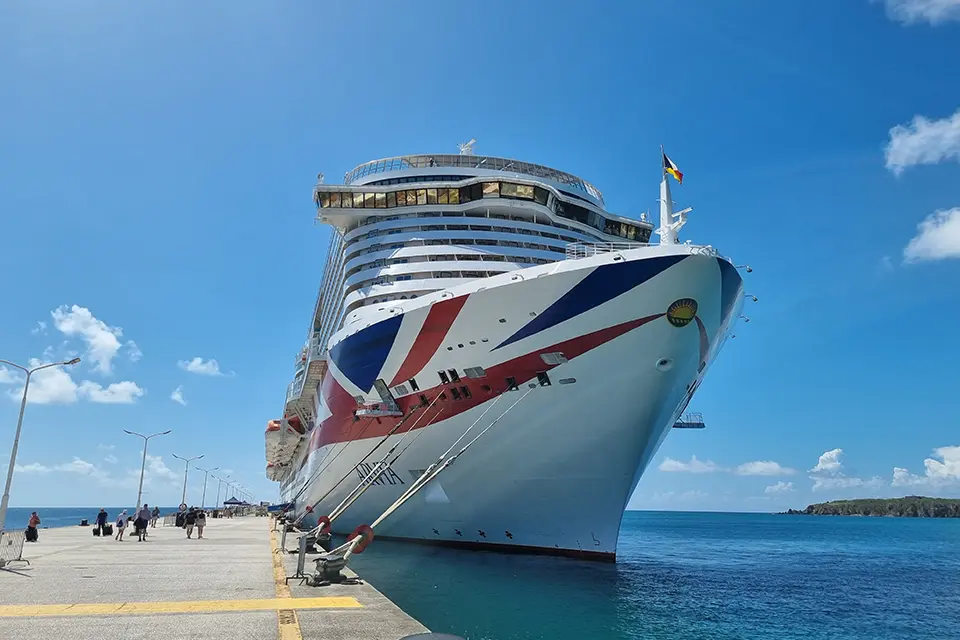
The United Kingdom’s Marine Accident Investigation Branch (MAIB) has officially published its comprehensive accident investigation report regarding a fatal incident involving a crew member on board the Bermuda-registered passenger vessel Arvia. The tragic event occurred on October 26, 2025, while the mega-cruise ship was underway on an international voyage from Southampton, England, to Santa Cruz de Tenerife in the Canary Islands, Spain.
The investigation was conducted by the MAIB acting on behalf of the Bermuda Ship Registry. Because Bermuda is a Crown Dependency and an active member of the Red Ensign Group (REG), the formal inquiry was carried out under the framework of a pre-established memorandum of understanding between the MAIB and various REG member administrations. This cooperative agreement ensures that independent, highly rigorous maritime safety investigations are applied universally across vessels operating under the Red Ensign flag, regardless of where in the world an incident takes place.
While the publication of the report marks a critical milestone in understanding the mechanics of the accident, it also serves as a stark reminder of the persistent occupational hazards faced by maritime workers within the global cruise industry. As cruise vessels grow in physical scale, passenger capacity, and operational complexity, the safety management systems governing the crew must evolve concurrently. This report delves into the operational environment aboard the Arvia, analyzes the sequence of events leading up to the fatality, evaluates the regulatory frameworks governing vessel safety, and outlines systemic recommendations designed to prevent similar tragedies from recurring across the international fleet.
Detailed Chronology of Events
Departure from Southampton and Passage Plan
On the morning of October 26, 2025, the Arvia departed from its regular berth in the Port of Southampton, England. The vessel was embarking on a scheduled transatlantic and Mediterranean-adjacent itinerary, carrying thousands of vacationers bound for the warmer climates of the Canary Islands. Like all modern cruise ships, the departure involved a meticulously coordinated sequence of events, requiring seamless communication between the bridge team, engine control room, and the various hotel and deck departments responsible for preparing the ship for open-sea navigation.
As the vessel cleared the Solent and entered the English Channel, standard operational routines were established for the multi-day passage south toward the Iberian Peninsula and onward to Tenerife. Crew members across all departments immediately transitioned to their routine duties, which encompass everything from hospitality services to routine mechanical maintenance, safety drills, and structural upkeep.
The Incident in Open Waters
While the Arvia was underway in international waters, an incident occurred that resulted in fatal injuries to a member of the ship’s crew. Although specific details regarding the exact compartment or immediate task undertaken by the crew member are outlined extensively within the technical sections of the MAIB report, the overarching timeline highlights the immediate emergency response mobilized by the shipboard medical and command teams.
Upon the discovery of the injured crew member, the ship’s internal emergency protocols were activated without delay. The vessel’s onboard medical staff responded to the scene to administer emergency trauma care, while the bridge team maintained communication with external maritime rescue coordination centers. Despite the prompt intervention of the shipboard medical personnel and the implementation of emergency response procedures, the crew member succumbed to their injuries.

Post-Incident Protocol and Reporting
Following the confirmation of the fatality, the master of the Arvia initiated standard mandatory reporting procedures, notifying the relevant flag state administration—the Bermuda Ship Registry—as well as the MAIB. In accordance with international maritime law, including the Casualty Investigation Code under the International Maritime Organization (IMO), major maritime incidents occurring on international voyages must be formally reported to ensure independent oversight and fact-finding.
Upon the vessel’s subsequent arrival patterns and coordination with port authorities, the scene was secured for forensic and investigative evaluation. Investigators from the MAIB deployed to examine the physical evidence, review shipboard logs, interview surviving crew members, and analyze closed-circuit television (CCTV) footage and safety management system (SMS) documentation. This rigorous fact-finding process formed the empirical backbone of the published report.
Supporting Context & Metrics
The Arvia: Vessel Profile and Specifications
To fully contextualize the incident, it is essential to examine the scale and operational profile of the vessel involved. Delivered to its operators as a state-of-the-art mega-cruise ship, the Arvia represents the pinnacle of modern maritime engineering and passenger luxury.
- Gross Tonnage: Approximately 185,000 GT
- Length: 344 meters (1,130 feet)
- Passenger Capacity: Up to 5,200 guests (double occupancy), scaling higher with full family configurations.
- Crew Complement: Approximately 1,800 international crew members.
- Flag State: Bermuda (Red Ensign Group).
- Propulsion: Liquefied Natural Gas (LNG) powered, dual-fuel engines.
Managing a floating city of this magnitude requires an intricate matrix of occupational health and safety protocols. With nearly two thousand crew members working around the clock in diverse environments—ranging from high-temperature galley kitchens and high-voltage engineering spaces to exposed exterior decks operating in variable weather conditions—the potential for operational risk is ever-present.
Occupational Safety in the Global Cruise Sector
Maritime work remains statistically one of the most hazardous occupations globally. According to international labor and maritime organizations, crew members face unique challenges that differentiate shipboard employment from land-based equivalents:

- Fatigue Management: Long working hours, shift rotations, and time zone changes can severely impact cognitive alertness and physical reaction times.
- Complex Machinery: Working in close proximity to heavy rotating equipment, high-pressure fluid systems, and dynamic cargo or mooring operations introduces severe physical risks.
- Dynamic Environments: Unlike fixed industrial plants, a ship is constantly moving in response to wind and sea states, introducing slip, trip, and fall hazards that require constant vigilance.
The MAIB report on the Arvia incident underscores the reality that despite advanced shipboard technologies and stringent international conventions—such as the Maritime Labour Convention (MLC, 2006) and the International Safety Management (ISM) Code—human factors, procedural compliance, and system design vulnerabilities continue to intersect in dangerous ways.
The Role of the MAIB and the Red Ensign Group
The Marine Accident Investigation Branch operates independently of commercial, regulatory, or political pressures to determine the causal factors of marine accidents and make safety recommendations. Its primary objective is not to apportion blame or liability, but rather to prevent future accidents through transparent, evidence-based inquiry.
In this specific case, the partnership between the MAIB and the Bermuda Ship Registry exemplifies the collaborative regulatory oversight characteristic of the Red Ensign Group. The REG comprises the United Kingdom, the Crown Dependencies (Bermuda, Cayman Islands, Isle of Man, Guernsey, Jersey), and the Overseas Territories (such as Gibraltar and the British Virgin Islands). Together, these jurisdictions maintain a unified high standard of British shipping administration, ensuring that vessels flying the Red Ensign comply with rigorous international conventions regarding safety, environmental protection, and crew welfare.
Official Statements and Regulatory Response
Summary of MAIB Findings
While the complete technical breakdown is detailed within the formal published document, the overarching conclusions of the MAIB investigation highlight critical areas for operational review. Investigators analyzed whether existing safety barriers were adequate, how procedures were communicated to the crew, and whether supervision and risk assessments matched the physical realities of the task being performed.
Key themes typically addressed in such reports—and reflected in the broader discourse surrounding the Arvia incident—include:
- Risk Assessment Efficacy: Evaluating whether the onboard risk assessments for the specific task adequately identified all potential failure modes and physical hazards.
- Permit to Work Systems: Examining the strictness and execution of safety permits required for high-risk operations, ensuring that sign-offs are not treated as bureaucratic checkboxes but as active safety interventions.
- Communication and Team Resource Management (TRM): Assessing how effectively instructions were transmitted across multi-national, multi-lingual crew hierarchies.
- Supervisory Oversight: Reviewing the presence and active engagement of supervisory personnel during non-routine or hazardous operations.
Industry and Operator Response
Representatives for the vessel’s operators expressed profound sorrow over the loss of life, extending condolences to the family, friends, and colleagues of the deceased crew member. In official statements released following the publication of the report, the management company emphasized its absolute commitment to crew welfare and safety compliance.
The operator confirmed that it has fully cooperated with the MAIB and the Bermuda Ship Registry throughout every stage of the investigation. Furthermore, management indicated that internal reviews were initiated immediately following the incident in October 2025. These reviews have already begun translating the interim findings of the investigation into tangible enhancements across the company’s entire fleet. Actions taken or planned by the operator include:
- Comprehensive Safety Audits: Re-evaluating safety management procedures, particularly focusing on operational tasks identified as high-risk within the report.
- Enhanced Crew Training Modules: Upgrading specialized training programs to reinforce hazard identification and situational awareness among all deck and engineering personnel.
- Safety Culture Promotion: Launching fleet-wide communication initiatives designed to empower crew members at all levels to halt operations if safety conditions appear compromised—reiterating the absolute application of the "Stop Work Authority."
Future Outlook: Preventing Future Tragedies
Implementing Safety Recommendations
The true value of any marine accident investigation report lies not in the documentation of past failure, but in the actionable implementation of its safety recommendations. The MAIB’s report on the Arvia contains specific directives directed toward the vessel’s operators, the Bermuda Ship Registry, and, where applicable, broader maritime regulatory bodies.
For the maritime community, the lessons learned from this incident must be systematically integrated into daily operations. Key areas for long-term improvement include:
- Digitalization of Safety Management: Moving away from static paper-based safety manuals toward dynamic, tablet-accessible digital platforms that provide real-time guidance, interactive checklists, and instant updates on safety alerts.
- Human-Centered Design: Encouraging ship designers and naval architects to factor human ergonomics and safety clearance directly into the physical layout of modern cruise ships, minimizing spaces where crew members must operate in constrained or high-risk geometries.
- Strengthening the Safety Culture: Cultivating an open reporting culture where near-misses and procedural friction can be reported without fear of retribution, allowing safety managers to identify systemic cracks before they manifest as catastrophic failures.
The Broader Horizon for Cruise Safety
As the global cruise industry rebounds and expands with larger, more technologically advanced vessels, regulatory bodies such as the International Maritime Organization (IMO) and flag state administrations face mounting pressure to adapt regulatory frameworks to the realities of modern cruise operations.
The tragic loss on board the Arvia serves as a sobering reminder that behind the gleaming exterior of modern luxury cruising lies a complex industrial workplace. Protecting the thousands of maritime professionals who keep these floating cities operational requires unwavering vigilance, rigorous oversight, and an unyielding commitment to continuous safety improvement.
The complete MAIB accident investigation report into the incident on board the Arvia is now publicly accessible via the official government publishing portals, providing the international maritime community with the detailed data necessary to drive meaningful change across the sector.