

Executive Overview
To the casual observer standing on the sun-baked banks of a roaring river, the sport of squirt boating looks less like an organized competition and more like an aquatic magic trick. Metal flakes of gold, green, red, and blue burst across the surface as sunlight refracts through churning water, while ultra-low-profile watercraft flash and meander through the current like rainbow sturgeon.
Then, abruptly, they vanish.
From above, spectators have no indication of how deep a boater has plunged, nor how long they might remain suspended beneath the surface. This is the realm of the Mystery Worlds—the premier, highly clandestine championship of kayaking’s most esoteric sub-discipline. Here, a collective elite of 10 to 40 paddlers converge on a single, highly volatile "sink spot" to compete in the sport’s ultimate maneuver: the mystery move.
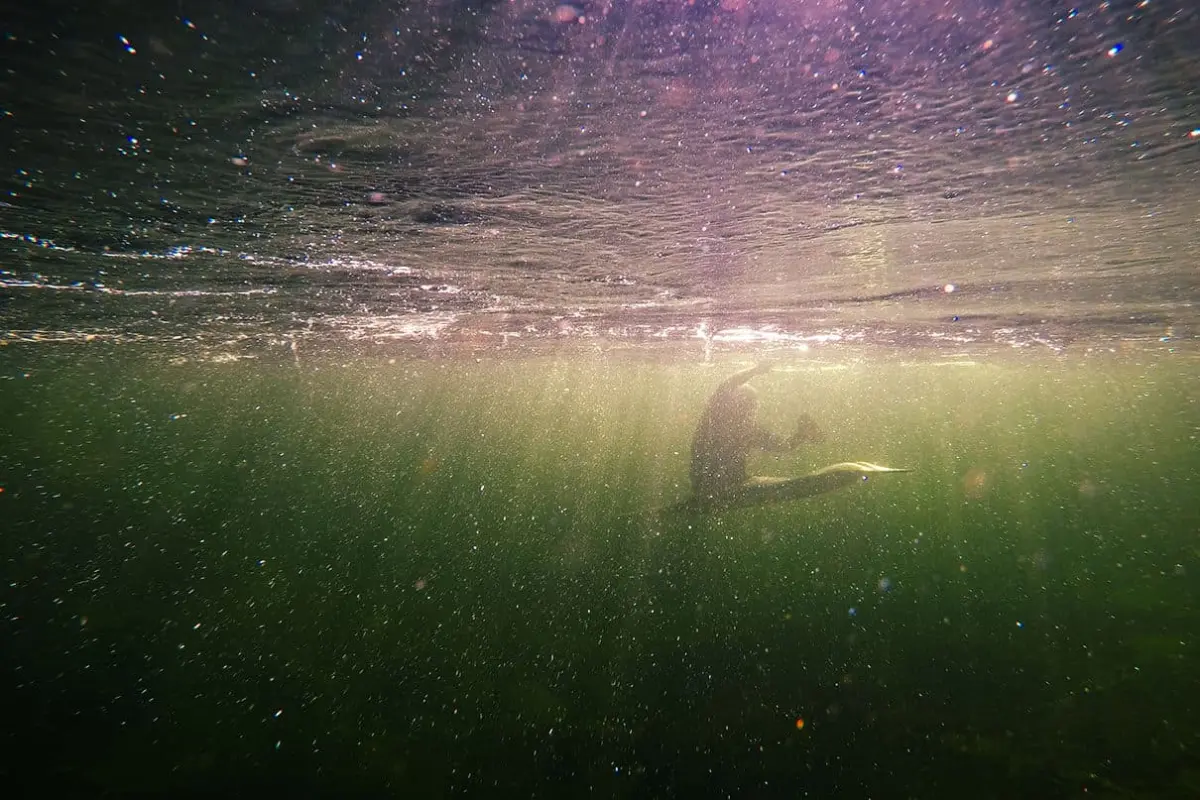
The mechanics are as harrowing as they are hypnotic. A mystery move initiates when a paddler dives their specialized, low-volume squirt boat directly into an eddyline or river seam where the current violently forces downward. The resulting vortex completely submerge both boat and pilot. Staying down for 20, 30, 40 seconds—or, in legendary cases, over a minute—requires an astonishing blend of breath control, spatial awareness, and micro-adjustments before the minimal volume of the boat inevitably drags them back to the light.
With the announcement by 2025 champion Andy Grizzell pointing toward a thunderous, boulder-choked drop on Idaho’s Salmon River for the 17th annual Mystery Worlds on July 4, 2026, the tight-knit community of squirt boaters is once again bracing for impact. Part extreme sport, part esoteric gathering, and part grueling test of human endurance, the Mystery Worlds remains an entirely unique fixture in the landscape of action sports.
Detailed Chronology: From Social Media Buzz to the Road to Idaho
The path to the 17th annual Mystery Worlds began not in a corporate boardroom or an official governing body’s headquarters, but in the digital slipstream of a Facebook video.
The November Spark
Back in November, South Carolina paddler and veteran squirt boater Andy Grizzell posted a short clip that immediately sent shockwaves through the niche community. Captured on the Salmon River near Riggins, Idaho, the video shows thousands of cubic feet per second of raw, glacial water violently wrapping around a massive boulder. The current collides into a frothing wall of whitewater before violently folding into a deep, highly unsettled eddyline.

Grizzell’s caption suggested the churning hydraulic might well be the epicenter for the 17th annual Mystery Worlds. The comments section ignited almost instantaneously. Reactions ranged from the hardcore rallying cry of #sinkandgetdestroyed to self-deprecating community jokes labeling the terrifying drop as "a perfect place to do less."
The Legacy of the 2025 Championships
Grizzell earned his right to scout and nominate the 2026 location by capturing the crown at the 2025 Mystery Worlds. The previous year’s event had been shaped by four-time champion Taft Sibley, who elected to host the competition on the Leslie rapid along the Hiawassee River in east Tennessee.
Sibley’s rationale for choosing the Hiawassee was deliberate: accessibility and community growth. Sitting squarely in a region boasting the highest concentration of squirt boaters in the United States, the Leslie rapid offered a known, reliable proving ground. Sibley’s primary motivation was to pack as many bodies into squirt boats as humanly possible.
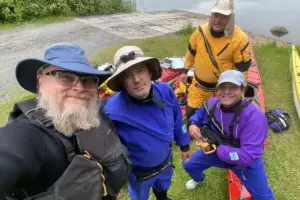
The strategy was an unmitigated success. Locals out for a casual stroll along the riverside trail were stunned to find a massive, rubber flotilla roughly the size of a pickleball court, packed with nearly 100 competitors and spectators, all fixated in dead silence on a single patch of churning water. When a camouflaged boat finally breached the surface after a grueling descent, the flotilla erupted. It was during this electric atmosphere that Grizzell nailed a stunning, 39.10-second alternate-charc ride to secure the victory.
Now, with the 2026 event looming, Grizzell is shifting the paradigm away from accessible, well-trodden classics and back toward raw exploration. His pitch for the Salmon River represents a return to the "mission-based" ethos of the sport: traveling to a remote, unfamiliar river seam and spending days decoding its underwater architecture.
Supporting Context & Metrics: Inside the Sub-Surface Physics of Squirt Boating
To understand the gravity of the Mystery Worlds, one must first understand the idiosyncratic engineering of a squirt boat and the brutal physical realities of the sub-surface environment.
Anatomy of a Squirt Boat
Unlike traditional whitewater kayaks, which are built with ample volume to stay buoyant and float over turbulent hydraulics, squirt boats are engineered to slice through and slip under the water. Molded tightly around a paddler’s legs and hips, these specialized vessels taper sharply to razor-thin points at both the bow and stern. Their profile resembles biological wings far more than traditional hulls.
Multi-Mystery Worlds winner and downtime record-holder Jeremy Pou famously encapsulates the sensation:
"You can’t get more in the water. It’s essentially swimming in a piece of fiberglass."
The minimalist design means that buoyancy is stripped to an absolute minimum. Paddlers frequently load up their watercraft with strategic modifications—including stuffing up to eight pounds of lead ballast into the hull—to ensure they can pierce the surface tension and anchor themselves deep within the river’s subterranean currents.
The Physics of the "Mystery Move"
When a paddler hits the seam correctly, they execute a charc—the charging arc used to dive underwater. Once captured by the downward-pulling vector of the hydraulic, the external world vanishes, replaced by the surreal silence of the underwater fishbowl.
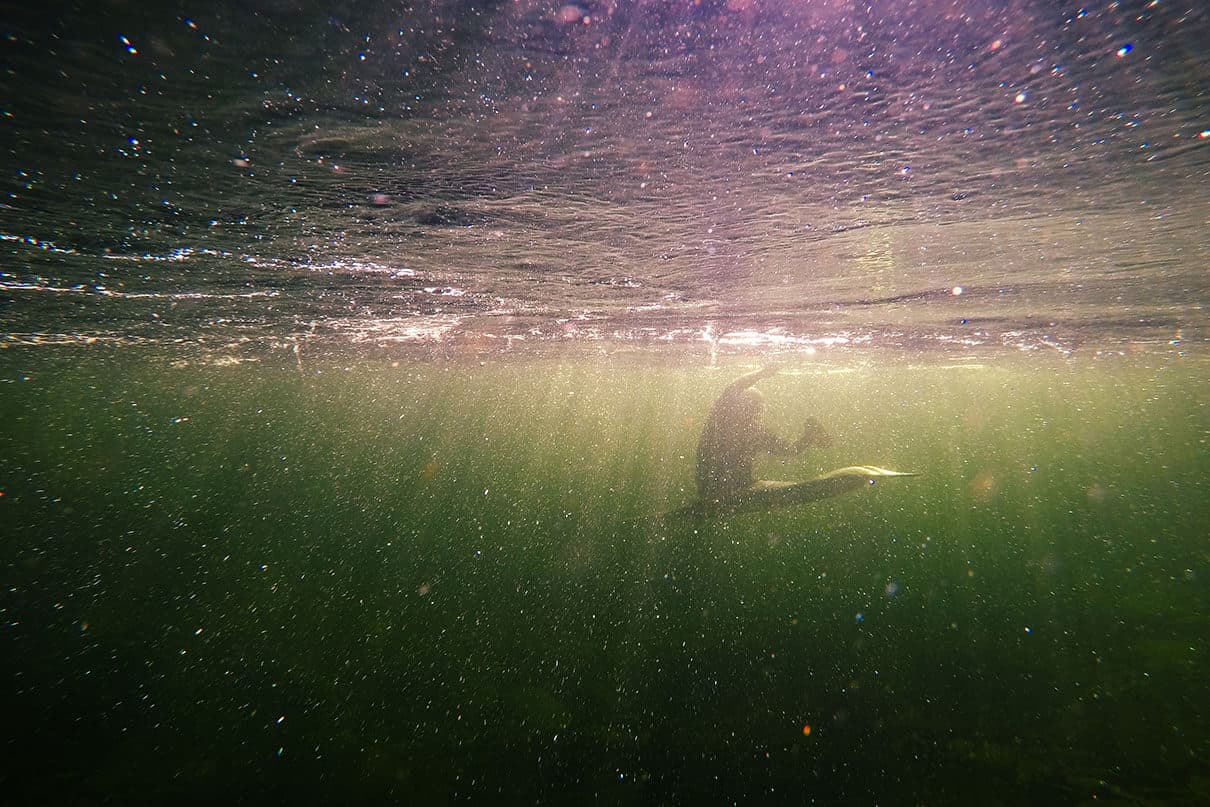
However, this quiet sanctuary comes with a steep physiological toll. At depth, the immense pressure of the compressed water column makes itself violently known.
"Sixteen feet hurts," Pou recalls, reflecting on the 2018 World Championships on Oregon’s Santiam River.
At extreme depths, the weight of the river pops eardrums and exerts crushing pressure across the chest cavity. The fiberglass hull itself compresses inward against the paddler’s knees, shins, and sensitive anatomy. Staying down requires absolute psychological fortitude, as the body fights an innate panic response while being held under massive underwater tonnage.
Competition Structure and Scoring
The governance of the Mystery Worlds is as fluid and unconventional as the water the athletes chase. There are no rigid, multi-page rulebooks or corporate sponsorships dictating heat durations.
Competition scoring is calculated based on total cumulative time underwater across a designated series of rides—typically five, though occasionally compressed to four depending on river conditions. Competitors may alternate charcs or run sequential attempts based on the whims of the reigning champion.
Because the reigning champion earns the exclusive privilege of hosting the subsequent year’s event, the rules, locations, and structural formats shift organically from year to year. The reward for enduring the crushing pressure and mastering the currents? There is no financial purse or lucrative endorsement contract; victors receive only a traveling trophy and the enduring respect of their peers.
Official Statements & Community Perspectives
Despite the fierce, hyper-competitive drive required to hold breath and position under crushing hydraulic pressure, the overarching culture of the Mystery Worlds is defined by camaraderie and a shared devotion to a fringe obsession.
Reflecting on the unpredictable nature of equipment and the egalitarian spirit of the fleet—where custom, high-tech carbon builds share the water with heavily modified, older craft—four-time champion Taft Sibley notes:
"At the end of the day, skill matters more than the boat."
That sentiment is echoed by Andy Grizzell, who looks past the occasional risk of a chosen river spot failing to deliver the expected hydraulics:
"Could it flop on me? Yeah, it could flop. But who cares? It’ll still be squirt boating."
For Grizzell, Sibley, Pou, and the broader community, the annual championship functions less like a cutthroat athletic tournament and more like an annual pilgrimage.
"Taft and I call it Beach Week," Grizzell explains. "Everyone else goes to the beach for a week in the summer. We go to a mystery spot and milk it for everything it’s got, sun up to sundown, and try to get the biggest rides we can out of the place."
This "Beach Week" philosophy protects the sub-discipline from taking itself too seriously. Competitors return year after year not for corporate glory, but for the rare, shared camaraderie of pushing a fragile fiberglass shell a fraction of a second further into the unknown.
Future Outlook: Looking Ahead to July 4, 2026
As the paddling community turns its gaze toward the scorching mid-summer heat of July 4, 2026, anticipation surrounding the Salmon River showdown continues to mount. The choice of the remote Idaho site marks a deliberate pivot back to wilderness exploration—testing whether a wild, high-volume Western river can yield the legendary, multi-second mystery moves that define the sport’s highest echelon.
Logistical challenges will undoubtedly test the competitors. Unlike the accessible, spectator-friendly eddy lines of east Tennessee’s Hiawassee River, the rugged canyons of the Salmon River demand serious expedition logistics, deep technical river-reading abilities, and absolute self-reliance. Yet, it is precisely this barrier to entry that draws the squirt boating elite.
Whether the Salmon River sink spot delivers world-record-shattering downtimes or proves to be an elusive puzzle that drains the stamina of even the sport’s greatest champions, one reality remains certain. On Independence Day 2026, a dedicated flotilla of paddlers will gather in quiet reverence around a churning Idaho hydraulic, watching the surface for the flash of rainbow-colored fiberglass—and waiting for the next master of the abyss to break the surface.