










Executive Overview
The commercial trucking industry stands at a historic crossroads. While the European market has witnessed electric truck prices tumble by 27% in recent years, the United States has moved in the opposite direction, with domestic electric truck prices climbing by 32%. Analysts and industry watchdogs point to a concerted strategy by traditional truck manufacturers and legacy carriers to drag their feet on zero-emission mandates, prioritizing the short-term profits of high-margin Class 8 diesel haulers over long-term environmental sustainability.
To shatter this pricing deadlock and overcome the friction of market entry, a powerhouse coalition has emerged. The Zero-Emission Truck Shipper-Carrier Alliance Leading Electrification (ZET SCALE)—an initiative spearheaded by Catalyst Mobility (formerly known as CALSTART), alongside the Smart Freight Center, Microsoft, and PepsiCo—has announced a landmark commitment. The alliance has secured binding orders for 2,500 battery-electric Class 8 trucks, matching the total population of heavy-duty electric haulers currently operating on US highways.
With Tesla selected as the primary original equipment manufacturer (OEM) for this initial multi-billion-dollar deployment—alongside contributions from Kenworth, Volvo, and RIDE—ZET SCALE is attempting to rewrite the economics of green freight. By aggregating fragmented buyer demand, unlocking innovative financing through ZET Financial, and synchronizing charging infrastructure across ten key North American logistics hubs, the alliance aims to drag zero-emission trucking out of the pilot phase and into mainstream commercial viability. Simultaneously, legislative actions like California’s newly enacted SB 1213 are injecting vital transparency into the market, even as debates rage over protectionist trade policies and the looming competitive shadow of global manufacturers.
Detailed Chronology & Market Mechanics
The birth of ZET SCALE did not happen in a vacuum; it is the culmination of mounting frustrations with the slow pace of American freight decarbonization. For years, individual fleets willing to pilot electric trucks faced an uphill battle. Navigating volatile vehicle pricing, building out high-voltage charging depots, and absorbing the terrifying "residual value risk"—the uncertainty of what a used electric truck will be worth years down the line—left most carriers clinging to reliable, cheap, but highly polluting diesel engines.
Breaking the Pilot Phase Trap
Traditional diesel Class 8 trucks have long held a massive upfront cost advantage, retailing around $180,000 compared to the roughly $400,000 price tag of a new battery-electric heavy hauler. Fleet operators, who plan their capital expenditures over multi-year horizons rather than quarterly cycles, found it difficult to justify a 120% premium for unproven technology, especially when the supporting infrastructure remained sparse.
ZET SCALE was engineered to dismantle these barriers through coordinated scale. Instead of individual logistics companies negotiating in isolation, the alliance consolidates freight demand, charging requirements, and purchasing power into a unified Request for Proposals (RFP).
Following a rigorous evaluation of pricing, driving range, payload capacity, charging speeds, and true manufacturing output, ZET SCALE tapped Tesla as its primary OEM for the initial 2,500-truck rollout, complemented by hardware from Kenworth, Volvo, and RIDE. Every major Class 8 manufacturer in North America was invited to the table, but the winning bid demonstrated the ability to deliver at volume.
Strategic Deployment Across Logistics Hubs
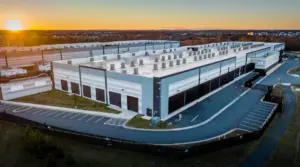
The 2,500 electric semi-trucks will not be randomly scattered across the country. They are slated for strategic deployment across ten major North American freight hubs, directly targeting the densest corridors of goods movement:
- Los Angeles, California
- Stockton, California
- Bakersfield, California
- Seattle/Tacoma, Washington
- Houston, Texas
- Dallas, Texas
- San Antonio, Texas
- Chicago, Illinois
- Atlanta, Georgia
- The Newark/New York metropolitan area
These hubs represent choke points of supply chain congestion and areas historically overburdened by diesel particulate emissions. By clustering trucks around these nodes, ZET SCALE can optimize regional charging corridors, making depot-sharing and high-capacity megacharger installation economically feasible.

Supporting Context & Metrics: The Cost of Transition
To understand the magnitude of the ZET SCALE intervention, one must examine the broader economic and regulatory pressures defining the North American logistics sector.
The Pricing Divergence: US vs. Europe
Data published by the International Council on Clean Transportation (ICCT) highlights a troubling divergence between transatlantic markets. While European electric truck prices fell by 27% over a recent multi-year window—largely catalyzed by fierce domestic competition and rapid product iteration—US prices surged by 32%.
Industry critics argue that legacy US truckmakers have weaponized regulatory loopholes, supply chain bottlenecks, and lobbying power to delay electric vehicle (EV) mandates. By maintaining production lines dominated by diesel-powered Class 8 vehicles, manufacturers have insulated their legacy profit margins at the expense of fleet modernization.
Mitigating Residual Value Risk
A core innovation of the ZET SCALE ecosystem is ZET Financial, a dedicated financing mechanism that underwrites the ZET Lease program. Michael Berube, CEO of Catalyst Mobility, emphasizes that groundbreaking technology is worthless without a functional market structure:
"You can have good technology and still not have a market. What is different about ZET SCALE is that the demand was organized so manufacturers could price at scale. That is how costs move, and that is how clean trucks leave the pilot phase."
By introducing residual value guarantees and structured leases, ZET Financial removes the terrifying depreciation risk from fleet balance sheets. Fleets no longer have to worry that their multi-million-dollar electric investments will become stranded assets if battery chemistries rapidly evolve or maintenance markets stall.
California’s SB 1213: Enforcing Transparency
Coinciding with the ZET SCALE announcement, California governor-backed legislation SB 1213 was officially enacted into law. Sponsored by State Senator Eloise Gómez Reyes, the bill addresses a glaring vulnerability in state-sponsored green incentives: a lack of pricing accountability.
SB 1213 mandates rigorous price data reporting across the medium- and heavy-duty zero-emission vehicle market. It grants the state unprecedented visibility into what fleet operators are actually paying for electric trucks, ensuring that taxpayer-funded subsidies and incentive programs genuinely compress vehicle costs rather than inflating manufacturer profit margins.
Furthermore, the legislation directs California to explore alternative financing models, such as low-cost public loans and state-backed residual value guarantees. This framework is already serving as a template for other states, with seven jurisdictions now implementing similar price-reporting guidelines to maximize the efficacy of public decarbonization dollars.

Official Statements & Industry Perspectives
The coalition behind ZET SCALE represents a rare alignment of private enterprise, non-profit advocacy, and financial engineering. Key leaders weighed in on the significance of the 2,500-truck commitment:
- Christoph Wolff (CEO, Smart Freight Center): "Every part of the freight industry wants cleaner trucks, but until now each company faced that transition — and its risks — alone. ZET SCALE aligns shippers, carriers, manufacturers, and financiers around a single, real demand signal. When the risk is shared across the whole chain instead of resting on any one player, the industry can finally move at scale."
- Dan Priestley (Head of the Tesla Semi Program): "ZET SCALE’s goals are exciting because they take the operational cost advantage and predictability that electricity provides and amplifies it at scale. We are proud to have been the primary selection in this RFP and look forward to giving shippers and carriers a new competitive edge."
- Senator Eloise Gómez Reyes (California State Senate): "California is making significant investments in our clean transportation future, and taxpayers and fleet operators deserve to know those investments are delivering real value. SB 1213 brings greater transparency and accountability… For communities like the Inland Empire, where families have carried the health impacts of goods movement for generations, making cleaner trucks more affordable means cleaner air and healthier neighborhoods."
Future Outlook: The Global Competitiveness Dilemma
While the 2,500-truck order represents a monumental leap forward for North American logistics, major structural questions remain regarding the long-term pace of electrification.
The Elephant in the Room: Global Competition
While US fleets struggle with high upfront vehicle prices, international markets are accelerating at a breakneck pace. China’s electric truck adoption has surged over the past year, fundamentally transforming domestic diesel demand. Manufacturers like BYD and Sany are rolling out heavy-duty electric trucks at price points that severely undercut Western domestic offerings. BYD’s dominant display at the recent IAA Transportation show in Hannover, Germany, showcased an array of globally competitive heavy-duty commercial vehicles capable of handling 44-metric-ton GCW loads.
Yet, protectionist trade policies in the United States effectively bar Chinese electric commercial vehicles from entering the market. Critics argue that while safeguarding domestic manufacturing is a political priority, insulating legacy US truckmakers from international competition stifles innovation and slows price parity. Without competitive pressure from low-cost global alternatives, American carriers may find themselves paying higher baseline costs for electric transformations, even with bulk-purchase alliances like ZET SCALE.
Total Cost of Ownership vs. Upfront Capital
Ultimately, the transition of North America’s freight corridors will hinge on the Total Cost of Ownership (TCO). Despite the steep $400,000 upfront price tag for electric semis compared to $180,000 for diesel equivalents, electricity’s operational predictability and freedom from volatile diesel pricing offer massive long-term savings. Fleets operating in high-mileage regional corridors—such as those moving freight between the ports of Los Angeles/Long Beach and inland distribution hubs—are already proving that the TCO math favors electrification.
Recent commercial momentum underscores this shift. Beyond the ZET SCALE commitment, Tesla recently secured an order for 500 Semis from Einride—designed for both port drayage and long-range intermodal routes—alongside an additional 50 trucks destined for IMC Logistics.
Conclusion
The launch of ZET SCALE and the passage of SB 1213 signal that the US commercial trucking market is finally engineering its way out of the chicken-and-egg dilemma of clean freight. By replacing isolated, high-risk individual adoptions with a synchronized, chain-wide demand signal, the alliance has proven that the appetite for zero-emission logistics is real. Whether American truckmakers choose to genuinely compete on price and innovation—or continue hiding behind trade barriers—the movement to electrify the American highway has officially entered the fast lane.