








Executive Overview
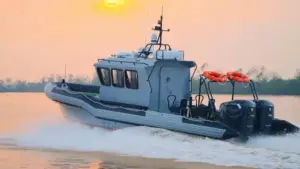
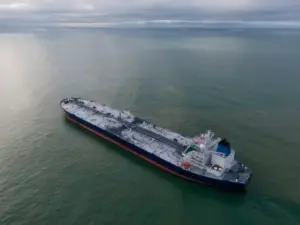
In the grey, choppy waters of the Gulf of Finland, a high-stakes maritime interdiction unfolded. Masked tactical operators, armed with automatic weapons and clad in specialized boarding gear, descended rapidly from a hovering Super Puma helicopter. Fast-roping onto the wind-swept deck of a target merchant vessel, the joint force—comprising elite elements of the Finnish Border Guard, national police, and the Finnish Defence Forces—quickly secured the crew before conducting a systematic, room-by-room sweep of the ship.
This was not a response to an active pirate attack in the Gulf of Aden, but a live-fire tactical exercise in the Baltic Sea. The drill, executed on September 17, serves as a direct response to a series of highly suspicious disruptions to critical undersea infrastructure. Since the Russian invasion of Ukraine in 2022, the Baltic Sea has transformed from a peaceful commercial highway into a primary theater for "grey-zone" hybrid warfare. Power grids, telecommunications cables, and gas pipelines running along the seabed have been repeatedly damaged, exposing a glaring vulnerability in Western Europe’s critical national infrastructure (CNI).
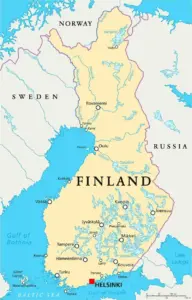
For Finland, which shares a 1,340-kilometer (830-mile) border with Russia and recently abandoned decades of military non-alignment to join NATO, protecting these underwater lifelines is now a matter of national survival. Helsinki’s rapid-response doctrine has shifted from passive monitoring to aggressive, proactive interdiction. This drill underscores a stark reality: Nordic authorities are preparing for the next inevitable strike on their undersea networks, and they are willing to board, search, and seize any vessel suspected of carrying out hostiles acts under the guise of commercial transit.
+-------------------------------------------------------------------+
|                  BALTIC SEA HYBRID THREAT LANDSCAPE                |
+-------------------------------------------------------------------+
|  [Nord Stream 1 & 2]  --> Sept 2022: Unexplained deep-sea blasts   |
|  [Balticconnector]     --> Oct 2023: Anchors dragging over pipe    |
|  [Telecom Cables]     --> Ongoing: Multi-point fiber optic cuts   |
+-------------------------------------------------------------------+
|  RESPONSE: Finnish Border Guard "VBSS" (Boarding) Drills          |
+-------------------------------------------------------------------+
Detailed Chronology: The Escalation of Baltic Maritime Insecurity
To understand the urgency behind Finland’s recent boarding exercises, one must examine the rapid deterioration of Baltic maritime security over the last several years. The region has transitioned from a zone of low geopolitical tension to an active security flashpoint.
   2022 (Sept)             2023 (Oct)             2024 (Sept)
-------|-----------------------|----------------------|-------->
  Nord Stream             Balticconnector         Live Boarding
  Explosions              Pipeline Ruptured        Drill Conducted
 (Sabotage Event)       (Suspect Ship Escapes)    (1-Hour Response)
September 2022: The Nord Stream Blasts
The geopolitical landscape of the Baltic Sea changed permanently on September 26, 2022, when a series of clandestine underwater explosions tore through the Nord Stream 1 and Nord Stream 2 natural gas pipelines in international waters near the Danish island of Bornholm. The blasts, which registered as seismic events, released hundreds of thousands of tonnes of methane into the atmosphere. While investigations by Swedish, Danish, and German authorities pointed to state-sponsored sabotage, the incident highlighted the extreme vulnerability of deep-sea infrastructure and the immense difficulty of attributing underwater attacks.
October 2023: The Balticconnector and Telecom Cable Ruptures
Just over a year later, on October 8, 2023, the Balticconnector—a 77-kilometer (48-mile) bi-directional subsea gas pipeline linking Finland and Estonia—suffered a sudden loss of pressure. Simultaneously, a nearby telecommunications cable connecting the two nations was severed.
Subsequent maritime investigations identified the prime suspect: the NewNew Polar Bear, a Hong Kong-flagged container vessel. Marine salvage teams later recovered a massive, 6-tonne anchor from the seabed directly adjacent to the ruptured pipeline. Evidence suggested the anchor had been dragged along the seafloor for miles, snagging and crushing both the data cables and the steel-reinforced concrete pipeline. Around the same time, an undersea telecom cable between Sweden and Estonia was also damaged, pointing to a coordinated or highly negligent pattern of maritime activity.
The Evolution of Finland’s Tactical Response
Helsinki’s operational posture has sharpened dramatically with each successive incident.
- The First Incident (Late 2022 / Early 2023): Suspect vessels often managed to exit the Baltic Sea and enter international waters or Russian territorial jurisdictions long before Finnish or allied authorities could coordinate a legal and physical response.
- The Balticconnector Incident (October 2023): While Finnish investigators quickly identified the NewNew Polar Bear, diplomatic and jurisdictional hurdles prevented immediate boarding, allowing the vessel to continue its transit out of the region.
- The Present Day (September 2024 and Beyond): The latest boarding drills demonstrate a zero-tolerance policy. Under the revised doctrine, any vessel exhibiting suspicious behavior over critical infrastructure will be boarded and secured within hours, utilizing rapid-deployment units before the ship can escape into international sanctuaries.
Supporting Context & Metrics: The Vulnerability of the Baltic Seabed
The Baltic Sea is uniquely vulnerable to maritime sabotage due to its geography, traffic density, and critical role in regional energy and data transmission.
1. Shallow Waters and High Accessibility
Unlike the deep abyssal plains of the Atlantic or Pacific, the Baltic Sea is remarkably shallow, with an average depth of just 55 meters (180 feet). This shallow profile makes the seabed highly accessible not only to military-grade submarines but also to commercial divers, commercially available Unmanned Underwater Vehicles (UUVs), remotely operated vehicles (ROVs), and basic maritime equipment like anchors and trawl nets.
2. Dense Commercial Traffic
At any given moment, between 2,000 and 3,000 large commercial vessels are transiting the Baltic Sea. This dense traffic provides perfect cover for "grey-zone" operations. A hostile actor does not need a sophisticated naval destroyer to sever a cable; a standard merchant ship, operating under a flag of convenience, can drop its anchor "accidentally" while transiting over a known infrastructure corridor.
3. Critical Infrastructure Density
The Baltic floor is a dense web of critical lifelines:
- Gas Pipelines: Interconnectors like Balticconnector and Nord Stream.
- Power Cables: High-voltage direct current (HVDC) lines such as Estlink 1 and Estlink 2 (connecting Finland and Estonia) and NordBalt (connecting Sweden and Lithuania).
- Data Links: Hundreds of fiber-optic cables carrying internet traffic, financial transactions, and military communications between Western Europe, the Nordic nations, and the Baltic states.
| Infrastructure Type | Primary Threat Vector | Detection Difficulty | Potential Regional Impact |
|---|---|---|---|
| Fiber-Optic Data Cables | Anchors, specialized cutting tools, UUVs | High (Requires acoustic arrays/OTDR) | High (Widespread internet and telecomm outages) |
| Power Interconnectors | Heavy anchors, explosive charges, ROVs | Medium | Severe (Grid instability, soaring electricity prices) |
| Natural Gas Pipelines | Explosives, heavy dragging equipment | Low (Pressure drops immediately) | Severe (Energy supply shortages, economic shock) |
Identifying Suspicious Vessel Behavior
According to maritime security experts, modern surveillance relies on detecting anomalies in a ship’s Voyage Data Recorder (VDR) and Automatic Identification System (AIS) telemetry. Key red flags include:
- Unexplained Speed Drops: A sudden deceleration from normal cruising speed (e.g., 15 knots down to 3–4 knots) while passing directly over a pipeline corridor.
- Course Deviations: Micro-maneuvering or zig-zagging over known cable routes.
- AIS Blackouts: Deliberate disabling of transponders (dark shipping) in areas with high densities of underwater infrastructure.
Official Statements: Defining "The New Normal"
The boarding exercises in the Gulf of Finland were accompanied by blunt assessments from top Finnish security officials, who sought to send a clear deterrent signal to regional adversaries.
+--------------------------------------------------------------------------+
|                        KEY VOICES ON BALTIC SECURITY                     |
+--------------------------------------------------------------------------+
| "In the past two or three years we've had several incidents in the       |
|  Baltic related to the damaging of critical underwater infrastructure.   |
|  So we have to be ready for when the next event happens."                |
|                                                                          |
|  -- Commander Ilja Iljin, Finnish Coast Guard                           |
+--------------------------------------------------------------------------+
| "In a real call-out, police officers on standby can be at their base     |
|  within an hour, before deploying by helicopter or boat."                |
|                                                                          |
|  -- Chief Inspector Juha Hietala, Police Special Intervention Unit       |
+--------------------------------------------------------------------------+
Commander Ilja Iljin (Finnish Coast Guard)
Commander Iljin, who directed the live boarding exercise, emphasized that the threat environment has permanently shifted. He noted that the Finnish Coast Guard no longer views these scenarios as hypothetical.
"This is the new normal," Iljin stated. "In the past two or three years, we’ve had several incidents in the Baltic related to the damaging of critical underwater infrastructure. So we have to be ready for when the next event happens." He explained that recognizing the warning signs—such as a vessel dragging an anchor or hovering suspiciously over a pipeline—must immediately trigger a tactical response rather than a prolonged diplomatic inquiry.
Chief Inspector Juha Hietala (Special Intervention Unit)
Chief Inspector Hietala detailed the high state of readiness maintained by Finland’s elite domestic law enforcement units, which work in lockstep with military and border authorities.
"In a real call-out, police officers on standby can be at their base within an hour, before deploying by helicopter or boat," Hietala said. This rapid response time is critical for intercepting vessels before they can cross out of Finland’s Exclusive Economic Zone (EEZ) or enter territorial waters where boarding actions could trigger international legal disputes.
Future Outlook: Legislation, Technology, and NATO Integration
As Finland adapts to this persistent threat, its strategy is evolving along three primary lines of effort: legislative reform, technological surveillance, and integration within the NATO alliance.
              ┌────────────────────────────────────────┐
              │  FINLAND'S THREE-PILLAR DEFENSE MODEL  │
              └───────────────────┬────────────────────┘
                                  │
         ┌────────────────────────┼────────────────────────┐
         ▼                        ▼                        ▼
┌─────────────────┐      ┌─────────────────┐      ┌─────────────────┐
│   LEGISLATIVE   │      │  TECHNOLOGICAL  │      │   GEOPOLITICAL  │
│     REFORMS     │      │   ADVANCEMENTS  │      │   INTEGRATION   │
│  Expanded Coast │      │ Hydrophones, AI │      │ NATO "Lake" Co- │
│  Guard powers & │      │ Tracking, UUV   │      │ ordination &    │
│  UUV intercepts │      │ Interdiction    │      │ Joint Patrols   │
└─────────────────┘      └─────────────────┘      └─────────────────┘
1. Legislative Overhaul and Expanded Interdiction Powers
Under current international maritime law, specifically the United Nations Convention on the Law of the Sea (UNCLOS), boarding a foreign-flagged vessel in an Exclusive Economic Zone (EEZ) is highly restricted, often requiring the consent of the flag state unless the vessel is deemed stateless.
To bypass these legal gray areas, the Finnish government is actively drafting new legislation. The proposed laws seek to grant the Finnish Border Guard and Coast Guard explicit authority to:
- Stop and Inspect Suspect Vessels: Interdict ships suspected of being stateless, operating under false registries, or displaying fraudulent flags of convenience within Finland’s contiguous zone and EEZ.
- Neutralize Unmanned Threats: Legally engage, disable, or seize unmanned underwater vehicles (UUVs) and remote-controlled diving robots operating near critical infrastructure.
- Enforce Exclusion Zones: Establish temporary maritime exclusion zones around vital undersea pipelines and power lines during periods of heightened tension.
2. Technological Advancements in Seabed Warfare
While physical boarding operations are an effective deterrent, Finland is also investing heavily in advanced subsea monitoring technologies to detect threats before they strike.
- Distributed Acoustic Sensing (DAS): By repurposing existing fiber-optic telecom cables as massive seismic and acoustic sensors, authorities can detect the acoustic signature of ships dragging anchors, divers breathing, or ROVs operating in the vicinity of critical infrastructure.
- Autonomous Underwater Patrols: Deploying fleets of long-endurance autonomous underwater vehicles (AUVs) equipped with side-scan sonar to continuously patrol pipeline corridors and detect anomalies or explosive charges.
- AI-Driven Predictive Tracking: Utilizing artificial intelligence to analyze AIS data from thousands of Baltic vessels in real time, automatically flagging ships that deviate from standard shipping lanes or exhibit erratic speed changes over CNI corridors.
3. The Geopolitical Dimension: The "NATO Lake"
With Finland and Sweden now fully integrated into NATO, the Baltic Sea has effectively become a "NATO Lake." This geographic shift allows for unprecedented intelligence-sharing and joint maritime operations.
However, this consolidation has also increased the likelihood of Russian asymmetric operations. Deprived of conventional naval dominance in the Baltic, Moscow may rely more heavily on shadow-fleet tankers, civilian research vessels, and subsea sabotage to project power and test Western resolve. The joint exercises conducted by Finland are a clear message to both allies and adversaries: the Nordic nations are prepared to defend their underwater frontiers, turning the cold depths of the Baltic Sea into a highly monitored and actively defended defensive line.