





Executive Overview
Every year, nature orchestrates some of the most breathtaking spectacles on Earth. Humpback whales navigate thousands of miles across open oceans to reach their ancestral breeding grounds, while every night, trillions of plankton, fish, and squid undertake a massive vertical migration from the abyss to the surface waters to feed. These biological rhythms are ancient, precise, and essential to the balance of marine ecosystems.
Yet, there is a different kind of migration occurring across our planet—one driven not by instinct, but by human conscience, urgency, and a shared commitment to healing our blue planet.
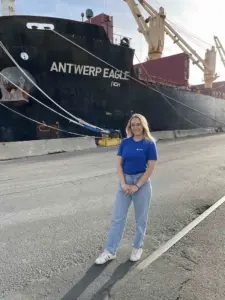
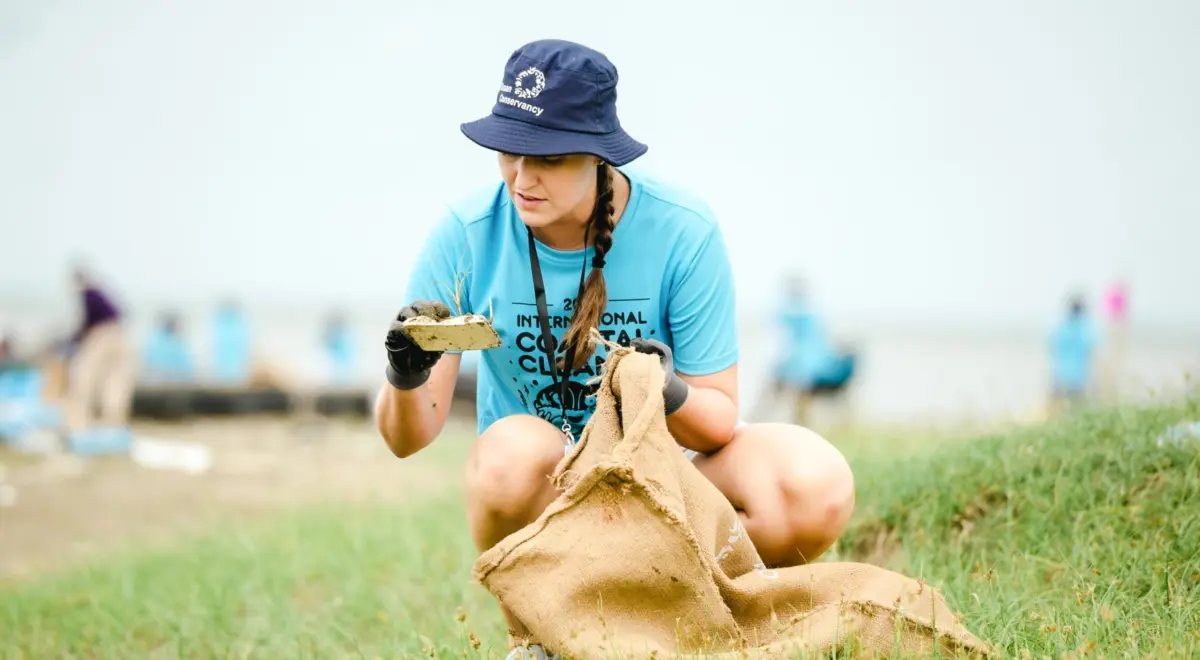
As we approach the 41st season of the Ocean Conservancy’s International Coastal Cleanup® (ICC), hundreds of thousands of volunteers are once again preparing to flock to shores worldwide. Their mission: to clear harmful debris and single-use plastics from creeks, rivers, lakes, and coastlines before these pollutants can fracture marine ecosystems permanently. For Sarah Weller, Associate Director of the International Coastal Cleanup, this year’s mobilization holds deep personal significance. It marks her first official cleanup with her eight-month-old daughter in tow—the beginning, she hopes, of a lifelong tradition of stewardship.
This sprawling, grassroots movement is far more than a seasonal volunteer event. It is a global data-gathering enterprise, an empirical engine for scientific research, and a powerful testament to humanity’s collective responsibility toward the global commons. As the ocean plastic crisis escalates, the ICC stands as the world’s largest volunteer effort of its kind, bridging the gap between local action and international environmental policy.
Detailed Chronology: The Evolution and Mechanics of the ICC
The story of the International Coastal Cleanup is one of steady, organic growth rooted in scientific rigor. Established more than four decades ago by the Ocean Conservancy, the initiative was born from a simple realization: to solve the ocean trash crisis, we first had to understand its scope. Before local communities could advocate for systemic legislative changes—such as plastic bag bans, extended producer responsibility laws, and upgraded municipal waste management systems—they needed undeniable, granular data.
From Grassroots Cleanup to Global Database
What began as isolated beach sweeps in Texas during the 1980s has transformed into a synchronized global movement spanning over 100 countries. Every year, millions of volunteers step up to not only remove trash from vulnerable aquatic environments but also meticulously log every single item they collect.
The mechanism behind this data collection is straightforward yet revolutionary. Using standardized data-collection cards or Ocean Conservancy’s specialized mobile application, Clean Swell®, volunteers categorize every piece of debris—from food wrappers and cigarette butts to abandoned fishing nets and microplastics. This information feeds directly into an open-access, global online database. Researchers, policymakers, and industry leaders leverage this repository to track trends, identify primary corporate polluters, and craft targeted interventions to stem the tide of plastic at its source.
The Scale of the Crisis
The numbers from previous campaigns illustrate both the staggering scale of the problem and the heroic dedication of the global volunteer base. During the most recent full reporting cycle, more than 630,000 volunteers mobilized across the globe. Together, they removed a jaw-dropping 7.9 million pounds (3.4 million kilograms) of trash from our waterways and shores, tallying an astonishing 13.8 million individual items removed.
While the flagship events traditionally peak in September, the ICC operates as a 365-day movement. Cleanups happen year-round, driven by local watershed groups, corporate teams, school classes, and families who recognize that ocean health begins thousands of miles inland. Every drop of rain that washes litter into a storm drain ultimately finds its way to a river, and every river leads to the sea.
Supporting Context & Metrics: Quantifying Conservation and Wildlife Impact
Cleaning up a beach does more than improve coastal aesthetics; it provides an immediate, measurable lifeline to marine wildlife. For decades, conservationists understood intuitively that removing plastic debris saved animals from entanglement and ingestion. However, recent breakthroughs in environmental science have allowed researchers to quantify these impacts with remarkable precision.
Groundbreaking Research and the Cozzarelli Prize
In a testament to the scientific rigor backing these initiatives, research led by Ocean Conservancy scientists recently won the highly selective Cozzarelli Prize for Scientific Excellence. This prestigious award recognized groundbreaking studies linking localized cleanup efforts to tangible reductions in mortality rates for marine species.
Building directly upon these scientific insights, the Ocean Conservancy developed the Wildlife Impact Calculator. Integrated directly into the Clean Swell® mobile application, this innovative tool transforms raw cleanup data into actionable, real-time ecological metrics. When a volunteer records their findings—such as removing a discarded fishing line, a plastic six-pack ring, or plastic bags—the calculator instantly estimates how many marine birds, sea turtles, or marine mammals have been safeguarded from potential entanglement or lethal ingestion.
This immediate feedback loop changes the volunteer experience profoundly. Participants are no longer left wondering if their afternoon of hard work truly mattered; they can see the exact, quantifiable protective effect of their labor right on their smartphone screens.
The Interconnected Threat of Plastic Pollution
To understand why tools like the Wildlife Impact Calculator are so vital, one must examine the pervasive nature of plastic in aquatic environments. Unlike organic matter, plastics do not biodegrade. Instead, exposure to ultraviolet radiation, wave action, and thermal fluctuations causes them to fragment into smaller and smaller pieces known as microplastics.
These microscopic particles permeate the entire marine food web, from microscopic zooplankton up to apex predators like killer whales and blue whales. They vector persistent organic pollutants (POPs) into the tissues of marine organisms, disrupting endocrine systems, stunting growth, and diminishing reproductive success. By extracting macro-plastics from the coastal environment before weathering reduces them to microplastics, ICC volunteers act as the ultimate line of defense for ocean biodiversity.
Official Statements and Community Voices: Why We Protect the Blue Planet
The ocean is the life-support system of our planet. It generates over half of the oxygen we breathe, regulates our global climate, and sustains billions of human lives through food security and economic activity. Yet, its vastness often masks its vulnerability.
To capture the emotional and philosophical core of the movement, the Ocean Conservancy recently posed a fundamental question to its global network of supporters:
“What does the ocean mean to you, and why do you feel called to protect it?”
The responses reflect a profound, universal reverence for the marine world:
-
Debra E. spoke to the continuity of generations, sharing:
“I would love for future generations to be able to see the beautiful ocean we have. We need to stop the destruction of pollution, overfishing, and warming of our oceans.” -
Suzy W. highlighted the ocean as a realm of discovery and hope:
“It is our future! And it is an honor to explore it at times. I wish everyone could see its beauty below the surface.” -
Derek H. framed the marine environment as humanity’s final terrestrial frontier:
“It’s one of the most important places on the planet, and it is still as unknown to us as outer space, for this is the final frontier to be explored. And now more than ever, our future depends on a healthy, thriving ocean.” -
Cynthia K. connected ocean stewardship to personal memory:
“The ocean and wildlife were part of my childhood. It was where I felt like I belonged. I want to protect it so future generations can have the connection that I had.” -
Laurie S. encapsulated the absolute existential necessity of marine health:
“The ocean is life itself; a vast, breathing force whose rhythms sustain the planet, nourish entire ecosystems, and cradle an extraordinary tapestry of wildlife. It embodies natural beauty in its purest form… Without the ocean, all life ends; with it, the planet thrives. It is both a wonder and a responsibility, a reminder that we must protect the oceans if we hope to protect ourselves and the future of every living thing.”
These powerful testimonies demonstrate that coastal cleanups are not merely physical acts of waste management; they are expressions of profound love, cultural heritage, and ecological survival.
Future Outlook: Envisioning a World Without Plastic Pollution
As the 41st International Coastal Cleanup season gets underway, coordinators and volunteers find themselves suspended between urgent, practical necessity and visionary hope.
Removing trash from our environment remains an indispensable triage measure. As long as single-use plastics continue to flood global markets without adequate extended producer responsibility, boots-on-the-ground cleanups will be necessary to prevent ecological catastrophe. Volunteers collecting debris today are actively saving lives and gathering the vital data needed to pressure institutional change tomorrow.
However, the ultimate goal of the International Coastal Cleanup is its own obsolescence.
Sarah Weller and millions of environmental advocates around the globe share a unified dream: a future where the plastic pollution crisis is confined to the history books, and subsequent generations—including Weller’s young daughter—grow up in a world where coastal cleanups are no longer necessary.
This utopian vision is not an impossible fantasy. The technological tools, scientific frameworks, and policy solutions required to curb plastic pollution already exist. From bioplastics and circular economy models to sweeping bans on unnecessary single-use items and investments in advanced municipal recycling infrastructure, the path forward is clear. What is required now is political will, corporate accountability, and the continued mobilization of passionate citizens.
Take Action
The health of our global ocean depends on the actions we take today. Whether you organize a community sweep along a local riverbank, join an established coastal cleanup group, or download the Clean Swell® app to track a solo cleanup in your neighborhood, your contribution matters.
Join the 41st International Coastal Cleanup® today. Step into the annual migration of good for our blue planet, and help secure a resilient, healthy ocean and a thriving world—forever and for everyone.