Executive Overview
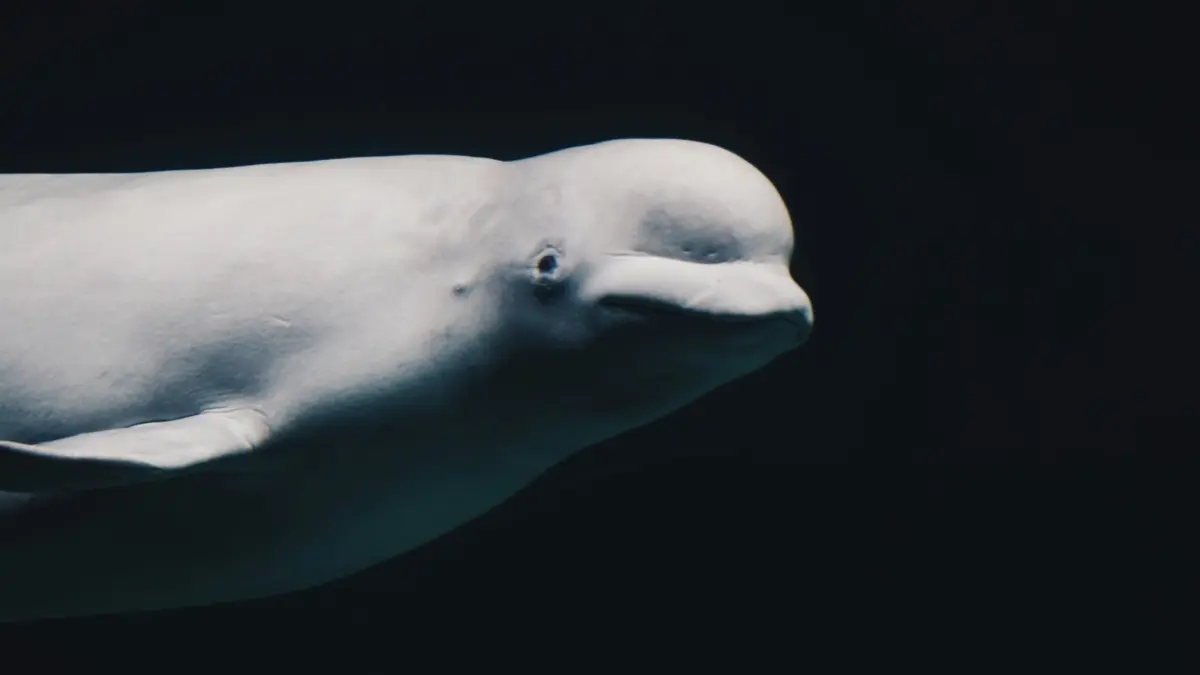
Hundreds of miles from the crashing rollers of the open Atlantic, slicing through the bustling shipping channels and quiet freshwater currents of Quebec’s St. Lawrence River, a flash of brilliant ivory breaks the surface. It is a beluga whale—a member of an isolated, resilient population that has called this inland waterway home for millennia.
The existence of these Arctic cetaceans so far south is not a geographical quirk, but a living geological artifact. They are the remnants of a vanished world shaped by colossal sheets of ice, shifting seas, and thousands of years of evolutionary adaptation. Yet, the same environment that sheltered these ice-age survivors for over 10,000 years is now transforming faster than their biology can accommodate.
Today, the St. Lawrence belugas face a compound crisis. Once hunted to the brink of commercial extinction, this endangered population of roughly 900 to 1,800 individuals is now besieged by industrial noise, chemical contamination, heavy maritime traffic, and the cascading effects of global climate change. Most alarmingly, a warming Arctic is melting the sea ice barriers that once protected them, inviting apex predators like orcas into their historic refuges. As the planet warms, the St. Lawrence beluga stands as both a living archive of Earth’s glacial history and a stark warning about the rapidly shifting future of our global oceans.

Detailed Chronology: From Glacial Basins to Modern Estuaries
To understand how Arctic whales came to inhabit a Canadian river, one must look back nearly 15,000 years, into the depths of the last glacial maximum.
The Wisconsin Glacier and the Champlain Sea (c. 13,000 BCE – 10,000 BCE)
During this epoch, North America groaned beneath the weight of the Wisconsin ice sheet, an enormous glacier spanning thousands of miles. The sheer mass of this frozen titan depressed the Earth’s crust beneath it by hundreds of meters. As global temperatures began to slowly rise, the glacier began a monumental retreat, leaving behind radical geographical alterations.
The depressed landforms created a massive low basin that was immediately flooded by saline waters rushing in from the Atlantic Ocean. This geological event birthed the Champlain Sea—an inland arm of the ocean that stretched from the present-day Atlantic coast westward toward the Great Lakes and modern-day New York.
Marine life flourished in this inland sea. As documented by fossil records embedded in the farmland, fields, and suburban lots stretching from Quebec City to the Ottawa Valley, porpoises, humpback whales, fin whales, bowhead whales, seals, and walruses thrived. Among them were ancestors of the modern beluga.

The Post-Glacial Rebound and Isolation (c. 8,000 BCE – 1,000 BCE)
As the heavy ice melted entirely, the weight lifted from the Earth’s crust, triggering a geological phenomenon known as post-glacial rebound. The land slowly rose back up, causing the Champlain Sea to drain away toward the Atlantic.
While most marine mammals retreated with the receding salt waters, a distinct population of beluga whales chose to stay behind in the newly forming St. Lawrence estuary. Cut off from their Arctic counterparts in northern Canada, Alaska, and Russia, these whales became genetically isolated. Over thousands of years, they forged a completely independent path, adapting their seasonal behaviors, feeding habits, and social structures entirely to the unique rhythms of the St. Lawrence River ecosystem.
Commercial Exploitation and Historical Decline (19th – 20th Century)
For generations, the St. Lawrence belugas coexisted sustainably with Indigenous communities, who relied upon them for subsistence, food security, and cultural traditions. However, the arrival of European settlers ushered in an era of systematic exploitation.
Belugas were viewed by early commercial fishers and government authorities as competitors for fish stocks and were hunted aggressively. By the turn of the 20th century, an estimated 10,000 belugas inhabited the St. Lawrence watershed. Decades of sanctioned culls, hunting, and industrial pollution decimated these numbers, leading to a desperate conservation scramble that finally culminated in a hunting ban in 1979.
Supporting Context & Metrics: A Species on the Brink
Despite decades of legal protection under Canadian wildlife laws, the St. Lawrence beluga population has failed to rebound. Today, they are officially classified as endangered, locked in a precarious struggle against both historical industrial scars and modern ecological disruption.
Population Demographics and Contaminant Loads
While historical counts once placed the population near 10,000, modern scientific censuses paint a grim picture. Current estimates suggest that only 900 to 1,800 belugas remain in the St. Lawrence estuary.
Compounding their low numbers is a toxic legacy. Because the St. Lawrence River drains heavily industrialized and urbanized watersheds, the whales have historically accumulated staggering levels of chemical contaminants in their blubber—including heavy metals, PCBs, and polycyclic aromatic hydrocarbons (PAHs). These toxins have been linked to high rates of cancer, reproductive failure, and compromised immune systems among the dead belugas that routinely wash ashore.
The Acoustic and Physical Squeeze
The river is no longer a quiet refuge. It is one of North America’s busiest commercial shipping lanes. Massive cargo ships, container vessels, and whale-watching boats churn the waters daily.
This heavy vessel traffic creates an intense underwater cacophony. Belugas rely on complex acoustic communication—echolocation clicks, whistles, and squeals—to navigate, hunt for food, and care for their calves. Chronic underwater engine noise masks these vital signals, effectively blinding the whales and disrupting fundamental behaviors like foraging and breeding.
The Arctic Connection and Climate Catalysts
The threats facing the St. Lawrence belugas are amplified by systemic changes unfolding thousands of miles to the north.
Every September, scientists at the National Snow and Ice Data Center measure the annual Arctic sea ice minimum—the point at which summer melt reaches its peak before winter refreezing begins. Satellite data spanning nearly five decades reveals an undeniable, accelerating downward trajectory: the last 19 September sea ice extents (from 2007 through 2025) are the 19 lowest on record.
This rapid loss of Arctic sea ice has catastrophic ripple effects. As northern waters warm and open up, new apex predators—most notably killer whales (orcas)—are expanding their hunting ranges into historical beluga sanctuaries. Lacking the protective barriers of sea ice, belugas find themselves increasingly vulnerable to predation.
Official Statements and Conservation Perspectives
Conservation scientists emphasize that the plight of the St. Lawrence beluga extends far beyond a single regional population; it is a warning about the fragility of isolated ecosystems in an era of rapid climate change.
"Groups of belugas in places like the St. Lawrence River and the Arctic have been separated for such long periods that they highlight the importance of genetic diversity when it comes to climate resilience," notes a spokesperson for Ocean Conservancy. "Losing one distinct population, like the St. Lawrence group, cannot simply be offset by having healthy beluga numbers in another part of the world. They represent thousands of years of unique history and adaptation."
Environmental advocates and marine biologists stress that protecting these animals requires aggressive, multi-pronged legislative and operational interventions. Chief among these is mitigating vessel strikes and acoustic pollution through enhanced maritime management.
Legislative frameworks, such as the proposed Whale CHARTS Act, seek to address these exact vulnerabilities. The act aims to amend the National Oceanic and Atmospheric Administration’s (NOAA) near-real-time monitoring and mitigation programs for large cetaceans. By improving our understanding of baleen and sperm whale migration routes, feeding grounds, and calving areas, regulatory bodies can implement mandatory slow-down zones and shipping lane shifts to drastically reduce deadly ship strikes and acoustic stress.
Future Outlook: Charting a New Course for Whales
The story of the St. Lawrence beluga is a powerful parable of persistence and vulnerability. For more than 10,000 years, these ivory cetaceans have adapted to an extreme, constantly shifting environment, serving as living archives of the North American continent’s glacial genesis.
Yet, as the pace of global warming outpaces evolutionary timelines, the window for intervention is rapidly closing. The threats facing the St. Lawrence population—ranging from chemical pollution and underwater noise to warming waters and invading predators—demand immediate, coordinated action from policymakers, shipping industries, and international conservation coalitions.
Safeguarding the future of the St. Lawrence beluga requires more than just local river management; it demands a global commitment to curbing greenhouse gas emissions, protecting marine biodiversity, and enforcing stricter maritime safety standards. If we fail to protect these ancient ice-age survivors, we risk losing not only a magnificent species, but a living record of what our oceans once were—and a crucial signpost of what they are rapidly becoming.