








Executive Overview
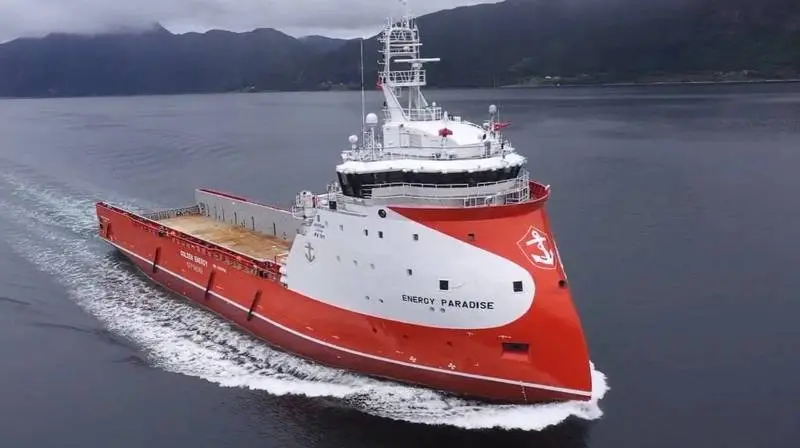
In a move that underscores the sustained strength and structural tightness of the North Sea offshore support vessel (OSV) market, Golden Energy Offshore Services AS (GEOS) has announced a significant contract extension for its platform supply vessel (PSV), Energy Paradise. The charterer, international energy logistics giant Peterson, has formally exercised a further well option, extending the vessel’s firm employment into the first quarter of 2027.
This contract extension is valued at an estimated $3.4 million for an anticipated duration of approximately 100 days. It is scheduled to commence in immediate continuation of the vessel’s current well program, which is slated for completion in mid-October 2026. This seamless transition guarantees uninterrupted operational deployment for the high-specification vessel through the challenging winter season, securing cash flow visibility for GEOS during a period of the year that historically experiences seasonal spot-market volatility.
The transaction highlights several critical trends currently shaping the offshore energy sector:
- Sustained Asset Demand: High-specification, fuel-efficient PSVs remain in exceptionally high demand as operators seek to de-risk their logistics supply chains.
- Strong Pricing Power: The implied day rates for this contract point to a robust pricing environment, reflecting the structural undersupply of premium tonnage in the North Sea.
- Strategic Fleet Utilization: The combined firm backlog for GEOS’s key assets, Energy Paradise and Energy Pace, has risen to approximately $10.3 million, with the potential to scale to $19.8 million should all remaining options be exercised.
As offshore exploration, production, and decommissioning activities maintain a rapid pace on the European continental shelf, this agreement highlights the strategic leverage held by vessel owners possessing modern, environmentally optimized fleets.
Detailed Chronology of the Charter Agreements
The operational timeline for the Energy Paradise reflects a highly coordinated sequence of charter campaigns designed to maximize asset utilization while mitigating transitional downtime.
[Current Well Program] ---> [Mid-Oct 2026: Option Commences] ---> [Late Jan/Early Feb 2027: Firm Period Ends] ---> [Optional Extension (1 Well)]The Current Program and Immediate Transition
The Energy Paradise is currently actively engaged under an existing well program managed by Peterson. This campaign has run throughout the summer and autumn of 2026 and is projected to conclude around mid-October 2026.
Rather than allowing the vessel to enter the North Sea spot market—where winter weather can occasionally disrupt charter rates and utilization—Peterson opted to exercise its contractually agreed well option well in advance. Under the terms of the agreement, the new 100-day firm period will trigger immediately upon the completion of the current well program, ensuring zero off-hire days for GEOS.
Extending the Horizon into 2027
The newly activated option secures the firm employment of the Energy Paradise until approximately late January or early February 2027. This timeline is highly advantageous for GEOS. In the North Sea, the winter months (November through February) are typically characterized by harsh weather, reduced marine operations, and a corresponding softening of spot charter rates. By locking in a firm, highly lucrative rate through the heart of the winter season, GEOS insulated its revenue stream from these seasonal dynamics.
Remaining Optionality
The commercial relationship between GEOS and Peterson regarding the Energy Paradise retains further upside. Following the expiration of this newly exercised 100-day option in early 2027, Peterson retains one additional well option. This remaining option has an estimated potential contract value of approximately $2.5 million. Should Peterson encounter further drilling successes or logistics requirements, this option provides them with pre-negotiated access to premium tonnage, while offering GEOS a clear pathway to extend the vessel’s employment further into 2027.
Supporting Context & Metrics: Financial and Operational Analysis
To fully appreciate the economic significance of this extension, it is necessary to analyze the underlying financial metrics of the charter and look at the broader fleet-wide impact for Golden Energy Offshore Services.
Implied Day Rate Analysis
While GEOS does not explicitly publish daily hire rates for individual charters due to commercial confidentiality, the figures provided in the public announcement allow for a reliable mathematical deduction:
$$textImplied Day Rate = fractextEstimated Contract ValuetextAnticipated Duration = frac$3,400,000100 text days = $34,000 text per day$$
A day rate of approximately $34,000 per day for a winter charter in the North Sea is a clear indicator of a highly healthy market. For comparison, during the prolonged offshore downturn between 2015 and 2021, standard PSV day rates frequently languished in the high single digits or low teens, often failing to cover basic vessel operating expenses (OPEX). A rate of $34,000 per day provides a substantial margin over typical North Sea PSV daily operating costs—which generally range between $10,000 and $15,000 (including crew, insurance, maintenance, and shore-based support)—yielding excellent cash flow generation for the vessel owner.
The Synergistic Value of the GEOS Fleet
The contract for the Energy Paradise does not stand in isolation. GEOS has strategically aligned its chartering activities to build a robust, predictable revenue backlog. This is evidenced by the parallel performance of another key asset in the company’s fleet, the Energy Pace.
| Vessel Name | Contract Status | Estimated Firm Value | Potential Options Value | Total Potential Value |
|---|---|---|---|---|
| Energy Paradise | Firm through Q1 2027 | $3.4 Million | $2.5 Million (1 Option) | $5.9 Million |
| Energy Pace | Term Contract | Included in Firm Backlog | Included in Options Backlog | – |
| Combined Portfolio | Firm Commitments | $10.3 Million | $9.5 Million | $19.8 Million |
This balanced portfolio approach provides GEOS with a highly stable financial foundation:
- Firm Revenue Security: The combined firm contracts for Energy Paradise and Energy Pace represent a guaranteed revenue backlog of approximately $10.3 million.
- Significant Financial Upside: If all remaining options under both the Energy Paradise and Energy Pace contracts are exercised by their respective charterers, the total combined contract value escalates to $19.8 million.
- Capital Allocation Flexibility: This forward revenue visibility allows GEOS to comfortably service its debt obligations, fund routine dry-dockings, and potentially evaluate further fleet expansion or modernization initiatives.
Strategic Alignment: GEOS and Peterson
The extension of this charter reflects a deep operational synergy between Golden Energy Offshore Services and Peterson.
Peterson: The Logistics Architect
Peterson is a globally recognized leader in offshore energy logistics, providing integrated supply chain solutions, port agency services, and marine management to major oil and gas operators, as well as offshore wind developers. In the North Sea, where logistics coordination is incredibly complex due to volatile weather and tight drilling windows, Peterson relies heavily on the reliability, fuel efficiency, and technical capabilities of its chartered fleet.
For Peterson, securing a high-spec PSV like the Energy Paradise on a term basis mitigates the risk of operational delays. In a tight market, relying on the spot market to support a continuous drilling or production campaign is a high-risk strategy; a lack of available vessels can result in idle rig time, costing operators hundreds of thousands of dollars per day. By exercising the well option, Peterson ensures logistical continuity and cost predictability for its clients.

GEOS: Premium Assets for Modern Demands
Golden Energy Offshore Services has carved out a distinct niche in the offshore sector by focusing on high-specification, environmentally responsible vessels. The Energy Paradise is designed to meet the rigorous standards demanded by modern energy companies, which increasingly prioritize carbon footprint reductions alongside operational safety.
High-spec PSVs of this class typically feature:
- Dynamic Positioning Class 2 (DP2): Essential for maintaining station alongside offshore platforms and drilling rigs in extreme North Sea weather.
- Large Cargo Capacities: Optimized deck areas and bulk tank capacities to transport drill water, liquid mud, brine, cement, and dry bulk efficiently.
- Fuel Efficiency and Low Emissions: Advanced hull designs and fuel management systems that reduce overall fuel consumption and emissions, aligning with the industry’s Scope 3 decarbonization targets.
Market Context: The North Sea OSV Super-Cycle
To understand why Peterson acted decisively to lock in the Energy Paradise into 2027, one must examine the broader macroeconomic dynamics governing the North Sea offshore support vessel sector.
The Supply-Side Crunch
The fundamental driver of the current high-rate environment is a severe, structural shortage of active, high-specification PSVs. The offshore industry suffered almost a decade of underinvestment following the oil price crash of 2014. During this downturn:
- Dozens of shipyards went bankrupt, halting the construction of new OSVs.
- Older, less efficient vessels were systematically sold for scrap or converted for use in other industries (such as aquaculture or offshore wind support).
- Many vessels were placed into long-term cold lay-up, from which reactivation is prohibitively expensive, often costing millions of dollars per vessel to bring back to class.
Consequently, the global and regional supply of active, class-certified PSVs has shrunk dramatically. With virtually no newbuild orders placed in recent years due to high interest rates, elevated steel costs, and uncertainty surrounding future fuel technologies, the supply side of the market is expected to remain highly constrained for the foreseeable future.
+-----------------------------------------------------------------+
|                    THE OSV SUPPLY-DEMAND SQUEEZE                |
+-----------------------------------------------------------------+
|  DEMAND DRIVERS:                                                |
|  - Increased North Sea oil & gas drilling (Energy Security)     |
|  - Rapid expansion of offshore wind farm construction          |
|  - Rising decommissioning activity in mature fields             |
+-----------------------------------------------------------------+
|                               VS                                |
+-----------------------------------------------------------------+
|  SUPPLY CONSTRAINTS:                                            |
|  - Near-zero newbuild orders over the last decade               |
|  - High cost of reactivating cold-laid-up vessels               |
|  - Permanent attrition of older tonnage via scrapping           |
+-----------------------------------------------------------------+
|  RESULT: Sustained utilization rates (>90%) and strong day rates|
+-----------------------------------------------------------------+
Sustained Demand Drivers
While supply has contracted, demand has experienced a powerful resurgence, driven by two primary engines:
1. Energy Security and Hydrocarbon Production
Following the geopolitical shifts of 2022, European nations have placed a renewed emphasis on domestic energy security. This has spurred increased investment in the North Sea Continental Shelf (NCS) and the UK Continental Shelf (UKCS). Operators are actively working to maximize production from existing assets, fast-track tie-back developments, and execute targeted exploration drilling. These activities are highly logistics-intensive, requiring steady runs of supply vessels to transport equipment, consumables, and fluids.
2. The Offshore Wind Boom
The rapid expansion of offshore wind farms in the North Sea has introduced a major new competitor for maritime assets. While specialized vessels are used for turbine installation, standard PSVs are increasingly utilized for cable-laying support, accommodation duties, and general cargo transport during the construction and commissioning phases of mega-wind projects. This cross-sector demand pulls vessels out of the oil and gas pool, further tightening the supply available to traditional operators.
Official Statements and Strategic Perspectives
The corporate messaging from Golden Energy Offshore Services consistently highlights a focus on operational excellence, environmental stewardship, and the cultivation of long-term, mutually beneficial client relationships.
While formal executive quotes were not detailed in the brief announcement, the strategic rationale behind the transaction speaks volumes. By securing this extension, GEOS’s management team continues to execute its stated strategy of de-risking the company’s cash flows through term charters with high-quality, blue-chip counterparts.
In past shareholder communications, GEOS has emphasized that:
- Customer Retention is Paramount: Securing repeat business and option exercises from tier-one charterers like Peterson validates the operational competence of the crew and the technical reliability of the vessels.
- Environmental Efficiency Pays Off: Vessels that can demonstrate lower fuel consumption and lower greenhouse gas emissions are consistently preferred by charterers, allowing owners of modern fleets to command a premium in the market.
- Maintaining Fleet Agility: By utilizing well-structured contracts with clear options, GEOS retains the ability to re-price its assets upward if the market continues its upward trajectory, while maintaining a firm baseline of contracted revenue.
Future Outlook and Industry Implications
Looking ahead toward the remainder of 2027 and the late 2020s, the contract extension for the Energy Paradise serves as a bellwether for the broader offshore maritime industry.
Will We See a Return to Newbuilding?
A critical question facing the industry is whether the current high-rate environment will trigger a new wave of vessel construction. Historically, high day rates prompted speculative building, which ultimately led to oversupply and market crashes.
However, the current cycle appears fundamentally different. Shipowners face significant hurdles to placing new orders:
- Technological Uncertainty: Owners are hesitant to invest in vessels with a 25-year lifespan when the future fuel standard (ammonia, hydrogen, methanol, or full electrification) remains undecided.
- Capital Constraints: Banks and financial institutions, guided by ESG (Environmental, Social, and Governance) mandates, are far more cautious about financing new fossil-fuel-related assets.
- High Capital Costs: Inflationary pressures have driven the cost of a newbuild high-spec PSV to unprecedented levels, requiring sustained day rates well above $40,000 to justify the capital expenditure.
Given these barriers, the industry is likely to see a prolonged period of high utilization and strong rates, as the existing fleet is progressively worked harder.
Consolidations and Fleet Optimization
To capitalize on these market dynamics, the industry is experiencing ongoing consolidation. Larger fleet operators are acquiring smaller players to achieve economies of scale, optimize shore-based support, and offer charterers a broader portfolio of vessels. For a focused operator like GEOS, maintaining a highly efficient, modern, and fully utilized fleet makes them an attractive partner for major logistics providers and potentially a compelling target for larger consolidators.
Conclusion
The activation of the 100-day well option for the Energy Paradise by Peterson is a micro-level transaction that perfectly illustrates the macro-level health of the offshore support vessel industry. By securing firm employment into early 2027 at highly favorable implied rates, Golden Energy Offshore Services has reinforced its financial stability, validated its operational strategy, and positioned itself to capitalize on the ongoing North Sea energy boom. As the market remains structurally undersupplied, the leverage continues to reside firmly with the owners of high-specification, reliable, and environmentally optimized offshore vessels.