



Executive Overview
Seattle, Washington, is a city defined by iconic silhouettes—chief among them the slender, futuristic needle of the Space Needle piercing the Pacific Northwest sky. While modern travelers frequently associate the 74-acre Seattle Center with high-tech museums, community festivals, and breathtaking art installations, its origins trace back to a defining moment in mid-century American history: the Century 21 Exposition, better known as the 1962 Seattle World’s Fair.
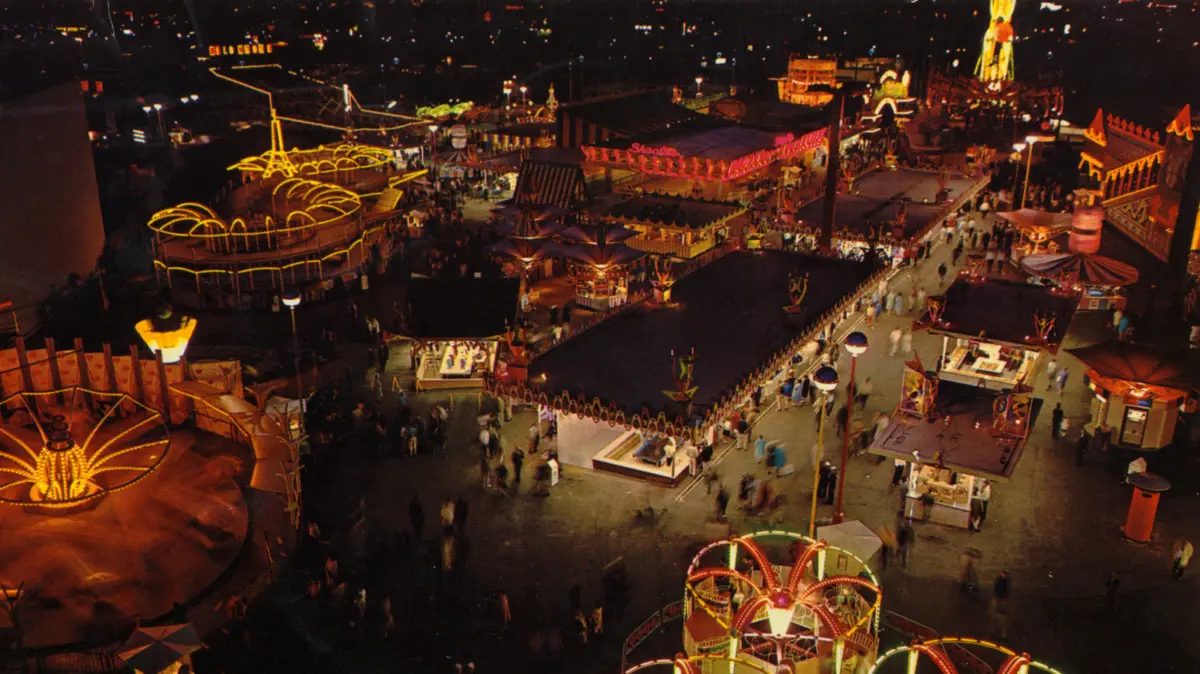
For six transformative months in 1962, the world looked to Seattle as a beacon of tomorrow. The fair introduced millions of global visitors to the possibilities of space exploration, modern architecture, and rapid transit, leaving behind enduring legacies such as the Seattle Monorail and the Space Needle. However, not every vestige of the exposition survived the decades intact. Tucked away in the historical archives of the fairgrounds was the "Gayway"—a bustling, neon-lit amusement park featuring carnival games, rollercoasters, and a gondola-style Sky Ride that entertained families for generations.
As the decades progressed, the Gayway evolved into the Fun Forest, a beloved local fixture that ultimately closed its gates in 2011. Rather than leaving the prime real estate vacant, city planners and visionaries seized an opportunity to redefine the cultural landscape of the Pacific Northwest. Today, that exact footprint hosts the Chihuly Garden and Glass, a world-class museum and botanical wonderland dedicated to the breathtaking, hand-blown glass sculptures of Tacoma native Dale Chihuly.
This deep dive explores the fascinating evolution of Seattle Center’s most dynamic parcel of land, tracing its journey from mid-century carnival thrills to high-culture masterpieces. It examines the historical significance of the 1962 World’s Fair, the meticulous engineering behind Chihuly’s globally celebrated installations, and the contemporary visitor experience that cements Seattle’s status as a premier cultural destination.
Detailed Chronology: From Century 21 to Contemporary Culture
1962: The Century 21 Exposition and the Birth of the Gayway
When the Century 21 Exposition opened its gates on April 21, 1962, it was designed to showcase America’s technological prowess at the height of the Space Race. Billed as a world’s fair focused on humanity’s life in the space age, the exposition attracted over 9.9 million visitors before closing its doors on October 21, 1962.
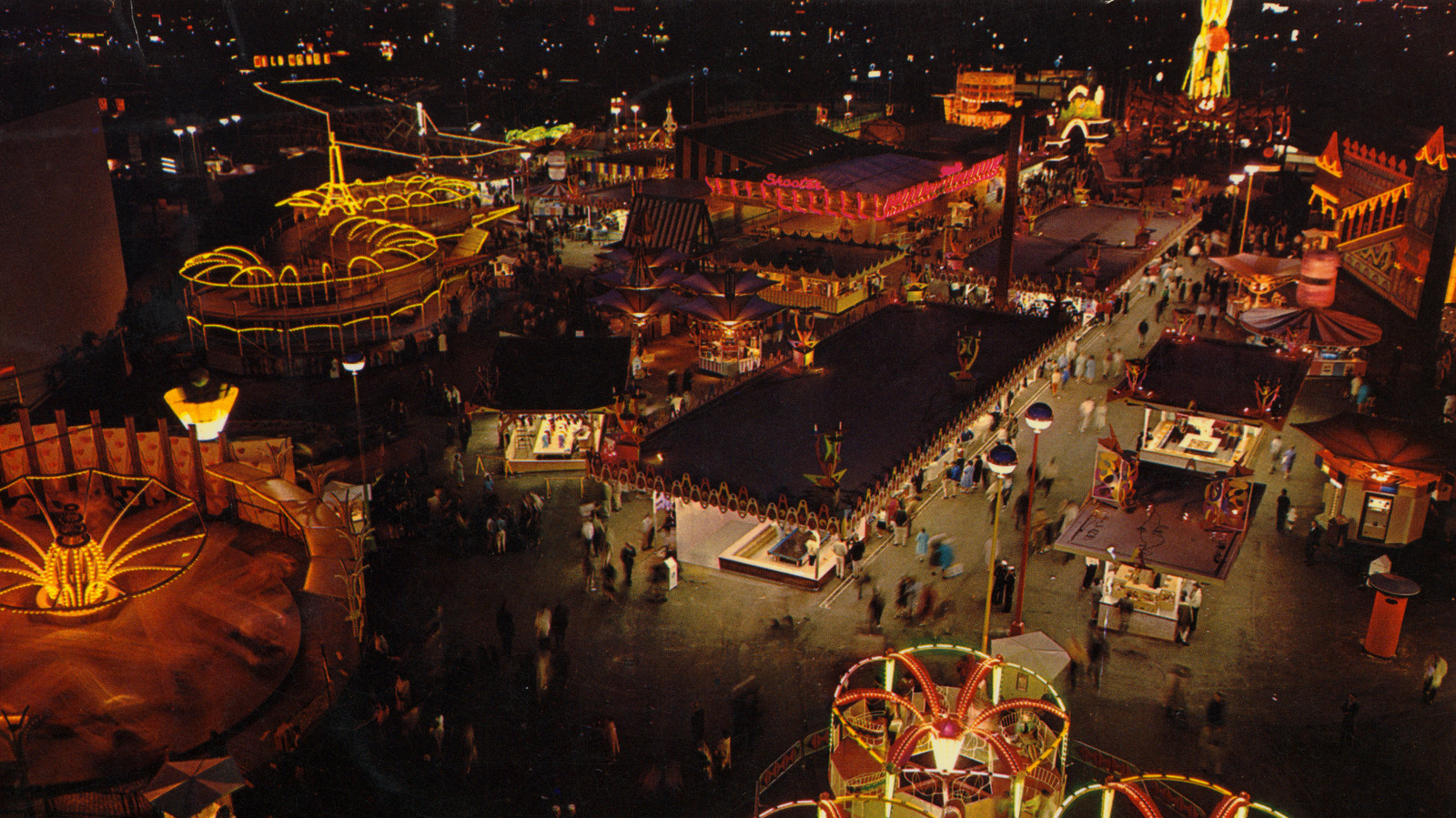
The fairgrounds were divided into distinct functional zones, including the World of Science, the World of Tomorrow, and the World of Entertainment. To satisfy the public’s appetite for classic thrills, organizers established the Gayway, a sprawling, 15-acre amusement area packed with approximately 20 rides, traditional carnival games, and mid-century attractions. Guests could take a leisurely spin on the sky wheel, enjoy the colorful teacup rides, experience the jolting turns of the Wild Mouse rollercoaster, or soar above the crowds on the gondola-style Sky Ride.
The exposition captured the cultural zeitgeist of the era, drawing global dignitaries, scientists, and Hollywood royalty alike. Most famously, rock-and-roll icon Elvis Presley arrived on-site to film scenes for his 1963 Metro-Goldwyn-Mayer motion picture, It Happened at the World’s Fair.
The Post-Fair Era: The Rise of the Fun Forest
Following the conclusion of the World’s Fair, the exposition site was officially designated as the Seattle Center, transitioning from a temporary global exhibition into a permanent civic, cultural, and recreational park. While many of the futuristic pavilions were repurposed, the amusement park zone remained a staple of local entertainment.
Rebranded over time as the Fun Forest, the former Gayway continued to serve generations of Seattle families. For nearly half a century, the flashing lights, the scent of cotton candy, and the screams of roller coaster riders remained a constant presence beneath the shadow of the Space Needle. However, by the late 2000s, the aging amusement park faced mounting operational challenges, shifting urban recreation trends, and a growing community desire to repurpose the central urban acreage for more cohesive, arts-focused civic programming. In 2011, the Fun Forest officially ceased operations, closing a 49-year chapter of amusement park history at the Seattle Center.
2012: The Arrival of Chihuly Garden and Glass
With the departure of the Fun Forest, city leaders and stakeholders deliberated on the future of the prime 7.1-acre parcel directly adjacent to the Space Needle. The solution arrived in the form of a public-private partnership honoring one of the region’s most celebrated native sons: master glassblower Dale Chihuly.
Construction moved rapidly, transforming the footprint of former carnival rides and ticket booths into an indoor-outdoor oasis of color, light, and organic form. When Chihuly Garden and Glass opened in May 2012, it fundamentally reshaped the aesthetic profile of the Seattle Center. Where patrons once queued for a ride on the Sky Ride, visitors now stand awestruck beneath a 100-foot-long floral sculpture inside the monumental Glasshouse, or wander among whimsical, serpentine glass installations seamlessly integrated into lush botanical gardens.
Supporting Context & Metrics: The Seattle Center Today
Today, the Seattle Center spans a sprawling 74 acres, functioning as the beating heart of the Emerald City’s arts and cultural scene. Managed as a public asset, the grounds welcome millions of visitors annually, offering a diverse array of green spaces, performance venues, and world-class museums.
Key Metrics and Infrastructure Highlights:
- Total Acreage: 74 acres of publicly accessible parkland, plazas, and cultural facilities.
- Annual Visitors: Estimates indicate that the Seattle Center attracts over 12 million visitors each year, making it one of the top tourist destinations in the Pacific Northwest.
- Attraction Density: The campus hosts more than 30 distinct cultural, educational, and entertainment organizations, including the Pacific Science Center, McCaw Hall (home to the Pacific Northwest Ballet and Seattle Opera), and Climate Pledge Arena.
- Architectural Legacy: Key structures remaining from the 1962 World’s Fair—including the Space Needle, the Seattle Monorail, and the original exhibition halls—are preserved under historic preservation guidelines, ensuring that the mid-century modern aesthetic endures alongside contemporary developments like MoPOP (Museum of Pop Culture).
Official Statements and Architectural Perspectives
The preservation and transformation of the Seattle Center campus have been guided by a coalition of urban planners, historians, and architectural preservationists dedicated to honoring the site’s mid-century roots while fostering modern innovation.
The Voice of Urban Historians and Preservationists
The Seattle Architecture Foundation (SAF), which regularly hosts the popular Seattle Center: The World’s Fair & Beyond walking tours, emphasizes the deliberate evolution of the grounds. According to foundation documents and architectural docents, the master plan of the 1962 exposition established a blueprint for pedestrian-centric urban design that was decades ahead of its time.
"The transition from the transitory thrills of the Gayway to the permanent, contemplative beauty of Chihuly Garden and Glass encapsulates Seattle’s broader economic and cultural maturation," notes the Seattle Architecture Foundation in its architectural briefs. "The fair put us on the global map as a city of the future; today’s Seattle Center honors that legacy by housing institutions that champion continuous human creativity, from computer science and music to avant-garde glass art."
Artistic and Curatorial Vision
Dale Chihuly, whose career spans over five decades of pioneering work in the Studio Glass movement, has frequently spoken about his deep connection to the Pacific Northwest. Born in Tacoma, Washington, in 1941, Chihuly studied interior design and architecture at the University of Washington before receiving a Fulbright Fellowship in 1968 to work at the legendary Venini glass factory on the island of Murano, Italy.
Despite suffering a severe automobile accident in 1976 that left him blind in his left eye—an injury that forced him to relinquish the physical glassblowing pipe and step into the role of director and designer—Chihuly revolutionized the medium through team-based execution on a monumental scale.
Reflecting on the permanent exhibition at Seattle Center, curators and museum spokespeople emphasize that the integration of art and nature is intentional. The venue is divided into three primary components: the Galleries, the centerpiece Glasshouse, and the outdoor Garden.
- The Galleries: Featuring black backdrops that provide stark, dramatic contrast, these rooms showcase Chihuly’s most iconic series, including Macchia, Ikebana, and the towering 20-foot Sealife Tower, where vibrant glass forms evoke oceanic ecosystems.
- The Glasshouse: A massive 40-foot-tall, 4,500-square-foot glass and steel structure housing a suspended, 100-foot-long sculpture composed of vibrant rust, amber, and yellow elements that interact dynamically with changing natural light throughout the day and evening.
- The Garden: A living botanical landscape featuring Japanese maples, dogwoods, ferns, and seasonal bulbs interspersed with Chihuly’s organic glass sculptures—such as swirling, cobra-like forms and towering lavender spears—creating a symbiotic dialogue between manufactured glass and organic flora.
Future Outlook: Preserving History While Embracing Innovation
As Seattle continues to experience rapid demographic and economic expansion driven by the technology and aerospace sectors, the role of public civic spaces like the Seattle Center becomes increasingly vital. The transformation of the old Gayway and Fun Forest footprint into Chihuly Garden and Glass serves as a national case study in adaptive reuse—demonstrating how cities can successfully transition aging, single-use entertainment zones into vibrant, multi-generational cultural assets.
Upcoming Initiatives and Pedestrian Connectivity
Looking ahead, city planners and neighborhood stakeholders are prioritizing enhanced pedestrian connectivity between the Seattle Center and adjacent urban hubs. Following Seattle’s designation as one of the country’s most walkable metropolitan destinations, municipal agencies are investing in improved walking trails, cycling infrastructure, and public transit links—such as the historic Monorail and light rail expansions.
Just an 11-minute walk from the Chihuly Garden and Glass grounds lies the Olympic Sculpture Park, Seattle’s largest downtown green space, managed by the Seattle Art Museum. This continuous ribbon of green spaces, parks, and world-class art installations reinforces the city’s commitment to blending the natural beauty of the Pacific Northwest with boundary-pushing contemporary art.
For historians, art enthusiasts, and families alike, a visit to the Seattle Center offers a rare, multi-layered experience. Beneath the shadow of the venerable Space Needle, visitors can trace the ghost of the 1962 World’s Fair across the expansive plazas, marvel at the engineering feats of mid-century architecture, and step inside a dazzling, color-drenched world where an old carnival midway once echoed with the laughter of the past.