






Executive Overview
Public transportation and active mobility—walking, cycling, and navigating urban centers on foot—form the lifeblood of modern, sustainable cities. They reduce carbon emissions, alleviate road congestion, and offer affordable connectivity for diverse populations. However, beneath the surface of everyday urban commuting lies a pervasive, frequently overlooked barrier to equity: public harassment. While street and transit harassment can impact anyone, it disproportionately targets women, people of color, and individuals within the LGBT+ community.
To confront this systemic crisis, a volunteer-led initiative known as Eyes on Board has emerged as a vital tool for documentation, education, and community solidarity. Drawing inspiration from legendary urbanist Jane Jacobs and her foundational concept of "Eyes on the Street"—the idea that natural surveillance by residents, pedestrians, and passersby fosters safety and deters crime—Eyes on Board combines an anonymous incident-reporting survey with a dynamic live tracking map.
This article explores the multifaceted dimensions of transit and street harassment, examining how pervasive low-level misconduct quietly erodes urban mobility, forces populations into car dependency, and undermines the foundational goals of progressive urbanism. Furthermore, as metropolitan areas like the San Francisco Bay Area face critical funding decisions—such as the upcoming 2026 regional transit funding measure—this piece investigates the intricate link between transit financing, infrastructural reliability, and personal safety. Ultimately, the initiative reminds urban planners, policymakers, and communities alike of a central truth: walkability must never be treated as a luxury, and urbanism must be inherently equitable.
Detailed Chronology: The Genesis and Evolution of "Eyes on Board"
The conceptual roots of modern urban surveillance trace back to Jane Jacobs’ 1961 masterwork, The Death and Life of Great American Cities, where she argued that safety on city streets is maintained not primarily by police, but by an intricate, unconscious network of voluntary eyes and ears belonging to the people inhabiting the space. Translating this philosophy into the digital and civic sphere, Eyes on Board was developed to address the gap between formal law enforcement statistics and the daily, low-level harassment that riders experience on buses, trains, and sidewalks.
Phase One: Conceptualization and the Need for Anonymous Reporting
For decades, public transit harassment has been plagued by underreporting. Targets frequently brush off "minor" verbal harassment, catcalling, or physical crowding because these behaviors have been aggressively normalized as an unavoidable tax of the "female experience" or urban living. Victims often feel that reporting incidents will yield little official action, or worse, invite humiliation and secondary trauma.
Recognizing this chilling effect, the creators of Eyes on Board launched an anonymous survey platform. This mechanism allows commuters to document the exact nature of their experiences without fear of exposure or social judgment. The survey collects crucial granular data, including:
- The time of day the incident occurred.
- The specific transit route, vehicle, or neighborhood location.
- The categorical type of harassment experienced (e.g., verbal catcalling, non-consensual physical contact, stalking, or targeted hate speech).
- The contextual environment (e.g., crowded rush-hour cars vs. isolated late-night platforms).
Phase Two: Deploying the Live Map and Fostering Solidarity
Once collected, this anonymized data feeds into a live, interactive GIS map (hosted via ArcGIS). Beyond serving as a data-collection repository, the map acts as a digital sanctuary of solidarity. For many victims, harassment breeds profound isolation; navigating a city while managing unaddressed trauma can make an individual feel entirely alone in their suffering.
By visualizing these reports across the urban landscape, the map reveals that harassment is not an isolated occurrence or the fault of the individual, but a widespread systemic issue. It validates the experiences of those who have suffered in silence, transforming invisible suffering into a collective, undeniable record.
Phase Three: Bridging the Empathy Gap and Activating Bystanders
A core mission of Eyes on Board is bridging the empathy gap between those who experience harassment regularly and those who remain oblivious to its scale. For urban dwellers—particularly women and marginalized groups—hyper-vigilance is a constant companion. They calculate routes based on lighting, crowd density, and time of day.
By laying bare the geographic and temporal distribution of harassment, the project educates the broader public. It provides actionable resources on how to safely intervene as a bystander using de-escalation techniques, and clearly defines what legally and socially constitutes harassment. This education is twofold: it empowers women to stop minimizing their own discomfort, and it challenges perpetrators—or ignorant bystanders—to recognize how seemingly "minor" behaviors inflict psychological damage and restrict the freedom of others.
Supporting Context & Metrics: The Intersection of Harassment and Mobility
To truly understand the impact of public harassment, one must examine its direct casualty: human mobility. Harassment is frequently misunderstood as an issue of mere comfort or politeness. In reality, it is a severe impediment to freedom of movement.
The Mechanics of Altered Mobility: A Personal Account
To see how harassment alters urban behavior, consider the lived experience of transit riders and pedestrians. Indigo Rosenberg, a 2025 graduate of San Francisco State University and member of the San Francisco Transit Riders (SFTR), recounts a personal encounter that highlights this dynamic:
"Earlier this year, I took a class at City College’s Chinatown campus, and I would walk up Grant Avenue because I loved the view. One day, one of the older storekeepers decided to follow me down the street so he could repeatedly ask me to get dinner with him. It happened the next time (and the time after that), so I walked on the opposite side of the street—he saw me and ran over to talk to me again, despite my only reply consistently being that I wasn’t interested. If I continued to walk down that street, I would continue to be harassed. I had to change my route, and my mobility was impacted."
This anecdote encapsulates the cumulative psychological wear-and-tear of urban harassment. When a commuter is forced to alter their daily walking path, bypass specific transit stops, or abandon public transit entirely after dark, their mobility is actively restricted.

Compounding Effects: Pushing Riders Toward Car Dependency
When these micro-interactions multiply across a city of millions, they fundamentally reshape urban demographics. People begin to self-regulate their travel habits:
- Avoiding evening classes or social events that require late-night transit trips alone or in small groups.
- Paying premium prices for ridesharing services (like Uber or Lyft) to avoid the vulnerability of waiting at dark bus stops.
- Abandoning public transit and pedestrianism altogether, thereby increasing individual carbon footprints and contributing to urban car dependency.
Crucially, experts emphasize that the root of this crisis is not public transportation itself, nor is it urban living per se. Harassment occurs in suburban and rural environments alike; it is a structural, societal failing. However, its frequency is magnified in dense urban spaces where millions of human interactions occur daily. When urbanism fails to protect its pedestrians and transit riders from harassment, it directly undermines its own sustainability goals, pushing exhausted citizens back behind the steering wheels of private automobiles.
Official Statements and Institutional Perspectives
Addressing public harassment requires a united front involving community advocates, transit agencies, and municipal policymakers. Urban planners and transit authorities are increasingly recognizing that physical infrastructure (such as clean stations, working elevators, and clear signage) is only half the battle; psychological infrastructure—the feeling of safety, social trust, and freedom from fear—is equally paramount.
Advocacy groups like SFTR and projects like Eyes on Board argue that municipal leaders must shift their paradigm. Historically, transit agencies have focused heavily on fare evasion, mechanical reliability, and structural maintenance while treating interpersonal harassment as an intractable social issue beyond their control. Community organizers push back against this complacency, asserting that passenger safety and psychological well-being are core responsibilities of any public transit provider.
Furthermore, labor unions and transit worker associations have weighed in, noting that frontline transit operators—bus drivers, station agents, and conductors—frequently bear the brunt of public volatility and unmanaged passenger harassment. Equipping systems with better data, such as that gathered by Eyes on Board, provides municipal governments with the empirical evidence needed to deploy targeted interventions, whether through increased community ambassador presence, better lighting, or enhanced crisis-response teams.
Future Outlook: Funding, Policy, and the Fight for Equitable Transit
As metropolitan areas look toward the future, the structural integrity of public transit systems hangs in the balance. The trajectory of urban mobility over the next decade will be heavily dictated by legislative funding, regional ballot measures, and political will.
The Looming Threat of Budget Cuts
In the San Francisco Bay Area, stakeholders are preparing for the crucial 2026 regional transit funding measure. Public polls and transportation analysts note that while regional funding measures are essential for keeping networks operational, the political and economic climate leaves little room for error.
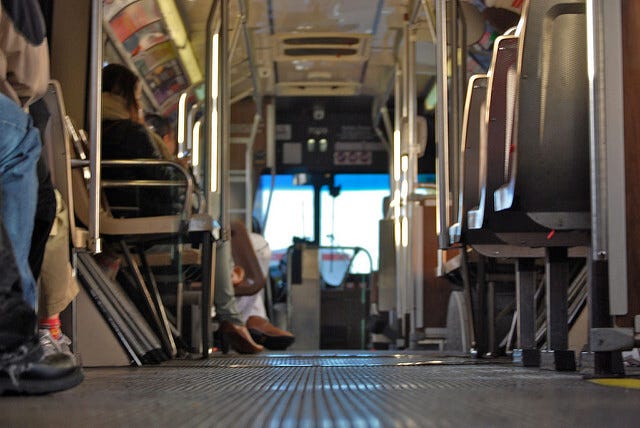
The consequences of failing to secure robust, long-term transit funding extend far beyond delayed trains and dirty platforms; they strike directly at the heart of rider safety:
- Reductions in Safety and Support Staff: Budget cuts inevitably lead to reduced staffing levels. Fewer station agents, platform attendants, and security personnel mean fewer "eyes on board," creating isolated environments where harassment thrives.
- Service Reductions and Extended Wait Times: When transit lines face budget deficits, frequencies drop. Longer wait times at desolate transit stops exponentially increase both the actual risk and the psychological fear of harassment.
- Stalled Expansions: Planned safety upgrades, modern lighting installations, and technological surveillance improvements are often the first items scrubbed from constrained capital budgets.
Redefining Urban Equity
To dismantle the culture of harassment, society must unlearn the harmful mandate that victims must simply "suck it up" and adjust their behaviors. Real progress requires continuous, multi-layered investments in:
- Comprehensive educational campaigns that teach respectful public behavior and bystander intervention strategies.
- Sustained operational funding for transit systems to guarantee high-frequency, reliable service that minimizes waiting times in vulnerable conditions.
- Institutional acknowledgment from city officials that mobility justice and safety are inseparable civil rights.
Walkability and public transit should never function as a tax on the vulnerable. By elevating projects like Eyes on Board, fostering open community dialogue, and securing the financial health of regional transit networks, cities can move closer to realizing the promise of truly equitable, safe, and sustainable urban spaces.
Call to Action
The fight against public harassment begins with visibility and conversation. If you have experienced or witnessed harassment on public transit or city streets, lend your voice to the cause by submitting an anonymous report to Eyes on Board.
To directly support this grassroots project, collaborate with its organizers, or learn more about how you can advocate for safer urban mobility, you can reach project contributor Indigo Rosenberg at [email protected].
Most importantly, keep talking about these issues. While discussing harassment can feel uncomfortable, breaking the silence is the singular, indispensable step toward dismantling a culture of fear and building cities where everyone can move freely, safely, and without intimidation.