







Executive Overview
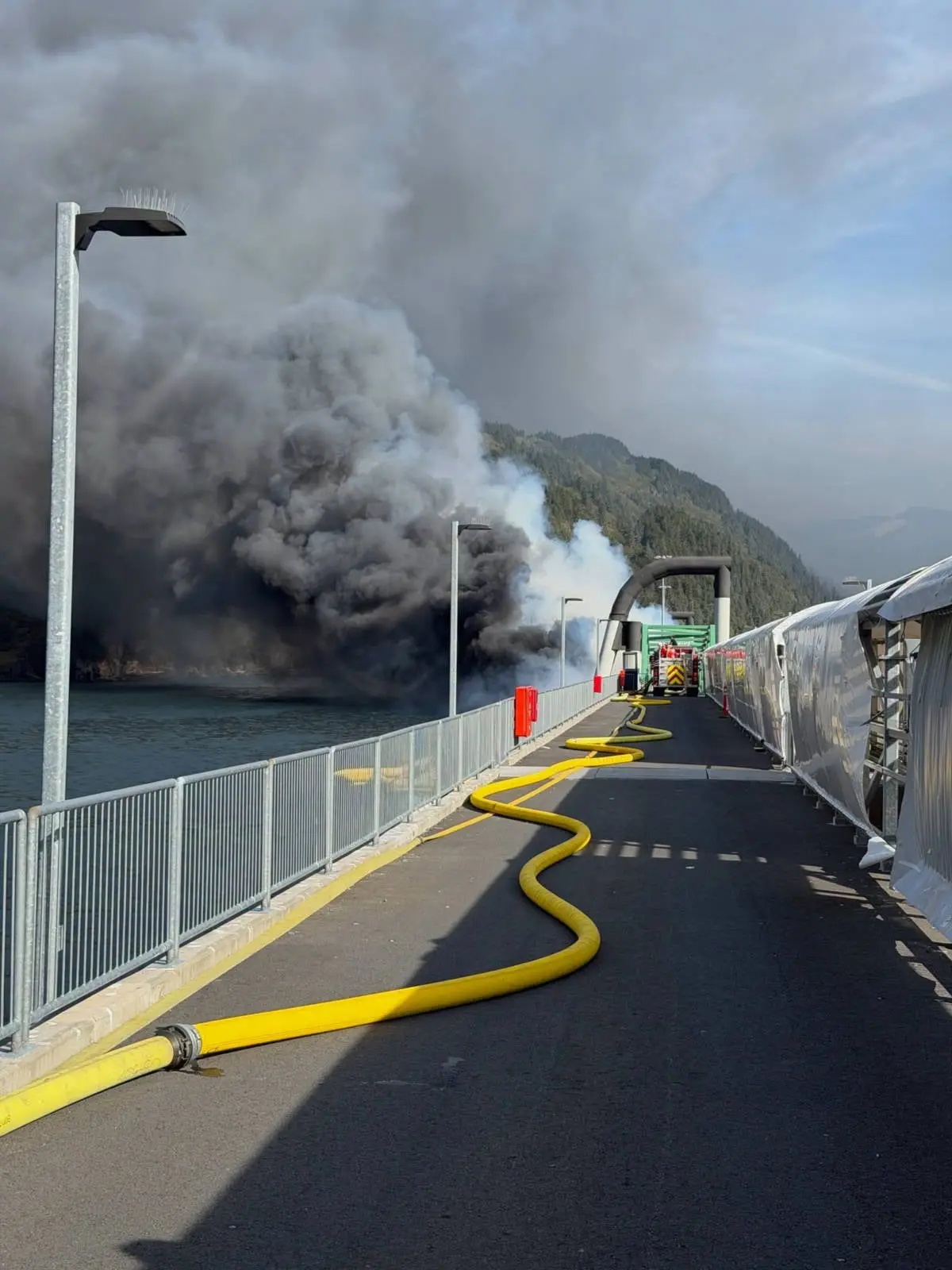
On the morning of Monday, September 14, 2026, a high-stakes emergency unfolded at the Chugach Glacier Gateway Cruise Terminal in Whittier, Alaska. A sudden and aggressive fire struck the facility’s double-sided dock, sending thick, dark plumes of smoke billowing across the port and triggering a massive multi-agency emergency response.
The incident directly impacted two prominent vessels docked at the facility: the tour boat Klondike Express, operated by Phillips Cruises & Tours, and the 2,402-guest cruise ship Norwegian Jade, operated by Norwegian Cruise Line. Thanks to swift action by local mariners, port personnel, and emergency responders, the fire was successfully contained and extinguished. Remarkably, no injuries were reported among passengers, crew members, or emergency personnel.
However, the blaze caused notable disruptions to local maritime and land-based infrastructure. The Anton Anderson Memorial Tunnel—the vital single-lane highway and railway tunnel serving as the sole land link into Whittier—was temporarily closed to prioritize the rapid transit of emergency apparatus. Furthermore, Norwegian Cruise Line was forced to alter its passenger embarkation logistics for Norwegian Jade, shifting operations to an alternate terminal within the port to ensure the safety and continuity of its scheduled voyage.
While the immediate danger has passed, questions remain regarding the origin of the fire, the long-term structural integrity of the Chugach Glacier Gateway dock, and the potential ripple effects on late-season Alaskan cruise itineraries. This comprehensive report details the chronology of the event, the operational impact on cruise lines, emergency response dynamics, and the broader outlook for the region’s maritime sector.
Detailed Chronology of the Incident
The Outbreak and Initial Response
The emergency began shortly before 11:00 a.m. local time on September 14, 2026. The Chugach Glacier Gateway Cruise Terminal was hosting two vessels: the Klondike Express, a dedicated day-tour vessel designed to navigate the 120-mile scenic routes through Prince William Sound, and the massive Norwegian Jade, which was preparing to handle passenger embarkation for a southbound voyage.
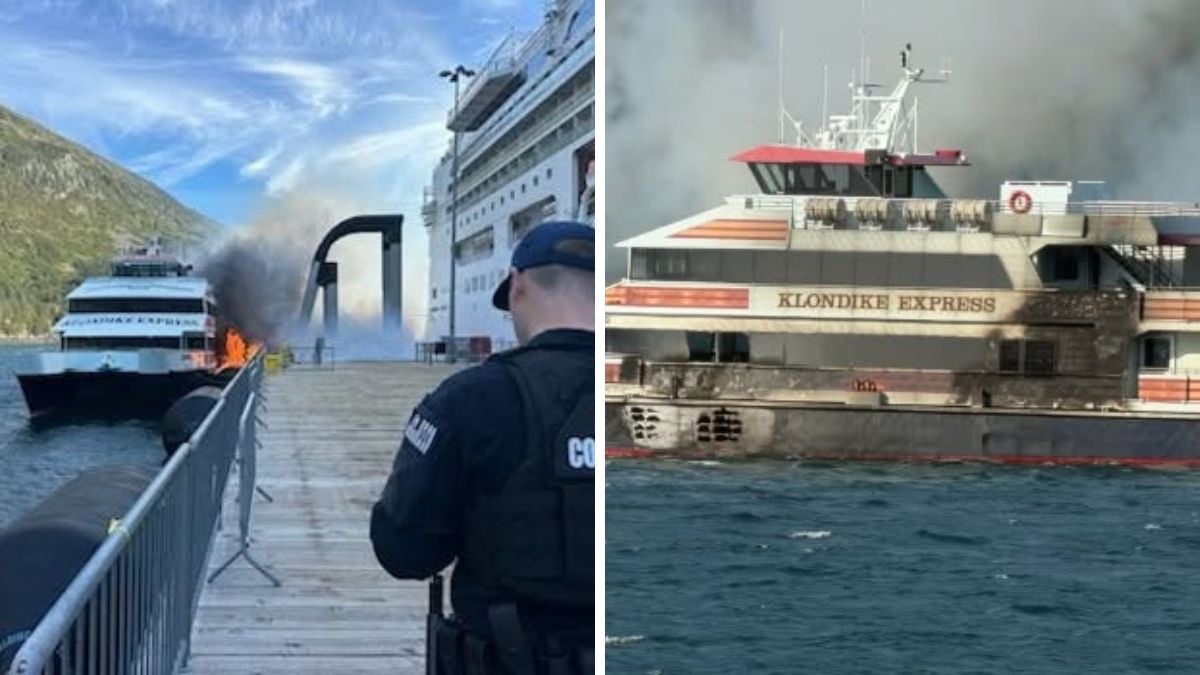
According to reports from local news station KTUU and the U.S. Coast Guard (USCG) Sector Western Alaska & U.S. Arctic, the fire originated at or near the dock structure while the Klondike Express was moored alongside. Fortunately, the tour boat was unoccupied by passengers at the time. Recognizing the immediate threat posed by the spreading flames, port personnel and crew members acted decisively. The Klondike Express was unmoored and moved away from the burning pier to prevent secondary explosions or total loss of the vessel, though official Coast Guard imagery later confirmed that the tour boat sustained localized fire damage.
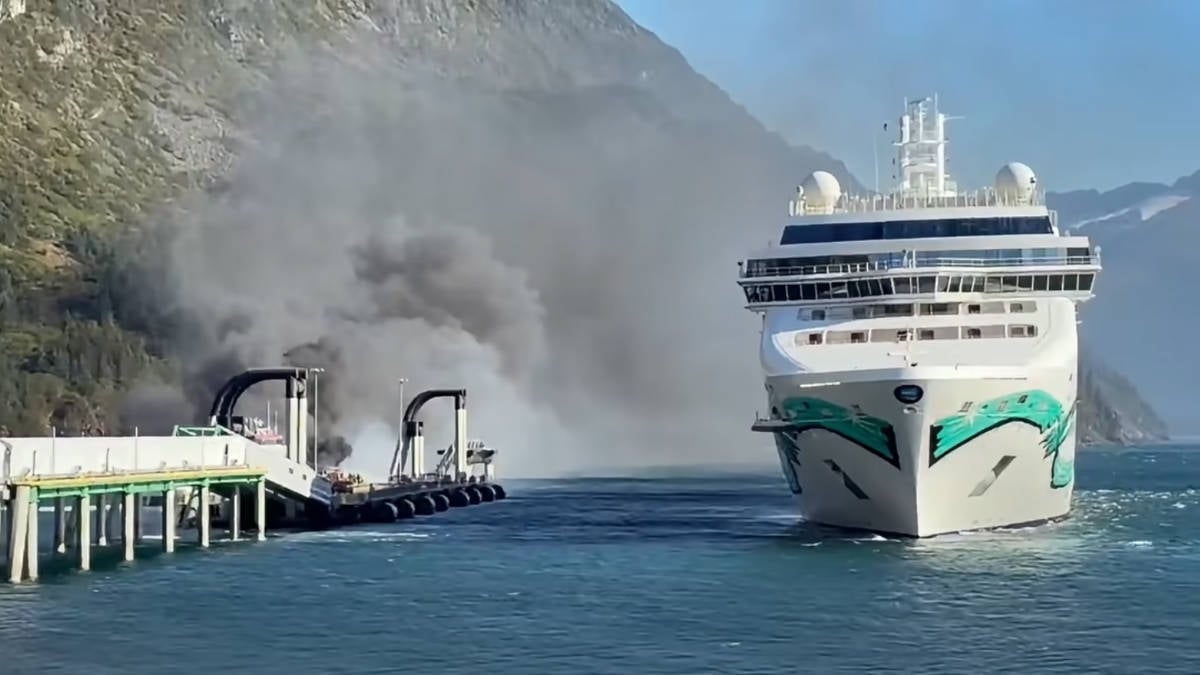
Simultaneously, bridge and deck officers aboard Norwegian Jade initiated safety protocols, successfully navigating the massive cruise ship away from the hazardous pier. Video footage captured by Girdwood Fire and Rescue showed the pristine white hull of the Norwegian Jade gliding away from the docks as towering pillars of black smoke consumed the sky overhead.
Multi-Agency Coordination and Tunnel Closure
The severity of the coastal blaze required an extensive regional response. Units from Girdwood Fire and Rescue, Whittier Fire, Anchorage Fire, and LifeMed Alaska were mobilized immediately. Emergency vehicles rushed toward the isolated coastal town of Whittier, an enclave hemmed in by steep mountains and water.
To facilitate the unimpeded transit of heavy fire engines, rescue squads, and medical personnel, the Alaska Department of Transportation & Public Facilities (DOT&PF) took the critical step of closing the Anton Anderson Memorial Tunnel. Spanning 2.5 miles through Maynard Mountain, the combined rail-highway tunnel is the primary artery connecting the Seward Highway to Whittier.
The closure temporarily cut off civilian traffic, stranding motorists and logistics trucks on either side of the mountain. However, the measure proved essential for shaving precious minutes off emergency response times. Firefighting crews deployed water and foam suppression systems directly onto the dock infrastructure, battling the stubborn flames to keep them from spreading further along the waterfront.
By approximately 2:00 p.m. local time (6:00 p.m. ET), fire officials and the Alaska DOT&PF confirmed that the blaze had been extinguished and mop-up operations were underway. The Anton Anderson Memorial Tunnel was officially reopened to public traffic, allowing normal commercial and passenger transit to slowly resume.
Supporting Context & Metrics
The Vessels Involved
The two ships caught in the footprint of the Whittier fire represent very different segments of Alaska’s thriving tourism ecosystem:
- Klondike Express: Operated by Phillips Cruises & Tours, this high-speed catamaran is a staple of day-cruising in Whittier. Capable of carrying hundreds of sightseers, the vessel takes travelers deep into Prince William Sound to view monumental tidewater glaciers and marine wildlife. The vessel sustained structural damage along portions of its exterior during the emergency maneuvers required to distance it from the blazing dock.
- Norwegian Jade: A Jewel-class cruise ship operated by Norwegian Cruise Line, the vessel boasts a guest capacity of 2,402 passengers and a dedicated crew of over 1,000. At the time of the incident, the ship was serving as the turnaround vessel for a crucial seasonal voyage.
Infrastructure and Regional Geography
Whittier occupies a unique position in Alaskan logistics. Founded as a secret military port during World War II due to its heavy cloud cover and deep-water access, it has since transformed into a major passenger gateway for cruise lines and day-tour operators.
The Chugach Glacier Gateway Cruise Terminal is a modern multi-purpose facility designed to handle modern mega-ships and local excursion boats simultaneously. A fire impacting its double-sided dock directly threatens regional economic throughput, as the port funnels thousands of tourists into the local economy during the compressed May-through-September Alaskan cruise window.
Official Statements and Industry Response
In the immediate aftermath of the disaster, federal, municipal, and corporate stakeholders moved quickly to manage communications and reassure the traveling public.
U.S. Coast Guard Assessment
The U.S. Coast Guard Sector Western Alaska & U.S. Arctic assumed oversight of the marine casualty investigation. Coast Guard assessment teams deployed drone units and surface craft to inspect the damage to both the Chugach Glacier Gateway dock and the hull of the Klondike Express. Environmental protection officers monitored the surrounding waters for potential fuel or chemical runoff resulting from the firefighting efforts, though no major pollution incidents were immediately reported.
Norwegian Cruise Line’s Operational Pivot
With the primary cruise terminal severely impacted and restricted by ongoing emergency investigations, Norwegian Cruise Line faced an immediate logistical hurdle regarding passenger embarkation for Norwegian Jade.
In an official statement released to media and affected passengers, the cruise line outlined its swift contingency plan:
"The safety and security of our guests, crew and the communities we visit are always a top priority. We are aware of a fire at the Chugach Glacier Gateway Cruise Terminal in Whittier, Alaska where one of our ships was scheduled to have guests embark from. As emergency personnel continue to respond to the situation, access to the area remains restricted. As a result, we will proceed with our embarkation process from an alternate location, Whittier Alaska Cruise Ship Terminal 1."
Cruise Ship Terminal 1, located on West Camp Road, sits approximately two-thirds of a mile away from the Glacier Creek Terminal across the water basin. Shore-side operations teams successfully redirected incoming motorcoaches and passenger transfers to the alternative pier, preventing widespread chaos among embarking guests.
Future Outlook and Impact on Alaskan Itineraries
Immediate Schedule for Norwegian Jade
Despite the dramatic disruption to terminal operations, the voyage itinerary for Norwegian Jade appeared largely insulated from sweeping changes. The September 14 departure marks the ship’s final southbound Alaska cruise of the 2026 season.
The 7-night itinerary features scenic cruising near the breathtaking Hubbard Glacier, followed by scheduled port calls to:
- Icy Strait Point
- Juneau
- Skagway
- Ketchikan
- Final disembarkation in Vancouver, British Columbia, on Monday, September 21.
Following its arrival in Vancouver, Norwegian Jade is scheduled to embark on a final positioning voyage through Alaskan waters before heading across the Pacific to commence its winter cruise season in Asia. Norwegian Cruise Line confirmed that if any auxiliary adjustments become necessary, guests will receive direct communications from the cruise line.
Port Recovery and Upcoming Arrivals
Looking at the wider Whittier port schedule, the timing of the fire offered a brief window for infrastructural assessment before the next major cruise ship call. Following the departure of Norwegian Jade, the port schedule shows a temporary lull in cruise traffic.
The next scheduled visitor to Whittier is the Royal Princess, which is slated to arrive on Thursday, September 24, 2026. However, industry watchers are monitoring the Royal Princess closely; Cruise Hive previously reported that the vessel has experienced recent engine-related mechanical issues, prompting localized itinerary adjustments. While those prior propulsion concerns have not yet disrupted the September 19 departure that leads to Whittier, port authorities and cruise operators will be racing against the clock to ensure the Chugach Glacier Gateway terminal is cleared, repaired, or bypassed safely before late-September sailings arrive.
Ongoing Investigations
As of press time, the root cause of the fire at the Chugach Glacier Gateway Cruise Terminal remains officially undetermined. Joint investigators from local fire marshals, municipal authorities, and federal maritime agencies are conducting forensic sweeps of the charred pier structures.
While the incident highlights the inherent vulnerabilities of isolated coastal infrastructure, the complete absence of injuries and the rapid containment of the blaze stand as a testament to the high level of preparedness and cross-agency coordination among Alaska’s emergency services. Further updates regarding structural repairs to the dock and the official cause of the fire are expected to be released as the investigation progresses.