





Executive Overview
The global tourism and travel sector is on the cusp of a profound structural evolution. For decades, the tours and activities segment—encompassing everything from walking food tours in Rome to archaeological excursions in Greece and day-trips across North America—has functioned as one of the last cottage industries within mainstream travel. It is an arena defined by passion, local expertise, and distinct cultural flavor, yet plagued by severe operational inefficiencies, technological backwardness, and hyper-fragmentation.
While the appetite for an industry-wide "roll-up" (a corporate strategy where a company acquires and merges multiple smaller companies in the same market) has existed for years, the realization of such ambitions was abruptly frozen by the COVID-19 pandemic. As global mobility ground to a halt, balance sheets were strained, and survival superseded expansion.
Today, the macroeconomic and technological landscapes have fundamentally shifted. With profit and loss (P&L) statements thoroughly rebounded and consumer demand for experiential travel surging past pre-pandemic benchmarks, the timing for consolidation is not merely opportune—it is urgent. Furthermore, the rapid ascent of generative artificial intelligence (AI) has positioned human-centric, tactile travel experiences as the ultimate counter-play to an increasingly automated, digital world.
Stepping into this vacuum is the private equity-backed Flagship Group, which has officially signaled the dawn of a new consolidation era with the simultaneous announcement of its first three strategic acquisitions:
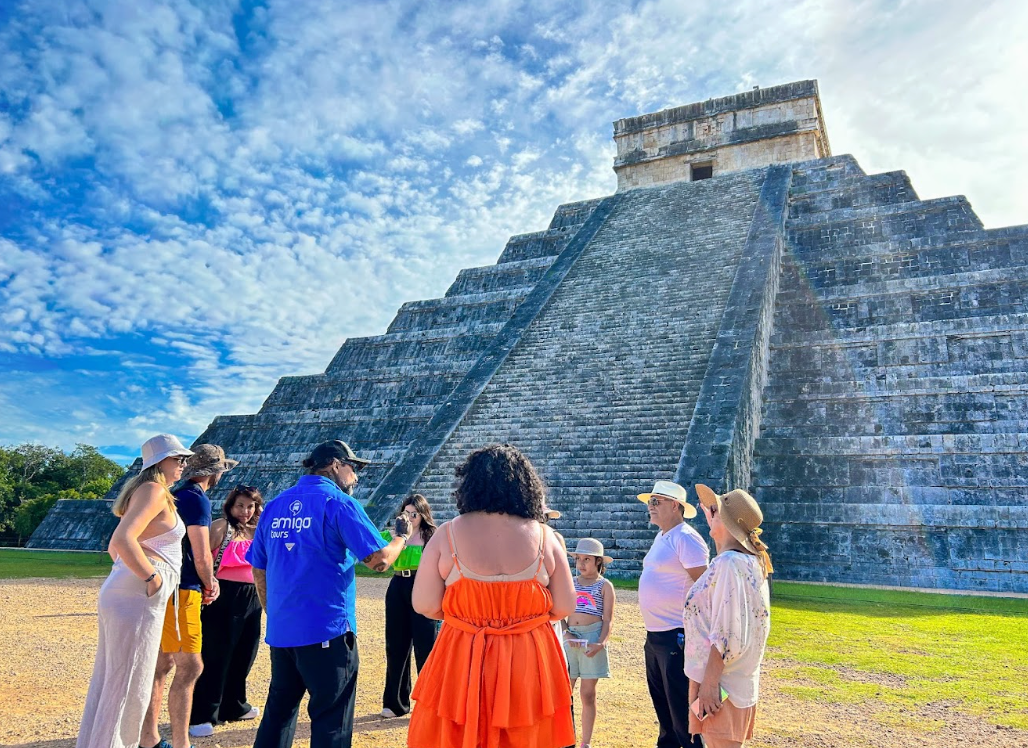
- Amigo Tours, a prominent day tour and excursion provider;
- WalksDevour, an established food and culture operator; and
- Askos Tours, a specialist in cultural and archaeological experiences.
This trifecta of acquisitions immediately endows Flagship Group with global operational coverage spanning North America, Europe, and Japan. This article investigates the genesis of this consolidation wave, the strategic vision driving Flagship’s leadership, the economic and technological tailwinds powering the experiences sector, and what this tectonic shift means for the future of global travel.
Detailed Chronology: From ‘Emily in Paris’ to a Global Multi-Brand Powerhouse
To understand how Flagship Group arrived at this watershed moment, one must trace the journey back to its conceptual roots. The genesis of the roll-up strategy was not born in a sterile boardroom during a private equity pitch, but rather in the field, born out of operational observation during the height of modern pop-culture tourism.
The Spark: The Dharma Revelation
Charaf El Mansouri, managing partner at Flagship Group, first encountered the dizzying fragmentation of the tours and activities market while running Dharma, a company that notably operated the official Emily in Paris tours in the French capital and later expanded the concept to Rome.
While mapping out local operational partnerships for the high-profile media-backed tours, El Mansouri asked his team to compile a directory of viable local operators in the region. Anticipating a manageable shortlist of perhaps six to eight established players, El Mansouri was instead confronted with a staggering dossier containing 120 distinct operators.
"I think essentially that was the thread that led us to where we are today," El Mansouri revealed in an interview with industry analysts. "It’s a massive space, it’s a growing space, but hyper-fragmented, which in the end is not in the interest of operators, distributors, or guests, and so the idea was: hey, is there an opportunity here?"
The Pandemic Interlude and the Post-COVID Rebound
The realization that the market was crying out for consolidation hit just as global tourism was thrown into existential turmoil by the COVID-19 outbreak. Plans for large-scale private equity deployment and operational roll-ups were abruptly put on ice. Operators large and small were forced into a defensive crouch, pivoting entirely toward liquidity preservation, debt restructuring, and weathering rolling lockdowns.
However, the prolonged crisis inadvertently served as a great filter. The operators that emerged on the other side of 2022 and 2023 were leaner, more digitally adaptable, and acutely aware of their vulnerabilities as standalone entities operating without centralized marketing muscle, technological infrastructure, or institutional financial backing.
By 2024, P&L statements across the experiential travel sector had firmly rebounded. Pent-up demand—famously termed "revenge travel"—morphed into a permanent consumer preference for experiential consumption over material goods. Recognizing that the macro-environment was ripe, Flagship Group galvanized its private equity backers to execute the long-delayed vision of institutionalizing the sector.
The Inaugural Acquisitions: Amigo Tours, WalksDevour, and Askos Tours
Flagship’s entry into the market was not characterized by a tentative, single test-acquisition, but rather by a synchronized three-pronged strike designed to establish immediate global footprint and operational diversity:
- Amigo Tours: Bringing heavy-duty logistics, day-trip scalability, and a robust footprint across key tourist corridors, Amigo Tours provides the foundational transit and excursion architecture.
- WalksDevour: Fusing the deep culinary storytelling of Walks (known for skip-the-line Colosseum and Vatican tours) with Devour Tours’ market-leading food experiences, this acquisition anchors Flagship in the high-margin, highly sought-after culinary and cultural niche.
- Askos Tours: Specializing in high-touch, academically grounded cultural and archaeological excursions, Askos adds a layer of intellectual pedigree and premium-tier guiding that appeals to high-net-worth travelers.
By securing this trio, Flagship has successfully bridged the gap between mass-market day-tripping and ultra-specialized cultural immersion, establishing immediate operational footholds in North America, Europe, and the burgeoning Japanese market.
Supporting Context & Metrics: Why the Experiences Sector is Ripe for Consolidation
The global travel and tourism economy is worth trillions of dollars, yet the tours, activities, and attractions segment—frequently valued around $250 billion globally—has historically remained stubbornly decentralized. To understand why Flagship Group’s roll-up strategy is capturing the attention of venture capitalists, institutional investors, and legacy travel conglomerates, one must analyze the prevailing market metrics and structural dynamics.
The Hyper-Fragmentation Paradox
In traditional travel sectors like aviation, hospitality, and car rental, consolidation has long been the norm. A handful of mega-airlines dominate global skies; major hotel brand families control thousands of properties across multiple tiers; and global rental car conglomerates dictate ground transport.
By contrast, the tours and activities sector is dominated by small-to-medium enterprises (SMEs)—often family-owned businesses, independent local guides, or boutique tour companies operating in single cities or narrow regional pockets.
| Market Feature | Traditional Hospitality / Aviation | Tours & Activities (Pre-Consolidation) |
|---|---|---|
| Market Concentration | High (Oligopolistic) | Extremely Low (Hyper-fragmented) |
| Technological Maturity | Advanced (Global Distribution Systems, PMS) | Varied (Ranging from API-integrated to manual pen-and-paper) |
| Capital Access | Institutional debt and equity markets | Bootstrapped / Local bank financing |
| Distribution | Direct-to-consumer & major OTAs | Fragmented channels, heavy reliance on third-party OTAs |
This hyper-fragmentation creates a paradox:
- For the Consumer: It offers authenticity and local flavor, but creates a labyrinth of inconsistent quality standards, fragmented booking systems, and varying customer service reliability.
- For the Distributor (OTAs like Viator, GetYourGuide, Klook): It creates an administrative nightmare of onboarding thousands of individual suppliers, standardizing content, and managing liability.
- For the Operator: It traps small business owners in a daily cycle of operational firefighting, leaving them starved of capital for digital transformation, talent acquisition, and international marketing.
The Counter-AI Play: The Rise of Tactile Tourism
Beyond traditional economic fundamentals, Flagship Group’s launch arrives at a unique psychological and technological crossroads. The explosive proliferation of generative artificial intelligence tools—capable of instantly drafting itineraries, translating languages, and summarizing historical destinations—has flooded the digital realm with hyper-efficient, synthetic content.
Consequently, modern consumers are experiencing digital fatigue. The more automated, screen-bound, and artificially generated our daily lives become, the greater our psychological craving for tactile, authentic, human-led experiences.
Travel has always been an antidote to routine, but today, experiential travel is positioned explicitly as the ultimate counter-AI play. You cannot taste authentic Roman carbonara via a chatbot; you cannot feel the texture of ancient basalt stones at an archaeological site through a VR headset; and you cannot forge genuine human camaraderie with fellow travelers through an algorithmic prompt. By consolidating tour operators under a unified institutional banner, Flagship is scaling the exact commodity that AI cannot replicate: human expertise, physical presence, and cultural serendipity.
Official Statements and Strategic Vision
The architecture of Flagship Group’s strategy rests on the premise that standardization and scale do not have to dilute authenticity—rather, they can enhance it by removing the administrative burdens that distract operators from what they do best: hosting guests.
Charaf El Mansouri, articulating the core mission behind the roll-up, emphasized that the current state of the market serves no stakeholder effectively.
"It’s a massive space, it’s a growing space, but hyper fragmented, which in the end is not in the interest of operators, distributors, or guests," El Mansouri noted.
By unifying Amigo Tours, WalksDevour, and Askos Tours, Flagship aims to create a symbiotic ecosystem where individual brands retain their distinct local identities and specialized brand equity, while benefiting from a shared corporate backbone. This centralized infrastructure includes:
- Unified Technology Stacks: Upgrading backend reservation systems, inventory management, and channel distribution APIs to seamlessly connect with major Online Travel Agencies (OTAs) and direct-to-consumer portals.
- Centralized Marketing and Data Analytics: Utilizing aggregated consumer data to cross-sell experiences, optimize pricing strategies, and target global demographic segments with precision-engineered marketing campaigns.
- Cross-Border Talent and Operational Mobility: Allowing guides, operational managers, and logistical frameworks to scale smoothly across international jurisdictions—a critical advantage when expanding into complex markets like Japan.
Industry insiders note that private equity firms have been circling the experiential travel space for years, waiting for the right platform vehicle. Flagship Group’s multi-brand approach signals that the playbook has evolved beyond simple single-brand buyouts. Instead, the strategy mirrors the multi-brand hospitality groups that revolutionized accommodation decades ago—applying institutional rigor to fragmented cultural assets.
Future Outlook: What the Consolidation Wave Means for the Industry
As Flagship Group integrates its inaugural trio of acquisitions, the ripple effects across the global travel landscape will be profound. The launch of this roll-up strategy serves as both a bellwether and a pressure test for the broader tours and activities sector.
1. A Catalyst for Fast-Follower M&A Activity
The announcement is expected to trigger a cascade of mergers and acquisitions across the tourism landscape. Rival private equity firms, venture capital syndicates, and large-scale travel conglomerates that have been watching from the sidelines will likely accelerate their own acquisition pipelines. Boutique operators who previously operated in isolation will increasingly seek out consolidation partners to avoid being out-scaled by institutionalized rivals.
2. The Professionalization of the Local Guide
For decades, working as a tour operator or local guide has been viewed as a lifestyle business or informal gig economy occupation. Institutional roll-ups like Flagship’s promise to professionalize the sector. By introducing structured career paths, standardized training, better insurance, and reliable year-round employment frameworks across multiple geographies, consolidated operators can attract and retain top-tier talent, ultimately elevating the baseline quality of the guest experience.
3. Redefining Distribution Dynamics with OTAs
The relationship between tour operators and major distribution channels—such as Viator, GetYourGuide, Expedia, and Klook—is also poised to shift. As Flagship Group aggregates major regional brands under a single umbrella, its negotiating leverage with OTAs increases significantly. Consolidated multi-brand operators can command preferential placement, streamline multi-destination contracting, and build robust direct-to-consumer brand loyalty that reduces dependency on third-party commission structures.
4. Navigating Integration Risks
Despite the optimistic outlook, the path forward is fraught with operational challenges. Integrating disparate company cultures, harmonizing legacy IT systems across diverse regulatory environments (from North American labor laws to Japanese consumer standards), and maintaining the localized charm of boutique brands while scaling corporate oversight requires immense managerial discipline. The ultimate success of Flagship Group—and by extension, the broader validation of the experiences roll-up thesis—will depend entirely on execution.
Conclusion
The launch of Flagship Group’s consolidation strategy marks a definitive turning point for the global tours and activities sector. By uniting Amigo Tours, WalksDevour, and Askos Tours under a single strategic umbrella, Flagship is not merely collecting travel brands; it is attempting to engineer the first truly global, institutionalized powerhouse in a market that has historically resisted standardization.
In an era defined by digital saturation and the rapid rise of artificial intelligence, the value of human-led, tactile exploration has never been higher. By bridging the gap between local authenticity and global scale, Flagship Group is betting that the future of travel belongs to those who can institutionalize the un-institutionalizable—transforming a fragmented cottage industry into a streamlined, high-performing pillar of the modern global economy.