Executive Overview
For generations, the final leg of any maritime voyage—navigating the tight confines of a crowded marina, battling crosswinds and uncooperative currents, and securing a vessel to a slip—has remained a persistent source of high-consequence friction. Navigational errors during these low-speed, high-stress maneuvers routinely result in costly fiberglass repairs, frayed tempers, and elevated blood pressure. While automated open-water steering has existed for decades, autonomous close-quarters maneuvering has largely remained the holy grail of marine electronics engineering.
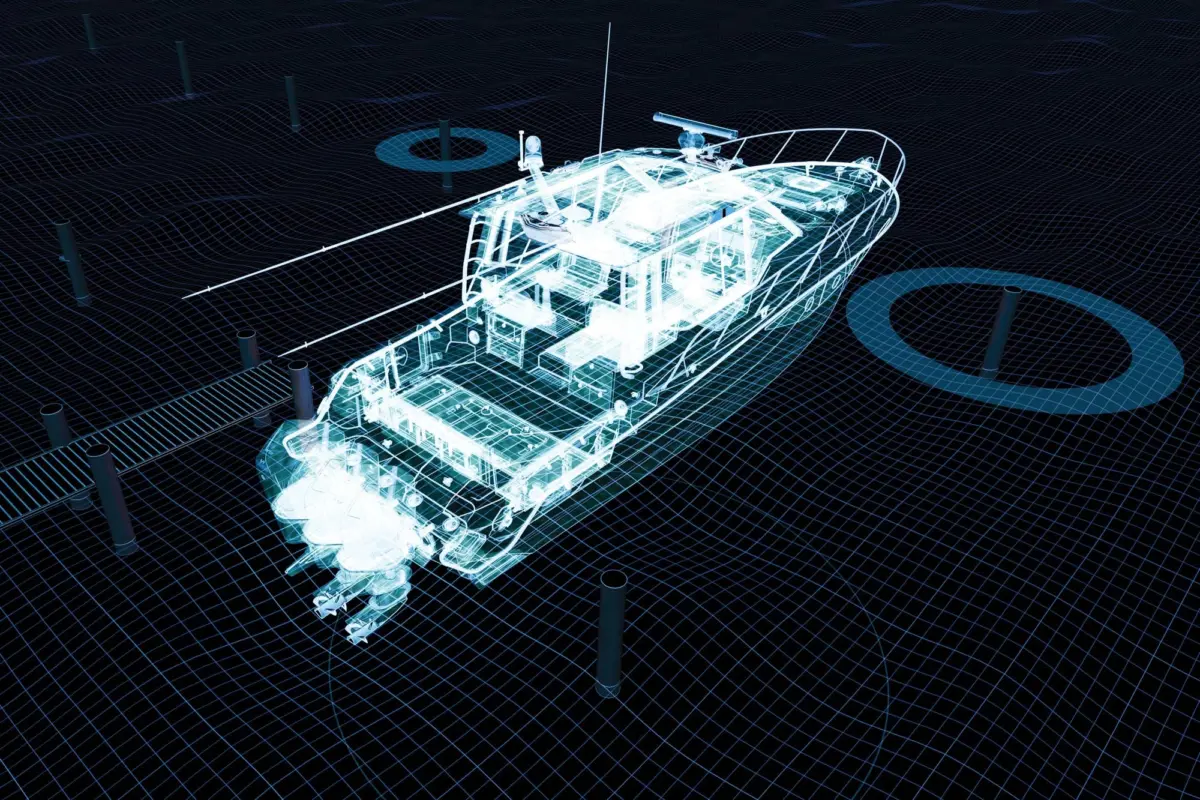
Enter Simrad’s AutoCaptain, a revolutionary, factory-installed autonomous docking ecosystem that merges state-of-the-art stereo vision, machine learning, satellite positioning, and deep propulsion integration. Currently debuting aboard the premium Boston Whaler 405 Conquest, AutoCaptain represents a paradigm shift in marine technology.
Unlike piecemeal aftermarket solutions that rely on third-party retrofits, AutoCaptain is built from the ground up by Brunswick Corporation and its subsidiary, Simrad Yachting (part of the Navico Group). Because Brunswick controls the entire manufacturing stack—from the multi-function displays (MFDs) and sensors to the steering architecture and Mercury outboard engines—AutoCaptain achieves a level of systemwide integration previously unseen in recreational boating. This comprehensive report explores the genesis, engineering architecture, operational workflows, and future trajectory of a system poised to redefine how boaters interact with the water.
Detailed Chronology: The Engineering Leap to Autonomous Docking
High-consequence marine maneuvers have long exposed the limits of human reaction times and spatial awareness under pressure. Historically, docking heavy, single-screw or twin-engine powerboats without modern thruster infrastructure relied entirely on the skipper’s innate dexterity, psychological fortitude, and willingness to embrace cosmetic risk.
The developmental timeline leading to AutoCaptain marks a major maturation point in marine robotics. For years, autonomy in the maritime sector was restricted to commercial shipping lanes or specialized military applications. When consumer-facing automation finally trickled down to recreational boating, it typically took the form of dynamic positioning (such as Mercury’s Skyhook) or rudimentary single-axis collision avoidance. These systems demanded constant human oversight and manual joystick inputs.
Simrad’s AutoCaptain bridges the gap between active operator control and complete machine autonomy. Designated at a Level 2-Plus on the National Highway Traffic Safety Administration’s (NHTSA) six-tiered autonomy scale, the system is strictly "hands-off, eyes-on." The operator remains at the helm, actively acknowledging system engagement, while the onboard processing core takes over the microscopic throttle, gear, and steering adjustments required to safely berth or unberth the vessel.
The rollout begins exclusively with the Boston Whaler 405 Conquest, showcasing Brunswick’s strategy of introducing high-end innovations on flagship, premium-class builds before cascading them down through broader product portfolios.
Supporting Context & Metrics: Hardware and Software Architecture
Achieving true autonomous docking requires an intricate synthesis of sensory inputs, processing power, and responsive actuation. AutoCaptain’s technical infrastructure is divided into tightly coordinated hardware arrays and advanced machine intelligence algorithms.
Hardware Infrastructure
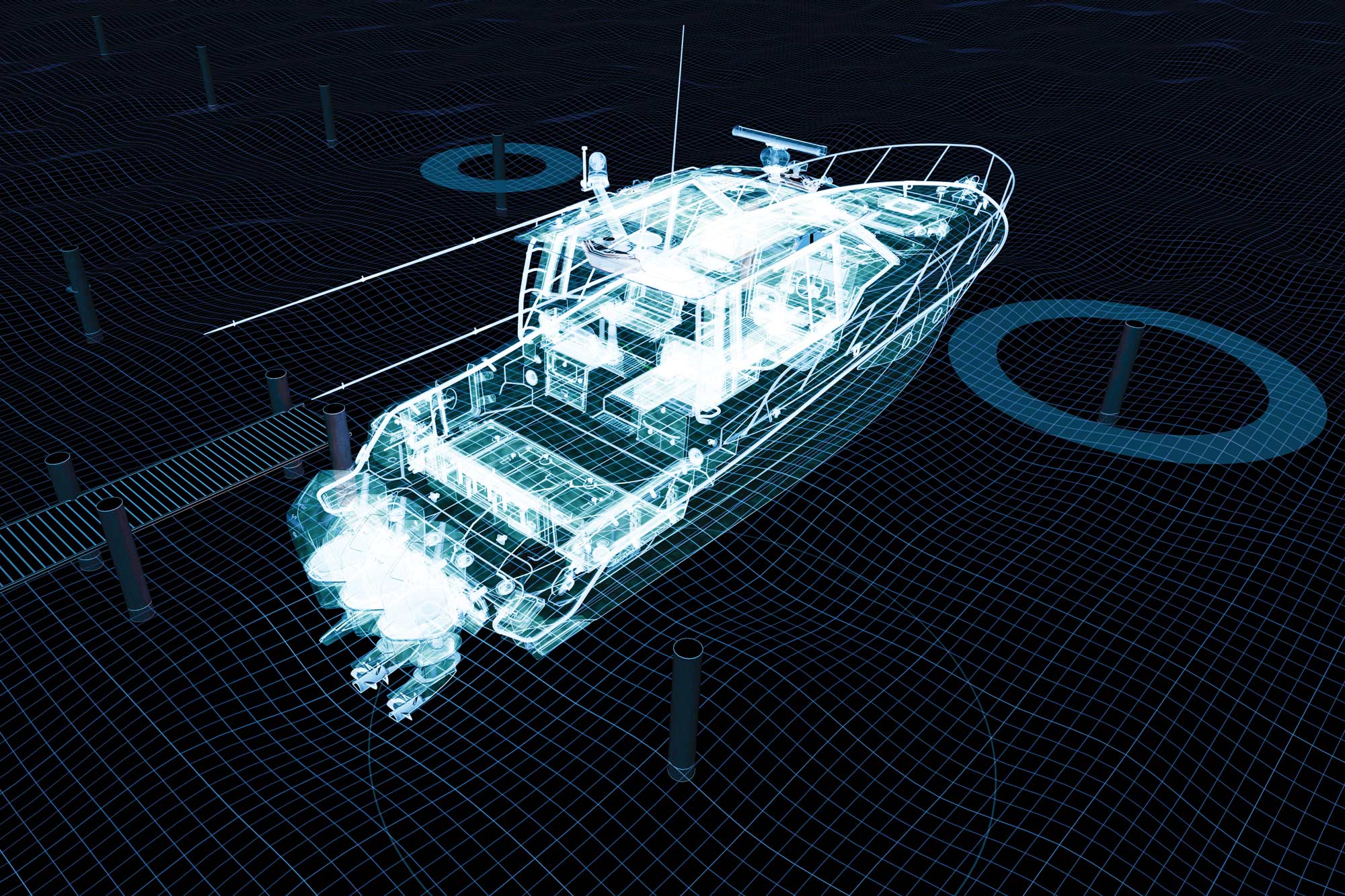
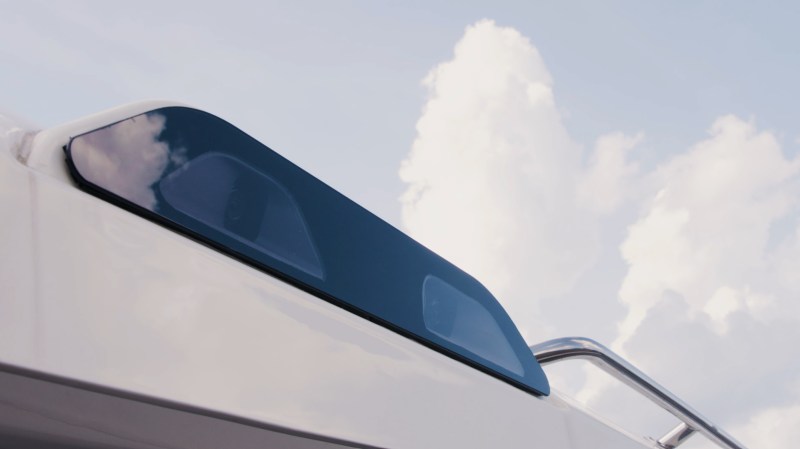
- Vision Array: Six factory-installed stereo cameras are seamlessly integrated into the vessel’s hardtop structure, delivering uninterrupted 360-degree environmental visibility. Stereo cameras were specifically chosen over single-lens configurations due to their superior capability to calculate distance, depth, and spatial fields of view with human-like precision. These cameras operate efficiently even under minimal ambient lighting conditions.
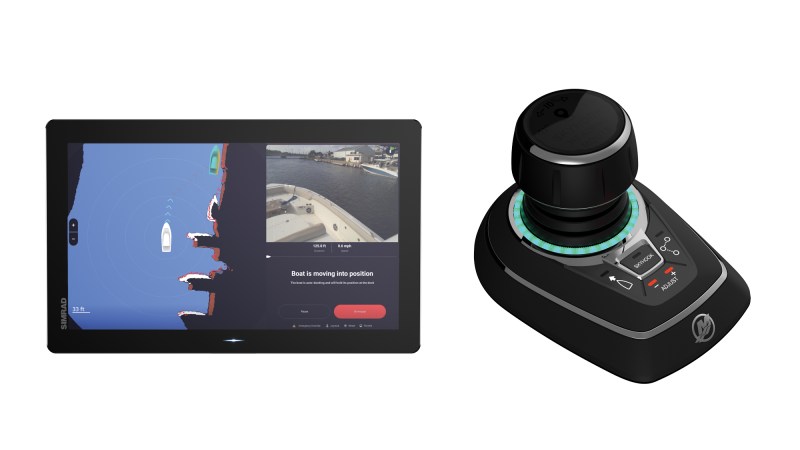
- Processing & Display Core: A dedicated black-box processor aggregates real-time video streams, supported by at least one Simrad NSO 4 or NSS 4 multifunction display running the proprietary AutoCaptain application.
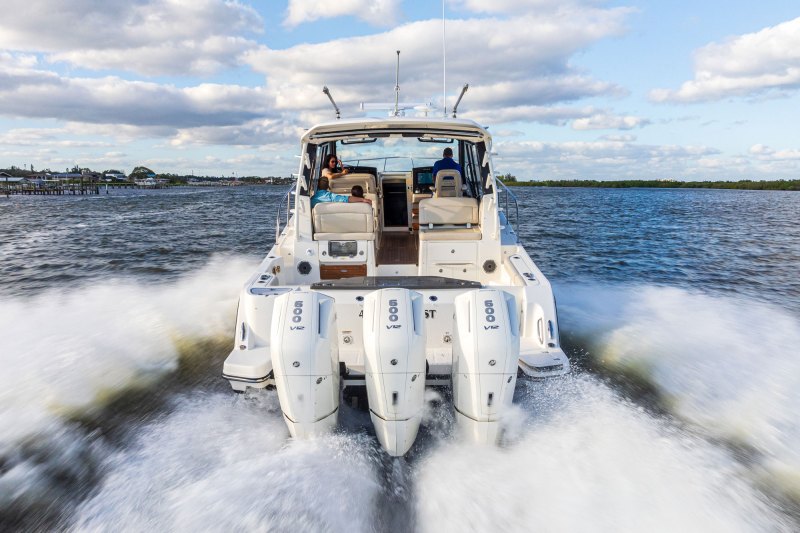
- Positioning & Actuation: A high-precision Global Navigation Satellite System (GNSS) receiver tracks exact coordinate positioning relative to dynamically generated local maps. Propulsion and steering authority are delegated entirely to dual (or multiple) compatible Mercury outboards equipped with Mercury’s advanced Joystick Piloting system.
Software and Artificial Intelligence
AutoCaptain’s software suite relies on two primary detection and routing algorithms backed by two distinct subsets of artificial intelligence:
- Machine Vision: Empowers the system’s processor to accurately identify and classify above-the-waterline objects, including docks, pilings, neighboring vessels, and floating debris, from the live video feeds.
- Machine Learning: Allows AutoCaptain to evolve independently of hard-coded rules. Every time the vessel interacts with a new marina or revisits a familiar slip, the system refines its spatial mapping database, growing progressively more accurate and efficient over time.
Official Statements & Industry Insights
The philosophy behind AutoCaptain’s integration and market positioning is rooted in seamless, closed-loop engineering.
"There’s no aftermarket. There’s no dealer install. The only way to get this is with a new boat."
— Jeremiah Clark, Navico Group Vice President of Product Management for Electronics Solutions
Clark emphasizes that AutoCaptain is designed as an expandable, software-driven architecture capable of handling docking, undocking, and short-range slow-speed maneuvers. Rather than relying on disparate components from third-party manufacturers, Brunswick’s vertical integration ensures complete compatibility.
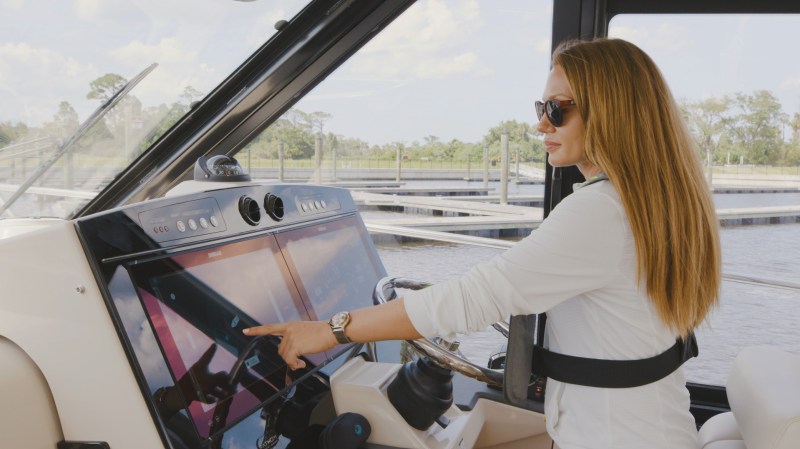
"It’s hands-off, but you’re at the wheel. The system keeps the map, and the more times you visit a place, the better that map gets."
— Brandon Ferriman, Brunswick Senior Director of Program Management
Ferriman highlights the intuitive nature of the user interface. Operators simply launch the AutoCaptain app on their Simrad display, confirm their presence at the helm, and utilize an on-screen touchpad to dictate the vessel’s desired final resting orientation (e.g., starboard slip with the bow facing outward).
The application screen is intelligently divided into three functional panes:
- Port Two-Thirds: A live, camera-generated vector map of the immediate surroundings.
- Starboard One-Third (Upper): A real-time camera feed displaying the vessel’s exact direction of travel.
- Starboard One-Third (Lower): Dedicated dialog boxes featuring prominent "Pause" and "Disengage" execution controls.
The inclusion of the Pause button introduces a sophisticated safety feature. Operating similarly to Mercury’s Skyhook dynamic positioning, engaging Pause locks the yacht’s position and orientation to within a one-meter tolerance, effectively serving as an autonomous "time-out" option if harbor traffic unexpectedly complicates the berthing trajectory. Furthermore, touching the steering wheel, throttles, joystick, or selecting the disengage button instantly drops AutoCaptain into a passive standby mode, ensuring human operators retain ultimate veto power at a moment’s notice.
Future Outlook & Strategic Implications
As recreational boating demographics shift to include both tech-savvy newcomers and experienced mariners seeking reduced physical fatigue, technologies like AutoCaptain bridge critical accessibility gaps.
Expanding Horizons via Software
Because Brunswick maintains complete ownership of the technological ecosystem—encompassing displays, sensors, steering, and engines—future upgrades will not require hardware overhauls. Upcoming capabilities will be deployed via streamlined software updates. Clark and Ferriman confirm that future iterations of AutoCaptain will likely tap into other proprietary sensor suites, including:
- Forward- and side-scanning sonar systems
- Doppler-enabled marine radar arrays
- Automatic Identification System (AIS) transceivers
By integrating these supplemental telemetry streams without the friction of licensing third-party protocols, Brunswick can continuously expand AutoCaptain’s collision-avoidance envelope and spatial awareness.
Market Positioning and Limitations
While AutoCaptain represents a monumental leap forward, industry analysts note current limitations. The system does not yet incorporate COLREGS (International Regulations for Preventing Collisions at Sea) intelligence, nor is it designed for high-speed, long-range open-ocean collision avoidance. Furthermore, hardware dependencies—specifically the requirement for a rigid hardtop to mount the 360-degree camera array and mandatory Mercury Joystick Piloting integration—currently restrict the technology to premium, mid-sized to large recreational builds rather than compact runabouts or multi-brand legacy fleets.
Nevertheless, by internalizing diagnostics through tools like Mercury’s G3 Service Tool and eliminating the blame-shifting often associated with multi-vendor electronics installations, Brunswick has established a formidable benchmark for marine autonomy.
For the modern yacht owner, AutoCaptain transforms the harrowing anxiety of marina navigation into a seamless, highly controlled routine—ensuring that the final moments of a day on the water are defined by relaxation rather than stress.