








Executive Overview
When the conversation turns to microplastic pollution, most people envision a familiar array of debris: colorful fragments breaking away from discarded water bottles and household buckets, or microscopic synthetic fibers shed from fleece jackets swirling down washing machine drains. However, an even more pervasive and insidious source of microplastic contamination remains hidden in plain sight, coating the very pavement beneath our tires. This pollutant is the tire wear particle (TWP)—microscopic fragments of rubber and chemical additives generated continually through the friction between moving vehicles and the asphalt road surface.
As vehicular traffic expands globally, the sheer volume of tire rubber ground down into the environment has become staggering. Far from being inert dust, these particles are complex chemical cocktails containing synthetic polymers, heavy metals, and toxic processing agents like 6PPD, which transforms into a lethal derivative known to decimate vulnerable aquatic populations such as coho salmon even at minuscule concentrations. Because traditional stormwater systems route urban runoff directly into local streams, rivers, and oceans without filtration, millions of tons of these toxic microplastics end up in marine and freshwater ecosystems every year.
Addressing this crisis requires innovative near-term strategies, as society cannot simply halt transportation overnight. While long-term solutions—such as reformulating tire rubber or transitioning entirely to zero-emission, lightweight mobility—are vital, they will take decades to scale globally. Enter green infrastructure: an engineered approach using natural systems like bioswales, rain gardens, permeable pavements, and roadside bioretention cells. By slowing down stormwater runoff and allowing water to filter naturally through soil and plant root networks, green infrastructure captures tire wear particles before they reach delicate aquatic habitats.

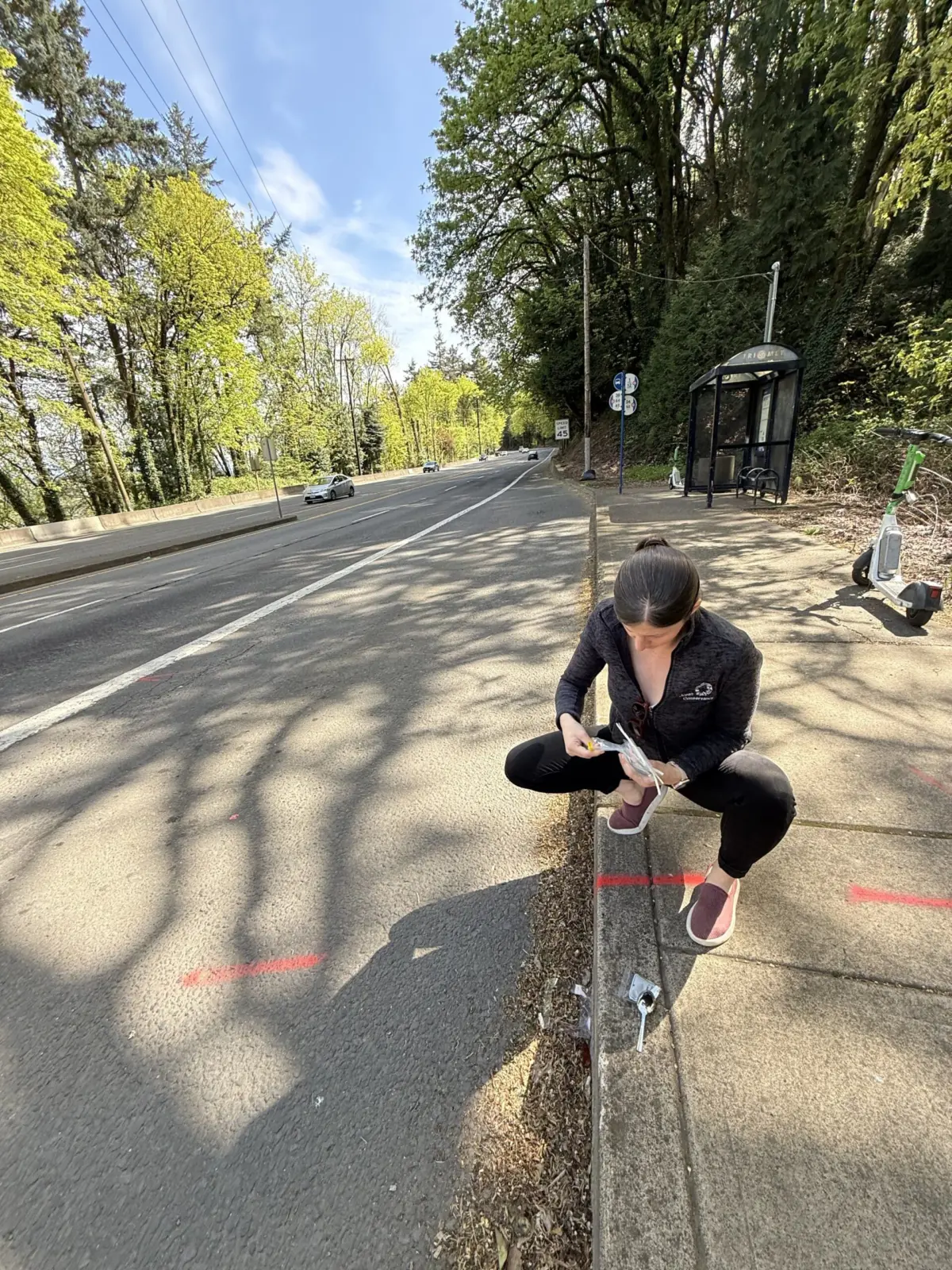
To bridge the gap between theoretical promise and municipal execution, a collaborative team of scientists from Ocean Conservancy’s plastics science and policy divisions—including Dr. Britta Baechler and Dr. Anja Brandon—has partnered with researchers at the University of Toronto. Funded by the Tire Industry Project, this groundbreaking initiative is actively evaluating the cost-benefit dynamics of scaling green infrastructure at the city level. Through rigorous field research, such as sampling roadside soils in cities like Portland, Oregon, these researchers are laying the groundwork for municipalities to transform urban design and mitigate one of the planet’s most overlooked pollution crises.
Detailed Chronology: Uncovering the Tire Wear Threat
For decades, the invisible attrition of vehicular tires went largely unacknowledged by environmental scientists studying plastic pollution. To understand how the scientific community shifted its focus from visible marine litter to the microscopic debris left by cars, it is essential to trace the chronology of discovery surrounding tire wear particles.
The Blind Spot in Early Microplastic Research (Pre-2010s)
In the nascent stages of microplastic research, analytical methodologies were primarily optical and chemical techniques tailored toward common polymers like polyethylene, polypropylene, and polystyrene—the building blocks of consumer packaging. Because tire wear particles are complex, highly weathered vulcanized rubber composites bound with mineral fillers, plasticizers, and carbon black, they proved exceedingly difficult to isolate and quantify using standard spectrometry. Consequently, early global plastic inventories dramatically undercounted or entirely missed the massive influx of rubber dust entering waterways from roadways.
The Breakthrough in Chemical Identification (2010s–2020)
As analytical chemistry advanced through techniques such as pyrolysis-gas chromatography-mass spectrometry (Pyr-GC/MS) and liquid chromatography-tandem mass spectrometry (LC-MS/MS), environmental scientists gained the capability to fingerprint specific chemical markers unique to tire compounds. A monumental turning point arrived in 2020 when a landmark study published in Science identified 6PPD-quinone (6PPD-Q)—a transformation product of an antioxidant widely used in tire manufacturing—as the primary culprit behind "urban runoff mortality syndrome," a phenomenon that had been killing up to 90% of returning coho salmon in Pacific Northwest urban streams for years. This discovery forced a paradigm shift: tire particles were no longer viewed merely as an aesthetic nuisance or physical contaminant, but as a potent chemical threat to global biodiversity.

The Rise of Field-Scale Interventions and Municipal Studies (2020–Present)
Recognizing that exhaust emissions regulations alone would not stem the tide of non-exhaust particle pollution, researchers began shifting focus toward capture mechanisms. While automotive engineers and material scientists worked on sustainable rubber formulations, environmental advocates and civil engineers turned their attention to urban hydrology. Pilot projects testing bioswales and permeable surfaces began yielding encouraging data regarding particulate capture rates.
This momentum culminated in modern research initiatives like the Ocean Conservancy and University of Toronto partnership. By moving out of the laboratory and into the field—meticulously scooping soil samples from urban roadsides in cities like Portland—scientists began calculating the precise logistical, economic, and ecological realities of scaling green infrastructure. Today, this work represents the cutting edge of environmental policy, bridging the gap between theoretical stormwater management and actionable urban planning.
Supporting Context & Metrics: The Scale of the Problem
The numbers associated with tire wear particles are staggering, illustrating an environmental burden that rivals, and in some regions exceeds, traditional plastic waste streams.
- Two Trillion Particles per Mile: Comprehensive vehicle emissions testing indicates that a standard set of four passenger car tires can emit upward of two trillion microscopic wear particles for every single mile driven.
- Two Pounds Per Person Annually: Statistical and environmental modeling reveals that the average individual living in a motorized society indirectly generates nearly two pounds of tire particle debris every year through daily commuting, public transit, and commercial freight transport.
- Dominance of Non-Exhaust Emissions: Modern vehicle testing shows that particle pollution stemming from tire and brake wear significantly surpasses tailpipe emissions in sheer mass, particularly as vehicles become heavier with the widespread adoption of battery-electric platforms.
- The Journey from Pavement to Ocean: Once shed from tires, these particles fall into two distinct categories. Lighter fractions become airborne dust, contributing to localized atmospheric particulate matter (PM2.5 and PM10). The heavier fractions settle on road surfaces, accumulating until precipitation events wash them directly into storm sewer networks, bypassing wastewater treatment facilities entirely and discharging straight into rivers, estuaries, and oceans.
Official Statements and Expert Insights
The invisible nature of tire wear pollution makes expert communication vital to raising public awareness and driving regulatory action. Leaders in ocean conservation and environmental policy have emphasized the urgency of rethinking both vehicle transit and urban design.
Dr. Britta Baechler, Director of Ocean Plastics Research at Ocean Conservancy, vividly contextualized the physical impact of driving during an interview with Eos magazine:
"Driving a car or even riding in a bus is a bit like dragging an eraser across the planet, except the crumbs are microplastics. Toxic microplastics."
Dr. Baechler further emphasizes why this specific pollutant demands immediate attention rather than passive waiting:
"Tire wear particle pollution can feel like an overwhelming problem. After all, it’s tied to transportation, which most of us rely on every day. But that’s exactly why research like this matters: It gives us a real, near-term path forward that doesn’t require waiting for the entire global transportation system to change first."
Dr. Anja Brandon, Director of Plastics Policy at Ocean Conservancy, underscores the necessity of pairing rigorous scientific inquiry with proactive municipal engineering:
"By pairing rigorous science with practical guidance, we hope to help cities move from asking ‘Could this work?’ to confidently building solutions that we know can be effective."
These perspectives highlight a unified strategic vision: while systemic overhauls of tire chemistry and transportation infrastructure remain crucial long-term goals, deploying localized green infrastructure provides an immediate, tangible shield for vulnerable ecosystems.
Future Outlook: Building a Resilient Urban Landscape
The path forward for mitigating tire wear particle pollution requires a multi-pronged approach that bridges materials science, civil engineering, and municipal policy. While the ultimate goal is the development of non-toxic, highly durable elastomer compounds that shed significantly fewer particles during transit, those technological innovations face prolonged development and deployment timelines.
In the interim, green infrastructure stands out as the most viable near-term defense. Bioswales, vegetated filter strips, rain gardens, and permeable asphalt structures function as decentralized ecological buffers. By interrupting the direct hydraulic connectivity between asphalt roadways and open waterways, these engineered natural systems buy precious time for environmental remediation.
However, scaling green infrastructure from isolated pilot projects to city-wide networks requires overcoming significant hurdles. Municipalities must navigate complex spatial constraints, secure long-term maintenance funding, and integrate hydrological performance metrics into routine urban planning. This is precisely why current partnerships—such as the Ocean Conservancy, University of Toronto, and Tire Industry Project collaboration—are indispensable. By quantifying the exact cost-benefit ratios and trapping efficiencies of roadside bioswales in cities like Portland, researchers are providing municipal leaders with the empirical data needed to justify and execute large-scale investments.
Ultimately, tackling tire wear particles requires us to rethink how our cities interface with the natural world. By transforming our roadways from frictionless channels of toxic runoff into intelligent, absorbent landscapes, we can safeguard our freshwater systems, protect marine wildlife, and move closer to a future free from invisible plastic pollution.