








Executive Overview
As transit systems across the United States grapple with aging fleets, soaring capital costs, and volatile operational environments, industry leaders are shifting their strategic focus toward a critical lever for financial sustainability: procurement reform. Pushed to the brink by inflationary pressures and supply chain fragilities, transit authorities are realizing that simply securing additional funding—even if available—is no longer a silver bullet. Instead, systemic changes to how buses are bought, specified, and manufactured are required to stretch limited public dollars and deliver reliable service to millions of daily riders.
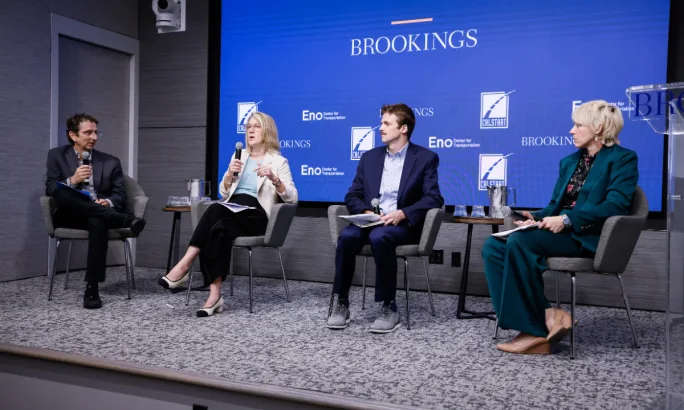
This imperative took center stage during a high-profile Brookings Institution event discussing a newly released collaborative report entitled Customization, Competition, and Costs: Findings and Recommendations for the U.S. Transit Bus Industry, published jointly by the Eno Center for Transportation and CALSTART. Moderated by Philip Plotch, principal researcher and senior fellow at the Eno Center, the discussion featured a panel of prominent transportation leaders, including Lisa Jerram, senior director of bus operations and new vehicle technologies at the American Public Transportation Association (APTA); Michael Dorgan, policy manager at the Center for Transportation and the Environment (CTE); and Holly Arnold, administrator at the Maryland Transit Administration (MTA).
The core takeaway from the convening was unambiguous: excessive, agency-specific vehicle customization has fragmented the U.S. bus marketplace, driving up vehicle prices, lengthening production timelines, and discouraging manufacturing competition. By pivoting toward standardized bus designs, cooperative purchasing models, and predictable multi-year funding, transit agencies can achieve dramatic cost savings without compromising on safety, regional adaptability, or the passenger experience.
Detailed Chronology of the Brookings-Eno Discussion
The discourse surrounding U.S. transit bus procurement has evolved from quiet industry grumbling into a national policy debate. The timeline of this movement reflects a growing urgency among policymakers and transit administrators to address structural inefficiencies before they compromise public mobility networks.
1. The Genesis of the Research
For decades, the U.S. transit bus manufacturing sector has contracted, leaving fewer active original equipment manufacturers (OEMs) to serve hundreds of independent public transit agencies. Recognizing that market consolidation combined with skyrocketing vehicle prices was creating an unsustainable fiscal crisis, the Eno Center for Transportation and CALSTART initiated an in-depth study. Their research sought to quantify the impact of "hyper-customization"—the industry practice where nearly every transit agency demands unique, bespoke modifications for every vehicle order.
2. The June Brookings Institution Convening
The release of the report culminated in a Brookings Institution event where policy experts, transit administrators, and federal lawmakers convened to dissect the findings. Panelists outlined how the current procurement landscape forces manufacturers to abandon assembly-line efficiencies in favor of continuous redesigns. This operational friction inflates engineering hours, complicates supplier networks, and extends delivery timelines from months to years.
3. Legislative Engagement and Congressional Action
The urgency of the procurement crisis has also resonated on Capitol Hill. During the event, U.S. Representative Maxwell Frost (D-FL) sat down with Rebecca Higgins, vice president of policy at the Eno Center, to discuss legislative remedies. Rep. Frost highlighted the introduction of the bipartisan Transit Bus Affordability Act, a legislative measure directing the Government Accountability Office (GAO) to comprehensively study rising bus procurement costs and identify actionable pathways for structural reform. This bipartisan focus underscores that bus procurement is no longer just a localized operational hurdle, but a national infrastructure priority.
Supporting Context & Metrics: The Cost of Customization
To understand the fiscal strain facing transit agencies, one must examine the mechanics of modern bus procurement. Historically, transit agencies developed hyper-specific engineering blueprints to address unique local operating conditions, historical preferences, or perceived agency requirements. While many of these specifications originated from legitimate operational reasoning, their cumulative effect has devastated market efficiency.
The Fragmented Marketplace
In a healthy, cost-effective manufacturing ecosystem, OEMs rely on long production runs of standardized models to drive down unit costs through economies of scale. In contrast, the U.S. transit industry frequently operates as a bespoke marketplace. Manufacturers build relatively small batches of heavily customized vehicles, driving up engineering overhead.
Former Maryland Transportation Secretary Paul Wiedefeld highlighted this phenomenon, noting that manufacturers are routinely forced to completely re-engineer vehicles for individual agency procurements. The resulting complexity ripples through supply chains, inflating component costs and delaying vehicle handovers.
Quantifying the Savings: The Maryland Transit Administration Model
The economic benefits of scaling back non-essential customization are not merely theoretical; they are demonstrable and immediate. Holly Arnold shared how the MTA scrutinized its internal vehicle specifications and eliminated custom requirements that offered little to no measurable operational value.

By streamlining these specifications, the MTA successfully reduced its bus procurement costs by approximately $17,000 per vehicle. Based on the agency’s typical procurement volume, this simple internal reform generated roughly $1.2 million in annual savings. These funds were subsequently redirected toward vital state-of-good-repair investments and fleet expansion initiatives.
Furthermore, Arnold emphasized the financial power of scale. Comparing small annual purchases to aggregated multi-year orders, she noted:
"If I do a procurement for 70 buses, the pricing that I’m getting is not nearly as good as if the procurement is for 500 buses over five years."
By leveraging existing state purchasing contracts and industry standards—such as APTA’s "White Book" standard bus specifications—agencies can dramatically compress procurement timelines, minimize administrative overhead, and secure significantly lower price points.
Official Statements and Industry Perspectives
The path forward requires a delicate balance between standardization and operational flexibility. Industry leaders at the Brookings event offered nuanced perspectives on how to navigate this transition.
Defining Value vs. Excess Customization
Panelists were careful to clarify that procurement reform does not mean eliminating customization entirely. Operating environments across the United States vary wildly. A transit bus deployed in the humid, salt-air environment of coastal Florida faces vastly different environmental stressors than a vehicle navigating the winter conditions and urban density of Baltimore.
However, speakers advocated for a strict triage system: agencies must distinguish between features that directly enhance safety, reliability, or the rider experience, and those driven by legacy habits or aesthetic preferences.
"There are customizations that are over the top, and then there are customizations that do improve the ridership experience," observed Michael Dorgan, policy manager at the Center for Transportation and the Environment. "Walking that line is going to be the challenge for the industry in the next couple of years."
The Evolving Complexity of Modern Fleet Technology
Compounding the customization challenge is the rapid evolution of bus technology. Modern transit buses are no longer mechanical people-movers; they are rolling technology platforms. Today’s procurement packages routinely include advanced driver assistance systems (ADAS), automated passenger counters, real-time passenger information displays, complex fare collection technology, on-board security cameras, and connected telematics software.
While these technologies undeniably improve safety and operational visibility, they also introduce significant cost layers. Beyond the initial purchase price, these systems require ongoing software subscriptions, regular firmware updates, and specialized maintenance training.
To prevent vendor lock-in and spiraling software costs, agencies are increasingly pushing for open-architecture platforms. Arnold noted that the MTA is actively transitioning toward open-platform technology requirements. This shift ensures better integration between disparate on-board systems while granting the agency flexibility to replace or upgrade software without relying on proprietary vendors.
Rebuilding Manufacturer Relationships
Procurement reform is a two-way street that requires constructive dialogue between public agencies and private-sector manufacturers. Arnold detailed how the MTA took the proactive step of meeting directly with manufacturers to understand why certain companies repeatedly chose not to bid on agency requests for proposals (RFPs).
Those candid conversations revealed that rigid contract terms and punitive bonding requirements were deterring potential bidders. By revising its contract terms, adjusting bonding requirements where feasible, and introducing milestone payments, the MTA successfully attracted higher levels of industry competition, driving down costs and ensuring healthier project delivery.
Future Outlook: Funding Stability and the Rider Experience
As the transit industry looks toward the horizon, two overarching themes will dictate its success: predictable federal funding and an uncompromising focus on core service delivery.
The Curse of Unpredictable Funding Cycles
Federal funding volatility remains a persistent anchor dragging down procurement efficiency. Rep. Maxwell Frost and panel participants underscored that current funding mechanisms—particularly the heavy reliance on competitive grants—create severe planning uncertainty.
When transit agencies cannot reliably forecast multi-year funding streams, they are forced into irregular, reactive purchasing cycles. This unpredictability prevents agencies from coordinating regional bulk orders, which would otherwise incentivize manufacturers to optimize production lines and lower unit costs. Lawmakers and transit advocates agree that bridging this gap requires structural funding stability alongside legislative oversight.
Refocusing on the Rider Experience
Ultimately, all discussions surrounding bus design, procurement reform, and technology integration point back to a singular stakeholder: the transit rider.
Lisa Jerram of APTA reminded attendees that excessive focus on bespoke vehicle amenities can distract agencies from their core mission. Research consistently shows that riders care far more about service frequency, schedule adherence, and system reliability than custom interior aesthetics.
"What drives folks to use the bus is going to be a bus that shows up when it says it’s going to show up," Jerram asserted. "Better amenities, not just on the bus, but also at bus shelters. The service is the more important thing. I would like us to focus on how we can provide the best service possible."
By embracing procurement reform, eliminating non-value-added customization, leveraging cooperative purchasing contracts, and securing stable funding streams, U.S. transit agencies can stretch their capital budgets further. The result will be healthier, more resilient fleets, lower operational overhead, and—most importantly—frequent, dependable transit service that brings communities closer together.