The global transition toward sustainable maritime transport has reached a critical juncture, moving away from experimental prototypes toward commercially viable, high-performance electric vessels. Amid this transformation, UK-based innovator Optima Yachts—fresh off its celebrated victory at the 2024 Gussies International Electric Boat Awards—is actively seeking investors, strategic acquirers, and operational partners. The goal is clear: to scale production of its groundbreaking recreational and commercial electric craft, anchored by the award-winning Optima 14 and the proven Optima 10 (e10).
For over five years, Optima Yachts has methodically tackled the most formidable bottleneck in marine electrification: energy efficiency. While the automotive sector has rapidly evolved through dense battery networks and high-speed charging infrastructure, the marine environment presents distinct hydrodynamic challenges. Water is roughly 800 times denser than air, meaning inefficient hull designs can drain energy reserves at an unsustainable rate.
Rather than relying solely on oversized battery banks—which add dead weight and inflate costs—Optima took a fundamental engineering approach. Backed by £1.6 million (approximately €1.85 million / $2.15 million) in specialized innovation grants, the company engineered a proprietary, ultra-efficient hull technology utilizing advanced computational fluid dynamics (CFD). The result is a vessel class capable of traveling well over 150 nautical miles at comfortable cruising speeds on a single charge.
Having successfully validated its technology through historic open-water milestones, including the first non-stop electric circumnavigation of the Isle of Wight, Optima Yachts now stands at a strategic inflection point. The company’s leadership is looking for the right financial and commercial architecture to transition from a pioneering research-and-development enterprise into a global force in sustainable marine mobility.
Detailed Chronology: Five Years of R&D and Historic Milestones
The trajectory of Optima Yachts is a testament to disciplined engineering, iterative design, and rigorous testing. The journey spans more than half a decade of intensive research and development, funded in part by significant UK innovation grants aimed at decarbonizing the maritime sector.
The Genesis of the Trimaran Tunneling Hull
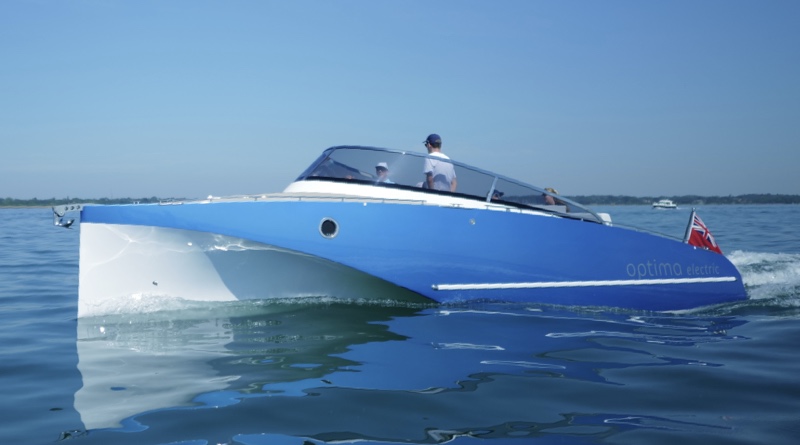
The cornerstone of Optima’s success is its distinctive hull architecture. Developed over five years of CFD analysis and physical prototype testing, the design can be best described as a "trimaran tunneling hull."
Unlike conventional planing hulls—which require immense energy to lift out of the water—or displacement hulls that hit a strict speed-to-length ratio wall, Optima’s geometry minimizes hydrodynamic drag. The vessel features a slender central hull flanked by two outer mini-hulls (pontoons) with extremely sharp V-profiles. These pontoons connect to the main body via an arching design that forms a tunnel, a concept drawing inspiration from high-speed racing powerboats. This configuration channels water efficiently, stabilizes the vessel in lively seas, and drastically reduces wake and resistance.
Theoretical efficiency is one thing; real-world maritime performance is another. In 2023, Optima provided definitive proof of its technology’s capability by deploying the 10.6-metre (35 ft) Optima e10 on a historic voyage.
Powered by a modest 40kW electric propulsion system, the e10 became the first electric boat to successfully circumnavigate the Isle of Wight non-stop. The vessel completed the grueling 55-nautical-mile course under demanding maritime conditions, traversing thick fog and turbulent, choppy waters off St. Catherine’s Point.
Beyond proving the vessel’s seaworthiness, the journey underscored the economic viability of electric cruising. The entire 55-nautical-mile voyage required a battery recharge costing just £20 (€23 / $27). For commercial operators and private owners alike, this stark contrast in operational expenditure highlights the disruptive potential of Optima’s design philosophy.
Recognition and the Gussies Victory (2024)
Following its open-water triumphs, Optima’s innovations gained international recognition when the company claimed a prestigious victory at the 2024 Gussies International Electric Boat Awards. This accolade cemented Optima’s reputation among industry peers and maritime experts as a frontrunner in non-foiling electric vessel design, setting the stage for its current push toward commercialization.
Supporting Context & Metrics: Efficiency, Comfort, and Commercial Versatility
The marine electric vehicle market is crowded with niche offerings, ranging from high-cost foiling craft that require pristine water conditions to heavy harbour workboats with limited range. Optima Yachts has carved out a distinct market segment by balancing uncompromising efficiency with the luxurious amenities expected by modern yacht owners, alongside practical scalability for commercial operators.
Balancing Luxury and Efficiency
A common pitfall in sustainable yacht design is the compromise on interior comfort and space in the name of weight reduction. Optima’s efficient hull design alters this equation. Because the hull generates minimal drag, the vessel can carry robust luxury amenities without severely penalizing range.
The Optima e10 (35 ft / 10.6 metres): Designed to accommodate up to 8 guests, this model features a double-bed cabin, a fully equipped kitchenette (including a fridge/freezer, sink, and induction stovetop hob/grill), a hot-water transom deck shower, an electric marine toilet with a holding tank, and a high-end 4-speaker audio system.
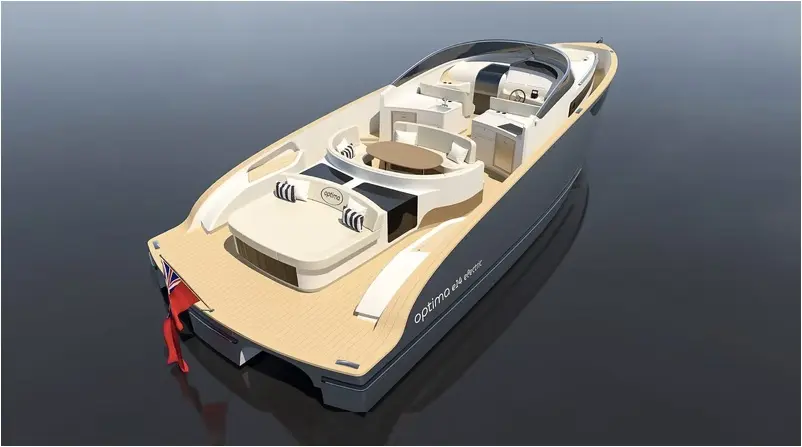
The Optima e14: Building upon the engineering principles of the e10, the award-winning e14 elevates passenger capacity and relaxation, offering a sprawling sunbed, a central dining area, and comfortable accommodations for up to 12 guests.
Expanding into Commercial Marine Sectors
While recreational cruising represents a core pillar of the brand, Optima has purposefully engineered its modular hull and propulsion platforms to serve the booming commercial marine sector. Waterfront municipalities, hospitality brands, and island resorts face mounting pressure to eliminate carbon emissions, comply with stricter environmental regulations, and meet shifting consumer expectations for sustainable travel.
Optima’s commercial architecture scales seamlessly across multiple use cases:
Luxury Water Taxis: 12-passenger configurations designed for high-end resort transfers and urban waterfront transit.
Small Ferries & Tour Boats: Mid-sized commercial variants capable of moving groups efficiently across sheltered and semi-sheltered coastal waters.
High-Capacity Transporters: Larger models capable of carrying up to 50 passengers, offering operators a dramatic reduction in long-term "refueling" and maintenance overhead compared to traditional diesel-powered vessels.
Official Statements: Leadership Vision for the Future
The driving force behind Optima Yachts is a clear-eyed mission to eliminate the structural barriers that have kept electric boating confined to short-range day trips.
Reflecting on the historic Isle of Wight expedition, CEO David Kendall emphasized the experiential benefits of the company’s engineering:
"It was an incredibly comfortable and enjoyable trip—we were able to have lunch and engage in pleasant conversation on passage thanks to the good sea keeping of the innovative hull and noise reduction from the electric drive. We arrived back in Lymington as relaxed and refreshed as we started, despite some challenging conditions south of the island including thick fog and lively seas off St Catherine’s Point."
Addressing the current inflection point of the company and its invitation to the global investment community, Kendall added:
"We have spent years solving one of the biggest barriers to marine electrification—vessel efficiency. We believe the business is now at an exciting inflection point and are looking for the right investment and ownership to take Optima to the next level, whether through commercial production, strategic partnerships or expansion into markets."
Future Outlook: Investment Opportunities in a Rapidly Evolving Market
The global electric boat market is transitioning from its infancy into a high-growth sector. Driven by tightening municipal regulations—such as zero-emission zones taking effect in European lakes, fjords, and sensitive marine sanctuaries—maritime operators are actively seeking plug-and-play alternatives to fossil-fuel combustion engines.
For prospective investors, strategic acquirers, or established marine operators, Optima Yachts presents a compelling value proposition. Rather than funding high-risk exploratory research from scratch, interested parties have the opportunity to acquire:
Validated Intellectual Property: Over five years of peerless, grant-backed R&D culminating in a patented or patent-pending trimaran tunneling hull design.
Proven Technology: Real-world validation through award-winning designs and historic open-water endurance records.
A Differentiated Market Position: A rare synthesis of ultra-long-range energy efficiency, luxurious aesthetic comfort, and scalable commercial adaptability.
As governments continue to pour capital into clean transport infrastructure and corporate hospitality groups race to meet net-zero corporate targets, Optima Yachts is ideally positioned to capture significant market share. The company’s leadership invites visionary partners, investors, and industrial operators to initiate discussions through the official Optima Yachts website to help bring this award-winning marine vision into full commercial reality.