





MEAFORD, ONTARIO — The Municipality of Meaford has officially announced the commencement of critical in-water dredging operations within its municipal harbor. Designed to remediate years of accumulated sediment, the project kicked off this week with heavy machinery and specialized maritime contractors mobilizing on-site. The comprehensive maintenance initiative is engineered to clear accumulated deposits of sand, silt, and other naturally occurring debris that have progressively shallowing the harbor basin, creating hazards for commercial vessels, recreational boaters, and emergency marine services alike.
Set to run continuously through mid-October, this vital infrastructure project highlights the ongoing challenges municipalities face in maintaining aging coastal and inland waterways. As shifting weather patterns, accelerated erosion, and natural sedimentation rates continue to impact freshwater harbors across the Great Lakes region, proactive interventions such as the Meaford Harbor dredging project have transformed from routine upkeep into essential investments for regional economic vitality and public safety.
Executive Overview: Restoring Depth and Navigational Security
The primary objective of the Meaford Harbor dredging project is the systematic extraction and removal of accumulated sediment layers that have severely compromised draft depths across multiple slips and navigation channels. Over extended periods, littoral drift, riverine discharge, and wind-driven wave action deposit large volumes of particulate matter into sheltered harbor basins. Left unaddressed, this gradual shoaling process restricts vessel draft, limits the maneuverability of larger craft, and exponentially increases the risk of groundings.
By authorizing this comprehensive intervention, municipal leaders are ensuring that Meaford Harbor remains fully accessible to the diverse array of watercraft that rely on its infrastructure. These include commercial fishing operations, recreational boating tourism, local ferry or excursion services, and vital search-and-rescue or provincial marine enforcement units.
Furthermore, the timing of the project has been meticulously coordinated to align with strict regulatory frameworks. Municipal officials, in collaboration with provincial and federal environmental agencies, scheduled the in-water works to coincide with approved environmental timing windows. This strategic scheduling is designed to minimize disruptions to local aquatic ecosystems, mitigating potential ecological impacts on indigenous fish species, benthic organisms, and migratory wildlife during vulnerable life-cycle phases.
Detailed Chronology: From Planning and Permitting to Mobilization and Execution
The road to the current dredging operation at Meaford Harbor represents the culmination of months—and in some cases years—of rigorous engineering assessments, bathymetric surveying, stakeholder consultations, and bureaucratic approval processes.
Phase 1: Bathymetric Surveys and Problem Identification
The genesis of the project traces back to routine hydrographic surveys conducted by municipal engineering consultants. These sophisticated sonar and laser-based depth measurements mapped the harbor floor in high resolution, revealing alarming rates of sediment accumulation in high-traffic zones and turning basins. Cross-referencing these findings with historical depth charts confirmed that localized shoaling had reduced available water columns significantly below the safety margins required for standard vessel drafts.
Phase 2: Environmental Review and Regulatory Compliance
Because Meaford Harbor forms an integral part of the larger Georgian Bay ecosystem, any heavy civil works involving in-water excavation demand exhaustive environmental screening. Municipal planners engaged with environmental protection agencies to secure the necessary permits under federal and provincial fisheries acts. Key components of this phase included:
- Sediment Characterization: Core samples of the harbor bottom were analyzed in certified laboratories to check for historical industrial contaminants, heavy metals, and agricultural runoff. Ensuring clean sediment disposal or identifying specialized management requirements is a mandatory precursor to any modern dredging initiative.
- Timing Windows: To protect spawning fish populations and macroinvertebrate communities, regulators imposed a strict operational window. By restricting heavy mechanical disturbance to late summer and early autumn, the municipality ensures that sensitive spring spawning periods and winter hibernation cycles remain undisturbed.
Phase 3: Contractor Procurement and Mobilization
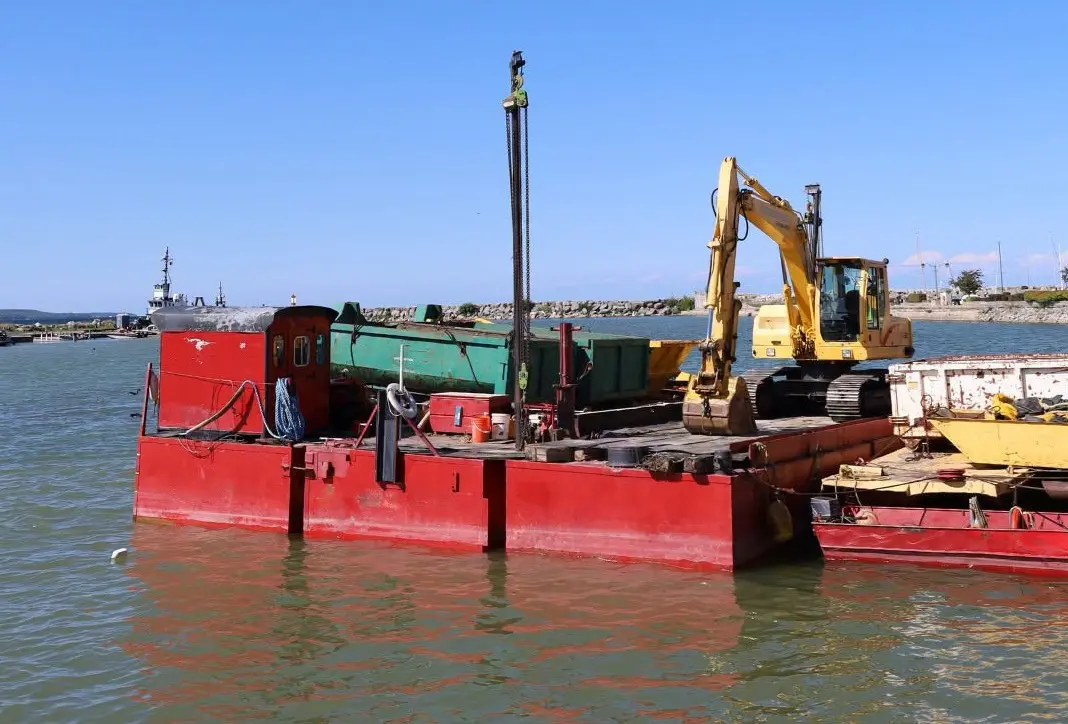
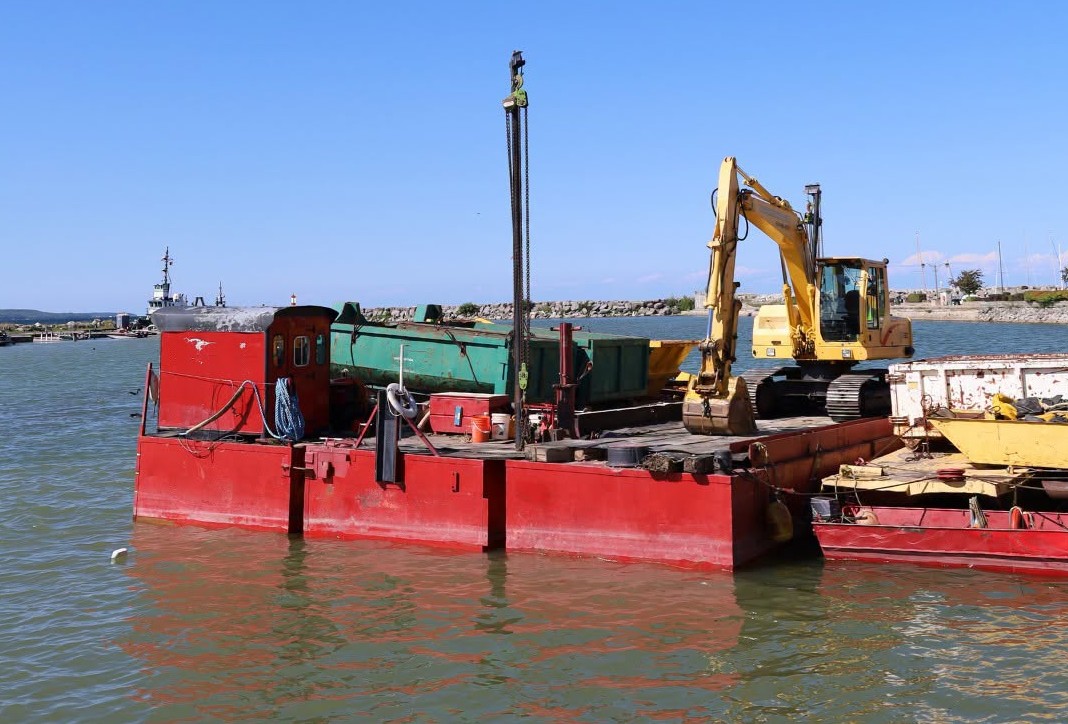
Following the successful acquisition of all environmental clearances and budgetary approvals, the municipality awarded the contract to specialized marine construction and dredging professionals. The mobilization phase began in August, featuring the arrival of specialized floating plant equipment, backhoes mounted on barges, turbidity curtains, and sediment dewatering containers.
Phase 4: Active Dredging Operations (Current Status)
As of this week, dredging crews are actively excavating the targeted zones within the harbor. The process involves mechanical removal of sediment, loading onto sealed barges or transport trucks, and hauling the material to designated, provincially approved disposal and management sites. Operations will scale dynamically over the coming weeks, remaining on track for a targeted completion date in mid-October.
Supporting Context & Metrics: The Geomorphology of Sedimentation in the Great Lakes
To fully grasp the necessity of the Meaford Harbor dredging project, one must examine the broader environmental and geographical dynamics governing the Great Lakes basin. Meaford, situated on the southern shores of Georgian Bay within Lake Huron, is subject to complex hydrodynamic forces.
The Mechanics of Harbor Shoaling
Harbors are, by design, engineered structures that disrupt natural littoral drift. By creating artificial breakwaters, jetties, and revetments to protect vessels from open-water wave action, engineers inadvertently create low-energy environments. In these sheltered zones, water velocities drop sharply, causing suspended particulate matter—carried by currents and wave-induced turbulence—to fall out of suspension and settle on the bottom.
In regions like Meaford, this natural process is compounded by:
- Severe Weather Events: Increasingly frequent high-intensity storm systems drive massive volumes of sand and topsoil off surrounding agricultural lands and coastal bluffs into the lake, where they are eventually swept into coastal inlets.
- Water Level Fluctuations: Lake Huron and Georgian Bay have experienced dramatic historical swings in water levels over the past decade, shifting rapidly from record highs to concerning lows. Low-water epochs instantly compress the usable water column, turning areas that were previously navigable into perilous shallows.
Quantifying the Scope of the Project
While exact volumetric figures for the Meaford project are dictated by ongoing bathymetric progress, typical municipal maintenance dredging operations of this scale routinely manage tens of thousands of cubic meters of sediment.
- Target Depth Restorations: Operations are engineered to return specific turning basins, slips, and fairways to their original design depths, often restoring a buffer of 1.5 to 2.5 meters of water clearance depending on the slip class.
- Economic Multipliers: Studies on Great Lakes maritime infrastructure consistently demonstrate that every dollar invested in maintaining harbor depth yields exponential returns in local tourism spending, charter business revenues, and marine retail trade.
Official Statements and Stakeholder Perspectives
The Municipality of Meaford has maintained a proactive and transparent communication strategy throughout the planning and execution phases of the dredging project, keeping local residents, boaters, and business owners fully informed.
In an official statement released by municipal authorities, the rationale behind the undertaking was articulated with absolute clarity:
"Dredging is needed because material has built up on the harbor bottom over time, making parts of the harbor shallower. Removing this material will help improve safe boating access and support harbor operations. In-water dredging can only happen during an approved environmental timing window to help reduce impacts to fish, wildlife, and the surrounding water."
Local maritime stakeholders have universally welcomed the initiative. Commercial fishermen and recreational marina operators have long voiced concerns over narrowing navigation channels and the risk of propeller and hull damage. With the arrival of the dredge plant, these anxieties are being systematically addressed.
Furthermore, environmental advocacy groups have expressed cautious optimism, pointing out that adherence to strict environmental timing windows demonstrates a mature, balanced approach to municipal engineering—one that prioritizes both economic infrastructure and ecological stewardship.
Future Outlook: Long-Term Infrastructure Resilience and Adaptive Management
As the dredging operations at Meaford Harbor progress steadily toward their mid-October completion date, municipal planners are already looking past the immediate horizon to design sustainable, long-term strategies for harbor management.
Maintenance dredging, by its very nature, is a cyclical necessity rather than a permanent fix. Because sedimentation is an ongoing geological reality, the Municipality of Meaford recognizes that proactive asset management must become a permanent fixture of its municipal capital works program.
Key Elements of Future Harbor Management:
- Predictive Hydrographic Monitoring: Implementing regular, biannual bathymetric surveys to track sedimentation rates in real-time. By monitoring precisely where and how fast material accumulates, the municipality can optimize future dredging cycles, reducing emergency interventions and lowering long-term costs.
- Nature-Based Coastal Protection: Exploring complementary shore-protection measures, such as sediment traps, riparian buffer zones upstream, and breakwater modifications, to intercept particulate matter before it reaches the core harbor basin.
- Climate Adaptation Strategies: Factoring in climate change projections—including increased frequency of severe storm surges and unpredictable lake level volatility—into future municipal waterfront master plans.
Conclusion
The initiation of in-water dredging at Meaford Harbor represents a critical milestone in municipal governance and infrastructure maintenance. By addressing the silent, cumulative threat of sedimentation head-on, the Municipality of Meaford is safeguarding its maritime heritage, protecting local economic drivers, and ensuring that its waters remain a safe, vibrant hub for commerce and recreation for years to come. As heavy equipment continues its methodical work through the golden weeks of early autumn, Meaford stands well-prepared to navigate the challenges of the future with confidence and clarity.