








GEORGETOWN — In a major milestone for coastal infrastructure and regional commerce, federal and local authorities have officially announced the completion of the Georgetown Harbor maintenance dredging project. Spanning two intensive months and backed by a $3.5 million federal investment, the operation successfully cleared accumulated sediment from critical federal navigation channels, restoring safe, reliable depths for commercial shipping and recreational vessels alike.
Executed by dredging contractor Southern Dredging under the oversight of the U.S. Army Corps of Engineers (USACE), the project successfully removed more than 561,000 cubic yards of sand, silt, and marine sediment. More importantly, this undertaking represents the first major, comprehensive dredging operation within the inner harbor since 2008. By tackling nearly two decades of accumulated sediment buildup, the completion of this project removes long-standing navigational bottlenecks, injects renewed momentum into the local maritime economy, and serves as a vital catalyst for the ambitious Georgetown Port Master Plan.
Executive Overview: Restoring Navigational Lifelines
Maritime commerce has always been the lifeblood of coastal communities, and Georgetown is no exception. Over the years, natural sedimentation—driven by tidal action, river currents, and coastal storms—gradually choked the harbor’s federal navigation channels. As water depths slowly decreased, commercial vessels faced increasing operational risks, drafting restrictions, and costly delays, while recreational boaters navigated treacherous shallows.
Recognizing the urgent need for intervention, USACE prioritized the Georgetown Harbor maintenance dredging initiative, securing $3.5 million to tackle the accumulation. Over a rigorous two-month schedule, specialized dredging equipment worked around the clock to extract over 561,000 cubic yards of material.
The successful conclusion of the project does more than simply deepen the water; it restores full operational capacity to a critical economic artery. Cargo vessels can now transit the harbor with confidence, fully laden and free from the draft limitations that have plagued the port for years. Furthermore, the project lays a sturdy physical foundation for future economic development, aligning directly with the overarching goals of the Georgetown Port Master Plan to expand local marine trade and modernize port infrastructure.
Detailed Chronology: From Planning to Project Completion
The successful wrap-up of the Georgetown Harbor dredging project is the culmination of meticulous planning, rigorous environmental reviews, and relentless operational execution. While the active phase spanned two intensive months, the groundwork for the initiative was laid years in advance.
Phase 1: Assessment, Design, and Contracting
For nearly two decades, the inner harbor of Georgetown had not undergone a major, systematic dredging campaign. While minor spot-dredging had occasionally been performed to address emergency shoaling, the cumulative impact of unchecked sedimentation severely constrained channel dimensions. By the early 2020s, local stakeholders, port authorities, and commercial operators intensified calls for federal intervention.
In response, USACE conducted comprehensive hydrographic surveys to map the extent of the shoaling. These surveys revealed that hundreds of thousands of cubic yards of sand and silt had choked critical stretches of the federal navigation channel. Armed with this data, USACE finalized project specifications, secured the necessary environmental permits, and allocated $3.5 million in federal funding. Following a competitive bidding process, Southern Dredging was awarded the contract, bringing specialized marine engineering expertise and heavy-duty dredging vessels to the site.
Phase 2: Mobilization and Execution
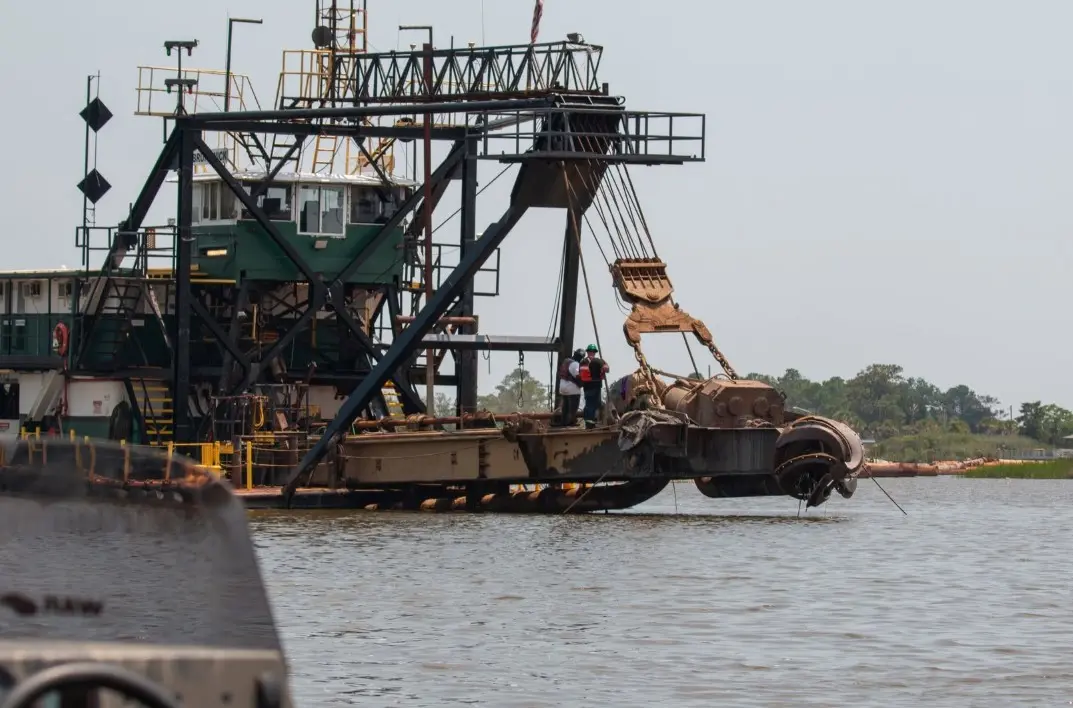
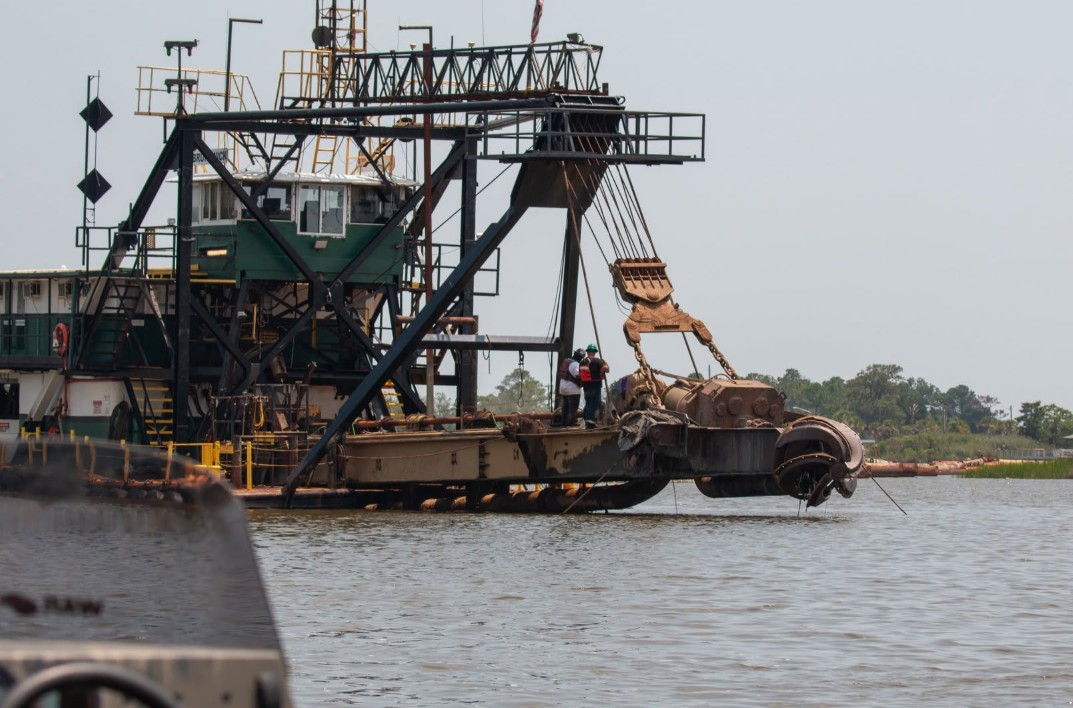
Operations kicked off earlier this summer, transforming the tranquil waters of Georgetown Harbor into an active marine construction zone. Southern Dredging mobilized heavy equipment, including cutterhead suction dredges, booster pumps, and pipeline networks designed to transport the extracted sediment to designated placement areas.
Working around the clock while managing tide schedules, environmental monitoring protocols, and active marine traffic, the project team systematically worked their way through the harbor. The primary objective was to excavate the navigation channel back to its authorized federal project depth. Despite summer weather challenges and the logistical complexities of operating in a shared commercial and recreational waterway, the contractor maintained a steady pace.
Phase 3: Final Surveys and Demobilization
By mid-August 2026, the dredging phase reached its conclusion. Following the extraction of the final cubic yards of silt and sand, USACE conducted rigorous post-dredging hydrographic surveys. These surveys verified that the channel had been successfully restored to its required depth specifications throughout its entire length. With verification complete, Southern Dredging began demobilizing its equipment, officially closing out the physical operations of the $3.5 million project.
Supporting Context & Metrics: Quantifying the Scope of the Operation
To fully understand the magnitude of the Georgetown Harbor maintenance dredging project, it is essential to examine the hard metrics and the technical challenges overcome by the engineering teams.
The Scale of Sediment Removal
Over the course of the two-month operation, Southern Dredging extracted a staggering 561,000 cubic yards of material. To put this figure into perspective, 561,000 cubic yards of sediment is enough to fill standard football stadiums to the brim multiple times over. This massive volume consisted primarily of a dense mix of marine silt, fine sand, and organic sediment carried downstream by river systems and pushed inward by tidal currents over the past eighteen years.
Financial Investment and Resource Allocation
The $3.5 million federal allocation represents a highly cost-effective investment in regional infrastructure. Every dollar spent directly addresses the safety and viability of a commercial channel that supports millions of dollars in economic activity annually. The funds covered comprehensive pre-and-post-project surveying, environmental compliance monitoring, equipment mobilization, round-the-clock dredging operations, and the environmentally sound placement of the dredged material.
Navigational Specifications and Safety Impacts
Prior to the project, localized shoaling had reduced clearance depths in several critical stretches of the inner harbor, forcing cargo vessels to "light-load"—carrying less cargo to reduce their draft—or wait for high tides to navigate safely. By removing the 561,000 cubic yards of choke points, the project restored full design depths, virtually eliminating the risk of groundings. This restoration guarantees two-way traffic efficiency and dramatically enhances safety for both deep-draft commercial freighters and the vibrant local community of recreational boaters.
Official Statements: Perspectives from the Front Lines
The successful completion of the project drew praise from federal agencies, regional planners, and maritime stakeholders, all of whom emphasized the collaborative nature of the undertaking.
In an official statement released following the conclusion of the project, a spokesperson for the U.S. Army Corps of Engineers (USACE) highlighted the dual benefits of safety and economic revitalization:
"After a 2-month, $3.5 million operation, we’ve restored safe and reliable channel depths in Georgetown’s vital federal navigation channels. Our contractor, Southern Dredging, removed over 561,000 cubic yards of sand and silt."
USACE representatives further underscored the historical significance of the operation and its alignment with broader regional goals, concluding:
"This project successfully clears critical navigation hazards, ensuring safe passage for both commercial and recreational boaters. Also, it marks the first major dredging in the inner harbor since 2008 and is a huge step forward for the region’s economic prosperity and the Georgetown Port Master Plan."
Local business leaders and port operators echoed these sentiments, noting that reliable infrastructure is the single most important factor in attracting new maritime commerce. For years, uncertainty surrounding channel depths discouraged potential shipping lines from establishing regular routes to Georgetown. With the channel now restored to its full authorized depth, local stakeholders are optimistic that shipping lines and marine industrial ventures will take a fresh look at the port’s capabilities.
Future Outlook: Paving the Way for the Georgetown Port Master Plan
While the completion of the maintenance dredging project is a monumental achievement in its own right, industry experts agree that it should be viewed as a foundational stepping stone rather than a standalone event. The long-term economic vitality of Georgetown depends on continuous infrastructure stewardship and strategic planning.
Integrating with the Georgetown Port Master Plan
The timing of the dredging project is particularly crucial as regional authorities advance the Georgetown Port Master Plan. Designed to modernize port facilities, attract private investment, and expand cargo-handling capacity, the master plan requires a deep, dependable navigation channel as an absolute prerequisite.
Without guaranteed water depths, investments in dock upgrades, warehousing, and intermodal transport connections would carry unacceptable operational risks. By clearing the backlog of sediment accumulated since 2008, USACE and Southern Dredging have removed the primary physical barrier to the master plan’s execution.
Ensuring Long-Term Channel Maintenance
Looking ahead, federal and local agencies recognize that sedimentation is an ongoing, natural process. Rivers will continue to deposit silt, and coastal tides will continue to shift sand. To prevent the harbor from falling back into the neglected state that characterized the post-2008 era, port officials and USACE are discussing the establishment of a more proactive, recurring maintenance schedule.
Routine, smaller-scale maintenance dredging every few years—rather than massive, disruptive overhauls every two decades—will prove far more cost-effective and environmentally manageable. Such a strategy ensures that Georgetown Harbor remains perpetually open, safe, and competitive in the fast-paced global maritime market.
Economic Ripples Across the Region
The ripple effects of a fully restored harbor extend far beyond the immediate port boundaries. Local shipyards, marine repair facilities, supply vendors, and logistics providers stand to benefit from increased vessel traffic. Furthermore, recreational boating enthusiasts—a vital component of the local tourism economy—will enjoy safer navigation and unhindered access to coastal waterways.
As the dredges depart and the final paperwork is filed, Georgetown Harbor stands ready to write a new chapter in its rich maritime history. Backed by federal investment, engineering expertise, and a clear strategic vision for the future, the port is poised to recapture its status as a bustling, competitive hub for regional and international trade.