









Executive Overview
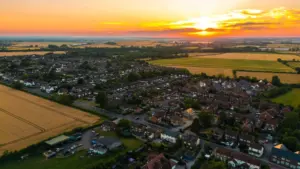
Tucked away in the verdant, rolling countryside of northwest England lies Grappenhall, a picturesque historic village that bridges centuries of architectural heritage with contemporary rural charm. Located in the county of Cheshire, approximately 27 miles east of Liverpool and 23 miles southwest of Manchester, this idyllic settlement boasts a population of under 10,000 residents. Despite its modest size, Grappenhall punches well above its weight on the cultural and historical map. It is famously celebrated as the birthplace of the late, legendary actor Tim Curry—renowned internationally for his iconic roles in The Rocky Horror Picture Show and Stephen King’s It—and is deeply intertwined with the literary legacy of Lewis Carroll and the ancient annals of English history.
For travelers seeking an authentic countryside excursion away from the hyper-urban sprawl of northern England’s major metropolises, Grappenhall offers an extraordinary synthesis of Domesday-era heritage, centuries-old ecclesiastical architecture, thriving community-centric gastronomy, and meticulously restored Victorian walled gardens. This comprehensive report explores the multi-layered history, architectural landmarks, culinary renaissance, and logistical accessibility of a village that serves as a living museum of English rural life.
Detailed Chronology
The historical tapestry of Grappenhall is deep and well-documented, tracing its origins back well over a millennium through pivotal epochs of British history.
Pre-Conquest and the Domesday Era (11th Century)
Long before it became known as a sanctuary for artists and urban day-trippers, Grappenhall was cataloged in the historic Domesday Book of 1086. At the time of the great survey commissioned by William the Conqueror, the settlement was a tiny, agrarian hamlet consisting of merely six households. Life was defined by subsistence farming, woodland management, and parish cooperation. Though minuscule in population, its inclusion in the Domesday Book cemented its status as a recognized legal and geographic entity within the Hundred of Bucklow in Cheshire.
The Medieval Transformation and St. Wilfrid’s Church (12th to 16th Centuries)
As the Middle Ages progressed, Grappenhall slowly expanded, pivoting its spiritual and social center around the establishment of a house of worship. The foundations of the current architectural marvel, St. Wilfrid’s Church, rest upon the structural footprints of a modest 12th-century church. Much of the magnificent edifice visible today dates back to the 1500s.
During the 14th century, master artisans crafted the intricate, colorful stained glass that still adorns the church windows, filtering natural light into a sacred space that has witnessed the birth, marriage, and passing of generations of Cheshire residents. The churchyard and surrounding lanes evolved organically, preserving the medieval street layouts that modern visitors navigate today.
The Victorian Era and the Parr Legacy (19th Century)
The 19th century brought industrial and domestic transformation to the region. Grappenhall Heys, a prominent local estate, became the home of the influential banker Thomas Parr. While Parr’s grand residential manor has since been lost to time, his legacy endures through the magnificent four-acre kitchen and pleasure gardens he established. Conceived as a technological and aesthetic triumph of Victorian horticulture, these walled gardens introduced sophisticated glasshouse cultivation for exotic fruits like citrus and grapes, laying the groundwork for the modern agricultural preservation efforts that define the site today.
The Mid-20th Century: The Birth of Tim Curry (1946)
On April 19, 1946, Grappenhall welcomed its most famous modern son: Timothy James Curry. Born in the village, Curry would spend his formative years absorbing the quiet eccentricities of English provincial life before embarking on a trailblazing acting career that spanned theater, film, and music. From his transgressive, career-defining portrayal of Dr. Frank-N-Furter in the 1975 cult classic The Rocky Horror Picture Show to terrifying audiences as Pennywise the Dancing Clown in the 1990 television adaptation of Stephen King’s It, Curry’s roots in Grappenhall connected a sleepy Cheshire village to the pinnacle of global pop culture.
Supporting Context & Metrics
To fully appreciate Grappenhall’s unique position within the regional landscape, one must examine the geographic, architectural, and demographic metrics that define the village and its surrounding infrastructure.
Geographic and Demographic Metrics
- Geographic Coordinates: Situated in the unitary authority of Warrington within the ceremonial county of Cheshire.
- Proximity to Urban Centers: Located approximately 27 miles east of Liverpool and 23 miles southwest of Manchester, making it an optimal destination for single-day tourism.
- Population Statistics: The parish houses a tight-knit community of fewer than 10,000 residents, ensuring that the village retains its distinct rural village atmosphere despite encroaching suburban expansion.
- Accessibility Hubs: Manchester Airport (MAN) services direct international routes from major hubs including New York City, Atlanta, and Las Vegas, alongside extensive European connections, positioning Grappenhall within easy reach of global travelers. Rail links via London Euston connect directly to nearby Warrington, facilitating seamless multimodal transit.
Architectural and Cultural Landmarks
Grappenhall’s built environment serves as a physical archive of architectural evolution:
- St. Wilfrid’s Church Tower Carving: Positioned directly beneath the clock face on the exterior of St. Wilfrid’s Church tower is an enigmatic stone carving of a cat. Local lore—and prominent historians—suggest this specific feline inspired Charles Lutwidge Dodgson, better known as the author Lewis Carroll, to conceptualize the iconic Cheshire Cat in his 1865 literary masterpiece, Alice’s Adventures in Wonderland. Carroll spent his youth in nearby Daresbury, deep within the same Cheshire milieu.
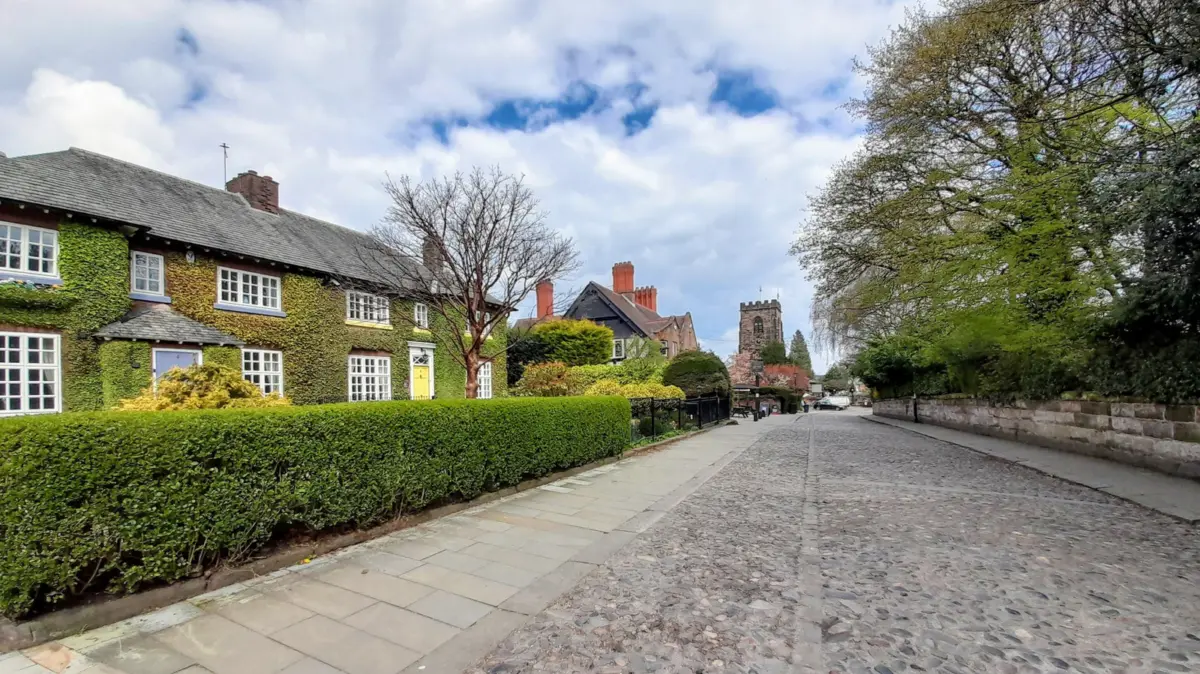
- Church Lane: The village’s primary thoroughfare features a partial cobblestone surface flanked by impeccably preserved historic homes, many exceeding a century in age. The streetscape offers an unobstructed window into late-Victorian and Edwardian domestic architecture.
- The Grappenhall Heys Walled Garden: Spanning four meticulously restored acres, this site features historic brick walls designed to trap heat and microclimates for tender crops, operational Victorian-style glasshouses, and tranquil tree-lined ponds.
Official Statements & Community Perspectives
The preservation and revitalization of Grappenhall are driven by a dedicated coalition of local councils, heritage trusts, small-business owners, and community volunteers.
Representatives from the Grappenhall and Thelwall Parish Council have repeatedly emphasized the delicate balance required to maintain historic integrity while accommodating modern visitors. In official planning and tourism briefs, council spokespersons note:
"Our mandate is to safeguard the irreplaceable architectural heritage of sites like St. Wilfrid’s and the historic village core, ensuring that future generations can experience the authentic character of a Cheshire settlement that has endured for over a millennium. At the same time, we actively foster a welcoming environment for regional and international visitors through sustainable tourism initiatives."
Local business operators also champion the symbiotic relationship between historic preservation and community hospitality. The management of the Parr Arms, a historic public house situated adjacent to St. Wilfrid’s Church, remarks on the cultural gravity of the village center:
"Operating a traditional pub in the shadow of a 16th-century church carries a profound sense of stewardship. We aren’t just serving meals; we are providing a communal hearth where locals and travelers converge to share stories, much as they have done in this parish for generations."
Similarly, culinary and hospitality ventures such as The Rams Head—noted by the Campaign for Real Ale (CAMRA) to occupy a site licensed continuously since the Domesday survey—stress the importance of historical continuity. Management highlights that maintaining classic British culinary traditions, such as slow-roasted Sunday beef dinners and hand-crafted steak and ale pies, acts as an anchor for visitors seeking genuine cultural immersion.
Future Outlook
As northern England continues to develop its transport networks and regional tourism strategies, Grappenhall stands at an intriguing crossroads between heritage conservation and selective modernization.
Sustainable Tourism and Horticultural Expansion
The ongoing revitalization of the Grappenhall Heys Walled Garden serves as a blueprint for sustainable community-led tourism. Managed with a focus on ecological biodiversity, heritage plant cultivation, and educational outreach, the gardens—alongside the on-site Primrose Cafe—demonstrate how historic agricultural spaces can be adapted for modern public enrichment. Future outlooks point toward expanded educational programming, highlighting organic farming methods and Victorian engineering techniques utilized within the glasshouses.
Cultural Tourism Linked to Literary and Cinematic Icons
With global interest in literary tourism and cinematic pilgrimage on the rise, Grappenhall is uniquely positioned to capitalize on its dual association with Lewis Carroll and Tim Curry. Local tourism boards anticipate increased interest from international fans tracing the footsteps of the author who dreamed up Wonderland and the enigmatic actor who permanently altered the landscape of rock-and-roll cinema.
Plans to further integrate historical walking trails—such as the family-friendly Mouse Trail winding through St. Wilfrid’s Church—ensure that younger generations remain engaged with local history. By harmonizing its Domesday roots with vibrant independent dining, accessible transit connections, and a steadfast commitment to architectural preservation, Grappenhall guarantees that its quiet, picturesque lanes will continue to charm travelers for centuries to come.