







Executive Overview
Tucked away in the rugged expanse of western British Columbia, far removed from the heavily trafficked tourist corridors of the province’s more famous southern parks, lies a tranquil, vertical sanctuary: Sleeping Beauty Mountain Park. Encompassing approximately 735 acres of pristine wilderness, this provincial park was formally established in 2004 to protect a fragile, high-elevation ecosystem characterized by dense old-growth forests, subalpine meadows, and dramatic glacial overlooks. Despite its rich natural assets, Sleeping Beauty Mountain Park remains an unsung destination, largely overshadowed by its commercialized counterparts. For those willing to navigate its challenging trails, however, it offers an exceptionally uncrowded backcountry experience, rewarding adventurers with absolute solitude and sweeping vistas of the Skeena River valley and Kitsumkalum Lake.
Located just a 30-minute drive from the nearby town of Terrace, the park bridges the gap between raw, untamed backcountry exploration and accessible mountain recreation. It serves as a microcosm of northern British Columbia’s staggering geographic diversity, featuring a demanding alpine hike that ascends through layered biotic zones—from second-growth timber to ancient hemlock and fir stands, and finally into exposed alpine perimeters. As outdoor enthusiasts increasingly seek out off-the-beaten-path destinations to escape the pressures of over-tourism, Sleeping Beauty Mountain Park has emerged as a compelling case study in sustainable, low-impact wilderness preservation. This report provides a comprehensive analysis of the park’s history, geographical layout, logistical considerations, infrastructure, surrounding socio-economic impacts on Terrace, and the future outlook for regional conservation and tourism development.
Detailed Chronology and Historical Context
The narrative of Sleeping Beauty Mountain Park is deeply intertwined with the industrial expansion, indigenous heritage, and environmental conservation movements of northern British Columbia. Long before its formal designation as a provincial park in 2004, the rugged peaks and valleys surrounding Terrace were utilized by First Nations peoples for hunting, gathering, and spiritual practices. The towering ridges that give the park its evocative name—derived from a profile resembling a reclining figure when viewed from specific angles in the valley—have long held cultural significance within the region.
Throughout the mid-to-late 20th century, the economic lifeblood of the Terrace area was dominated by heavy resource extraction, primarily logging and mining. The very access route that hikers use today to reach Sleeping Beauty Mountain Park—a narrow, unpaved forest service road—was originally engineered and maintained primarily for industrial forestry operations. As commercial timber harvesting expanded up the valleys, logging roads sliced deeper into the mountainous terrain, inadvertently opening up previously inaccessible backcountry zones to local hikers, mountaineers, and hunters.
By the late 1990s and early 2000s, local conservationists and outdoor recreation groups recognized the urgent need to protect the ecological integrity of the high-elevation zones above the commercial timber lines. The push for formal provincial protection gained momentum amid growing provincial recognition that northern British Columbia possessed world-class ecotourism assets that required statutory safeguards against unregulated resource encroachment.
On April 20, 2004, the British Columbia government officially established Sleeping Beauty Mountain Park under the Protected Areas of British Columbia Act. This designation placed 735 acres of sensitive alpine and subalpine terrain under the jurisdiction of BC Parks. The primary management objective shifted from timber extraction to the preservation of native biodiversity, watershed protection, and the promotion of low-impact backcountry recreation. Over the ensuing two decades, BC Parks, in collaboration with regional trail-building associations and municipal stakeholders in Terrace, has gradually formalized access to the park. While intentionally lacking heavy infrastructure to preserve its wild character, the park has seen targeted investments in trail markers, a designated subalpine campsite, and essential visitor amenities designed to mitigate human impact on a fragile northern ecosystem.
Supporting Context and Metrics: Geography, Infrastructure, and Logistics
Understanding the logistical realities of visiting Sleeping Beauty Mountain Park requires a thorough examination of its geographical metrics, transportation networks, and environmental challenges.

Geographical Scope and Trail Metrics
- Total Area: Approximately 735 acres (300 hectares).
- Elevation Profile: The journey begins at the upper parking lot and climbs steadily to the summit ridge. The one-way distance from the upper parking area to the summit is approximately 4.7 miles (7.5 kilometers), resulting in a round-trip trek of roughly 9.4 miles.
- Trail Composition: The route initiates via a 0.8-mile stretch along an old, decommissioned forest road, transitioning into a 1.6-mile maintained, marked dirt and root path through dense second-growth and old-growth hemlock and fir forests. The final ascent opens up into exposed alpine meadows, culminating in an unmarked, rugged trail leading to panoramic viewpoints.
- Difficulty Ratings: BC Parks classifies the route as moderately difficult with steep sections, while independent trail mapping platforms such as AllTrails rate it as "hard," primarily due to its relentless incline, root-strewn surfaces, and potential for adverse weather or lingering snowpacks.
Access and Transportation Infrastructure
Reaching the trailhead demands careful preparation. Located approximately a 30-minute drive northwest of downtown Terrace, the park is accessed via a network of forestry roads that require mindful navigation.
- Parking Logistics: There are two designated parking areas along the access route. The first (lower) parking lot, situated roughly 0.4 miles from the official trailhead, is highly recommended for low-clearance passenger vehicles. Attempting to drive past this point in a standard sedan risks undercarriage damage due to uneven terrain and deep water bars. Furthermore, the upper access road is exceptionally narrow, presenting severe challenges for turning around if a driver encounters oncoming traffic.
- Industrial Traffic Coexistence: Because the access roads are active logging corridors, visitors must exercise extreme caution. Heavy commercial logging trucks retain the right-of-way, and recreationalists are advised to use vehicle headlights, drive at reduced speeds, and monitor for industrial radio traffic if applicable.
Climatic Realities and Seasonal Constraints
Sleeping Beauty Mountain Park is strictly a warm-weather destination. Due to heavy northern snowpacks and avalanche risks, the park is functionally inaccessible for standard hiking and camping during the winter months.
- The Snow Melt Window: Climatic data for the Terrace region indicates that winter snow can persist on the upper reaches of the Sleeping Beauty trail well into mid-July. Consequently, early-season hikers frequently encounter muddy, waterlogged trail conditions, slippery tree roots, and stubborn snow bridges.
- Optimal Weather Window: The prime window for experiencing the park in optimal condition is restricted to late July through September, when the alpine meadows are free of snow, wildflowers are in bloom, and daylight hours are maximized.
- Invertebrate Pressures: Visitors must factor seasonal wildlife into their planning. Ecological reviews and hiker logs consistently highlight that biting insects—including mosquitoes, black flies, and occasionally hornets—can present a significant nuisance during the peak summer months, necessitating the packing of industrial-grade insect repellent, head nets, and appropriate layering.
Official Guidelines and Environmental Stewardship
As visitation to northern British Columbia’s backcountry gradually increases, BC Parks enforces strict stewardship policies to protect fragile habitats like Sleeping Beauty Mountain Park. Alpine and subalpine environments are characterized by short growing seasons; plants that take decades to mature can be permanently destroyed by a single misplaced footstep.
The Leave No Trace Ethos
BC Parks mandates that all visitors to Sleeping Beauty Mountain Park adhere strictly to Leave No Trace principles. Because the park features limited human infrastructure—operating largely as a primitive backcountry zone—pack-it-in, pack-it-out policies are vigorously enforced. Littering, cutting living vegetation, and disturbing wildlife are strictly prohibited.
Wildlife Management and Human Safety
The park’s diverse biotic zones support a rich array of wildlife. While smaller bird species such as grouse, gray jays, boreal chickadees, and dark-eyed juncos are common sights along the lower forested trails, the upper reaches and surrounding valleys are active habitats for larger mammals, including moose, mountain goats, black bears, and occasional grizzly bears.
To mitigate human-wildlife conflicts, park authorities emphasize the following protocols:
- Secure Food Storage: Backpackers utilizing the designated subalpine campsite must make use of the provided bear-proof food storage lockers. Hanging food incorrectly or leaving scraps unattended habituates wildlife to human presence, endangering both animals and future visitors.
- Deterrents and Awareness: Hikers traveling through forested and alpine sections should make noise periodically to avoid surprising bears, and carrying EPA-approved bear spray in an easily accessible holster is considered standard operating procedure for all backcountry travelers in the Skeena region.
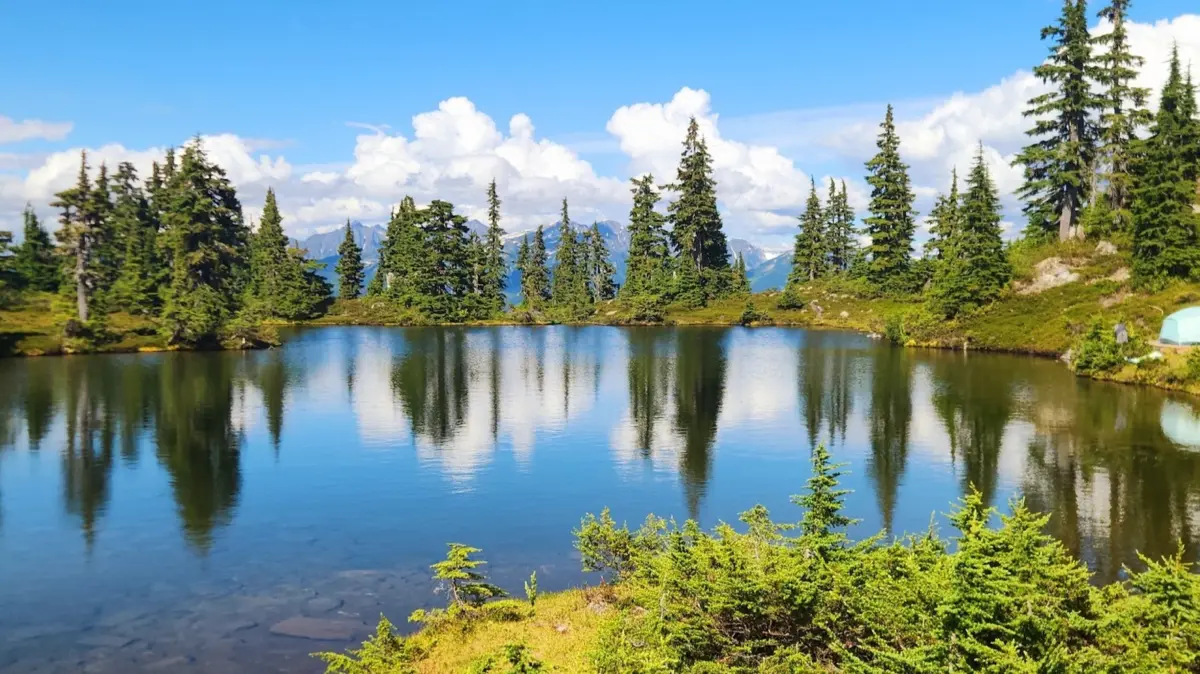
- Sanitation Facilities: A single pit toilet is maintained at the subalpine campsite. Visitors are required to utilize this facility to prevent watershed contamination and maintain sanitary conditions around the alpine lake.
Surrounding Socio-Economic Impact: The Gateway Role of Terrace
The economic and cultural vitality of Terrace, British Columbia, is deeply intertwined with the outdoor recreation assets that surround it. Nestled amid dramatic mountain ranges and centered along the mighty Skeena River, Terrace acts as the logistical base camp for travelers exploring Sleeping Beauty Mountain Park and the broader Kitimat-Stikine District.
Accommodations and Lodging Infrastructure
While backcountry purists may opt for the primitive two-pad campsite situated by the subalpine lake within the park, the vast majority of visitors utilize Terrace as their primary hub. The municipality offers a diverse spectrum of accommodations tailored to modern travelers:
- Bed and Breakfasts: Boutique properties such as the Skeena River House Bed and Breakfast provide personalized hospitality, home-cooked regional breakfasts, and sweeping views of the surrounding riverways.
- Hotels and Motels: A wide selection of established chain hotels and local lodges caters to commercial travelers, adventure tourists, and anglers alike.
- Campgrounds and RV Parks: For those traveling by camper van or motorhome, numerous fully serviced RV parks and tenting campgrounds operate in and around the Terrace city limits.
Culinary and Craft Beverage Scene
Recharging after a grueling 9.4-mile round-trip alpine hike is an essential ritual for visitors to Terrace. The local culinary landscape has evolved significantly in recent years to cater to an increasingly discerning demographic of eco-tourists, cyclists, and outdoor athletes:
- Specialty Cafes: Cyclists and coffee aficionados frequently congregate at establishments like The Fix Cafe and Cyclery, which uniquely combines a top-tier artisanal coffee shop with a full-service bicycle repair and retail hub under a single roof.
- Dining Options: For hearty post-hike meals, establishments such as Sonbadas Steakhouse (holding strong customer approval ratings on digital mapping platforms) serve hearty regional favorites, ranging from perfectly seared ribeye steaks to slow-roasted lamb dishes.
- Craft Breweries: The burgeoning local craft beer scene is anchored by destinations like Sherwood Mountain Brewhouse. Featuring a popular dog-friendly outdoor patio, the brewery offers locally crafted ales and lagers while providing patrons with scenic views of passing freight trains and the rugged mountain backdrops that define the region.
The Broader Regional Road Trip Economy
Sleeping Beauty Mountain Park is part of an expansive network of northern British Columbia wilderness destinations that drive the provincial road trip economy. Reaching Terrace from major urban centers like Vancouver involves an epic, roughly 850-mile overland journey driving inland highways through Prince George, or alternatively, catching a scenic coastal ferry through Prince Rupert.
For travelers looking to expand their northern BC itineraries well beyond Terrace, the region acts as a springboard to monumental provincial preserves. More than eight hours’ drive away lie icons such as Northern Rocky Mountains Provincial Park—British Columbia’s third-largest provincial park, celebrated for its staggering geological isolation and towering limestone peaks—and Boya Lake Provincial Park, renowned for its striking, Caribbean-esque aqua-green glacial waters. These destinations collectively underscore why British Columbia remains globally renowned as one of the premier road-trip frontiers on the North American continent.
Future Outlook: Conservation, Sustainable Tourism, and Infrastructure Challenges
As global travel trends increasingly prioritize uncrowded, nature-based destinations over congested urban and coastal hotspots, Sleeping Beauty Mountain Park faces a delicate balancing act between promoting regional tourism and preserving ecological sanctity.
Balancing Access with Ecological Preservation
The primary challenge facing BC Parks administrators regarding Sleeping Beauty Mountain Park is managing the degradation of the trail network caused by increased foot traffic and adverse weather. Because portions of the trail traverse steep, erosion-prone soils and sensitive alpine tundra, uncontrolled expansion of social trails (unauthorized paths forged by hikers circumventing mud or steep sections) poses a direct threat to native flora.
In response, regional park planners are evaluating potential infrastructure enhancements for the coming decade. These proposals include:
- Boardwalk and Drainage Upgrades: Implementing strategic boardwalk installations across chronically boggy subalpine meadows to protect underlying root systems and prevent soil compaction.
- Enhanced Trailhead Signage: Upgrading informational kiosks at the upper parking lot to better educate novice hikers on trail difficulty, weather unpredictability, and Leave No Trace principles before they begin their ascent.
- Road Maintenance Agreements: Collaborating with provincial ministries and local forestry license-holders to establish predictable maintenance schedules for the industrial access road, ensuring safe transit for recreational vehicles without compromising active logging operations.
Economic Opportunities for Terrace
From a municipal perspective, the anticipated steady growth in visitation to Sleeping Beauty Mountain Park represents a stable, sustainable economic driver. Unlike high-impact industrial sectors that experience cyclical booms and busts, ecotourism provides a steady, year-round baseline of economic activity for local outfitters, hospitality providers, dining establishments, and retail merchants in Terrace. Municipal leaders are increasingly marketing Terrace not merely as a historic industrial waypoint, but as a premier, multi-disciplinary outdoor recreation capital of northwestern British Columbia.
Conclusion
Sleeping Beauty Mountain Park stands as a testament to the wild, untamed beauty of northern British Columbia. By offering a rigorous physical challenge, profound ecological diversity, and an escape from the congestion of modern life, the park delivers a quintessential wilderness experience. As management agencies, local businesses, and outdoor enthusiasts navigate the challenges of sustainable access, Sleeping Beauty Mountain Park is well-positioned to retain its status as a cherished regional sanctuary—rewarding those patient and prepared enough to seek out its quiet alpine heights for generations to come.