







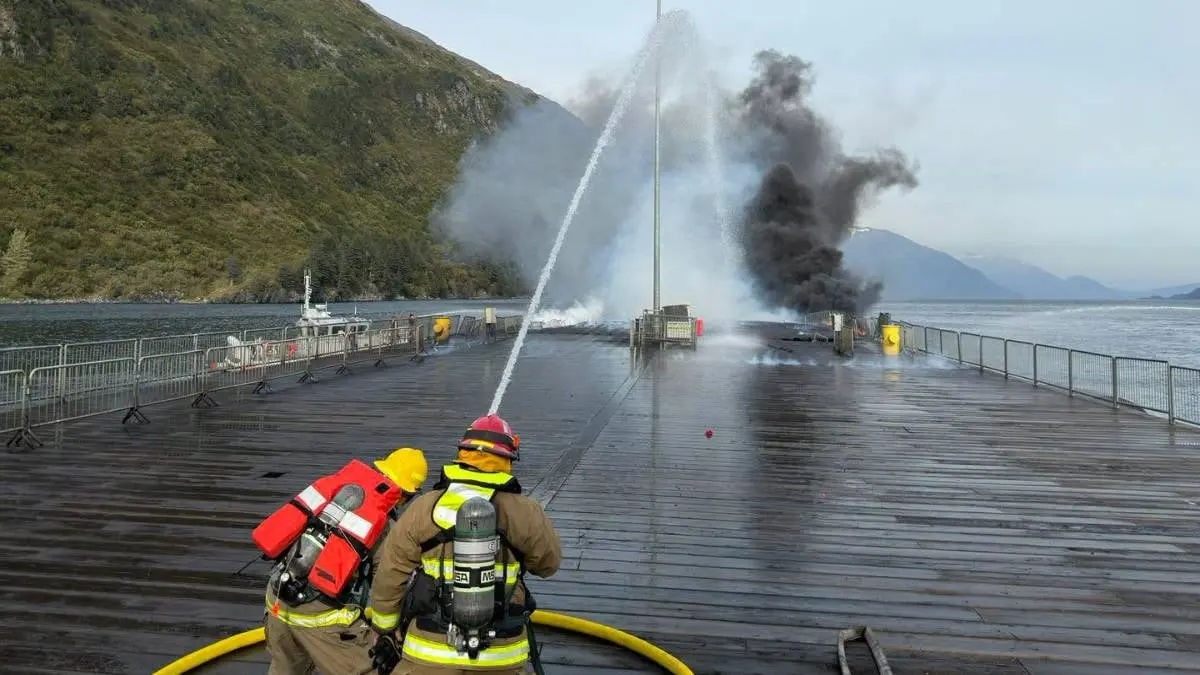
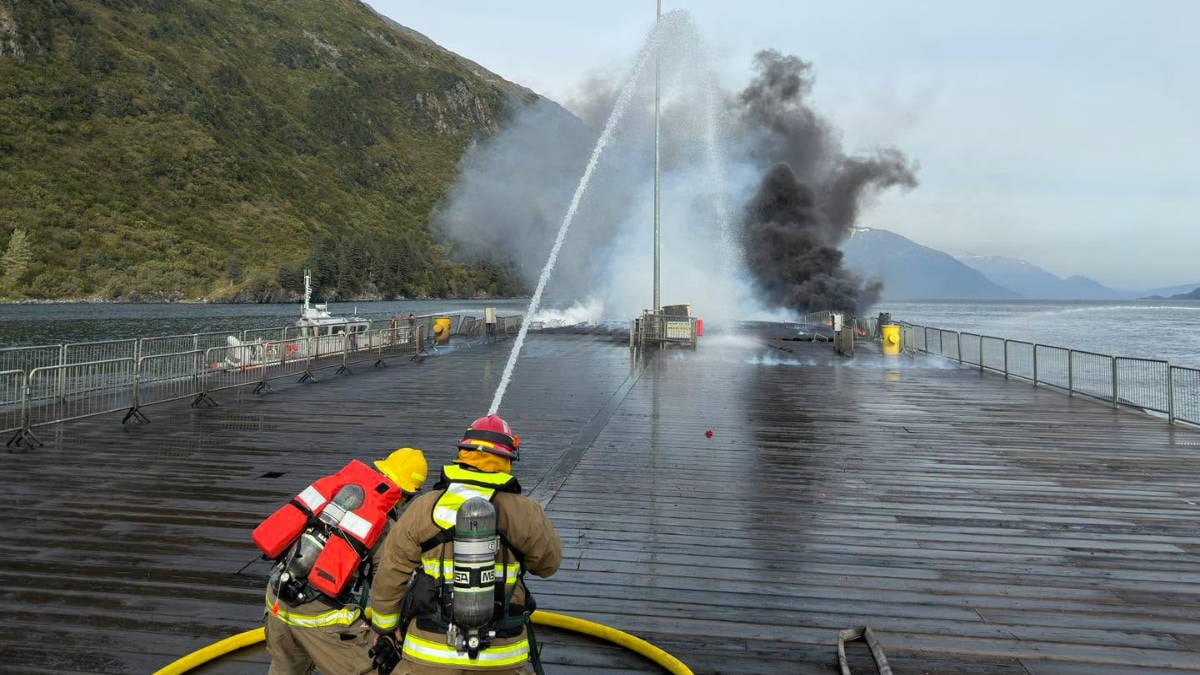
WHITTIER, Alaska — In a severe blow to the regional tourism economy and Norwegian Cruise Line Holdings (NCLH), state authorities have officially declared the dock at the Chugach Glacier Gateway Cruise Terminal a "total loss" following a ferocious, hours-long blaze. The catastrophic fire, which broke out on Monday morning, September 14, 2026, has left one of Alaska’s premier modern maritime facilities in ruins and cast a pall of uncertainty over the upcoming cruise seasons.
The determination was handed down on Wednesday, September 16, by the Alaska State Fire Marshal’s Office, following a rigorous two-day site inspection and structural evaluation. While the immediate danger has passed and no injuries have been reported, the implications of the disaster stretch far beyond the charred pilings of the Whittier waterfront, raising critical questions about port resilience, regional infrastructure, and the logistics of Alaska’s multi-million-dollar cruise industry.
Executive Overview: A Multi-Million-Dollar Catastrophe
The destruction of the Chugach Glacier Gateway Cruise Terminal dock represents a stunning setback for a facility that had only recently commenced operations. Opened in September 2024, the $80 million state-of-the-art terminal was engineered as a crown jewel of Whittier’s maritime infrastructure. Built as a collaborative joint venture between Norwegian Cruise Line Holdings and the Huna Totem Corporation, the facility featured a double-berth dock and a sophisticated terminal building designed to accommodate some of the world’s most advanced cruise vessels.
Now, barely two years after its grand opening, the pier infrastructure has been reduced to structural wreckage. The fire not only consumed the dock itself but also severely damaged the Klondike Express, a prominent local day-tour vessel moored alongside it.
While cruise lines and local authorities scrambled to avert a broader disaster during the emergency—famously forcing the Norwegian Jade to make an emergency relocation—the long-term fallout is only beginning to take shape. With the 2026 Alaska cruise season rapidly drawing to a close, attention has already pivoted to the economic and operational viability of the port ahead of the 2027 season, leaving stakeholders bracing for potential bottlenecks and costly rebuilding efforts.
Detailed Chronology of the Disaster
Monday, September 14, 2026: The Flames Erupt
The crisis unfolded on a fateful Monday morning in the small coastal community of Whittier, nestled at the head of Passage Canal in Prince William Sound.
- 10:50 AM: Witnesses first spotted heavy, dark smoke billowing from the waterfront near the newly constructed Chugach Glacier Gateway Cruise Terminal. A local tour boat, the Klondike Express—operated by Phillips Cruises & Tours and routinely utilized for glacier-viewing day trips—was moored at the terminal’s pier.
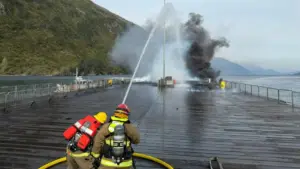
- 11:15 AM: Emergency alerts prompted an immediate and massive multi-agency response. Whittier Fire & EMS rushed to the scene, quickly recognizing that the scale of the blaze vastly outstripped local municipal firefighting capacities. Mutual aid protocols were activated, drawing rapid reinforcements from Girdwood Fire and Rescue, the Anchorage Fire Department (AFD), and maritime assets from the United States Coast Guard.
As emergency responders arrived, they faced a compounding tactical nightmare: a critical lack of working water hydrants directly adjacent to the dock. To combat the roaring timber-and-steel fire, the Anchorage Fire Department deployed an engine alongside two specialized water tenders to shuttle vital suppression supplies to the waterfront.
The Threat to the Fleet
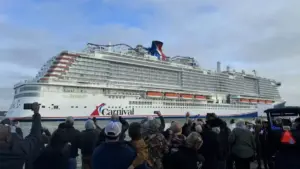
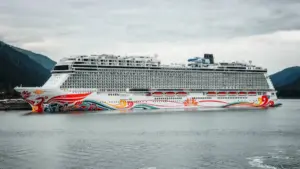
Parked nearby during the unfolding emergency was the 2,402-passenger Norwegian Jade, which had been scheduled for embarkation operations at the terminal that day. Recognizing the extreme thermal radiation and toxic smoke plume, ship command and port authorities acted decisively. The vessel was cast off and maneuvered out of immediate danger, relocating safely to Cruise Terminal 1, located approximately 1.5 miles away.
Thanks to this swift tactical maneuver, the Norwegian Jade sustained zero structural damage. Embarkation operations for waiting passengers were successfully rerouted to the secondary terminal with minimal disruption to the sailing schedule, averting what could have easily compounded into a widespread passenger embarkation crisis.
Tuesday, September 15: Overhaul and Mop-Up
Despite heavy streams of water and chemical retardants applied throughout Monday afternoon and evening, the fire proved exceptionally stubborn, feeding on structural creosote, marine growth, and vessel materials.
The U.S. Coast Guard Sector Western Alaska and U.S. Arctic command monitored the situation closely, deploying vessels to maintain a safety perimeter and assist with firefighting efforts. It wasn’t until 12:30 AM on Tuesday, September 15, that the U.S. Coast Guard officially declared the stubborn blaze to be fully extinguished.
Wednesday, September 16: The "Total Loss" Verdict
With the smoldering ruins finally cooled, state investigators moved in. On Wednesday, September 16, officials from the Alaska State Fire Marshal’s Office finalized their preliminary assessments. Due to catastrophic structural compromise, warping of steel pilings, and extensive charring of the pier’s substructure, the dock was officially condemned and declared a "total loss."
Supporting Context & Metrics: Infrastructure and Impact
To fully understand the weight of this disaster, one must examine the economic and physical footprint of the Chugach Glacier Gateway project.
- Financial Investment: The terminal represented an $80 million capital injection into Whittier’s tourism and maritime sectors, financed jointly by NCLH and the Huna Totem Corporation—an Alaska Native corporation renowned for developing sustainable cruise infrastructure, such as Icy Strait Point in Hoonah.
- Structural Design: Engineered to accommodate modern megaships, the facility featured a double-berth dock. This dual capability allowed NCLH vessels (spanning Norwegian Cruise Line, Oceania Cruises, and Regent Seven Seas Cruises) to dock simultaneously, significantly boosting passenger throughput and regional economic activity.
- Vessel Casualties: The primary vessel casualty, the Klondike Express, suffered substantial structural and thermal damage. Fortunately, no passengers or crew were aboard the tour boat at the time of the fire.
- Human Toll: Remarkably, despite the intensity of the inferno and the complex marine firefighting environment, zero injuries or fatalities were reported among firefighters, port workers, or civilians.
Official Statements and Ongoing Investigations
In the wake of the disaster, state and federal authorities have launched comprehensive parallel investigations to determine the cause of the fire and assess environmental repercussions.
The Origin and Cause Investigation
Speaking on behalf of the state Department of Public Safety, spokesman Austin McDaniel confirmed that the exact origin and root cause of the fire remain under active investigation. Forensic investigators are combing through debris, reviewing harbor security footage, and interviewing port personnel to determine whether the fire originated aboard the moored Klondike Express and spread to the dock, or if it began within the pier’s electrical or utility infrastructure and engulfed the vessel.
Environmental and Pollution Assessments
Simultaneously, the U.S. Coast Guard has stepped up environmental protections. Coast Guard pollution responders from Sector Western Alaska deployed containment booms and conducted aerial and surface monitoring to check for fuel, oil, or chemical leaks stemming from either the burned-out dock or the damaged Klondike Express.
According to official Coast Guard statements, no significant environmental pollution has been detected. A minor, iridescent "fuel sheen" was observed on the water’s surface immediately following the fire’s containment, but active remediation and natural tidal action caused it to rapidly and completely dissipate.
Future Outlook: What Does This Mean for Cruises?
As the 2026 Alaska cruise season enters its final weeks, maritime planners are casting anxious glances toward the horizon. While the immediate logistical adjustments are manageable, the long-term ramifications for the 2027 season loom large.
The Remainder of the 2026 Season
The 2026 cruise calendar for Whittier is already winding down, with only a handful of scheduled port calls remaining.
- The final scheduled call of the season belongs to Regent Seven Seas Cruises’ luxury vessel, the Seven Seas Explorer, which is slated to arrive in Whittier on Monday, October 5, 2026.
- Because this is an isolated call with no overlapping ships in port, port authorities anticipate that the 750-guest luxury ship will easily utilize the alternative Cruise Terminal 1 without straining local berthing capacity.
The 2027 Season and Beyond
The true test will come when Alaska reopens for its busy summer cruise season in May 2027.
The Chugach Glacier Gateway Cruise Terminal was designed to serve as the primary homeport infrastructure for the NCLH family, while also providing overflow and flexible berthing for other major lines, such as Princess Cruises and Holland America Line, which traditionally rely on Cruise Terminal 1.
The first scheduled arrival in Whittier for the 2027 season is currently booked for the Coral Princess on Tuesday, May 4, 2027. This will be quickly followed by the first planned arrivals from the NCLH fleet:
- Oceania Riviera on Sunday, May 9, 2027
- Norwegian Jade on Monday, May 17, 2027
- Seven Seas Explorer on Wednesday, May 19, 2027
As of press time, neither Norwegian Cruise Line Holdings nor the Huna Totem Corporation has released a definitive timeline regarding whether the dock can be salvaged through major structural rebuilding or if it will require total demolition and reconstruction from the seabed up.
Industry analysts suggest that in the interim, all Whittier-bound cruise traffic will likely be consolidated at Cruise Terminal 1, located roughly 1.5 miles away from the destroyed site. While Cruise Terminal 1 is fully operational, absorbing the full capacity of NCLH ships alongside its regular traffic will require meticulous schedule coordination, passenger staging adjustments, and potentially tender operations or revised motorcoach logistics to handle peak turn-day crowds.
A Resilient Community
Huna Totem Corporation leadership has stated that comprehensive structural engineering assessments are currently underway. Further updates regarding remediation timelines, insurance claims, and rebuilding plans will be shared as the data becomes available.
For the residents of Whittier, a community deeply intertwined with the rhythms of the sea and summer tourism, the fire is a devastating blow. Yet, echoing the resilient spirit that defines the Last Frontier, local authorities and maritime operators have already shifted their focus from the ashes of Monday morning to the logistical challenges of tomorrow, ensuring that Whittier remains a vital gateway to the breathtaking majesty of Prince William Sound.