











Executive Overview
In the dynamic and often unpredictable landscape of global aviation, airlines continually walk a tightrope between operational expansion and macro-economic volatility. For Delta Air Lines, one of the world’s most profitable and consistently managed legacy carriers, early 2026 has brought a sharp reminder of the industry’s vulnerability to external market shocks. Despite robust passenger demand, expanding international networks, and a newly minted, multi-billion-dollar widebody fleet modernization initiative, Delta has officially revised its full-year 2026 financial guidance downward.
Addressing investors, analysts, and members of the press, Chief Financial Officer Erik Snell outlined a recalibrated outlook for the fiscal year. While the airline remains firmly confident in its ability to generate a healthy profit—reassuring stakeholders that the carrier is not veering toward red ink—the sheer velocity of jet fuel price spikes has forced a significant recalculation of bottom-line projections. The carrier’s revised earnings per share (EPS) for 2026 are now forecasted to land between $5.10 and $5.60, a noticeable reduction from the previously bullish target of $6.50 to $7.50.
At the core of this adjustment is a staggering financial burden: surging fuel costs are projected to saddle Delta with an additional $6 billion in operating expenses throughout the year. With average jet fuel prices hovering around $4.50 per gallon as of mid-January, airline executives are confronting a commodity market that has rapidly outpaced conservative baseline models.
Yet, this narrative is not solely one of headwinds. In a striking display of long-term strategic confidence, Delta concurrent with its earnings recalibration announced a monumental fleet investment: a binding commitment to acquire up to 60 Boeing 787 Dreamliner aircraft. This dual narrative—grappling with immediate, short-term macroeconomic pressures while simultaneously investing billions in structural, long-term fuel efficiency—encapsulates the current balancing act defining modern legacy carrier management. This comprehensive report explores the chronology of these developments, examines the macroeconomic metrics driving the aviation sector, details official executive statements, and evaluates what this pivotal juncture means for Delta Air Lines’ future outlook.
Detailed Chronology: How the 2026 Financial Recalibration Unfolded
To fully understand the weight of Delta’s announcement, it is necessary to examine the timeline of events that led to the mid-January guidance revision. The aviation industry enters 2026 facing a cocktail of geopolitical tensions, fluctuating supply chains, and shifting energy markets, setting a tense backdrop for corporate financial reporting.
Q4 2025: Closing Out a Strong Fiscal Year
As Delta prepared to close the books on 2025, executive leadership was riding a wave of operational stability. Passenger load factors remained exceptionally high, corporate travel continued its post-pandemic recovery trajectory, and premium leisure demand showed no signs of abating. During late 2025 investor briefings, Delta’s financial team modeled a stable economic environment, projecting an optimistic 2026 EPS range of $6.50 to $7.50. This initial outlook assumed that jet fuel prices—while elevated compared to historical pre-pandemic averages—would remain within a predictable, manageable band.
Early January 2026: The Energy Market Shock
The macroeconomic reality shifted dramatically during the first two weeks of January 2026. Unforeseen geopolitical escalations in key energy-producing regions, combined with tight refining capacities and seasonal weather disruptions, sent shockwaves through global crude and refined product markets. Jet fuel, historically one of the most volatile and expensive line items on an airline’s income statement, decoupled from broader stabilization trends.

By the evening of Thursday, January 15, spot prices for jet fuel had climbed to an alarming average of $4.50 per gallon. For an airline of Delta’s scale—consuming billions of gallons annually across its mainline and regional networks—every ten-cent increase in the price per gallon translates to hundreds of millions of dollars in unexpected costs.
Mid-January 2026: The Strategic Reassessment and Fleet Announcement
Recognizing that the spike in fuel prices was not a transient blip but a sustained cost pressure that would impact multi-quarter earnings, Delta’s executive committee made the prudent, transparent decision to update the market. Rather than waiting for the formal end-of-quarter earnings call, leadership opted to reset expectations early.
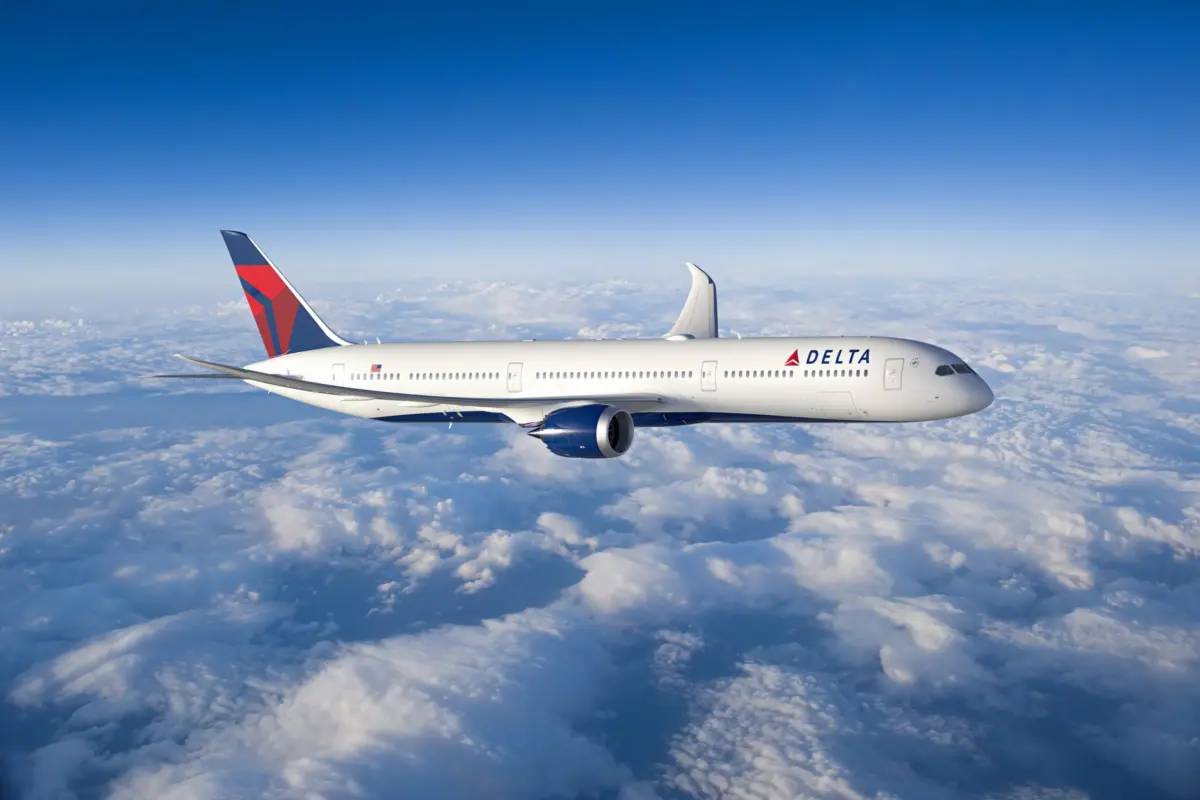
Simultaneously, Delta finalized and publicized its landmark agreement with Boeing for up to 60 Boeing 787 Dreamliners. The juxtaposition of slashing annual guidance while committing to a multi-billion-dollar aircraft order initially baffled casual observers. However, financial analysts quickly recognized the underlying chess move: Delta was aggressively doubling down on structural efficiency. The Boeing 787 Dreamliner family offers approximately 25% better fuel efficiency than the older widebody aircraft it is slated to replace. By accelerating its fleet modernization timeline, Delta is executing a definitive counter-strategy against future energy shocks, ensuring that the airline becomes structurally insulated from chronic oil price volatility over the next decade.
Supporting Context & Metrics: Analyzing the $6 Billion Fuel Burden
To grasp the true magnitude of Delta’s current financial adjustments, one must dive deep into the underlying metrics, operational math, and macroeconomic forces at play.
The Mathematics of the $6 Billion Expense Surge
Fuel represents historically between 20% and 30% of an airline’s total operating expenses, making it second only to labor in terms of cost concentration. When Delta’s financial modeling team ran the updated equations based on a sustained $4.50-per-gallon average, the resulting variance was stark.
- Incremental Cost Exposure: Delta’s leadership calculated that the elevated fuel pricing environment will inject an additional $6 billion in unexpected cash outflow over the course of the year.
- The Cushion of Hedging: Fortunately, Delta’s treasury and risk-management divisions were not entirely caught flat-footed. As CFO Erik Snell noted during press briefings, the airline has already successfully accrued $90 million in financial hedges. While $90 million is a fraction of a $6 billion headwind, it underscores Delta’s proactive stance on risk mitigation. Strategic derivatives, call options, and forward-purchase contracts act as a shock absorber, smoothing out the immediate blow while the airline adjusts its commercial pricing strategies.
Fare Pass-Through Capabilities
Can Delta simply pass these costs onto the consumer? The answer is nuanced. In a robust demand environment, airlines possess considerable pricing power. Premium cabins—Delta One, Premium Select, and even high-end domestic first class—have exhibited incredible elasticity; affluent travelers and corporate accounts continue to book seats despite rising ticket prices.

However, economy and price-sensitive leisure segments present a different challenge. Pushing fares up too aggressively in the main cabin can depress load factors and erode volume. Consequently, Delta must carefully calibrate its yield management systems, trimming unprofitable frequencies, redeploying aircraft to high-yield trunk routes, and utilizing ancillary revenue streams to bridge the gap left by unhedged fuel exposure.
Fleet Modernization as a Long-Term Hedge
The newly announced acquisition of up to 60 Boeing 787 Dreamliners is not merely a capacity play; it is a macroeconomic defense mechanism. Older widebody aircraft in Delta’s inventory—such as certain legacy models—carry heavy maintenance burdens and consume significantly more fuel per available seat mile (ASM).
The composite airframes and advanced GEnx or Trent 1000 engines of the 787 family represent the pinnacle of aerodynamic and thermodynamic efficiency. By transitioning international routes to the Dreamliner fleet over the coming years, Delta permanently lowers its baseline fuel burn. Even if oil prices remain structurally high for the remainder of the decade, the structural unit-cost advantages of the 787 will protect Delta’s operating margins far more effectively than short-term financial hedging ever could.
Official Statements: Insights from Delta Leadership
The transparency with which Delta communicates its financial adjustments plays a vital role in maintaining investor trust. During the briefings following the guidance revision, Chief Financial Officer Erik Snell provided critical commentary that unpacked the rationale behind the numbers.
Addressing the media and financial analysts, Snell was candid about the external pressures facing the carrier:
"The change in our full-year guidance was driven almost entirely by the rapid escalation of jet fuel costs, which have challenged our baseline projections and introduced a substantial new cost layer into our operating model for the year. While underlying customer demand remains remarkably resilient and our core commercial operations are performing exceptionally well, a $6 billion increase in fuel expenses requires a disciplined and realistic recalibration of our financial targets."
Snell emphasized that despite the downward revision to EPS—bringing the range to $5.10–$5.60 from the prior $6.50–$7.50 target—Delta’s fundamental business model remains profitable and highly cash-generative.
"It is crucial for stakeholders to understand that Delta is not forecasting a loss. We are largely forecasting a strong, healthy profit in a very difficult commodity environment. Our ability to absorb a multi-billion-dollar cost shock and remain solidly profitable is a testament to the structural improvements we have made to our balance sheet, our revenue diversification, and the unwavering strength of our premium brand."
Regarding the timing of the Boeing 787 Dreamliner acquisition announcement amid cost headwinds, Snell and other corporate spokespersons reiterated that long-term strategic investments cannot be paused simply because of short-term commodity spikes. Fleet planning is a multi-decade endeavor; securing production slots and modernizing the widebody fleet is essential for Delta’s long-term competitive positioning against domestic and international rivals.
Future Outlook: Navigating the Horizon of 2026 and Beyond
As Delta Air Lines looks past the immediate turbulence of early 2026, the strategic roadmap ahead is defined by resilience, operational discipline, and forward-looking capital allocation.
Short-Term Tactical Adjustments
Over the next two to three quarters, Delta management will focus heavily on cost containment and revenue optimization. While capacity growth may be selectively moderated to match demand realities and avoid over-supplying softening markets, the airline will continue to lean heavily into its most profitable segments:
- The Premium Advantage: Continued investment in Delta’s Sky Clubs, airport infrastructure, and onboard premium experiences to capture high-margin corporate and leisure spend.
- Network Optimization: Dynamic scheduling that shifts capacity toward transatlantic and transpacific joint-venture routes where yields remain exceptionally robust.
- Maintenance and Operational Efficiency: Leveraging predictive maintenance technologies to minimize unscheduled engine removals and reduce out-of-service time for the existing fleet.
Long-Term Structural Transformation
Looking toward the late 2020s and early 2030s, the integration of the newly ordered Boeing 787 Dreamliners will transform Delta’s long-haul network. As these aircraft enter service, they will systematically replace aging, less-efficient widebodies, yielding cumulative fuel savings that will dwarf current short-term cost headwinds. This fleet transition aligns with Delta’s broader corporate sustainability goals, significantly reducing carbon emissions per passenger mile and insulating the airline against anticipated future environmental regulations and carbon-pricing regimes.
Conclusion
Delta Air Lines’ revision of its 2026 financial outlook serves as a masterclass in corporate candor and strategic agility. While a $6 billion fuel cost surge and a trimmed EPS forecast of $5.10 to $5.60 represent undeniable near-term hurdles, they have not broken the carrier’s financial foundation. By pairing immediate risk management—such as targeted fuel hedging and yield optimization—with bold, long-term capital investments like the Boeing 787 fleet modernization, Delta demonstrates that it is not merely reacting to the storms of the present, but actively building a more durable, weather-proof airline for the future.


