Executive Overview
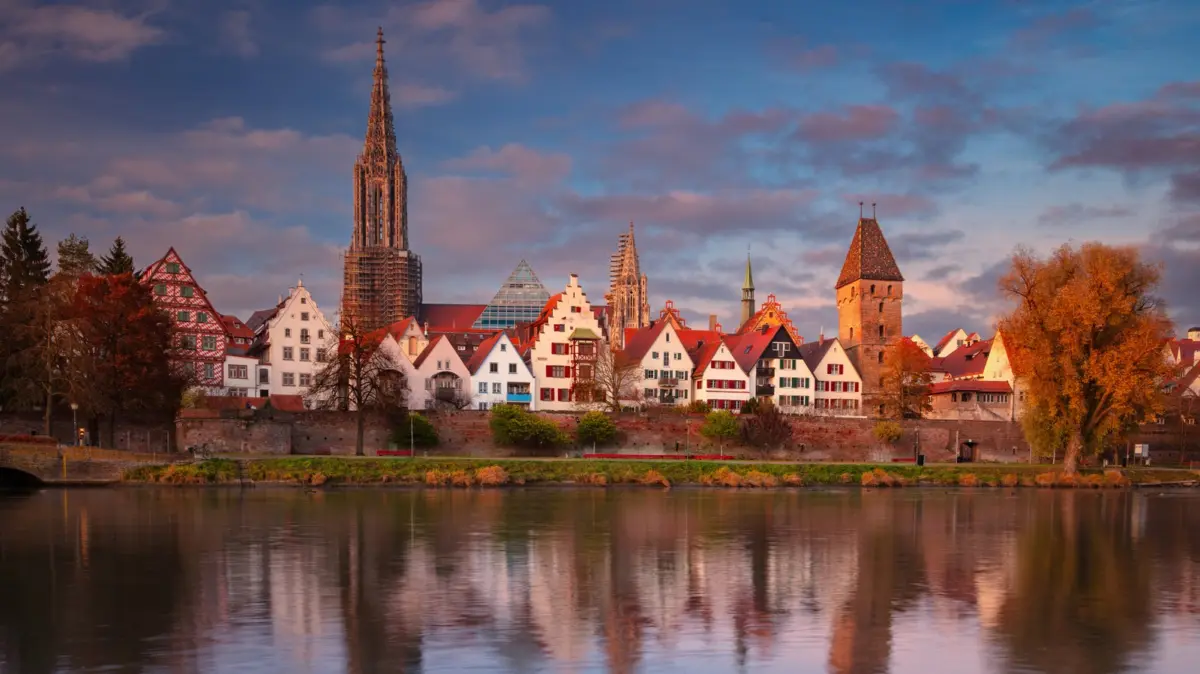
While international travelers plotting a German itinerary routinely gravitate toward the heavy-hitting urban centers of Munich and Stuttgart, the geographic and cultural space directly between them harbors a destination of profound historic depth and contemporary vibrancy. Ulm, a historic city established along the banks of the legendary Danube River, bridges the states of Baden-Württemberg and Bavaria, serving as an exceptional case study in how a medieval municipality can seamlessly integrate deep-rooted heritage with cutting-edge modernity.
Often overlooked by mass-market tourism brochures in favor of more heavily name-dropped destinations, Ulm offers visitors a concentrated dose of European history, visionary architecture, and artistic innovation. Most famously recognized globally as the birthplace of theoretical physicist Albert Einstein in 1879, the city’s identity extends far beyond its most famous son. From the soaring Gothic spires of the Ulm Minster—home to the tallest church steeple in the world—to the labyrinthine, half-timbered alleyways of the historic Fishermen’s Quarter (Fischerviertel), Ulm operates as a dynamic cultural crossroad.
This comprehensive report explores the foundational history, architectural marvels, geographic significance, cultural institutions, and future tourism outlook of a city that deftly honors its ninth-century origins while embracing the twenty-first century.

Detailed Chronology: From Ninth-Century Outpost to Modern Hub
To truly understand the architectural and cultural density of modern Ulm, one must trace its evolution across more than a millennium of European history. The timeline of the city reflects the shifting tides of trade, religion, and geopolitical power in Central Europe.
The Medieval Genesis and Imperial Era (854 AD – 15th Century)
- 854 AD: The earliest official documentary mention of Ulm occurs under the reign of King Louis the German, marking the beginning of the settlement’s recorded history as a royal palace (Kaiserpfalz).
- 1184: Emperor Frederick I (Barbarossa) elevates Ulm to the status of a Free Imperial City (Freie Reichsstadt), granting the municipality significant political autonomy, economic privileges, and the right to establish its own defensive structures. This status catalyzed its growth as a formidable trade and manufacturing center along the Danube.
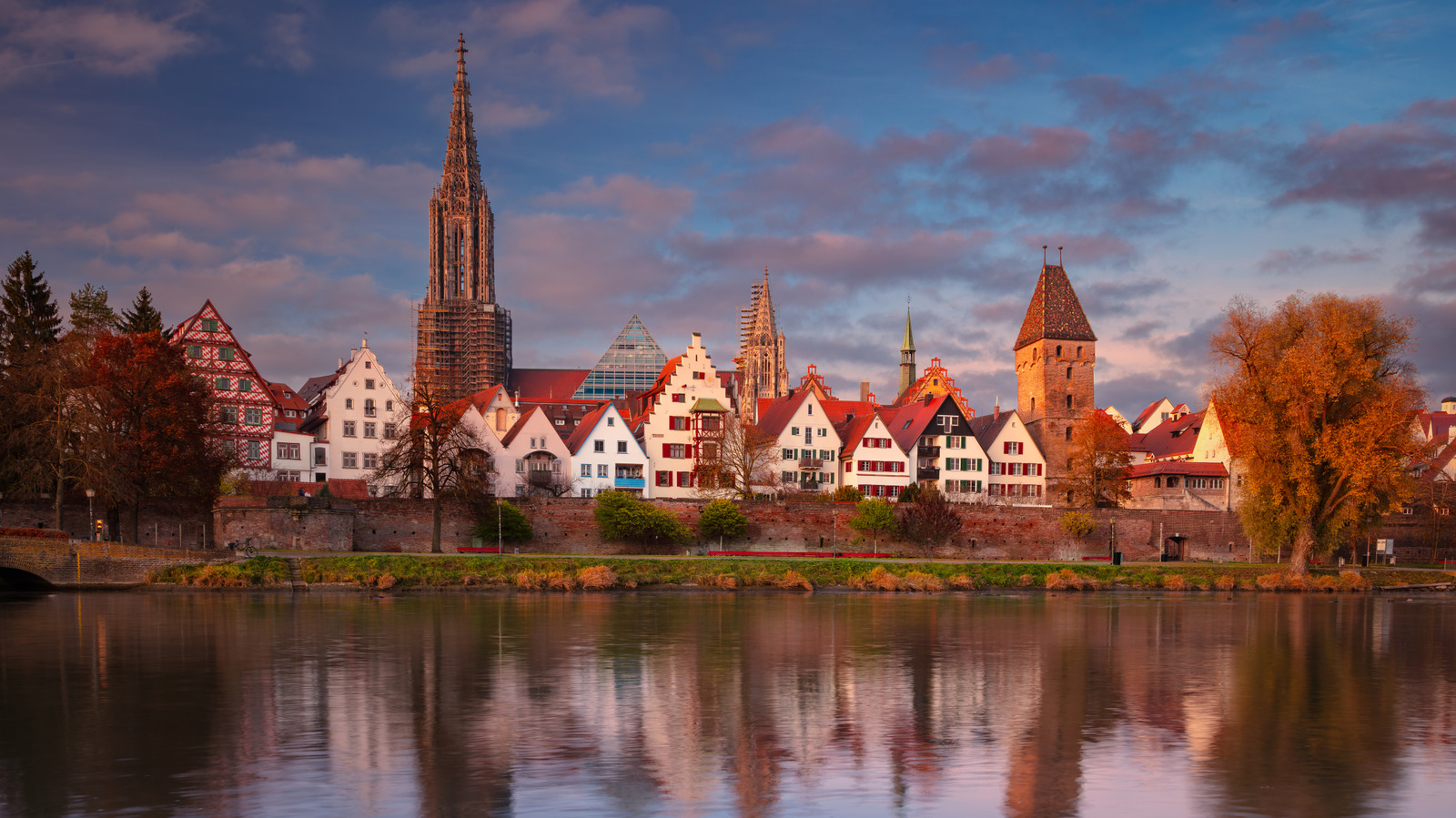
- 1377: Construction formally commences on the monumental Ulm Minster (Ulmer Münster). Financed entirely by the citizens of Ulm rather than the church or nobility, the construction project becomes a multi-generational testament to civic pride and cooperative labor.
- 14th to 16th Centuries: Ulm reaches the zenith of its medieval golden age. Driven by the flourishing trade of textiles, particularly fustian (a sturdy fabric made of cotton and linen), the city becomes one of the wealthiest commercial hubs in the Holy Roman Empire.
Industrialization, Wartime Transformation, and the Einstein Era (1879 – 1945)
- March 14, 1879: Albert Einstein is born in a modest home at Bahnhofstraße 135 in Ulm, spending the earliest years of his infancy here before his family relocates to Munich.
- Late 19th Century: The military fortification of the German Confederation transforms Ulm and its Bavarian twin city, Neu-Ulm, into one of the largest federal fortress complexes in Europe, altering its urban landscape with massive brick ramparts, bastions, and outworks.
- December 1944: Allied bombing raids heavily damage the historic fabric of Ulm, destroying a vast percentage of the medieval old town, particularly the districts surrounding the Münster. However, the Ulm Minster itself miraculously sustains relatively minor structural damage compared to the surrounding devastation.
Post-War Reconstruction and Contemporary Renaissance (1945 – Present)
- 1953: The founding of the Ulm School of Design (Hochschule für Gestaltung Ulm) by Inge Aicher-Scholl, Otl Aicher, and Max Bill cements the city’s status as a beacon of modern functionalist design and democratic education in post-war West Germany.
- 1993: The inauguration of the Stadthaus Ulm, designed by acclaimed American architect Richard Meier, introduces a striking, stark-white modernist pavilion directly into Münsterplatz, sparking initial local debate but ultimately symbolizing Ulm’s embrace of architectural duality.
- 2007: The opening of the Kunsthalle Weishaupt gallery expands the city’s contemporary art footprint, housing world-class modern collections alongside the Ulm Museum.
Supporting Context & Metrics: Geography, Infrastructure, and Architecture
Ulm’s strategic positioning in the heart of southern Germany makes it an extraordinarily accessible destination for international travelers seeking an authentic alternative to over-tourismed metropolises.
Geographic and Transit Metrics
Situated approximately 90 miles (145 kilometers) west of Munich and 60 miles (96 kilometers) southwest of Stuttgart, Ulm acts as a critical transit nexus.
- Rail Connectivity: Operated by Deutsche Bahn, Ulm Central Station (Ulm Hauptbahnhof) serves as a major junction for high-speed InterCity Express (ICE) and regional rail networks. Direct trains connect travelers from Munich to Ulm in roughly 45 to 55 minutes, while journeys from Stuttgart take approximately 50 to 60 minutes.
- The Danube Divide: The legendary Danube River flows directly through the urban core, acting as a natural administrative boundary. The northern bank constitutes Ulm proper within the federal state of Baden-Württemberg, while the southern bank forms the independent city of Neu-Ulm within the state of Bavaria. Several pedestrian and vehicle bridges seamlessly unite these two distinct cultural identities.
Architectural Triumphs: Old Meets New
Ulm’s built environment is defined by a striking juxtaposition of medieval Gothic endurance and stark contemporary minimalism.

| Architectural Landmark | Era / Completion Date | Primary Material | Defining Characteristic |
|---|---|---|---|
| Ulm Minster (Ulmer Münster) | Begun 1377; Completed 1890 | Sandstone, Brick | Features the tallest church steeple in the world at 161.5 meters (530 feet). |
| The Fishermen’s Quarter (Fischerviertel) | 15th–17th Centuries | Timber, Plaster, Stone | Labyrinthine medieval canals, crooked houses (Schiefes Haus), and historic watermills. |
| Stadthaus Ulm | Opened 1993 | Enamel, Glass, Steel | Designed by Richard Meier; acts as a geometric modernist counterpoint to the Gothic Münsterplatz. |
| Federal Fortress Ulm (Bundesfestung) | 19th Century (1842–1859) | Ashlar Stone, Brick | The largest preserved historical fortress complex in Germany. |
Official Perspectives and Cultural Institutions
Local authorities, cultural preservationists, and tourism boards have increasingly emphasized Ulm’s multi-layered identity, moving past the narrow historical pigeonholes of Einstein’s birthplace or the Minster’s height records to champion a holistic cultural ecosystem.
Preserving Living History
According to municipal cultural preservation statements, Ulm’s urban planning philosophy prioritizes the preservation of living neighborhoods over museum-ified façades. The Fischerviertel (Fisherman’s Quarter) serves as a prime example of this ethos. Historically inhabited by tanners, fishermen, and manual laborers along the River Blau—a tributary of the Danube—the district was meticulously restored following mid-century conflicts. Today, local governance works in tandem with independent business owners to ensure that independent artisan workshops, family-owned restaurants, and boutique guesthouses thrive within historical structures like the famed Hotel Schiefes Haus (Crooked House), a medieval timber-frame building that has leaned over the water for centuries due to structural subsidence.
Artistic and Scientific Institutions
Ulm’s institutional framework bridges empirical science and fine arts:
- The Ulm Museum (Museum Ulm) & Kunsthalle Weishaupt: Housing archaeological treasures such as the prehistoric Lion Man (Löwenmensch), one of the oldest known figurative sculptures in human history, alongside post-war abstract expressionist and contemporary works by artists like Andy Warhol and Willem de Kooning.
- The Danube Swabian Central Museum (Donauschwäbisches Zentralmuseum): An authoritative institution dedicated to chronicling the migration, culture, and centuries-long heritage of German-speaking populations who settled along the Danube basin.
- The Albert Einstein Memorial: Rather than maintaining a massive monolithic shrine, the city commemorates its most famous intellectual through subtle urban interventions, including a modernist glass-and-steel monument designed by Max Bill near the site of Einstein’s razed birth home, celebrating his legacy of scientific inquiry and pacifism.
Future Outlook: Sustainable Tourism and Urban Development
As international tourism trends shift toward slow travel, regional exploration, and secondary-city discovery, Ulm is positioned to experience a significant surge in visibility.
Strategic Urban Initiatives
City planners and tourism directors are actively investing in sustainable infrastructure to accommodate increasing numbers of day-trippers and multi-night visitors without compromising the historic integrity of the inner city. Key initiatives include:
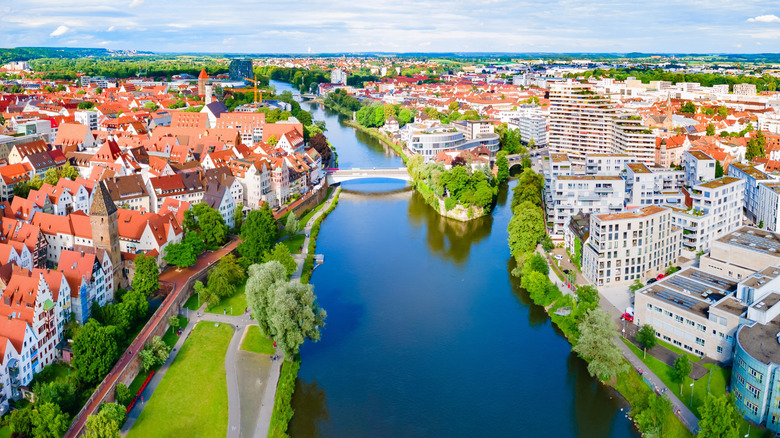
- Pedestrianization and Green Corridors: Expanding car-free zones around the Münsterplatz and the Danube riverbanks to encourage walking and cycling. The transformation of former military fortification zones into expansive green parks (Glacis-Park) creates an ecological corridor linking Ulm and Neu-Ulm.
- Smart Mobility Integration: Enhancing regional transit coordination via the Donau-Iller transport association, making it effortless for travelers arriving via Stuttgart or Munich to navigate the twin cities entirely via electric public buses, trams, and bicycle-sharing networks.
- Year-Round Cultural Programming: While Ulm’s historic Christmas market (Ulmer Weihnachtsmarkt), operating annually in the shadow of the Minster since the medieval era, draws hundreds of thousands of seasonal visitors, municipal leaders are heavily promoting shoulder-season tourism through international food festivals, Danube jazz events, and contemporary design exhibitions at the Stadthaus.
Conclusion
Ulm stands as an invaluable counterweight to Germany’s hyper-commercialized tourist tracks. By successfully balancing the soaring verticality of its fifteenth-century Gothic cathedral with the minimalist purity of modern design, and by honoring both its medieval merchant roots and its modern scientific pedigree, Ulm offers travelers a deeply enriching European experience. For those willing to look just beyond the horizon of Munich and Stuttgart, this Danube sentinel yields timeless architectural splendor, vibrant local culture, and an enduring legacy of human ingenuity.