






Executive Overview
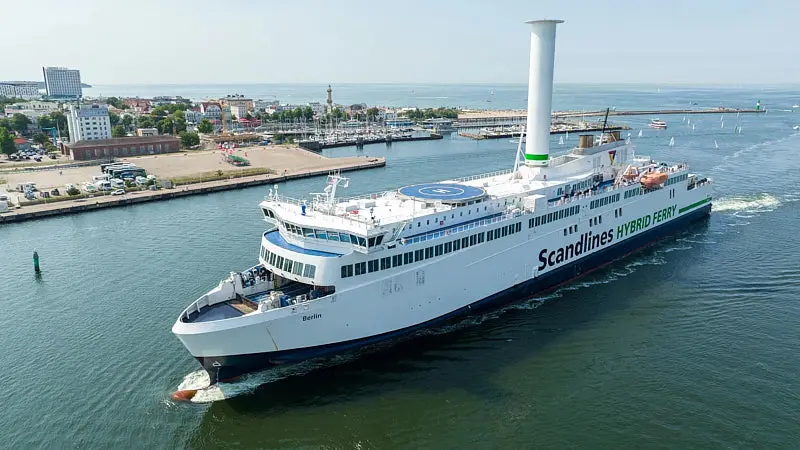
Danish-German ferry operator Scandlines achieved a major post-pandemic milestone in July, recording its highest single-day passenger volume in years and demonstrating the operational benefits of its recent fleet optimization strategy. Across its two primary arterial corridors linking Germany and Denmark—Puttgarden–Rødby and Rostock–Gedser—the maritime operator transported a total of 1.173 million passengers during the peak summer month. This represents a solid year-over-year increase from the 1.152 million passengers registered during the same period in the prior year, confirming the sustained recovery and growth of cross-border European leisure travel.
The defining highlight of the month occurred on July 18, when passenger volume spiked to nearly 62,000 travelers within a single 24-hour window. This single-day throughput exceeded the previous year’s peak by more than 10 percent, marking the highest daily traffic volume recorded across the Scandlines network since prior to the onset of COVID-19 travel disruptions.
Crucial to managing this surge was the strategic integration of Scandlines’ new dedicated freight ferry, THE BALTIC WHALE. By siphoning off heavy commercial traffic onto a dedicated cargo line, the operator unlocked crucial deck capacity on its high-frequency hybrid passenger vessels. This structural reallocation of freight proved pivotal in preventing port congestion, minimizing turnaround times, and accommodating elevated holiday passenger traffic.
Looking ahead, Scandlines projects total passenger throughput across the three core summer months (June, July, and August) to approach 2.5 million traveler crossings. This performance underlines both the resilience of the southern Baltic maritime corridor and the efficacy of modernizing logistics to serve distinct customer segments simultaneously.
       SCANDLINES JULY PASSENGER PERFORMANCE (OVERVIEW)
┌─────────────────────────────────────────────────────────────┐
│ Total July Passengers:    1.173 Million (+1.8% YoY)         │
│ Peak Single-Day Traffic:  ~62,000 Passengers (July 18)      │
│ Peak Daily Growth:       >10% vs. Prior Year Peak           │
│ Summer Season Projection: ~2.500 Million Passengers         │
└─────────────────────────────────────────────────────────────┘
Detailed Chronology: Anatomy of a Record-Breaking Summer Season
The summer travel window in the Western Baltic Sea presents a complex operational challenge. Each year, millions of vacationers from Germany, Central Europe, and Scandinavia converge on the limited corridor connecting northern Germany with the Danish islands of Fehmarn and Falster. Understanding how Scandlines met this demand requires examining the timeline of fleet deployment, traffic buildup, and operational execution leading up to the July milestone.
           CHRONOLOGY OF SUMMER FREIGHT & PASSENGER DEPLOYMENT

   Late Q2                     Early July                  July 18                   Late Summer
  ┌──────────┐                ┌──────────┐                ┌──────────┐                ┌──────────┐
  │ Baltic   │───────────────►│ Freight  │───────────────►│ Record   │───────────────►│ Projected│
  │ Whale    │                │ Diverted │                │ Peak Day │                │ 2.5M Pax │
  │ Deployed │                │ to Cargo │                │ (~62k)   │                │ Target   │
  └──────────┘                └──────────┘                └──────────┘                └──────────┘
Pre-Season Integration: Deploying THE BALTIC WHALE
In the months leading up to the summer peak, Scandlines restructured its corridor logistics. Recognizing that co-loading heavy freight vehicles (HGVs) alongside passenger cars creates deck space constraints and extends port boarding times, the company introduced THE BALTIC WHALE, a dedicated freight vessel tailored for Ro-Ro (Roll-on/Roll-off) cargo. The operational mandate of THE BALTIC WHALE was straightforward: absorb non-time-sensitive commercial trailers and unescorted freight, freeing up upper and lower vehicle decks on passenger-focused hybrid ferries operating on the high-frequency routes.
Early July: The Mobilization Phase
As school holidays commenced across major German federal states and Nordic countries in early July, vehicle queues began assembling at the port terminals of Puttgarden (island of Fehmarn) and Rostock. On the Danish side, the port infrastructure at Rødby and Gedser prepared for high-volume inbound traffic. During the first two weeks of July, passenger numbers built steadily, tracking slightly ahead of historical multi-year averages. The decoupled logistics system functioned as designed: commercial truck traffic was efficiently channeled into dedicated lanes and loaded onto THE BALTIC WHALE, while private motorists, campers, and coaches flowed uninterrupted onto the passenger hybrid fleet.
July 18: The Single-Day Peak
The operational inflection point arrived on Thursday, July 18. A convergence of weekend travel shifts, mid-month turnover for holiday rentals, and prime weather conditions caused an unprecedented spike in reservation bookings and walk-up drive-through traffic.
- Port Logistics: Across the 24-hour cycle of July 18, port personnel processed nearly 62,000 travelers.
- Terminal Throughput: At the peak hours between 08:00 and 16:00, vessels departed at near-maximum vehicle capacity.
- Turnaround Management: Rapid turnarounds—often under 15 minutes in port for double-ended ferries on the Puttgarden–Rødby line—were maintained without safety incidents or extended dwell times.
The peak surpassed the busiest day of the prior year by over 10 percent and stands as the single highest daily passenger count recorded by Scandlines in the post-2019 era.
Late July: Sustaining High-Density Operations
Following the July 18 peak, traffic volumes remained elevated throughout the final weeks of the month. The system’s ability to maintain high throughput without significant delays demonstrated that the operational adjustments were durable rather than momentary. By the close of business on July 31, total monthly passenger traffic had reached 1.173 million.
Supporting Context & Metrics: Operational Performance Breakdown
To contextualize Scandlines’ performance, it is necessary to examine the metrics governing the two primary ferry links, as well as the mechanical advantages derived from fleet segment restructuring.
                  CORRIDOR TRAFFIC & ROUTE CHARACTERISTICS
┌─────────────────────────┬───────────────────────────┬───────────────────────────┐
│ Metric / Feature        │ Puttgarden – Rødby        │ Rostock – Gedser          │
├─────────────────────────┼───────────────────────────┼───────────────────────────┤
│ Crossing Duration       │ ~45 Minutes               │ ~120 Minutes              │
│ Service Type            │ High-Frequency Shuttle    │ Strategic Medium-Haul     │
│ Primary Passenger Base  │ Transit to Denmark/Sweden │ Central Europe / Baltic   │
│ Operational Efficiency  │ Double-Ended Hybrid Vessels│ Hybrid + Rotor Sail Craft│
└─────────────────────────┴───────────────────────────┴───────────────────────────┘
Route Analysis: Puttgarden–Rødby vs. Rostock–Gedser
-
Puttgarden–Rødby (The Fehmarn Belt Link):
- Distance & Duration: Short-sea crossing spanning roughly 18 kilometers, completed in approximately 45 minutes.
- Operational Profile: Functions as a high-frequency maritime bridge. Four hybrid ferries operate on a continuous clock-face schedule, departing every 30 minutes in each direction.
- Volume Impact: Handles the vast majority of private motor vehicle transit, serving as the direct arterial route connecting northern Germany with Zealand, Copenhagen, and onward travel to Sweden via the Øresund Bridge.
-
Rostock–Gedser:
- Distance & Duration: A longer crossing of approximately 48 kilometers, requiring roughly two hours.
- Operational Profile: Serves long-distance travelers originating from southern/eastern Germany, Poland, the Czech Republic, and broader Central Europe.
- Volume Impact: Accommodates high passenger counts accompanied by heavier baggage and commercial loads. Vessels on this line incorporate innovative propulsion technologies, including hybrid engines supplemented by modern rotor sails to reduce fuel consumption in open waters.
Freight Decoupling and Deck Capacity Economics
The addition of THE BALTIC WHALE provided an immediate structural boost to passenger capacity without requiring the costly construction of new passenger-certified vessels. The arithmetic of deck allocation explains this operational dynamic:
$$textFreed Deck Space = textFreight Units Diverted to Cargo Vessel times textAverage Truck Length Ratio$$
Because one commercial heavy goods vehicle (HGV) occupies the linear deck footprint of approximately four to five standard passenger vehicles, diverting 100 commercial trailers to a dedicated cargo run frees up space for between 400 and 500 family cars on primary routes.
Furthermore, freight loading requires complex weight distribution and lane-height checks, which can extend port turnaround times. Offloading heavy freight to THE BALTIC WHALE yielded several concrete operational gains:
- Increased Passenger Vehicle Space: Passenger decks could be populated almost exclusively with private cars, SUVs, and vacation camper vans.
- Accelerated Port Turnarounds: Disembarkation and embarkation cycles were shortened, preserving tight 30-minute departure windows during peak hours.
- Lower Operational Stress: Passenger terminals experienced smoother traffic flow, preventing backups on land-side access roads near Puttgarden and Rostock.
                      DECK SPACE ALLOCATION EFFICIENCY

  WITHOUT DEDICATED FREIGHT VESSEL:
  ┌───────────────────┬───────────────────┬─────────────────────────┐
  │   Passenger Cars  │   Heavy Freight   │   Restricted Capacity   │
  └───────────────────┴───────────────────┴─────────────────────────┘

  WITH "THE BALTIC WHALE" DEPLOYMENT:
  ┌───────────────────────────────────────────────┬─────────────────┐
  │   Expanded Passenger Car & Leisure Capacity   │ Fast Turnaround │
  └───────────────────────────────────────────────┴─────────────────┘
  [Freight diverted to dedicated cargo vessel]
Official Statements and Strategic Fleet Dynamics
Reflecting on the record-setting performance, Scandlines management emphasized that meeting high summer demand relies on targeted investments in operational flexibility and environmental efficiency rather than simply expanding passenger fleet size.
Company officials noted that the deployment of THE BALTIC WHALE was designed specifically to address summer seasonal bottlenecks. By relieving passenger ferries of non-essential cargo transport during periods of high tourist traffic, Scandlines expanded its addressable passenger market while maintaining high schedule reliability.
A spokesperson for Scandlines highlighted the broader strategic vision behind these deployment decisions:
"The strong demand observed throughout July demonstrates the enduring popularity of our routes for travellers moving between Germany and Scandinavia. By introducing additional freight capacity through ‘THE BALTIC WHALE’, we created a win-win scenario: commercial logistics clients received dedicated transport solutions, while our passenger customers benefited from increased capacity, better departure availability, and smoother terminal experiences during peak holiday hours."
Fleet Modernization and Environmental Imperatives
The integration of THE BALTIC WHALE aligns with Scandlines’ ongoing efforts to modernize its fleet and cut carbon emissions. Operating dual-purpose hybrid ferries that balance heavy freight and light passenger vehicles often requires compromise in propulsion efficiency and vehicle deck layout. By shifting dedicated cargo to optimized freight transports, overall fleet energy consumption per payload unit is lowered.
Scandlines has established itself as an industry leader in green maritime transit across the Baltic Sea, pursuing a zero-direct-emission operational strategy. Key technological initiatives across its broader operational footprint include:
- Hybrid Propulsion Systems: Combining conventional marine diesel engines with high-capacity battery banks, enabling energy storage during transit and zero-emission port maneuvers.
- Rotor Sail Technology: Harnessing wind energy via Magnus-effect rotor sails installed on long-haul vessels operating on the Rostock–Gedser route, lowering fuel usage and carbon emissions.
- Zero-Direct-Emission Freight Innovation: Future-proofing fleet assets through the deployment of zero-direct-emission vessels designed to transition to pure battery operation as port charging infrastructure matures.
- Hydrodynamic Hull Optimization: Redesigning hull profiles and applying advanced anti-fouling coatings to reduce underwater resistance and minimize noise pollution in sensitive Baltic marine habitats.
Future Outlook: The 2.5 Million Target and the Horizon Ahead
With July delivering strong operational results, Scandlines is positioned to hit its broader summer milestone. Company forecasts indicate that cumulative passenger traffic across June, July, and August will reach approximately 2.5 million travelers.
             SCANDLINES LONG-TERM STRATEGIC ROADMAP
┌─────────────────────────────────────────────────────────────┐
│ 2024 Target:      Reach ~2.5 Million Summer Passengers      │
│ Fleet Goal:       Expand Zero-Direct-Emission Operations    │
│ Infrastructure:   Enhance Port Battery Charging Networks     │
│ Market Focus:     Maintain Route Frequency & Flexibility    │
└─────────────────────────────────────────────────────────────┘
Navigating Near-Term and Long-Term Market Dynamics
As Scandlines looks beyond the current summer peak, its strategic planning is shaped by both immediate market trends and long-term structural changes in regional infrastructure:
-
Changing Traveler Behavior: European domestic and regional tourism remains robust. High travel costs, airport delays, and environmental concerns surrounding short-haul flights have fueled a resurgence in drive-to-destination holidays. Family travelers from Germany, northern Europe, and Scandinavia are increasingly opting for vehicle-based travel, benefiting cross-Baltic ferry operators.
-
The Fehmarn Belt Fixed Link Construction: The most significant long-term factor facing Scandlines on the Puttgarden–Rødby corridor is the ongoing construction of the Fehmarn Belt Fixed Link—an 18-kilometer immersed tunnel designed to connect Denmark and Germany by rail and highway late in this decade.
To remain competitive once the tunnel opens, Scandlines is positioning its ferry service around key differentiators:
- Cost Efficiency: Offering flexible pricing structures compared to toll-based tunnel corridors.
- Built-in Rest Breaks: Providing a scheduled 45-minute or 120-minute operational break for drivers during transit, complete with onboard dining and retail services.
- Environmental Sustainability: Progressing toward zero-emission fleet operations, allowing eco-conscious travelers to cross the Baltic Sea with a minimal carbon footprint.
Conclusion
Scandlines’ performance in July—marked by 1.173 million total passengers and a post-pandemic daily record of nearly 62,000 travelers on July 18—validates the company’s operational adjustments. The introduction of THE BALTIC WHALE demonstrated how targeted freight management can expand passenger capacity, streamline port operations, and support high service reliability during seasonal demand surges. As the operator moves toward its summer target of 2.5 million passengers, its continued investments in green technology and fleet management provide a solid foundation for navigating the evolving maritime landscape of the Baltic Sea.