Executive Overview
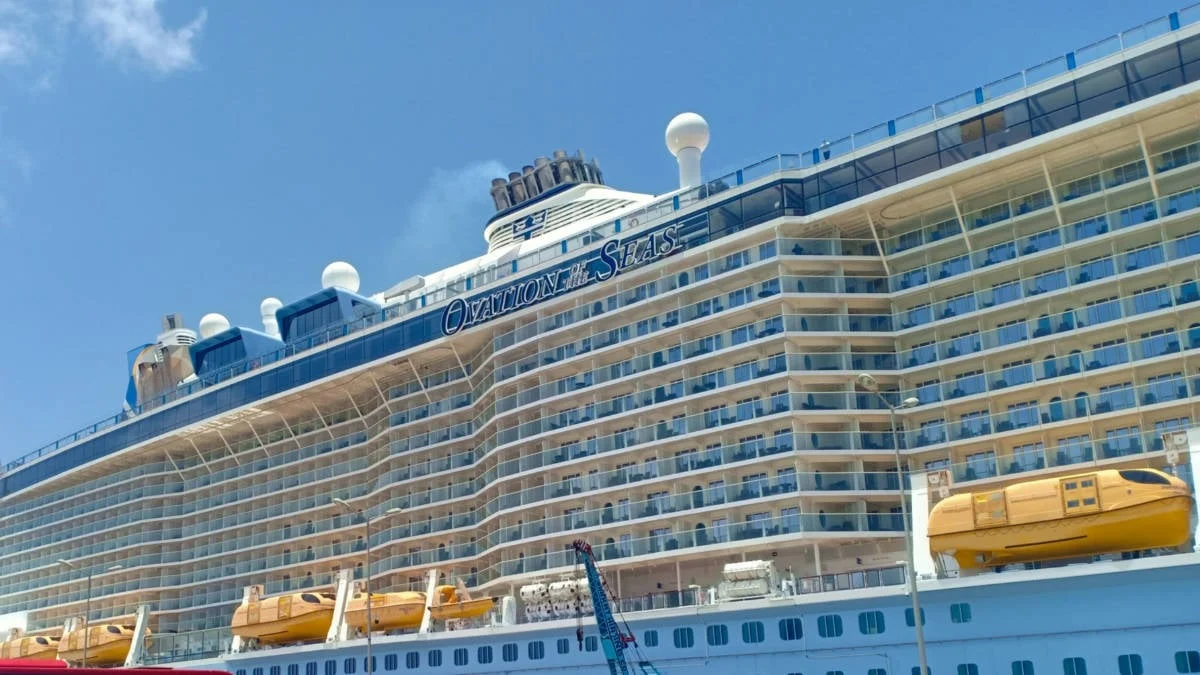
For cruise passengers, booking a specific stateroom is often an exercise in careful planning, preference balancing, and financial investment. Travelers frequently pay a premium to secure a chosen location—whether it is a quiet mid-ship cabin to minimize motion sickness, a balcony with a prime sunset view, or a specific grouping of rooms for an extended family. However, a growing wave of frustration is sweeping across online cruising communities as Royal Caribbean International begins involuntarily reassigning specific cabins on select sailings aboard the 4,234-passenger Ovation of the Seas.
The controversy centers on automated and administrative room changes that strip passengers of their handpicked accommodations, plunging their bookings into a "Guarantee" (GTY) status. Among those affected is a traveler booked on the ship’s October 12, 2026, four-night coastal voyage to Catalina Island and Ensenada, Mexico. Despite having booked months in advance and paying a distinct financial premium to select an exact stateroom, this guest was abruptly notified that their room assignment was being overhauled due to "adjusted occupancy needs."
This administrative shift has ignited a broader debate across the cruising industry regarding consumer rights, the value of cabin selection fees, and the opaque nature of cruise line contract-of-passage clauses. While Royal Caribbean maintains the legal right to reassign cabins for operational necessities, affected guests argue that absorbing the financial loss of paid-for room selection—without receiving proportional compensation, refunds, or guaranteed equivalent upgrades—undermines consumer trust. This investigative report examines the mechanics behind these reassignments, the passenger backlash, the potential catalysts rooted in recent dry dock modifications, and what travelers can do when their carefully laid cruise plans are disrupted.
Detailed Chronology of the Disruption
The unfolding situation aboard Ovation of the Seas highlights a systemic pattern of late-stage modifications that catch travelers off guard. To fully understand the scope of the issue, it is vital to trace how the notifications are delivered, how guest statuses shift, and how customer service interactions exacerbate the tension.
The Notification and Status Shift
The catalyst for public attention occurred when an affected traveler posted a notification received from Royal Caribbean on a popular Facebook cruising community group. The communication was designed to alert the guest that their meticulously chosen stateroom was no longer theirs.
"During a recent review of your reservation, we identified that your stateroom’s assigned occupancy needs to be adjusted," the email stated. "To ensure your accommodations are just right, we’re in the process of reassigning your party to a stateroom that comfortably accommodates your entire group — either within the same category or in an upgraded category."
The message went on to explain that while these arrangements were being finalized, the reservation would temporarily reflect a "GTY" (guarantee) status, with a definitive stateroom number to be assigned at a later, unspecified date.

For the original poster, the timeline of events added insult to injury. The cruise had been booked directly through Royal Caribbean months prior, specifically bypassing cheaper guarantee rates to lock down an exact cabin. Yet, administrative tracking tools showed their reservation flipped to "GTY" status as early as June 30, 2026—weeks before public discussions began to surface.
The Financial Disconnect
The core grievance for many impacted passengers is not merely the loss of a physical room, but the financial inequity of the reclassification. The affected guest reported paying an extra $300 specifically for the privilege of selecting their exact stateroom location.
By being forced into a guarantee pool, the passenger was stripped of the very service they paid for, landing in the exact same logistical tier as travelers who opted for a lower-cost, unassigned guarantee rate.
"Now we are in the same position as someone who booked GTY and didn’t pay extra to book a room," the guest stated online. "They won’t offer a reimbursement. So it’s not just about the actual room we wanted; it’s also the value for the service we have paid for."
Customer Service Inconsistencies
As guests attempted to rectify the situation by contacting Royal Caribbean’s customer service channels, they encountered a frustrating lack of uniformity.
- Denied Compensation: The primary poster noted that multiple Royal Caribbean representatives categorically denied any form of reimbursement for the $300 seat-selection fee, treating the reassignment as a routine operational adjustment covered by the cruise line’s ticket contract.
- Onboard Credit Offers: Conversely, other passengers chimed in on social media threads reporting similar reassignments for Ovation of the Seas. Some of these travelers claimed they successfully negotiated modest onboard credit (OBC) amounts to offset the inconvenience once their final, upgraded stateroom numbers were eventually confirmed.
- The Waiting Game: Much like passengers affected by similar reassignments on the ship’s August 14, 2026, Alaska sailing, travelers on the October itinerary face an agonizing wait. Many are left in limbo regarding their exact deck, proximity to amenities, and bed configurations right up until the final weeks or days before embarkation.
Supporting Context & Metrics: The Anatomy of Ovation of the Seas
To contextualize why Royal Caribbean might be undertaking such sweeping stateroom reassignments, it is necessary to examine the physical characteristics, recent history, and passenger capacities of Ovation of the Seas.
Ship Profile and Capacity
- Class: Quantum-Class
- Passenger Capacity (Double Occupancy): 4,180
- Maximum Passenger Capacity: 4,905
- Total Guest Capacity Rating: Frequently cited around 4,234 standard guests
- Gross Tonnage: Approximately 168,666 GT
- Crew Members: ~1,500
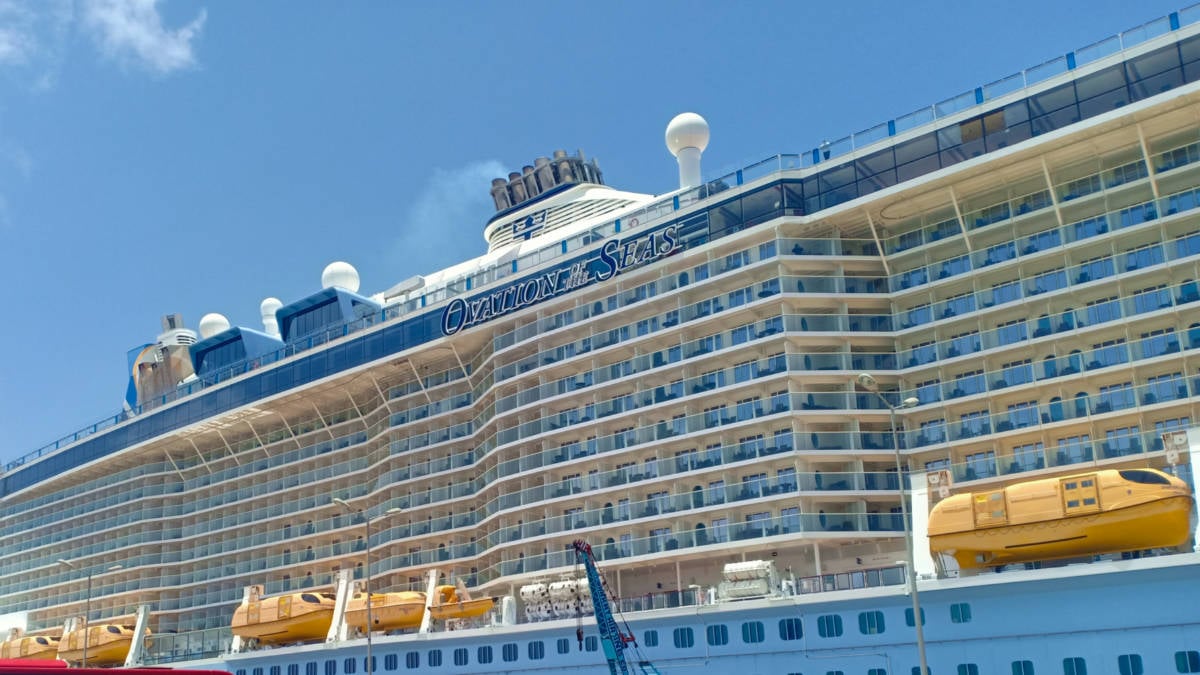
As a Quantum-class vessel, Ovation of the Seas is a technological marvel featuring cutting-edge amenities, including the North Star observation capsule, RipCord by iFly skydiving simulator, and the dynamic Two70 entertainment venue. However, managing nearly 5,000 guests and 1,500 crew members requires absolute precision in structural allocation, weight distribution, and emergency safety protocols.
The April 2026 Dry Dock Amplification
The most glaring catalyst for these widespread stateroom adjustments lies in the ship’s extensive dry dock amplification completed in April 2026. During this major overhaul, Royal Caribbean implemented structural changes designed to maximize passenger capacity and update onboard venues.
Most notably, the dry dock introduced 40 brand-new staterooms across various decks:
- Deck 5: 10 new staterooms were constructed to replace the former photo gallery area.
- Deck 16: 7 new staterooms were added in proximity to the fitness center.
- Decks 9, 12, and 13: Additional staterooms were integrated into existing structural layouts.
While adding 40 staterooms significantly boosts revenue potential for the cruise line, it fundamentally alters the ship’s architectural blueprint. Every single stateroom on a cruise ship is tied to complex logistical matrices that dictate safety compliance, life-saving equipment deployment, and crowd flow during emergencies.
Official Statements and Industry Mechanics
While Royal Caribbean has not issued a broad public relations statement specifically addressing the financial complaints of the October 2026 guests, maritime operations experts and cruise industry analysts point to strict regulatory requirements as the primary driver behind these reassignments.
The Role of Muster Stations and Lifeboat Capacities
Under international maritime law governed by the International Convention for the Safety of Life at Sea (SOLAS), every cruise ship must demonstrate that all passengers and crew can be safely evacuated into survival craft within a strict timeframe (typically 30 minutes from the abandon-ship signal).
- Lifeboat Calculations: Every lifeboat and life raft on Ovation of the Seas is certified to carry a maximum number of souls. Adding 40 new staterooms during the April 2026 dry dock meant introducing dozens of new passenger berths into the ship’s stability and safety equations.
- Muster Station Redistribution: Each stateroom on the ship is permanently paired with a specific muster station. When new rooms are added, or when existing spaces are reconfigured, the total head count assigned to specific safety zones shifts.
- Occupancy Reclassifications: It is highly probable that during post-dry dock safety reviews, Royal Caribbean’s marine operations team identified that certain pre-existing staterooms required an adjustment to their maximum occupancy ratings to maintain compliance with lifeboat capacities. If a room was originally rated for four guests but must be restricted to two—or vice versa—families booked into those rooms can no longer be legally or logistically accommodated there.
The Legal Framework: The Cruise Contract
From a legal standpoint, cruise lines protect themselves against guest dissatisfaction through the fine print of the ticket contract. Standard cruise passenger contracts explicitly state that the cruise line reserves the right to:
- Change cabin assignments at any time for operational, commercial, or safety reasons.
- Modify itineraries, ship allocations, and stateroom categories.
- Deny liability for changes in accommodation provided the replacement is of equal or greater value.
While this legal shield protects Royal Caribbean from breach-of-contract lawsuits, it does little to preserve goodwill among loyal cruisers who view the forfeiture of paid selection fees as an unfair business practice.
Future Outlook: Navigating Cabin Reassignments
As cruise lines increasingly push ships through high-density modifications, dry docks, and fleet-wide modernizations, the operational friction between maximizing ship capacity and honoring individual guest preferences is likely to persist. For travelers planning future sailings on Ovation of الحساس—or any heavily amplified vessel across major cruise lines—several proactive steps can mitigate the risk of disruption and protect consumer investments.
Recommendations for Cruisers
- Understand Guarantee vs. Assigned Bookings: Recognize that even when paying extra to select a specific cabin, the cruise contract preserves the line’s right to move passengers. However, keeping meticulous records of paid fees is essential for disputing charges.
- Document Everything: If notified of a stateroom reassignment after paying a selection fee, immediately contact customer service or your travel agent to request a formal accounting of the fee. If reimbursement is denied by phone, escalate the request in writing through customer relations.
- Leverage Travel Agents: Booking through a reputable, high-volume travel agency provides an extra layer of advocacy. Experienced travel advisors often have direct lines to internal management desks and can successfully lobby for onboard credit, specialty dining packages, or category upgrades when unrequested reassignments occur.
- Monitor Reservation Statuses Regularly: Periodically check your cruise planner and booking confirmation online, particularly in the months following major scheduled dry docks, to catch potential "GTY" status reverts early before final documentation is issued.
The Broader Industry Challenge
For Royal Caribbean, balancing the immense financial benefits of adding staterooms during dry docks with the customer satisfaction of repeat cruisers will remain a delicate tightrope walk. As Ovation of the Seas continues its deployment schedule, transparent communication and fair compensation policies for guests who lose out on paid-for selections will be critical in maintaining passenger trust in an increasingly competitive cruise market.