









Executive Overview
In the modern corporate landscape, scale is frequently conflated with dehumanization. As multinational corporations grow, their operations are increasingly dictated by complex algorithmic frameworks, bottom-line metrics, and predictive analytics that reduce complex human behaviors to rows and columns of quantifiable data points. Nowhere is this tension more palpable than in the global hospitality sector, where the pressure to optimize operations at scale often clashes with the fundamental human desire for warmth, empathy, and personalized care.
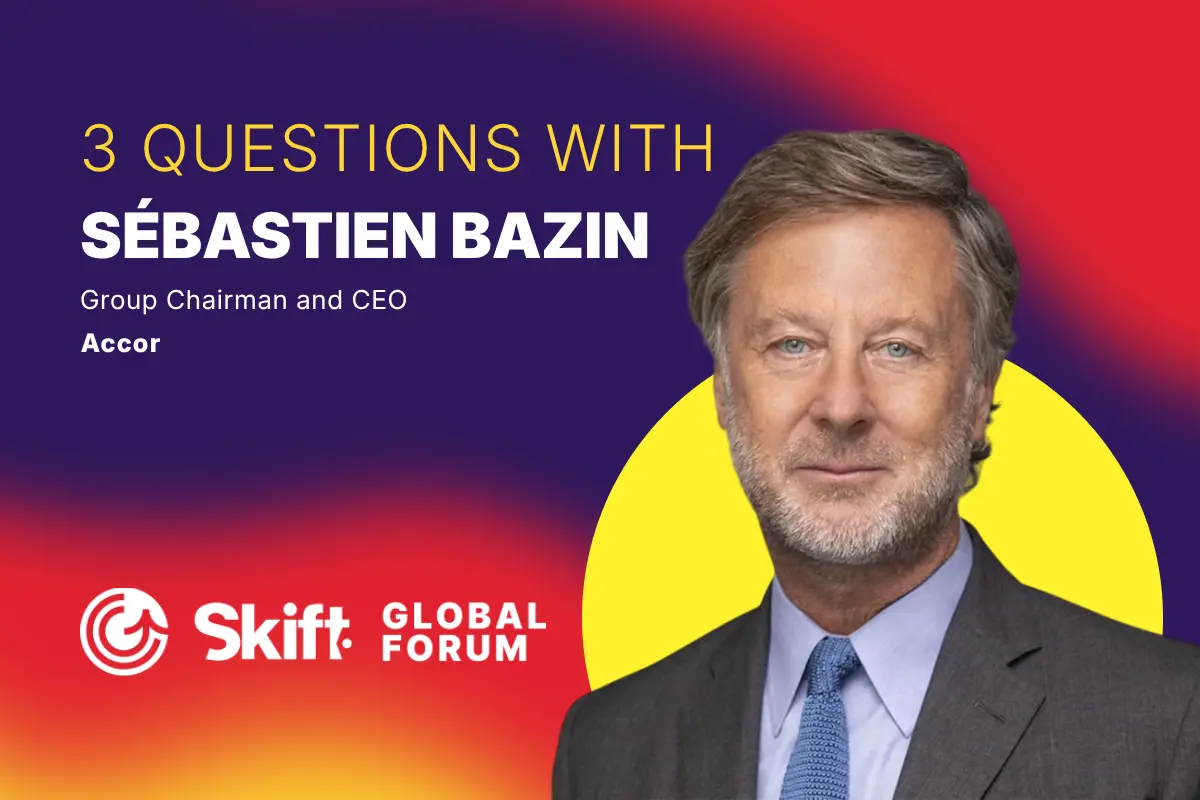
Few executives understand this balancing act as profoundly as Sébastien Bazin. Having steered Accor—one of the world’s largest and most sprawling hospitality conglomerates—since 2013, Bazin has overseen a period of unprecedented transformation. Managing an empire that spans more than 45 distinct brands, encompassing over 5,800 hotels and resorts across the globe, requires a leadership paradigm that goes far beyond traditional corporate management. It demands a philosophy capable of synthesizing relentless technological disruption with the timeless art of hosting.
Ahead of his highly anticipated appearance at the upcoming Skift Global Forum, Bazin has articulated a core leadership philosophy that challenges the prevailing corporate dogma: data is essential, but it must serve to nourish human instinct rather than overrule it. In an industry rushing headlong into the era of artificial intelligence, hyper-personalization, and automated distribution, Bazin’s perspective offers a vital counterweight. This comprehensive analysis explores Bazin’s decision-making framework, the shifting dynamics of the modern traveler journey, the critical role of hospitality as a socioeconomic catalyst, and what the future holds for global hotel leadership in an increasingly automated world.
Detailed Chronology: The Evolution of Accor Under Bazin
To understand Bazin’s current management philosophy, one must examine the trajectory of Accor since he assumed the chief executive role in 2013. When Bazin took the helm, the company—then known as AccorHotels—was primarily recognized as a European leader heavily concentrated in the economy and midscale segments, anchored by iconic brands like Ibis, Novotel, and Sofitel. However, the travel landscape was shifting beneath the feet of traditional hoteliers. The rise of alternative accommodations, digital-first distribution giants, and shifting consumer expectations demanded a radical restructuring of legacy business models.
Phase One: Asset-Light Transformation and Brand Diversification (2013–2018)
Bazin’s early tenure was defined by a bold strategic pivot toward an "asset-light" business model. Accor began shedding real estate ownership to focus heavily on brand management, franchise operations, and hotel management contracts. This financial liberation allowed the group to aggressively pursue mergers, acquisitions, and strategic partnerships.
During this period, Accor expanded its footprint upward into luxury and lifestyle segments. The acquisition of FRHI Hotels & Resorts in 2016 brought legendary high-end properties like Fairmont, Raffles, and Swissôtel under the Accor umbrella. Simultaneously, Bazin recognized that the future of hospitality lay in lifestyle and experiential travel. Through joint ventures and acquisitions—such as Ennismore, which eventually merged with Accor to form a standalone lifestyle hospitality powerhouse—Bazin transformed a traditional hotel operator into a multifaceted ecosystem of brands spanning luxury, premium, midscale, and economy.
Phase Two: Digital Integration and Ecosystem Expansion (2018–2022)
As the portfolio swelled to encompass dozens of distinct brands, the operational complexity multiplied exponentially. Bazin and his leadership team confronted the challenge of digital transformation. The launch of the ALL (Accor Live Limitless) loyalty platform was a watershed moment, designed to transition Accor from a simple place to sleep into a daily lifestyle companion for its guests.

During these years, data analytics became central to understanding guest preferences across disparate demographics and geographies. Yet, even as Accor integrated advanced revenue management systems, predictive booking engines, and digital guest-engagement tools, Bazin maintained a strict boundary regarding the limits of technology. He resisted the temptation to let quantitative metrics entirely dictate portfolio expansion or guest-facing innovations, insisting that the soul of each property must reflect its local community.
Phase Three: Navigating Post-Pandemic Realities and the AI Horizon (2022–Present)
The global disruptions of the early 2020s tested the resilience of every hospitality enterprise, but Accor’s diversified model enabled a rapid recovery. Today, as the industry hurtles into the artificial intelligence revolution, Bazin’s role has shifted from operational restructuring to philosophical stewardship. He currently oversees an organization operating in over 110 countries, where the primary challenge is no longer merely survival or expansion, but maintaining authenticity in an era of hyper-automation.
Supporting Context & Metrics: The Scale of Accor and the Modern Travel Dilemma
To fully appreciate the weight of Bazin’s decisions, one must examine the sheer scale of the enterprise he manages. Accor is not a single product; it is a sprawling constellation of more than 45 brands catering to every conceivable segment of the traveler market.
The Portfolio Breakdown
- Economy & Midscale: Brands like Ibis, Mercure, and Novotel serve as the bedrock of global travel, offering reliable, accessible accommodation for millions of business and leisure travelers daily.
- Premium & Luxury: High-end banners such as Pullman, Swissôtel, Fairmont, Raffles, and Orient Express cater to discerning travelers seeking exceptional, design-forward, and culturally immersive experiences.
- Lifestyle: Through the Ennismore collective—featuring brands like Mama Shelter, 25hours, The Hoxton, and SLS—Accor captures the cultural zeitgeist of younger, experience-driven travelers who prioritize neighborhood integration and design aesthetics over traditional hotel formality.
The Data Imperative vs. Decision Fatigue
In an ecosystem comprising over 5,800 properties, the volume of data generated daily is staggering. Booking patterns, cancellation rates, culinary preferences, spa utilization, and digital engagement metrics flow into central data lakes continuously. For many corporate leaders, this influx of information leads to analysis paralysis or an over-reliance on algorithmic forecasting.
Bazin’s approach cuts through this data fatigue. When asked about his personal decision-making test in an era of accelerating change, Bazin offers a remarkably human framework:
"I start with my gut, then my heart, then my brain. My instinct tells me what feels right, my heart tells me how the decision will affect people and my brain tells me the timing."
This tri-part rule reverses the traditional corporate hierarchy, which typically places analytical data and financial forecasting ("the brain") at the absolute apex of decision-making. By prioritizing instinct and empathy ahead of raw analytics, Bazin protects the emotional core of hospitality from being eroded by cold corporate calculation.
Furthermore, Bazin offers a pragmatic warning regarding the pursuit of perfect information in modern business: "Data is essential, but it should nourish your instinct, not replace it. In a world moving this quickly, waiting for perfect information often means you have already waited too long."
Official Statements and Industry Insights
Bazin’s perspectives on technology, the customer journey, and the socioeconomic value of hospitality provide an authoritative blueprint for the future of global travel. Below is a detailed examination of his core philosophies as articulated ahead of the Skift Global Forum.
Navigating the AI-Driven Customer Journey
The modern traveler journey has become profoundly non-linear. Guests no longer book via a simple linear progression of inspiration, search, and reservation; instead, they interact with a fragmented ecosystem of social media influencers, metasearch engines, review platforms, and personalized AI assistants.
Bazin acknowledges that artificial intelligence is poised to revolutionize virtually every touchpoint of this journey, particularly how travelers discover, plan, and personalize their trips.
"In the next few years, travelers will expect experiences that feel increasingly individual and intuitive," Bazin notes.
However, rather than viewing AI as a total replacement for human labor, Bazin frames technology as an enabler that raises the stakes for genuine human interaction. He argues that as digital tools become more powerful and ubiquitous, the human touch actually appreciates in value:
"Our role is to use technology and better data to meet those expectations without losing what matters most in hospitality: the human connection. In fact, as technology becomes more powerful, I believe the human touch becomes even more valuable. That is where our teams, our brands and the experiences we create can truly differentiate."
The Overlooked Pillar: Human Capital and the Social Elevator
Perhaps Bazin’s most passionate critique of the contemporary travel industry centers on what he perceives as a blind spot among corporate leaders: the undervaluation of the human workforce. While industry panels, conferences, and executive boardrooms are perpetually consumed by discussions surrounding distribution costs, loyalty ecosystems, and software integrations, Bazin insists that the foundational truth of hospitality is relentlessly human.
"We talk about technology, distribution and changing traveler behavior, but hospitality is fundamentally about human connection," Bazin states. "Hotels are places where cultures meet, communities gather and people build careers."
Beyond the immediate guest experience, Bazin elevates the conversation to address the broader socioeconomic impact of the hotel industry. He reminds stakeholders that hospitality remains one of the world’s few remaining robust social elevators—an industry capable of absorbing individuals from vastly disparate educational, social, and economic backgrounds and providing them with legitimate avenues for upward mobility and lifelong careers.
In an age where automated check-ins, robotic concierges, and AI-driven room service requests threaten to depersonalize the physical hotel environment, Bazin issues a definitive mandate:
"As our industry embraces AI and new technology, we cannot allow that human role to become secondary. It should become even more central."
Future Outlook: The Road Ahead for Accor and Global Hospitality
As Sébastien Bazin prepares to take the stage at the upcoming Skift Global Forum in New York—appearing alongside other industry luminaries such as Expedia Group CEO Ariane Gorin, Wyndham Hotels & Resorts CEO Geoff Ballotti, and Qatar Airways Group CEO Hamad Al-Khater—the broader implications of his leadership model are becoming clear.
The hospitality industry stands at a historical crossroads. On one side lies the siren song of total automation: hyper-efficient, frictionless, data-optimized operations designed to maximize operating margins by minimizing labor costs. On the other side lies the timeless essence of hospitality: a sanctuary of human empathy, cultural exchange, and personalized care.
Bazin’s decade-plus tenure at Accor demonstrates that these two forces are not mutually exclusive, provided they are managed with philosophical clarity. By using data to sharpen strategic instincts rather than stifle them, and by fiercely protecting the human element of hotel operations against the encroachment of indiscriminate technology, Bazin has established a resilient blueprint for enterprise-scale leadership.
Looking forward, the success of multinational hospitality groups will not be measured solely by their digital penetration or the scale of their loyalty databases. It will be measured by their ability to make travelers feel genuinely seen, valued, and cared for in a complex world. For Sébastien Bazin and Accor, the future belongs to those who possess the technological sophistication to anticipate what a guest needs, combined with the emotional courage to remember why they are in the business of hospitality in the first place.