








Executive Overview
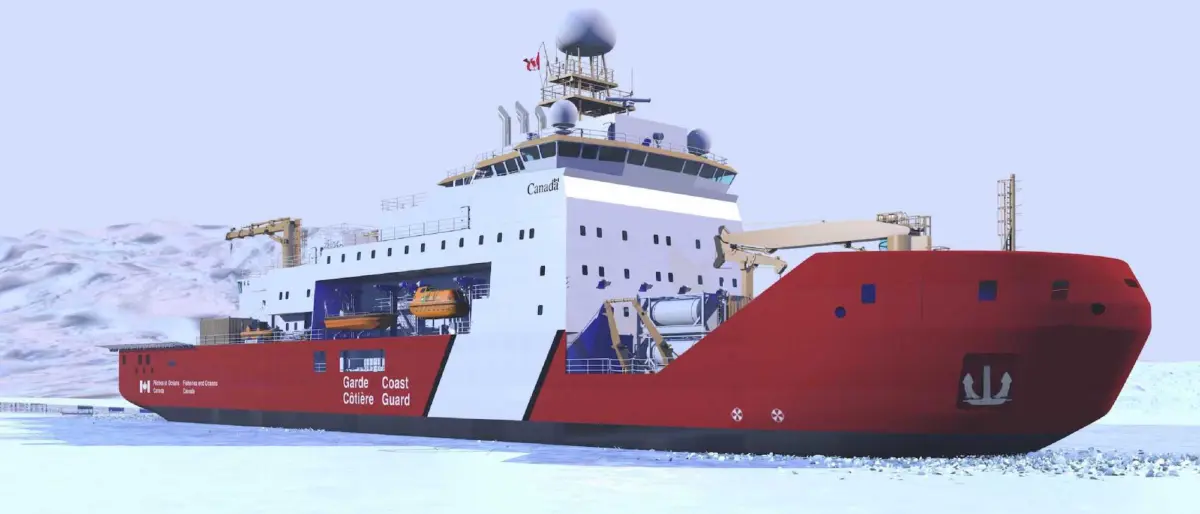
In a decisive move to secure its northern frontier and revitalize its domestic maritime industrial base, the Canadian government has finalized a landmark $8 billion (USD) fixed-price contract with Davie Shipbuilding. The agreement covers the construction of six state-of-the-art Program Icebreakers for the Canadian Coast Guard (CCG). This deal represents one of the most significant single capital procurements in the history of Canada’s National Shipbuilding Strategy (NSS), signaling a major shift in how Ottawa intends to police, protect, and project sovereignty over its increasingly accessible Arctic waters.
The contract marks a dramatic departure from conventional, risk-averse defense procurement models. By utilizing a fixed-price structure, the Canadian government is transferring substantial execution and cost-management risks directly to the shipbuilder. In return, Davie Shipbuilding gains a highly coveted asset in the maritime industry: a long, uninterrupted production run of six identical, highly complex vessels. This continuity allows the shipyard to leverage the economic law of the learning curve, driving down per-unit costs while steadily increasing assembly-line efficiency.
This domestic mega-project is not an isolated national endeavor. It is deeply intertwined with a broader geopolitical realignment. As climate change accelerates the melting of polar ice caps—opening up lucrative new global trade routes and exposing vast, untapped natural resources—the Arctic has transformed into a theater of strategic competition. Through this contract, and its parent company Inocea’s expanding footprint across Canada, Finland, and the United States, Davie is positioning itself as the premier industrial linchpin of the Western alliance’s polar security infrastructure.
Detailed Chronology
The path to this historic $8 billion contract reflects a decade-long evolution in Canada’s approach to national shipbuilding and polar defense.
[2010s: NSS Launched] ──> [2023: Davie Joins NSS] ──> [Early 2024: Lévis Announcement] ──> [Present: $8B Contract Signed] ──> [2027: Construction Begins]The Genesis of the National Shipbuilding Strategy (NSS)
For years, Canada’s shipbuilding capacity suffered from boom-and-bust cycles that led to shipyard closures, loss of skilled labor, and critical delays in fleet renewals. To combat this, Ottawa established the National Shipbuilding Strategy (NSS) to rebuild the domestic marine industry by concentrating federal shipbuilding projects within designated strategic partners. Initially, only Irving Shipbuilding in Halifax and Seaspan Shipyards in Vancouver were selected. However, as the demand for heavy icebreaking capability grew more urgent, Canada formally welcomed Davie Shipbuilding as the third strategic partner under the NSS in early 2023.
The Lévis Declaration
The momentum culminated earlier this week when Prime Minister Mark Carney visited Davie’s historic shipyard in Lévis, Quebec. Against the backdrop of the St. Lawrence River, the Prime Minister announced the formalization of the six-ship Program Icebreaker project, framing it as both an economic engine for Quebec and a national security imperative.
Contract Finalization
Following the high-profile political announcement, negotiators from Public Services and Procurement Canada and Davie executives finalized the commercial terms of the $8 billion fixed-price contract. By locking in the pricing structure before steel is cut, the Canadian government sought to insulate taxpayers from the notorious cost overruns that have historically plagued complex naval and coast guard procurements.
The Construction and Delivery Timeline
With the contract signed, the program moves into its detailed engineering and procurement phase.
- 2024–2026: Engineering, design refinement, and supply chain onboarding.
- 2027: First cut of steel for the inaugural Program Icebreaker at the Lévis yard.
- Late 2020s to 2030s: Continuous series production, with successive vessels scheduled for delivery throughout the 2030s to systematically replace aging legacy hulls.
Supporting Context & Metrics
To understand the operational scale of this program, one must examine both the technical specifications of the vessels and the strategic footprint of the builder.
Technical Specifications: The Polar Class 3 Workhorses
These six vessels are engineered to operate in some of the most hostile marine environments on Earth. Classified as Polar Class 3 (PC3) vessels, they are designed to perform multi-mission operations in year-round polar waters.
| Parameter | Specification / Capability |
|---|---|
| Vessel Length | 110 to 120 meters |
| Icebreaking Capability | Continuous progress at 3 knots through 1.4 meters of first-year ice |
| Operational Range | Approximately 20,000 nautical miles |
| Cruising Speed | 11 knots |
| Aviation Support | Fully equipped flight deck and hangar capable of operating a medium CCG helicopter |
These vessels will serve a dual-hemisphere operational profile. During the harsh Canadian winter, they will keep critical shipping lanes open in Atlantic Canada, the St. Lawrence River, and the Great Lakes, ensuring the continuous flow of commercial maritime trade. As the ice recedes in the summer, they will deploy north to the High Arctic to support remote northern communities, conduct scientific research, and perform maritime search and rescue operations.
Davie’s Modernization and the Global Order Book
To execute this program alongside its existing commitments, Davie is undergoing a massive transformation. The company is currently executing a $840 million CAD modernization program at its Lévis facility to expand its physical capacity, integrate automated welding technologies, and implement advanced digital shipbuilding systems.
This contract adds to an already sprawling polar order book managed by Davie and its parent company, Inocea:
- CCGS Arpatuuq (Polar Max): Davie is currently constructing Canada’s flagship Polar Class 2 icebreaker, a massive 22,800-ton vessel scheduled for delivery in 2030. This build utilizes a hybrid construction model leveraging Davie’s Helsinki Shipyard in Finland and the Lévis facility.
- CCGS Imnaryuaq: In parallel, Seaspan’s Vancouver Shipyards is constructing another Polar Class 2 vessel, ensuring a multi-yard push to modernize Canada’s heavy polar fleet.
- U.S. Coast Guard Arctic Security Cutters: In May, Davie’s U.S. subsidiary, Davie Defense, finalized a $3.5 billion contract for five Arctic Security Cutters. The first two units will be built in Helsinki, Finland, before production shifts to Davie’s Gulf Copper facilities in Galveston and Port Arthur, Texas.
- The "American Icebreaker Factory": Inocea plans to invest up to $1 billion in its Texas facilities to establish a premier domestic manufacturing base for American polar vessels.
Official Statements & Corporate Strategy
The leadership at Davie and Inocea have emphasized that this contract represents a structural evolution in industrial defense partnerships.
James Davies, Chief Executive Officer of Davie Shipbuilding, highlighted the trust placed in the yard’s technical and operational capabilities:
"This contract reflects Canada’s confidence in Davie’s ability to deliver complex, mission-critical ships. I am incredibly proud of our team and our partners, who continue to drive productivity and innovation in shipbuilding. Together, we are ready to deliver."
The Power of Series Production
A major challenge in specialized shipbuilding is the "stop-and-start" nature of government procurement, which often forces yards to lay off specialized workers between projects. The six-ship order mitigates this risk entirely.
Alex Vicefield, Chairman and CEO of Inocea, explained how the long production run will directly benefit both the builder and the Canadian taxpayer:
"Delivering multiple vessels within a class will allow our teams to continuously improve, develop new skills, and increase productivity with each ship we produce. These cumulative improvements will translate directly into greater operational efficiency and lower overall costs over the life of the program."
Davie President Lindsey Kettel emphasized the broader socio-economic stability this contract guarantees to the regional economy:
"This agreement provides long-term certainty for our shipyard’s dedicated workforce and our extensive network of domestic suppliers. As we continue to invest heavily in our Lévis facilities, we are ensuring that Canadian materials, Canadian steel, and Canadian hands build the future of our Arctic fleet."
Indeed, the program aligns directly with Ottawa’s "Buy Canadian" policy. By sourcing propulsion systems, structural steel, and marine electronics from domestic suppliers, the project is designed to maximize economic multipliers across Canada’s manufacturing corridors.
Future Outlook & Geopolitical Implications
The finalization of this contract occurs at a critical geopolitical juncture. The Arctic is no longer a remote, isolated buffer zone; it is a rapidly emerging front in global geopolitical competition.
                  ┌────────────────────────────────────────┐
                  │          The ICE Pact Alliance         │
                  │   (Canada  •  United States  •  Finland) │
                  └───────────────────┬────────────────────┘
                                      │
             ┌────────────────────────┼────────────────────────┐
             ▼                        ▼                        ▼
┌────────────────────────┐┌────────────────────────┐┌────────────────────────┐
│     Lévis Shipyard     ││    Helsinki Yard       ││    Gulf Copper Yard    │
│        (Canada)        ││       (Finland)        ││     (Texas, USA)       │
└────────────┬───────────┘└───────────┬────────────┘└───────────┬────────────┘
             │                        │                        │
             └────────────────────────┼────────────────────────┘
                                      ▼
                  ┌────────────────────────────────────────┐
                  │    Unified Western Polar Fleet Build   │
                  └────────────────────────────────────────┘
The ICE Pact Synergy
In July 2024, the governments of Canada, the United States, and Finland announced the ICE Pact (Icebreaker Collaboration Effort). This trilateral initiative is designed to pool resources, share designs, and coordinate shipbuilding capacity to counter the rapid expansion of Russian and Chinese polar fleets.
Inocea and Davie occupy a uniquely powerful position within this alliance. By operating shipyards in all three ICE Pact member nations—Lévis in Canada, Helsinki in Finland, and Galveston/Port Arthur in the United States—Inocea has effectively built a transnational polar shipbuilding supply chain. The company can export Helsinki’s world-renowned icebreaking design expertise directly into North American shipyards, circumventing traditional bottlenecks and accelerating delivery timelines for both the Canadian and U.S. Coast Guards.
Countering Polar Competitors
The strategic necessity for these ships cannot be overstated. Russia continues to maintain and expand the world’s largest icebreaker fleet, including nuclear-powered giants, to assert control over the Northern Sea Route. Meanwhile, China, self-identifying as a "near-Arctic state," has steadily increased its presence in polar waters, deploying its own research icebreakers and investing heavily in northern infrastructure.
For Canada, asserting sovereignty over the Northwest Passage requires more than legal declarations; it requires a physical, persistent presence. These six new Program Icebreakers, alongside the heavy Polar Class 2 vessels under construction, will ensure that the Canadian Coast Guard remains equipped to patrol its waters, secure its maritime borders, and support northern economic development for the next half-century. By locking in this $8 billion program, Canada has taken a major step toward ensuring that the future of the Arctic remains stable, secure, and sovereign.