





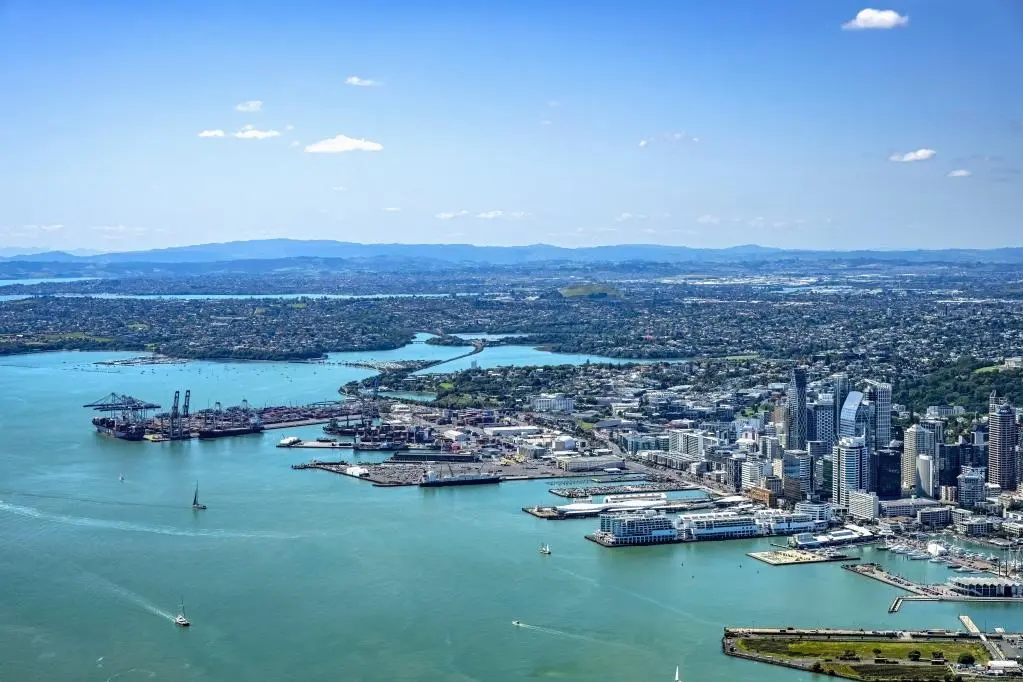
AUCKLAND, NEW ZEALAND — In a milestone moment for New Zealand’s maritime infrastructure, the Port of Auckland has officially commenced deck-laying operations at the Bledisloe North wharf. The placement of the very first precast panel slab marks the beginning of the final, highly anticipated phase of construction for what is destined to become the city’s premier big-ship, multi-use maritime facility.
This ambitious civil engineering undertaking represents a watershed moment not only for the commercial operations of the port authority but also for the broader economic trajectory of the Auckland region. Designed to future-proof the gateway against the escalating demands of global trade and international tourism, the multi-million-dollar development is rapidly reshaping the city’s waterfront. As construction enters its home stretch, stakeholders are eyeing a grand opening in March 2027, a target date that coincides with the delivery of a state-of-the-art international cruise terminal.
Executive Overview
At the heart of the Port of Auckland’s strategy is a robust, forward-looking capital expenditure program exceeding $200 million. This substantial financial commitment is engineered to accomplish a singular, vital objective: transforming the port into a "big-ship capable" international hub.
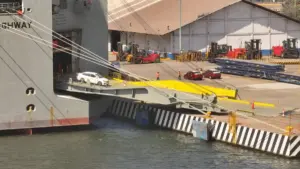
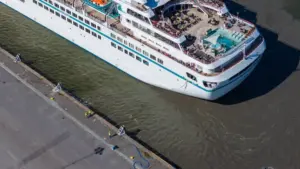
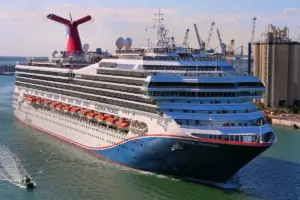
The centerpiece of this transformation is the Bledisloe North wharf project. Once operational, the facility will dramatically expand the port’s capacity to handle both large-scale cruise liners and specialized Roll-on/Roll-off (RoRo) freight vessels. In an era defined by supply chain volatility and increasing vessel dimensions, the ability to accommodate the world’s largest cargo and passenger ships is no longer a luxury—it is an economic imperative.
The project is moving forward on two parallel tracks:
- The Bledisloe North Wharf Rebuild: Executed by lead contractor HEB, this phase transforms the legacy marine structure into a modern, heavy-duty operational asset.
- The New International Cruise Terminal: Being constructed by Hawkins, this passenger facility is rising in tandem with the wharf to create a unified maritime gateway.
Both ventures are on schedule to officially open to the public and commercial operators in March 2027. By fusing cargo handling capabilities with world-class passenger infrastructure, the Port of Auckland is reinforcing its status as New Zealand’s primary maritime gateway to the world, injecting fresh momentum into the local economy, and cementing the city’s position as a premier South Pacific destination.
Detailed Chronology and Engineering Scope
The journey from conception to the laying of the first deck slab has been marked by precision engineering, regulatory innovation, and intense logistical coordination.
The Fast-Track Legislative Triumph
One of the most remarkable aspects of the Bledisloe North project is the unprecedented speed at which it has moved from administrative approval to physical realization. Port of Auckland Chief Executive Officer Roger Gray noted that Bledisloe North stands as the port’s pioneer infrastructure project approved under specialized fast-track legislative frameworks.
By bypassing bureaucratic bottlenecks without compromising environmental or structural rigor, the project team streamlined the regulatory pathway. From the initial submission of consent applications to ultimate project completion, the entire lifecycle is slated to span a mere two years—a blistering pace for heavy marine civil engineering.
Foundation Work: The Piling Phase
Before a single deck panel could be set into place, engineers and construction crews faced the formidable challenge of building a resilient foundation in a marine environment. Head contractor HEB mobilized heavy marine plant and equipment to execute the complex piling phase of the project.
During this foundational stage, HEB successfully installed 242 heavy-duty structural piles to anchor the wharf against the dynamic forces of tides, currents, and seismic activity. This intricate subsurface work required the placement of more than 3,800 cubic meters of high-performance concrete, establishing a rock-solid structural skeleton capable of enduring the immense loads associated with modern heavy freight and massive passenger vessels.
Deck Laying Operations Begin
With the structural foundation firmly established, the project crossed its latest major milestone with the laying of the first precast panel slab. The comprehensive deck-laying phase involves the meticulous installation of 290 precast concrete panels.
To balance logistical efficiency, quality control, and site constraints, the supply chain for these panels has been split down the middle:
- Off-Site Fabrication: Approximately 50 percent of the concrete panels are being cast off-site in specialized manufacturing facilities, ensuring rigorous quality standards and minimizing on-site congestion.
- On-Site Fabrication: The remaining 50 percent are being cast locally on or near the port premises, reducing transportation emissions and allowing for real-time adjustments to project specifications.
Once all 290 precast panels are locked securely into position, HEB will enter the next sub-phase of deck construction. This will involve pouring an additional layer of approximately 2,580 cubic meters of structural concrete directly over the panels. This continuous pour will fuse the individual components into a monolithic, high-strength wharf deck capable of withstanding the relentless wear and tear of heavy port machinery, container handlers, and heavy vehicular traffic.
Final Outfitting and Marine Furniture
The concrete work represents the backbone of the wharf, but operational readiness requires meticulous outfitting. Once the final concrete deck cures and achieves structural integrity, installation teams will move on to fit out the marine furniture and essential wharf services.
This final phase includes:
- Heavy-Duty Fenders: Engineered to absorb the kinetic energy of docking mega-vessels and protect both ship hulls and wharf infrastructure.
- Bollards: High-capacity mooring points designed to securely tether multi-thousand-tonne cruise ships and RoRo carriers against wind and tidal forces.
- Integrated Utilities: Electrical, water, and waste services to support berthed vessels efficiently, contributing to the port’s broader sustainability goals by enabling cold-ironing (shore power) capabilities where applicable.
Supporting Context & Strategic Metrics
The revitalization of Bledisloe North does not exist in a vacuum; it is part of a calculated, multi-year master plan designed to optimize the Port of Auckland’s physical footprint and financial performance.
Financial and Operational Context
Backed by a capital expenditure program exceeding $200 million, the port is systematically addressing historical capacity constraints. This investment comes on the heels of impressive operational metrics. Recent performance data released by the port indicates robust container volumes through the first half of the 2026 fiscal year (H1 FY26), demonstrating underlying strength in New Zealand’s import and export markets despite global economic headwinds.
By expanding capacity for Roll-on/Roll-off (RoRo) freight—which includes vehicles, heavy machinery, and wheeled cargo—the port is directly alleviating bottlenecks that have historically restricted automotive and industrial supply chains. Concurrently, the revitalization of cruise infrastructure addresses the pent-up demand of the global tourism sector, positioning Auckland to capture lucrative international passenger spending.
Synergy with the New International Cruise Terminal
The synergy between the Bledisloe North wharf and Auckland’s new international cruise terminal cannot be overstated. While HEB engineers the commercial and multi-use resilience of the wharf, construction firm Hawkins is pressing forward with the terminal building itself.
Slated for completion in early 2027, the terminal will serve as the welcome mat for hundreds of thousands of international tourists arriving by sea. The proximity of the modernized wharf ensures seamless passenger disembarkation and transit, transforming the traveller experience from the moment a ship drops anchor to the moment visitors step out into the heart of Auckland.
Both the wharf and the terminal are scheduled to officially open in March 2027, creating a synchronized ribbon-cutting moment that will signal a new era for New Zealand’s maritime sector.
Official Statements
The significance of the Bledisloe North milestone has drawn enthusiastic commentary from the port’s executive leadership, highlighting the collaborative effort required to bring the vision to life.
Port of Auckland CEO Roger Gray captured the celebratory mood of the city and the organization during the milestone event:
"This is a big moment for our city and a day that is worth celebrating. The work being done here is part of our $200 million investment to unlock economic growth through more cruise tourism and RoRo freight capacity for greater Auckland. It sets us up well into the future and confirms our gateway status to the world."
Reflecting on the regulatory and administrative hurdles cleared to reach this point, Gray underscored the effectiveness of innovative public-policy mechanisms:
"Bledisloe North wharf is the first of our infrastructure projects to be approved under the fast-track legislation. From consent application to project completion will take just two years."
Looking forward to the synchronized delivery of the passenger facilities, Gray added:
"This major infrastructure project goes hand in hand with the creation of Auckland’s newest international cruise terminal. We’re proud to share that this project is also progressing and on track for completion in early 2027."
Future Outlook: March 2027 and Beyond
As the first precast panel slab settles into place atop the Bledisloe North wharf, the Port of Auckland stands firmly on the threshold of a transformative era. The convergence of civil engineering precision, streamlined legislative approvals, and targeted financial investment has set a new benchmark for infrastructure development in New Zealand.
The months leading up to March 2027 will see relentless activity across the waterfront. As HEB completes the final concrete pours, marine outfitting, and service integrations on the wharf, and as Hawkins puts the finishing touches on the international cruise terminal, Aucklanders will watch a modern, world-class maritime precinct emerge from the drawing boards.
When the gates officially swing open in early 2027, the Port of Auckland will no longer merely participate in global trade and tourism—it will lead from the front. With expanded RoRo capacity powering national supply chains and a glittering new cruise terminal welcoming the world’s finest liners, the port will secure its economic vitality, resilience, and global relevance for decades to come.