





Executive Overview
For over a decade, Dr. Britta Baechler, Director of Ocean Plastics Research at the Ocean Conservancy, has studied plastic pollution from the controlled environment of a laboratory. She has analyzed hundreds of samples under high-powered lenses, cross-referenced complex environmental datasets, and spent countless hours tracing the complex pathways of petrochemical debris once it leaves human hands and enters natural ecosystems. However, the theoretical reality of numbers on a spreadsheet often contrasts starkly with the tangible, churning reality of the open ocean.
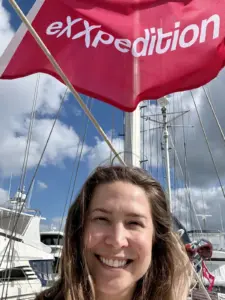
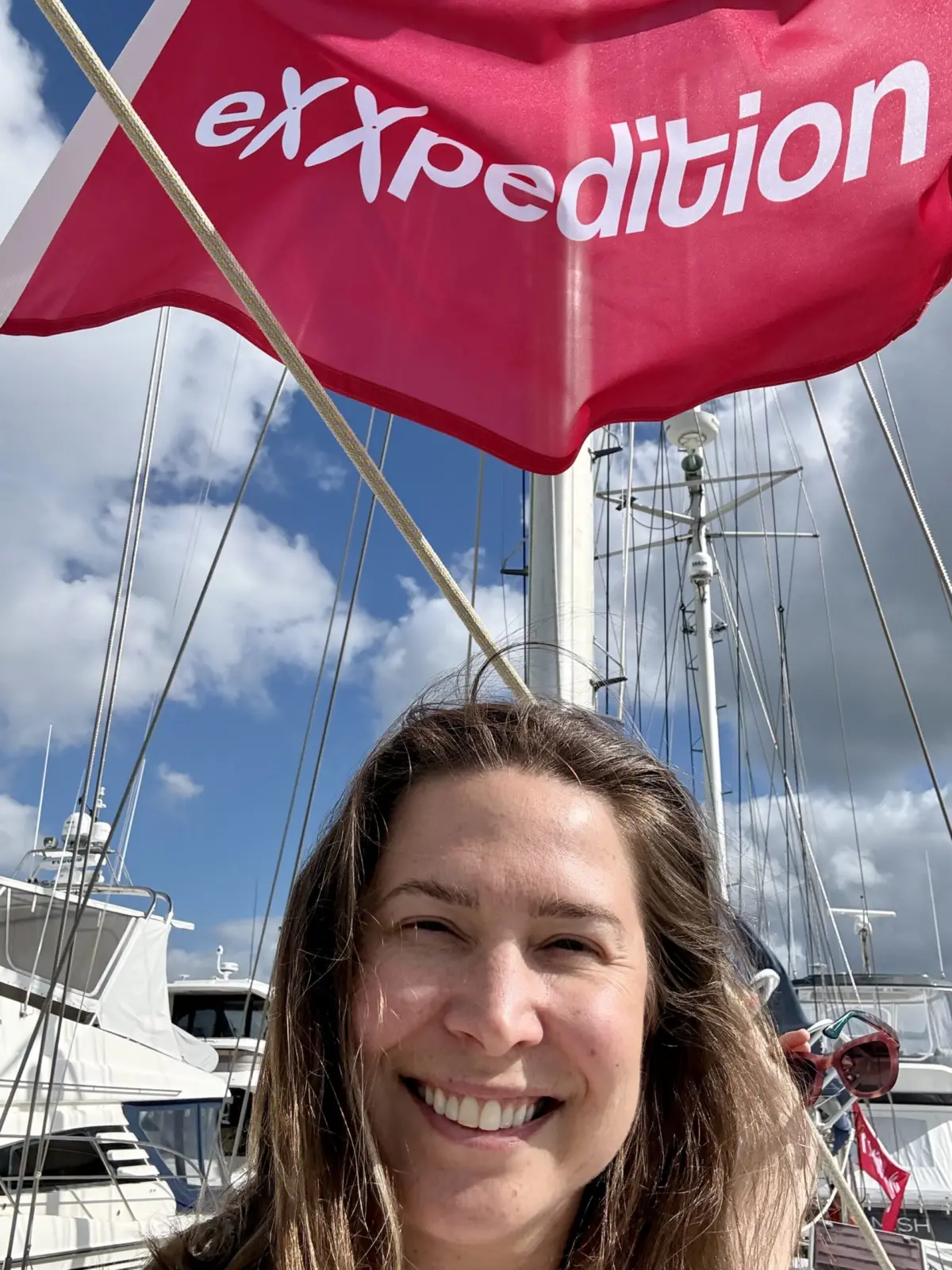
To bridge this gap between analytical science and frontline fieldwork, Dr. Baechler recently swapped her lab coat for a lifejacket, embarking on the inaugural leg of the eXXpedition South Pacific voyage. Setting sail from Auckland, New Zealand, to the Bay of Islands aboard the 70-foot research vessel Wind Shift, Dr. Baechler joined an all-female crew of twelve interdisciplinary scientists, engineers, and strategists. Over ten grueling and exhilarating days, the crew conducted ocean-surface water sampling via manta tow nets, audited remote coastlines, and mapped urban plastic footprints.
The mission yielded sobering results: microplastics, particularly microscopic synthetic fibers, are pervasive across both bustling metropolitan streets and seemingly pristine, remote coastlines. This investigative report details the chronology of the eXXpedition voyage, the scientific methodologies employed at sea, the alarming metrics surrounding microplastic pollution, official perspectives on systemic mitigation, and the actionable pathways forward to protect global marine ecosystems.
Detailed Chronology: Ten Days Aboard the Wind Shift
Setting Sail from Auckland
The expedition commenced in late April, launching from the dynamic urban hub of Auckland, New Zealand. Before hitting the open water, the crew established a baseline of land-based pollution by analyzing city streets and shorelines. Using measuring tapes and standardized field equipment, the researchers evaluated how everyday consumer debris—ranging from single-use food packaging to weathered fragments—migrates from urban environments into local waterways like the Hauraki Gulf.
Traversing the Hauraki Gulf to Aotea Great Barrier Island
Leaving Auckland’s metropolitan coastline behind, the Wind Shift navigated toward the Aotea Great Barrier Island, a notoriously rugged and heavily protected stretch of New Zealand’s coastline. Despite its geographical isolation and protected status, the island served as a stark lesson in global pollution dynamics.
Working in partnership with the local environmental NGO Sustainable Coastlines, the all-female crew conducted rigorous beach cleanups and litter audits along remote, windswept shores. The findings defied expectations: hidden among the pristine sands were weathered bottle caps, degraded fragments, industrial plastic pellets (nurdles), and tangled fishing gear. The expedition confirmed a troubling ecological truth—plastic pollution does not respect remoteness. Ocean currents and atmospheric deposition ensure that anthropogenic debris accumulates even in areas far removed from direct human habitation.
Science on the Waves: The Manta Trawl
One of the expedition’s core scientific undertakings involved continuous sea-surface sampling utilizing manta tow nets—long, cone-shaped mesh nets towed alongside the vessel to capture floating particulate matter. Processing these samples aboard a moving, 70-foot sailing vessel presented an extraordinary physical challenge.
Isolating microscopic particles from krill-laden seawater samples under a microscope while battling the rolling motion of the South Pacific required immense resilience. Yet, these onboard analyses provided immediate, localized data regarding the density of suspended microplastics, laying the groundwork for a broader understanding of how debris moves through pelagic zones.
Supporting Context & Metrics: The Ubiquity of Microfibers
To fully understand the gravity of Dr. Baechler’s findings, one must examine the broader metrics governing the global plastic crisis. While large plastic items—such as discarded fishing nets, bottles, and bags—pose severe and visible threats to marine megafauna through entanglement and ingestion, microplastics represent a pervasive, invisible chemical threat.
The Domination of Microfibers
Among the myriad particulate pollutants collected during the eXXpedition, microplastic fibers emerged as the most prolific culprit. These tiny strands—often no wider than a human hair—stem from a variety of degraded materials, including cigarette filters, deteriorated industrial ropes, wet wipes, and synthetic textiles.
The primary driver of environmental microfiber pollution is the routine laundering of synthetic clothing (such as polyester, nylon, and acrylic). Shocking industry metrics indicate that a single household load of laundry can shed up to 18 million microfibers into wastewater streams.
The Transport Paradox
While municipal wastewater treatment plants capture a significant portion of these particles, millions escape into waterways and are ultimately transported vast distances by oceanic conveyor belts. The discovery of high concentrations of microfibers in the remote waters of the South Pacific—miles away from the nearest washing machine or municipal discharge pipe—illustrates the sheer scale of global pollution circulation. These particles are swept into atmospheric loops, deposited via rainfall, and carried by marine currents to the most isolated corners of the globe, where they infiltrate the marine food web from the bottom up.
Official Perspectives: The Power of Interdisciplinary Collaboration
The significance of the eXXpedition model lies heavily in its nomenclature. The "XX" in eXXpedition highlights its all-female roster, designed explicitly to elevate women in STEM fields and bridge the historical gender gap in maritime research and oceanography.
Uniting Diverse Disciplines
The crew represented a remarkable cross-section of professional expertise, including:
- Structural Engineering: Evaluating the durability and degradation rates of consumer polymers.
- Circular Economy Strategy: Designing systems that eliminate waste at the manufacturing stage.
- Sustainable Fashion: Analyzing textile production methods to curb microfiber shedding at the source.
- Robotics and Data Science: Optimizing automated data collection for oceanic particulate matter.
- Plastics Research: Translating field data into actionable conservation policies.
Dr. Baechler emphasized that the plastic crisis is fundamentally a human problem, requiring coordinated, cross-disciplinary solutions. "Going to sea, doing the science, and pushing through discomfort to collect data that matters was not easy," Dr. Baechler noted. "We were seasick some days and exhilarated others. Despite that fact, we showed up for it fully, every day. The answer is not to be paralyzed by the scale of the plastic out there, but to use it as fuel."
The Call for Upstream Policy Interventions
While volunteer beach cleanups and coastal audits organized by groups like the Ocean Conservancy remain vital for mitigating immediate environmental damage, conservation leaders agree that cleanup alone cannot solve the crisis. Stemming the tide requires robust policy frameworks, extended producer responsibility (EPR), improved product design, and heavy international investment in modern waste management infrastructure.
Future Outlook & Actionable Solutions
The data collected during the South Pacific voyage is currently being integrated into broader global models tracking plastic provenance and transport pathways. These evidentiary baselines are critical for informing upcoming domestic and international regulations aimed at curbing plastic production and release.
The Immediate Solution: Washing Machine Filters
Fortunately, unlike diffuse microplastic fragments that stem from countless fragmented sources, the primary driver of ocean microfibers—laundry wastewater—has a clear, highly effective, and immediately deployable technological solution: washing machine filters.
Much like standard lint traps found in household clothes dryers, specialized microfiber filters can be installed on washing machines to capture up to 90% of synthetic fibers before wastewater leaves the home. Mandating these filters via municipal or federal policy represents a low-cost, high-impact intervention capable of drastically reducing the volume of microplastics pouring into marine environments.
What You Can Do
Solving the plastic crisis requires collective action at every level of society. Conservation organizations like the Ocean Conservancy urge individuals to leverage their civic voices, particularly during awareness campaigns such as Plastic Free July®.
- Advocate for Policy Change: Citizens can take immediate action by contacting elected officials to demand legislative mandates requiring washing machine manufacturers to incorporate microplastic filters as standard equipment.
- Modify Laundry Habits: Consumers can utilize aftermarket laundry bags (such as Guppyfriend bags) or external filter attachments designed to trap microfibers during domestic washing cycles.
- Support Upstream Legislation: Back policies that restrict single-use plastics, enhance producer accountability, and fund comprehensive global waste management infrastructure.
As Dr. Baechler reflects on her journey from the laboratory bench to the deck of the Wind Shift, her overarching takeaway remains one of resilient hope: "People are remarkable. Our ocean is remarkable. And our ocean is worth fighting for, including from 70 feet of sailing vessel in the South Pacific, staring down a microscope with a pair of tweezers and a queasy stomach."