






By Dan Berkson
Digital Advocacy Manager, Ocean Conservancy
Executive Overview
Humanity has long harbored a celestial fascination. For decades, our technological and scientific prowess has mapped the craters of the moon, charted the rust-colored dunes of Mars, and captured detailed telemetry from the outer edges of our solar system. Yet, a startling paradox remains at the heart of modern science: we possess vastly superior topographical maps of the lunar surface than we do of our own planet’s deep seafloor.
The reasons are clear, if formidable. The moon is airless, waterless, and directly observable through the unhindered gaze of orbital satellites. In stark contrast, the Earth’s deep seafloor is hidden beneath miles of dense, opaque, and crushing ocean water. Covering more than two-thirds of the Earth’s surface, the deep sea represents a realm roughly ten times greater than the total landmass of the moon. It sits right in our terrestrial backyard, yet it remains the least-understood biome on the planet.
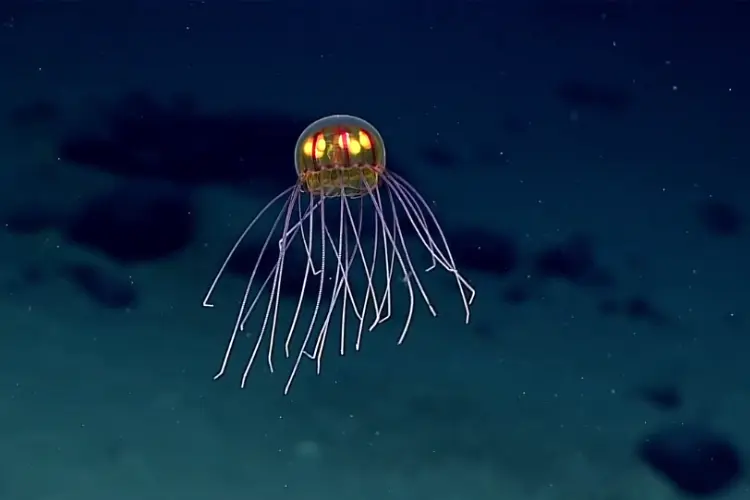
Today, scientists estimate that humanity has visually observed less than 0.001 percent of the deep seafloor. This vast, alien landscape is governed by near-total darkness, near-freezing temperatures, and bone-crushing atmospheric pressure. Yet, despite these extreme obstacles, deep-sea exploration is not merely an academic pursuit for the curious; it is an urgent imperative. As industrial pressures mount—most notably through the looming threat of commercial deep-sea mining—understanding, valuing, and protecting the deep ocean has never been more vital to the survival of planetary ecosystems and human communities alike.
Detailed Chronology: A Century of Unlocking the Deep
The quest to understand the ocean’s twilight and midnight zones has evolved dramatically over the last century and a half. Transitioning from rudimentary, blind sampling to sophisticated, autonomous robotic mapping, the history of deep-sea exploration is a testament to human ingenuity against crushing odds.
The Late 1800s: The Dawn of Modern Oceanography
The foundational era of deep-sea science began in earnest with the historic expedition of the HMS Challenger (1872–1876). Spanning nearly four years, this global voyage marked the first comprehensive survey of the world’s oceans. Armed with weighted hemp lines, natural history dredges, and biological trawls, scientists aboard the Challenger hauled up deep-sea mud, rock, and unknown biological specimens from unprecedented depths. This monumental expedition proved that life could indeed exist in the deep ocean, shattering the prevailing scientific consensus of the time and laying the groundwork for modern oceanography.
The Mid-1900s: The Shift to Acoustic and Indirect Study
As the 20th century progressed, oceanographers sought ways to pierce the ocean’s depths without relying solely on physical extraction. The introduction of sonar technology during and after the World Wars revolutionized seafloor mapping. By bouncing sound waves off the ocean floor, scientists could calculate depths and create preliminary bathymetric maps, charting underwater mountain ranges (midocean ridges) and deep trenches without ever leaving the deck of a research vessel.

The 1960s: The Rise of Remotely Operated Vehicles (ROVs)
The mid-20th century also witnessed the birth of direct, mechanical intervention in the deep. The development of Remotely Operated Vehicles (ROVs) in the 1960s changed the game entirely. Tethered to surface vessels by heavy cables capable of transmitting power and high-definition video data, these maneuverable underwater robots allowed researchers to look directly into the abyss. ROVs could withstand pressures that would crush a human hull, collecting pristine biological samples and capturing mesmerizing footage of vent ecosystems and gelatinous deep-sea creatures.
The 1980s to Present: The Era of Autonomous Robotics and Observatories
By the 1980s, technology leapt forward once again with the introduction of Autonomous Underwater Vehicles (AUVs). Unlike their tethered predecessors, AUVs are untethered, robotic submersibles programmed to execute complex, independent mission profiles. Gliding silently through the water column, AUVs map expansive swaths of the ocean floor, monitor chemical plumes, and sample marine environments with pinpoint accuracy. Today, these tools are augmented by permanent deep-sea observatory networks, transforming our relationship with the deep from sporadic snapshot expeditions to continuous, real-time planetary monitoring.
Supporting Context & Metrics: Decoding the Extreme Environment
To comprehend why the deep sea remains so profoundly mysterious, one must understand the sheer physics of the biome. Legally and oceanographically, the "deep sea" is generally defined as beginning at 200 meters (656 feet) below the surface—a threshold known scientifically as the twilight or disphotic zone.
The Triad of Extremes: Darkness, Temperature, and Pressure
Below the 200-meter mark, sunlight is rapidly absorbed and scattered, leaving the vast majority of the water column in perpetual, pitch-black darkness. Photosynthesis ceases entirely, and temperatures plummet rapidly, stabilizing at a chilling 2°C to 4°C (36°F to 39°F) across most of the deep ocean floor.
However, the most formidable barrier to exploration is hydrostatic pressure. Water is heavy—far heavier than air. For every 10 meters (32.8 feet) a submersible or instrument descends into the ocean, the pressure increases by one atmosphere (where one atmosphere is defined as the standard air pressure at sea level, roughly 14.7 pounds per square inch).
Consider the math:
- At the surface: 1 atmosphere of pressure.
- At 200 meters deep (the edge of the deep sea): An object experiences 21 atmospheres of pressure—one from the air column above, and 20 from the sheer weight of the water pressing down from all sides.
- At the abyssal plains (4,000 meters deep): Pressure routinely exceeds 400 atmospheres, equivalent to having the weight of a large elephant balanced on your thumb.
These punishing conditions explain why specialized, high-cost engineering is mandatory for deep-sea research, and why humanity has visually mapped a mere fraction of a percent of our own watery globe.
Official Statements & Scientific Consensus
The scientific and conservation communities have increasingly raised alarms regarding the balance between human curiosity, industrial exploitation, and planetary protection.
Global monitoring networks—such as the Ocean Observatories Initiative (OOI)—serve as vital lifelines for understanding Earth’s interconnected systems. According to marine scientists and environmental advocates, these deep-sea observation systems are indispensable. By tracking coastal environments, abyssal ecosystems, and the deep, sluggish thermohaline currents that drive global climate patterns, OOI data empowers researchers to forecast severe storms, predict tectonic shifts and earthquakes, monitor the health of commercial fisheries, and anticipate catastrophic coastal flooding.
Yet, this vital scientific framework is under immediate threat from commercial pressures. In statements addressing industrial encroachment, the Ocean Conservancy has repeatedly condemned initiatives that prioritize short-term resource extraction over planetary health.
"Our ocean faces growing threats, like deep-sea mining. This practice, which involves extracting mineral deposits from the ocean floor, is expanding rapidly worldwide and could cause major, irreversible environmental damage," notes the organization’s advocacy division.
Conservationists emphasize that deep-sea mining threatens fragile, slow-growing ocean ecosystems and dependent coastal communities. The mechanical destruction of abyssal habitats, the generation of toxic underwater sediment plumes, and the disruption of unknown food webs pose severe economic and ecological risks that modern science is only beginning to comprehend.
Future Outlook: Why Deep-Sea Exploration Matters Now More Than Ever
As we look toward the horizon of the 21st century, the imperative to explore and protect the deep sea has reached a critical crossroads. Far from being a barren, empty wasteland, the deep ocean is a vibrant, interconnected engine that regulates the Earth’s climate, cycles vital nutrients, and harbors biodiversity that could hold keys to medical and technological breakthroughs.
The data gathered from deep-sea exploration is our best defense against global climate destabilization. The ocean has absorbed more than 90% of the excess heat generated by human carbon emissions and roughly 25% of all anthropogenic carbon dioxide. Understanding how deep-ocean carbon sequestration functions is essential for predicting the future trajectory of global warming.
Simultaneously, humanity faces a stark choice. Will we use our burgeoning technological capabilities to study and safeguard the mysteries of the abyss, or will we rush to industrialize it before we even understand what we stand to lose?
The expansion of deep-sea mining threatens to permanently alter environments that took millions of years to form. Once destroyed, deep-sea coral gardens, polymetallic nodule fields, and unique hydrothermal vent communities cannot be restored within human timescales.
Take Action Today
The fight to protect our ocean requires collective vigilance and active participation. We depend on the ocean far more than we realize, and the deep sea is the ultimate foundation of that life-support system.
The Ocean Conservancy is actively leading the charge to defend marine ecosystems from today’s most aggressive industrial threats. Take action now to add your name and urge your congressional representatives to enact strict legislative bans against deep-sea mining before commercial interests gain an irreversible foothold in our blue planet’s final frontier.