The global marine industry stands at a monumental crossroads. As governments, regulatory bodies, and eco-conscious consumers demand urgent decarbonization across all forms of transport, the recreational and commercial boating sectors have lagged behind the automotive world. The primary culprit? Physics. Water is roughly 800 times denser than air, creating severe hydrodynamic drag that drains battery power at an alarming rate. For years, designers of electric watercraft have struggled to reconcile the immense energy demands of pushing a hull through the water with the limited energy density of contemporary battery chemistry.
Enter Optima Yachts. Based in the United Kingdom, this visionary marine design firm has spent more than half a decade quietly solving one of the most stubborn engineering barriers to maritime electrification: vessel efficiency. Crowned as a winner at the prestigious 2024 Gussies International Electric Boat Awards, Optima has developed a proprietary, highly sophisticated hull technology that dramatically reduces hydrodynamic resistance. This engineering breakthrough yields staggering results, allowing Optima’s vessels to travel over 150 nautical miles on a single charge at comfortable cruising speeds.
Having successfully proven its concepts—including a historic, record-shattering circumnavigation of the Isle of Wight by its e10 model—Optima Yachts is now poised for its next great leap. The company has officially announced that it is seeking visionary investors, maritime operators, and strategic acquirers. The ultimate objective is clear: secure the necessary capital, production partnerships, and commercial backing to transition the Optima 14, e10, and a broader portfolio of recreational and commercial electric vessels from award-winning prototypes into full-scale commercial manufacturing.
For forward-thinking stakeholders looking to enter or dominate the rapidly expanding electric marine market, Optima presents a turnkey opportunity. It combines battle-tested intellectual property, validated real-world performance, and luxury-tier design, positioning the company squarely at the lucrative intersection of sustainability, operational efficiency, and premium marine mobility.
Detailed Chronology: From Concept to Award-Winning Innovation
The journey of Optima Yachts is a testament to the power of patient, government-backed research and relentless computational engineering. Unlike many maritime startups that rush unproven designs to market, Optima dedicated over five years to research and development. This extensive pre-commercialization phase was heavily supported by approximately £1.6 million (roughly €1.85 million or $2.15 million) in innovation grants awarded to the company for pioneering advanced energy-saving marine technologies.
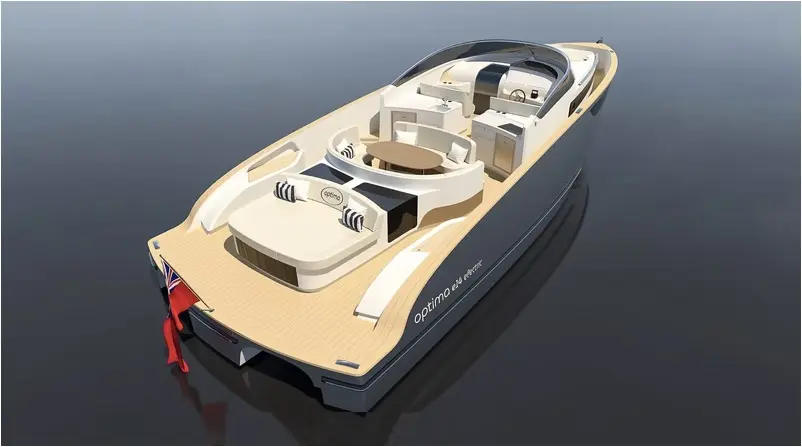
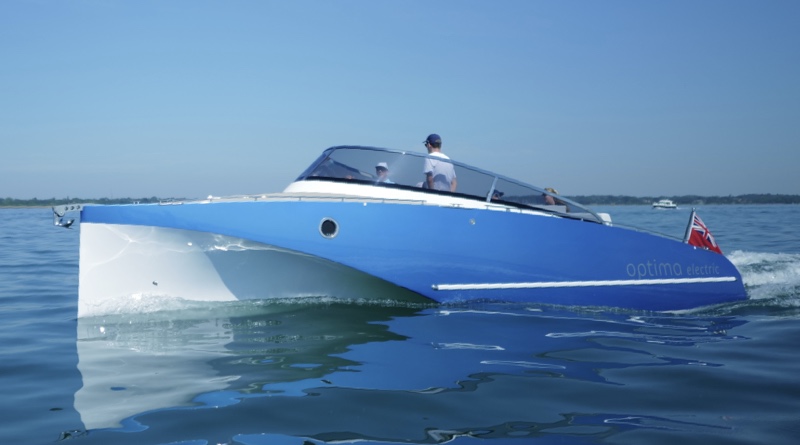
At the heart of Optima’s success is a revolutionary approach to hull architecture. Developed using advanced computational fluid dynamics (CFD), the company engineered what can best be described as a “trimaran tunneling hull.” This distinctive configuration features a primary central hull flanked by two outer mini-hulls, or "pontoons," characterized by extremely sharp V-shaped profiles. These outboard elements connect to the central section via an arching architectural design, forming a tunnel reminiscent of high-performance racing speedboats.
This complex geometry is not merely aesthetic; it serves a vital functional purpose. The design minimizes wave-making resistance, dampens rolling motions in rough seas, and maintains an exceptionally stable platform while consuming a fraction of the energy required by standard displacement or planing hulls. While many contemporary electric boats are designed primarily as planing craft, harbor workboats, or short-range day-cruisers that burn through battery reserves for speed, Optima prioritized long-range efficiency and passenger comfort.
The culmination of this rigorous R&D timeline reached a national milestone in 2023. Powered by a modest 40kW electric propulsion system, the 10.6-metre (35-foot) Optima e10 embarked on a historic journey: a non-stop circumnavigation of the Isle of Wight. Successfully navigating the 55-nautical-mile course around the notoriously treacherous waters off the southern coast of England, the e10 proved the viability of long-distance electric cruising. The entire voyage was completed at a staggering electricity recharge cost of just £20 (€23, $27).
Capitalizing on this momentum, Optima expanded its recreational portfolio with the introduction of the e14. Taking the core efficiency of the proprietary hull and scaling it upward, the e14 introduces elevated luxury features, including an expansive sunbed, a central open-air dining area, and certified capacity for up to 12 guests. The design philosophy underpinning both models is simple: boat owners care far more about comfort, space, and elegance than raw engineering metrics. Optima managed to deliver ultra-low energy consumption while enveloping passengers in the opulent amenities expected of a multi-million-dollar luxury yacht.
Supporting Context & Metrics: Efficiency Meets Luxury and Commercial Utility
To truly understand the value proposition of Optima Yachts, one must examine the specific metrics and market applications that separate the company from its competitors in the electric boat space.
In the non-foiling electric boat category, Optima’s hull technology occupies the absolute top tier of energy efficiency. While hydrofoils have gained attention for lifting hulls completely out of the water to reduce drag, they often introduce mechanical complexity, high maintenance costs, shallow-water limitations, and structural vulnerabilities. Optima achieves exceptional hydrodynamic efficiency through purely architectural means, keeping the vessel firmly in contact with the water while still slipping through it with minimal wake and resistance.
This efficiency directly translates into real-world operational metrics. Consider the specifications of Optima’s core recreational line:
Optima e10 (10.6 meters / 35 feet): Designed to accommodate up to 8 guests. It features a spacious double-bed cabin, a fully equipped galley with a fridge/freezer, sink, and induction stovetop hob/grill, a hot water deck transom shower, an electric marine toilet with a holding tank, and a high-end 4-speaker audio system. During its Isle of Wight trial, it proved that a 40kW motor could push the vessel through challenging open ocean conditions for 55 miles without breaking a sweat.
Optima e14: Expands on the e10’s foundation, offering a larger footprint complete with a dedicated sunbed, a central dining area, and a 12-passenger capacity, making it ideal for day charters, resort hosting, and luxury coastal cruising.
Beyond the recreational market, Optima has strategically diversified its intellectual property to target the booming commercial marine sector. Global tourism, hospitality, and urban waterfront mobility markets are under immense pressure to decarbonize. Coastal cities, island resorts, and inland municipalities are aggressively seeking zero-emission transport alternatives to comply with tightening environmental legislation and satisfy modern eco-conscious travelers.
Optima has successfully adapted its core hull and electric propulsion platform for commercial applications, including:
12-Passenger Luxury Water Taxis: Offering high-end resorts and urban transit authorities a silent, vibration-free alternative to fossil-fueled water limousines.
Small to Medium Ferries: Scalable designs capable of transporting up to 50 passengers.
The financial incentive for commercial operators is massive. By eliminating traditional fossil fuel expenditures and drastically lowering long-term "refueling" costs, commercial fleets powered by Optima’s technology achieve a significantly lower Total Cost of Ownership (TCO). Furthermore, the silent operation and absence of diesel fumes drastically elevate the passenger experience, turning routine transfers into serene, premium components of a luxury vacation or daily commute.
Official Statements: The Vision Behind the Shift
The transition from a research-and-development powerhouse to a commercially scalable enterprise requires clear leadership and a compelling strategic vision. David Kendall, Chief Executive Officer of Optima Yachts, has been vocal about the milestones the company has achieved and the collaborative pathways required for the future.
Reflecting on the historic Isle of Wight circumnavigation, CEO Kendall highlighted the unique experiential benefits of the company’s engineering:
"It was an incredibly comfortable and enjoyable trip—we were able to have lunch and engage in pleasant conversation on passage thanks to the good sea keeping of the innovative hull and noise reduction from the electric drive. We arrived back in Lymington as relaxed and refreshed as we started, despite some challenging conditions south of the island including thick fog and lively seas off St Catherine’s Point."
This quote underscores a vital psychological shift that electric mobility brings to the water. Traditional internal combustion engines produce a relentless, low-frequency hum, exhaust fumes, and jarring vibrations that fatigue passengers over long journeys. Optima’s electric drivetrain combined with its stable trimaran-tunneling hull converts a potentially grueling open-water transit into a tranquil, living-room-like experience.
Addressing the company’s current corporate standing and its call for strategic investment, Kendall emphasized that the foundational heavy lifting has already been accomplished:
"We have spent years solving one of the biggest barriers to marine electrification—vessel efficiency. We believe the business is now at an exciting inflection point and are looking for the right investment and ownership to take Optima to the next level, whether through commercial production, strategic partnerships or expansion into markets."
This open invitation serves as a beacon for institutional investors, established boat-building syndicates, and maritime conglomerates looking to acquire validated, patent-ready intellectual property rather than starting an expensive R&D cycle from scratch.
Future Outlook: A Turnkey Opportunity in the Electric Marine Market
The timing of Optima Yachts’ capital raise could not be more auspicious. The global electric boat market is experiencing exponential growth, driven by falling battery costs, rising environmental awareness, and strict new regulations governing emissions in fragile marine ecosystems, lakes, and urban harbors across Europe and North America.
For prospective investors, operators, or strategic acquirers, entering talks with Optima represents a rare, low-risk entry into high-tech sustainable maritime mobility. The company has already done the hardest part: it secured £1.6 million in innovation grants, spent five years perfecting computational fluid dynamics, built physical prototypes, won international acclaim at the Gussies Awards, and empirically proved its range and seaworthiness in the open ocean.
What remains is the commercial scaling phase—establishing volume manufacturing facilities, setting up global distribution channels, and fulfilling the pent-up demand from commercial operators and luxury buyers eager to embrace zero-emission cruising without compromising on range or comfort.
As maritime transport accelerates toward a net-zero future, companies that hold proprietary keys to energy efficiency will dictate the standards of the industry. Optima Yachts holds one of the most effective keys in existence. Interested parties, strategic buyers, and venture partners are invited to initiate discussions through the official Optima Yachts website. The waters of the future are electric, quiet, and ultra-efficient—and Optima is ready to lead the fleet.