Executive Overview
In the upper echelons of the global maritime community, the calculus of superyacht destination planning has evolved far beyond basic slip availability. Owners, captains, and management companies no longer seek merely a place to tie up; they demand robust infrastructure capable of servicing colossal engineering marvels, uninterrupted power solutions for international vessels, high-capacity fueling systems, and, crucially, an immersive onshore experience that satisfies discerning crews and elite owners alike.
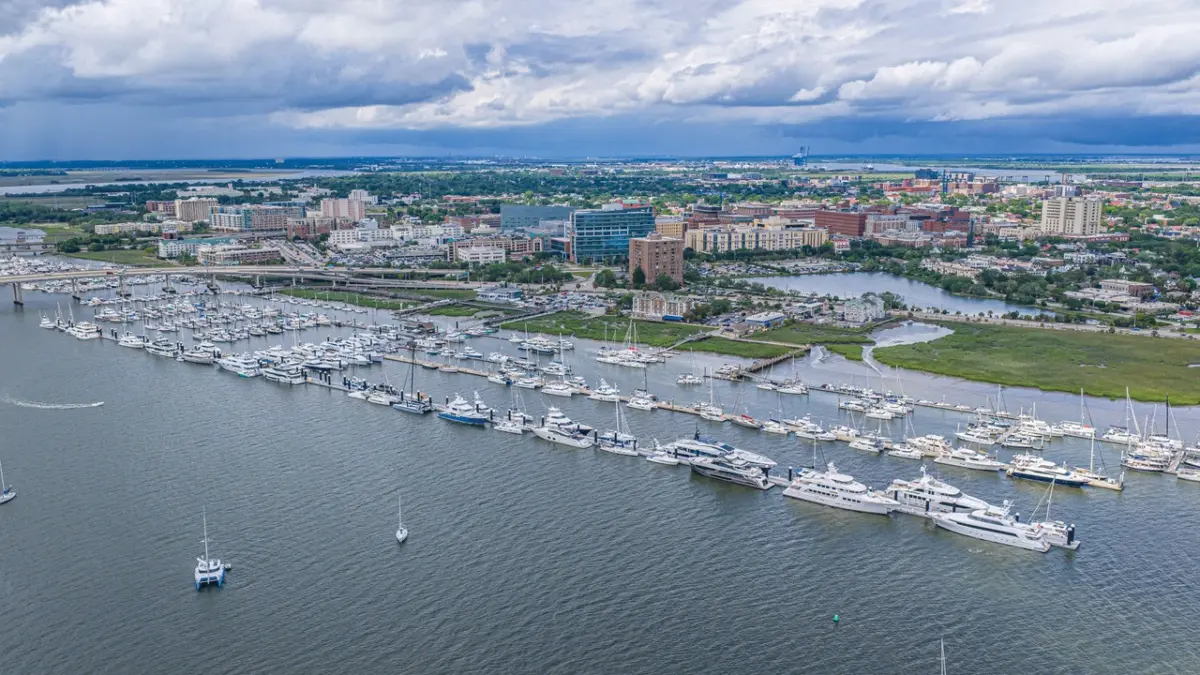
Enter Safe Harbor Charleston City, situated along the vibrant downtown peninsula of South Carolina’s most populous city. Anchored by its legendary Megadock—a sprawling feat of modern marine engineering offering nearly a mile of linear dockage—the facility has solidified its status as North America’s premier staging ground for the world’s most impressive luxury yachts. From hosting architectural masterpieces like the 454-foot Lürssen Rising Sun to rolling out state-of-the-art upgrades including advanced frequency converters and 15 high-speed in-slip fuel dispensers, the marina bridges the gap between raw industrial capability and Southern hospitality.
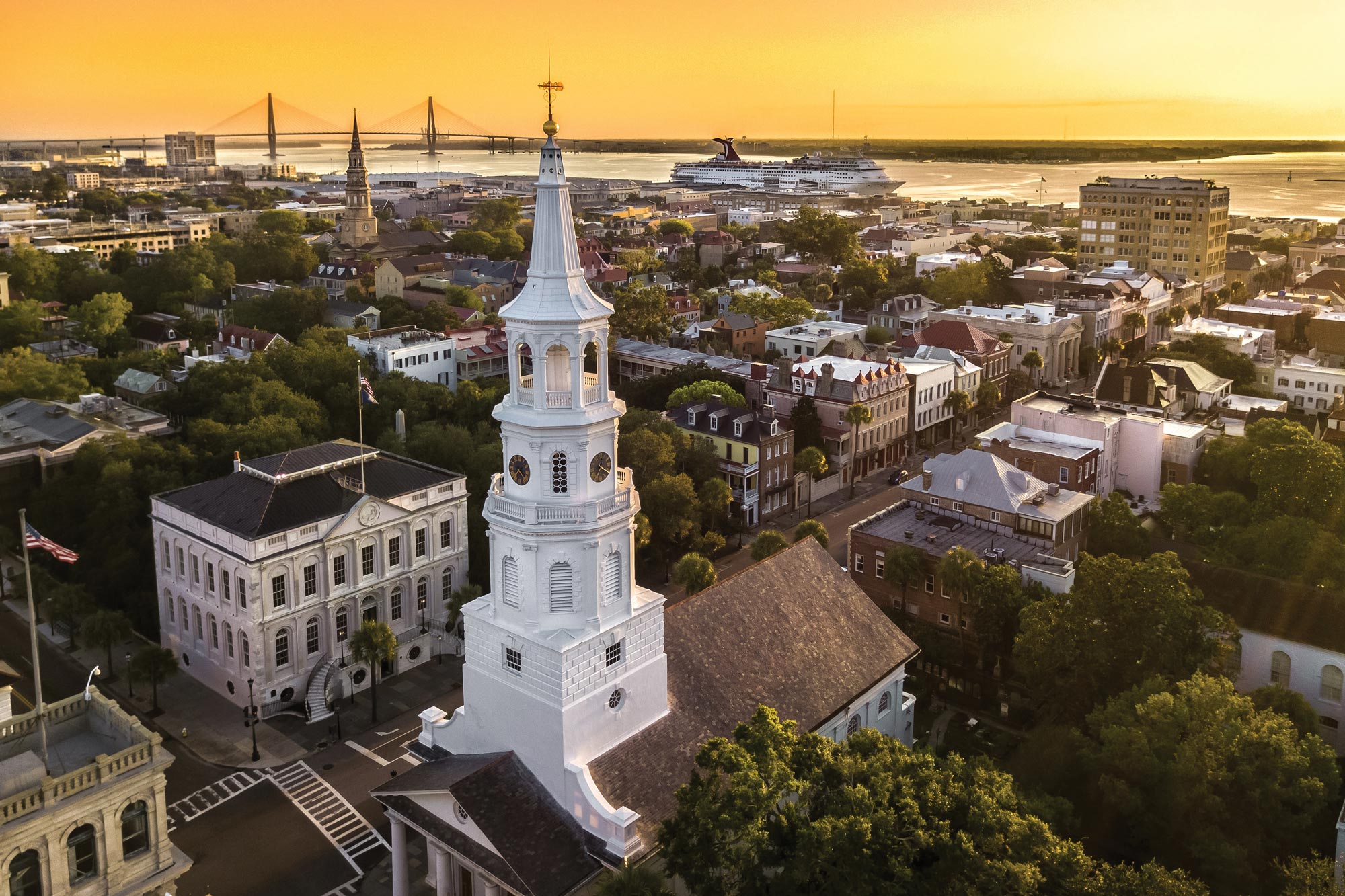
Yet, the facility’s masterstroke is not just its steel-and-concrete fortitude; it is its geographical poetry. Steps away from the gangway lies Charleston’s historic district—a living museum of cobblestone alleys, antebellum architecture, and a culinary scene that reinvents itself by the month. As David Isom, general manager at Safe Harbor Charleston City, bluntly notes: "The captain is the happiest when the crew get off the boat. If the crew get stuck in the boat, that’s when all the drama happens." By offering a frictionless fusion of world-class technical support and immediate access to centuries of cultural heritage, Charleston has redefined what it means to be a superyacht port of call.
Detailed Chronology: The Evolution of Charleston’s Waterfront Hub
To understand how Safe Harbor Charleston City attained its current preeminence, one must trace the timeline of maritime commerce and urban preservation that shaped the Charleston peninsula.
1670–1900s: The Port of Origin
The historical narrative of Charleston as a maritime sanctuary began over three and a half centuries ago. Founded in 1670 as Charles Town, the strategic positioning of the harbor made it one of the most significant and prosperous ports in the original American colonies. For generations, the waterfront served as a crucible for global trade, naval strategy, and cultural exchange. As the city matured, it amassed an astonishing collection of architectural treasures, ranging from grand Georgian and Federal-style mansions to intricately detailed wrought-iron gates and historic houses of worship.
1920: Pioneering Preservation
As the modern industrial era threatened to bulldoze America’s architectural past, Charleston stepped into the vanguard of conservation history. In 1920, visionaries established the Preservation Society of Charleston—marking the very first grassroots organization in the United States dedicated specifically to protecting historic buildings from demolition and unsanitary modernization. This institutional commitment to preserving the past while accommodating the future created a unique urban fabric where multi-million-dollar superyachts dock mere blocks away from 17th-century landmarks, creating a seamless visual dialogue between modern luxury and colonial history.
The Modern Era: Engineering the Megadock
As private yachts escalated in length, beam, and draft during the late 20th and early 21st centuries, traditional marinas found themselves obsolete. Charleston’s operators recognized this paradigm shift early. Through successive phases of capital investment and engineering ingenuity, the property evolved into Safe Harbor Charleston City, crowned by its sprawling Megadock. The development transformed the downtown waterfront into a deep-water sanctuary capable of accommodating giga-yachts that traditionally had to anchor offshore or bypass East Coast ports altogether due to infrastructure limitations.
Supporting Context & Metrics: Engineering Marvels and Onshore Opulence
The operational statistics behind Safe Harbor Charleston City read less like a standard marina directory and more like a heavy civil engineering prospectus. Accommodating vessels the size of a small cruise ship requires uncompromised structural integrity and logistical foresight.
Architectural and Structural Specifications
The backbone of the facility’s heavy-weather resilience and mega-vessel capacity lies in its pilings. The Megadock is secured by 67 massive piles, each constructed from 36-inch steel pipe stretching an astonishing 100 feet in length. Driven deep into the harbor floor, these robust pillars provide the structural rigidity necessary to withstand storm surges, tidal shifts, and the immense windage exerted by towering superyacht superstructures.
+-----------------------------------------------------------------+
|              SAFE HARBOR CHARLESTON CITY METRICS                |
+------------------------------+----------------------------------+
| Linear Dockage               | Nearly 1 Mile                    |
| Megadock Piles               | 67 units (36" steel, 100' deep)  |
| Max Vessel Length Welcomed   | 454 Feet (Lürssen "Rising Sun")  |
| High-Speed Fuel Dispensers   | 15 units                         |
| Maximum Fuel Pumping Rate    | 150 Gallons Per Minute (In-Slip) |
+------------------------------+----------------------------------+
Fluid Logistics: High-Speed Fueling
Superyachts consume thousands—sometimes tens of thousands—of gallons of marine diesel. Pumping fuel traditionally requires tedious tanker trucks or slow dockside pumps that bottleneck marina traffic. Safe Harbor Charleston City eradicated this friction point by installing 15 high-speed fuel dispensers capable of delivering up to 150 gallons per minute directly in-slip. This capability drastically reduces turnaround times, enabling vessels to tank up and depart on oceanic passages with minimal delay.
Powering the Global Fleet: Frequency Converters
One of the most persistent operational hurdles for foreign-flagged superyachts visiting the United States is electrical compatibility. European and international vessels operate on 50Hz electrical systems, whereas American shoreside power operates on 60Hz. Historically, this meant foreign superyachts were forced to run their heavy diesel generators continuously while docked in the US just to keep shipboard systems alive—creating local noise, emissions, and wear-and-tear on machinery.
Addressing this pain point directly, Safe Harbor Charleston City recently injected significant capital into advanced shoreside frequency converters.
- "The crew love it," general manager David Isom emphasizes.
- "It solves the problem, and it gives them a chance to service the engines while they’re in the water."
By cleaning and converting local shore power to match foreign specifications, the marina allows crews to shut down their generators entirely, ushering in a quieter, cleaner, and more efficient dockside stay.
The Historic District and Cultural Infrastructure
Beyond the docks, the surrounding environment serves as an extension of the marina’s amenities. The Charleston Historic District—often celebrated as a living museum—places crews and owners within immediate walking or shuttle distance of world-class cultural touchstones:
- The Charleston City Market: Operating on historic land gifted to the city under the strict legal stipulation that it must perpetually serve as a public market, this architectural gem features local artisans selling handcrafted wares, including the region’s famous, highly collectible sweetgrass baskets.
- Culinary & Retail Epicenters: Regular shuttle services transport guests directly to Market Street, King Street, and Meeting Street. Here, a dynamic culinary ecosystem—featuring James Beard Award-winning chefs and newly minted restaurants opening every few months—sits side-by-side with high-end boutiques and antique dealers.
Official Statements and Industry Insights
The philosophy driving Safe Harbor Charleston City’s success centers heavily on crew welfare and operational reliability. In the high-stakes world of superyacht chartering and private ownership, happy crews equate to seamless voyages.
"The captain is the happiest when the crew get off the boat. If the crew get stuck in the boat, that’s when all the drama happens."
— David Isom, General Manager, Safe Harbor Charleston City
Isom’s pragmatic approach underscores a vital truth of yacht management: confined spaces breed tension. By positioning the marina at the nexus of a bustling urban center with effortless transportation links, management ensures that deckhands, engineers, and stews can decompress ashore.
Furthermore, Isom highlights Charleston’s unmatched utility as an atmospheric and logistical hurricane hole or weather shelter.
"Charleston is the perfect place to get weathered in because of the robust Megadock system," Isom notes. "You’re protected. And it’s Charleston. There’s so many things to do and see."
When a low-pressure system or tropical disturbance sweeps up the Atlantic seaboard, captains routinely point their bows toward Charleston, secure in the knowledge that the Megadock’s 100-foot steel piles will hold firm while the crew enjoys world-class dining and historical exploration just steps away.
Future Outlook: Setting the Standard for East Coast Superyacht Infrastructure
As the global superyacht fleet continues to expand in both average hull length and technological complexity, the infrastructural demands placed upon marinas will only intensify. Safe Harbor Charleston City has established a blueprint for how historic American ports can adapt to the modern maritime age without sacrificing their architectural heritage.
Looking forward, the facility’s strategic investments in high-capacity electrical conversion, high-speed fluid logistics, and heavy-duty structural engineering position it advantageously against competing ports throughout the Caribbean and North American Eastern Seaboard. By anticipating the needs of foreign flagged mega-vessels—such as the 454-foot Lürssen Rising Sun—the marina proves that geographic charm and industrial might are not mutually exclusive.
For yacht owners charting future itineraries, charter brokers mapping out high-yield cruising grounds, and captains seeking an uncompromised blend of technical excellence and cultural immersion, Safe Harbor Charleston City remains an indispensable anchor. In an industry where precision, protection, and pleasure must coexist, Charleston continues to chart a course into the future while honoring the rich waters of its past.