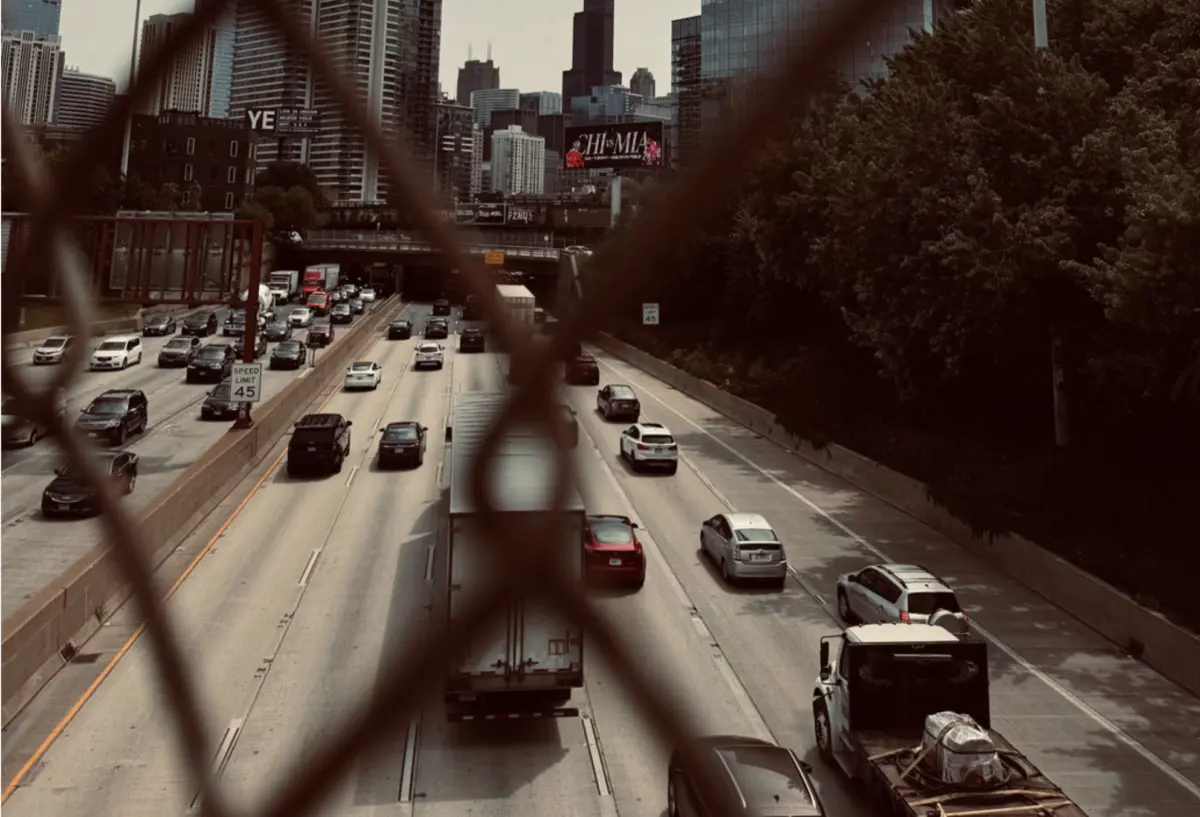
For decades, the standard narrative surrounding American transportation has been framed by a simple, seemingly immutable premise: the United States is a nation of drivers by choice. This cultural ethos—built upon the romance of the open road, sprawling suburbs, and the ultimate symbol of personal liberty, the automobile—has dictated federal, state, and local policy for generations. Yet, a groundbreaking new study from the Climate and Community Institute (CCI) shatters this foundational illusion, revealing that the vast majority of American motorists do not feel liberated by their vehicles; rather, they feel trapped.
According to the CCI survey, an astounding 73 percent of self-identified drivers report having "no choice but to drive as much as they do." Furthermore, over half of all drivers—53 percent—express an explicit desire for viable transportation options that do not require them to constantly reach for their car keys. Far from being a voluntary preference, car ownership and operation have metastasized into a mandatory tax on modern life, underpinned by a regulatory and financial ecosystem that heavily favors automotive infrastructure at the expense of all other modes of transit.
This pervasive car dependency creates a profound societal disconnect. While roughly one in three U.S. residents cannot drive or lacks reliable access to a car—making auto-centric cities a daily obstacle course—the millions of Americans who do drive are largely miserable about doing so. The CCI report argues that motorists and non-motorists are united by a shared dissatisfaction with their daily mobility options. Despite this widespread discontent, federal and state policymakers remain stubbornly wedded to status-quo investments, locking communities into a cycle of congestion, financial strain, and environmental degradation.
Detailed Chronology of the Crisis: From Subsidized Sprawl to Mandatory Motoring
To understand how the United States arrived at this critical juncture, one must examine the systematic policy decisions that engineered a nation of compulsory drivers.
Mid-20th Century: The Autocentric Turn
The modern American landscape was not born of organic consumer preference; it was constructed through deliberate legislative action. Following World War II, federal policy pivoted decisively toward highway expansion and suburban development. The passage of the Federal-Aid Highway Act of 1956 cemented this trajectory, injecting billions of federal dollars into the Interstate Highway System.
Simultaneously, local zoning laws enforced strict separation between residential, commercial, and industrial areas. This sprawling design made walking, bicycling, and traditional mass transit mathematically impossible for the average citizen. By engineering the physical environment to make cars essential, policymakers manufactured the very "demand" they would later use to justify even more asphalt.
The Modern Funding Imbalance
Decades later, the structural bias embedded in government budgets remains largely unchanged. As highlighted by CCI researcher Kira McDonald, the federal government routinely guarantees that 80 percent of its transportation funding is locked into automotive uses. Meanwhile, federal grants for shared, active, and public transportation are subjected to stringent hurdles and are all too easily clawed back or diverted.
When these funding ratios propagate down to state departments of transportation (DOTs) and municipal planning boards, the result is an environment dominated by multi-lane highways, stroads, and sprawling sea-of-asphalt parking lots. This entrenched bureaucracy has effectively blinded lawmakers to the evolving desires of their constituents.
The Breaking Point: Surging Costs and the CCI Survey
The tipping point arrived in the mid-2020s. Amid fluctuating global energy markets—exacerbated by geopolitical conflicts such as the war in Iran, which sent gas prices soaring—the financial precarity of forced car ownership became impossible to ignore. The CCI survey captured this anxiety in real-time, revealing that two in five American adults struggle to absorb unexpected transportation expenses, such as a sudden car repair or a spike in fuel prices. An equal number reported being forced to make drastic, painful adjustments to their household budgets simply to keep their vehicles on the road. It was against this backdrop of economic vulnerability and systemic frustration that the Climate and Community Institute launched its comprehensive investigation into what Americans actually want out of their transportation systems.
Supporting Context & Metrics: The Human and Financial Toll of Car Hegemony
The CCI report breaks new ground by shifting the focus away from traditional mode-share statistics—which merely measure how people currently get to work—and asking profound questions about consumer desire and lived experience.
The Illusion of Freedom vs. The Reality of Debt
The cultural myth of the automobile promises freedom, upward mobility, and economic opportunity. For many immigrant families and working-class households moving to sprawling, transit-poor regions, this narrative is deeply compelling. Ruth Rojas, a co-author of the CCI study, reflected on her own upbringing in a small, spread-out town:
“[I personally grew up in] an immigrant family who didn’t have access to cars in a small town that was very spread out and didn’t have public transit… My family really bought into that idea that cars meant freedom, cars meant getting a job, cars meant more economic growth.”
However, Rojas points out that this narrative dangerously omits those who cannot or choose not to drive. Once families buy into the necessity of car ownership, they often find themselves locked into a punishing financial cycle. Vehicle payments, insurance, fuel, maintenance, and parking constitute a massive percentage of lower- and middle-class household expenditures. When a car breaks down, employment and livelihood are instantly threatened.
The Statistics of Dissatisfaction
73% of drivers state they have no choice but to drive as much as they do.
53% of drivers explicitly report wanting more transportation options beyond the automobile.
40% of U.S. adults struggle to weather unexpected transportation costs, such as emergency repairs.
1 in 3 Americans either cannot drive or lacks reliable access to a vehicle, navigating a built environment fundamentally hostile to their daily existence.
These metrics paint a damning picture of a system that serves neither the financial well-being of motorists nor the basic mobility needs of non-drivers.
Official Statements and Expert Perspectives
The researchers behind the Climate and Community Institute study emphasize that the current transportation paradigm is maintained not by public demand, but by entrenched political and corporate interests.
Emmett Hopkins, transportation policy manager at the Institute and co-author of the study, highlighted the common ground shared by drivers and non-drivers alike:
"Whether you get around mostly by car or you don’t drive at all, most people in the U.S. are united by feeling unhappy with their daily transportation options. Broadly speaking, they want the same thing: more good transportation options that don’t [leave] a car as the only choice — or basically, the forced choice."
Hopkins further contextualized the struggle, framing transportation reform as a labor and equity issue:
"This call to offer more people more choices is really a call to stand up for working people against corporate power determining what options they have in their lives."
Kira McDonald addressed the systemic blindness of policymakers who mistake high driving rates for genuine enthusiasm:
"A ludicrous percentage of adults use cars to get to work — [but that’s] because we are under-investing in other modes. The novel contribution of this report was to supplement those [mode share statistics] with survey data, and ask people what they actually want."
Future Outlook: Overcoming Induced Demand and Rebuilding the American Landscape
Reversing decades of entrenched car dependency will not be easy. The CCI report makes it clear that incremental tweaks will not suffice; transforming American mobility requires a fundamental restructuring of policy, funding, and cultural imagination.
A Blueprint for Systemic Overhaul
Federal and State DOT Reform: Departments of Transportation must be thoroughly overhauled. Funding mechanisms must pivot away from highway expansion and toward robust investments in public transit, micro-mobility, pedestrian infrastructure, and rail.
Executive and Legislative Action: The executive branch must dismantle auto-centric regulatory rules, guidelines, and cultural assumptions within federal agencies. Simultaneously, Congress must leverage its power of the purse to guarantee long-term, predictable funding for multi-modal transit networks.
Local Implementation: Municipal governments must act swiftly to redesign streets, prioritizing human-scale transit and placemaking over high-speed vehicular throughput.
The Phenomenon of "Inverted" Induced Demand
One of the most profound insights offered by the CCI researchers concerns public psychology and policy implementation. Urban planners are well-acquainted with "induced demand," the principle that building more highways simply encourages more driving, worsening congestion. However, the CCI team argues for a positive flip side to this coin: an induced demand for freedom from cars.
Many Americans remain skeptical of transit investments or pedestrianization projects simply because they have never experienced a functional alternative. Yet, historical data from cities that have successfully reclaimed street space for transit, bikes, and pedestrians shows that public approval skyrockets after implementation, once residents get a taste of a quieter, safer, and more financially sustainable lifestyle.
As McDonald aptly summarizes:
"I think there’s a kind of induced demand [among] people who want to live outside of car dependency, but they don’t know it yet, because they haven’t experienced it. These policies always see their popularity improve after implementation."
Ultimately, the CCI report serves as both a wake-up call and a manifesto. Americans are ready to step off the highway treadmill. It remains to be seen whether policymakers will finally listen to the 73 percent trapped behind the wheel and build the diversified transportation future they are crying out for.