






Executive Overview
The promise of same-day and next-day delivery has fundamentally transformed the modern consumer experience, anchoring convenience at the center of global retail. Yet, behind the seamless convenience of doorstep delivery lies a chaotic and increasingly hazardous reality for the urban centers bearing the brunt of the logistics boom. In New York City, the staggering expansion of e-commerce has turned municipal roadways into high-pressure speedways where safety rules are routinely sidelined in the pursuit of impossible delivery quotas.
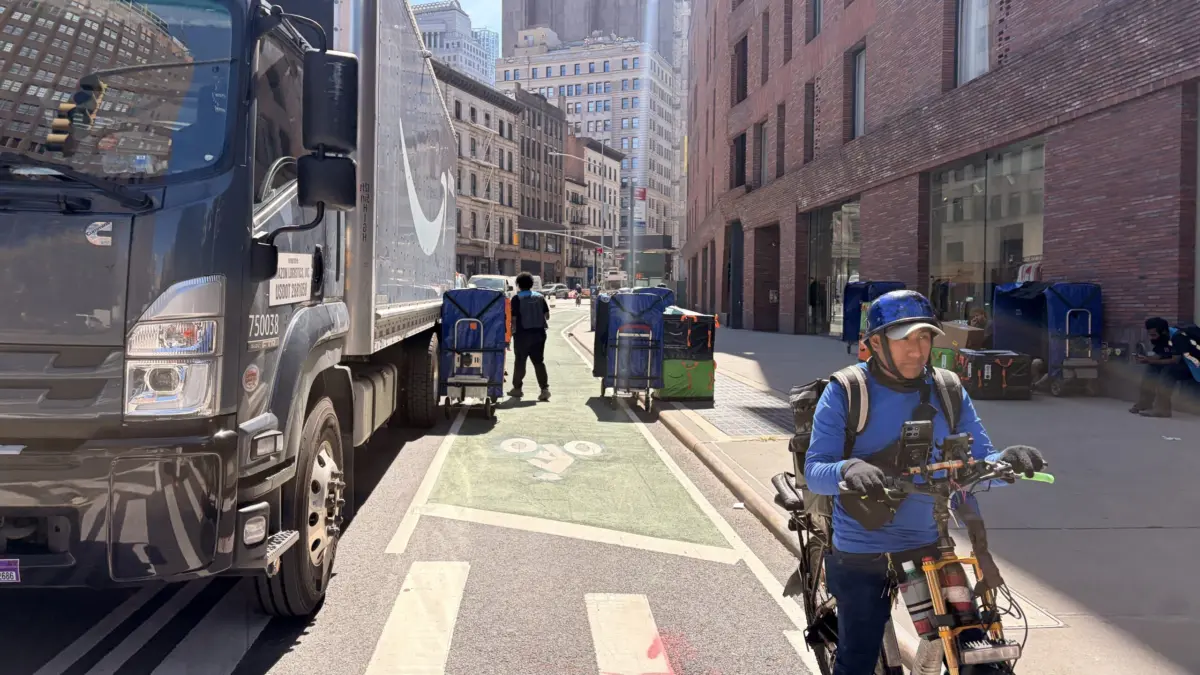
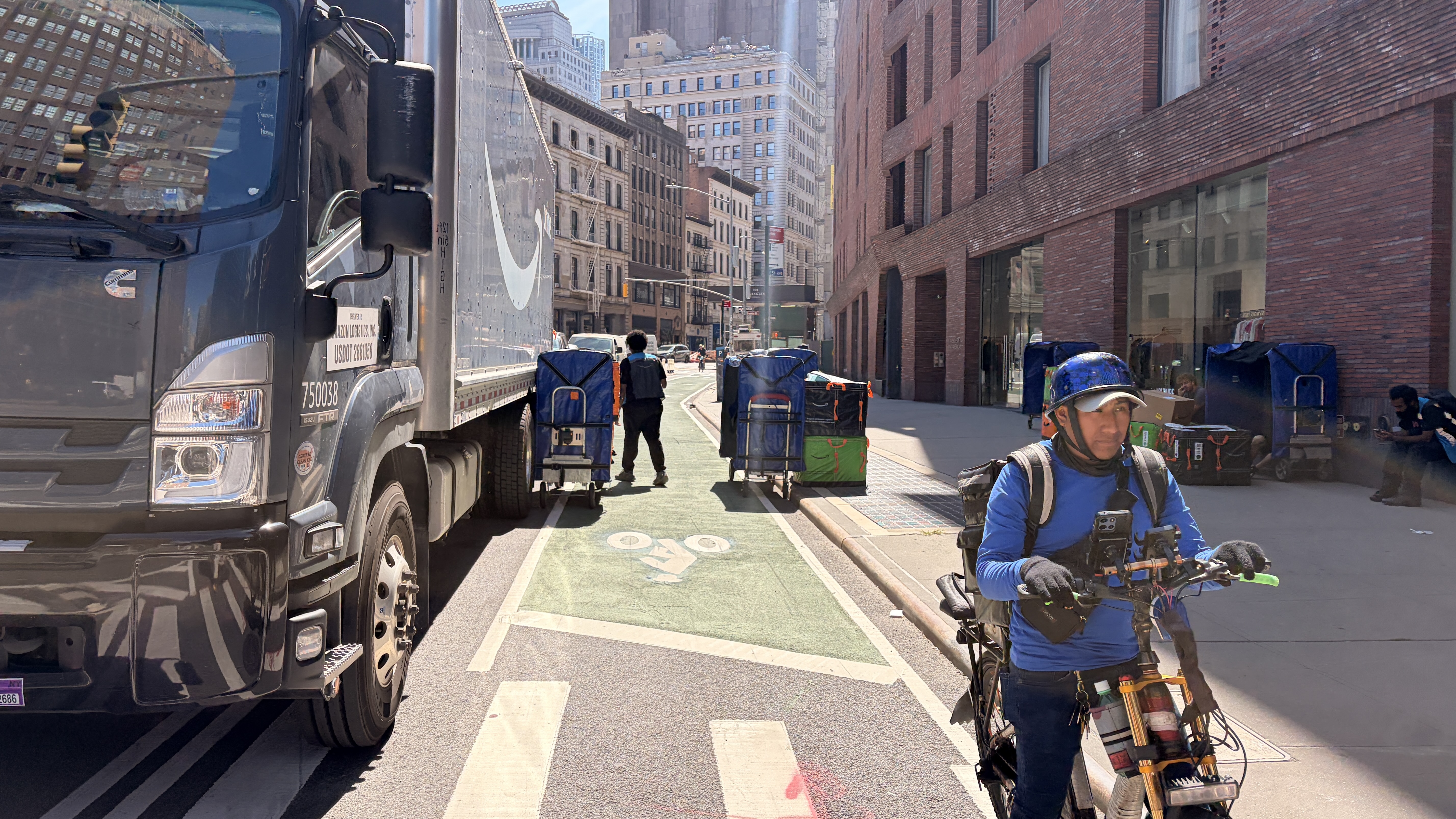
A groundbreaking interactive mapping tool, titled "Amazon Delivers Dangers," has cast a glaring spotlight on the immense friction between corporate delivery metrics and urban traffic safety. Developed by the labor-aligned Alliance for a Greater New York (ALIGN) in collaboration with the Graduate Center, the tool compiles city data spanning a four-year period from July 2021 to June 2025. The findings reveal that delivery vans associated with Amazon racked up a staggering 14,290 traffic infractions—ranging from aggressive speeding through vulnerable school zones to dangerous parking habits that block critical commuter pathways, bus lanes, and fire hydrants.
This digital ledger of infractions arrives at a pivotal moment of political and regulatory reckoning. It serves as empirical ammunition for labor organizers, urban safety advocates, and progressive lawmakers fighting to pass the Delivery Protection Act. Proposed by New York City Council Member Tiffany Cabán (D-Queens), the controversial legislation aims to overhaul the structural anatomy of "last-mile" warehousing and logistics. By forcing corporate behemoths like Amazon to directly employ their delivery drivers—rather than shielding liability behind a revolving network of independent subcontractors—the bill seeks to re-establish accountability on city streets.
As the City Council weighs the legislative future of urban freight management, the data ignites a fierce debate over who should bear the ultimate responsibility for public safety: the multi-trillion-dollar retail giant dictating every second of a driver’s shift, or the isolated local subcontractors caught in the crossfire of algorithmic surveillance and municipal law enforcement.
Detailed Chronology: The Escalation of the Last-Mile Crisis
To understand the current crisis on New York City’s streets, one must examine the rapid, unchecked acceleration of e-commerce over the past decade, a trend supercharged by shifting consumer habits and urban density.
The Pandemic Surge and Algorithmic Pressures (2019–2021)
Between 2019 and 2024, the volume of packages delivered daily across New York City skyrocketed by nearly 40 percent, surging from an estimated 1.8 million packages per day to a staggering 2.5 million. This unprecedented inundation flooded municipal corridors with commercial delivery vans. Concurrently, Amazon perfected its hyper-efficient last-mile delivery infrastructure.
However, this algorithmic efficiency came with an invisible human toll. Former drivers describe a work environment governed by constant, minute-by-minute surveillance. Artificial intelligence tracking systems monitor speed, route adherence, and dwell times, penalizing drivers who fall behind expected metrics and threatening termination for those who fail to meet aggressive pacing benchmarks.
The Data Window (July 2021–June 2025)
The newly released Amazon Delivers Dangers mapping tool captures the direct consequences of this hyper-monitored system. Analyzing data collected by traffic enforcement agents and automated street cameras between July 2021 and June 2025, the tool maps 14,290 distinct traffic violations.
Rather than isolating the problem to a few inexperienced or reckless drivers, the mapping data proves that the infractions are systemic. Citations were issued across all 51 of New York City’s City Council districts, proving that the dangerous habits of last-mile delivery drivers are pervasive in every borough, neighborhood, and commercial corridor. Furthermore, statistical analysis of the license plates reveals that the top 10 most-cited vehicles accounted for just 904 of the nearly 14,300 total infractions, underscoring that the issue stems from corporate structural mandates rather than a handful of anomalous "bad apples."
Legislative Pushback: The Delivery Protection Act (2025–Present)
As the citation count climbed into the tens of thousands, labor organizations and local lawmakers mobilized. In late 2025, Council Member Cabán introduced the Delivery Protection Act. Designed to rein in the chaotic wild-west environment of urban delivery logistics, the bill quickly gained momentum. By late 2025, a firm majority of the City Council signaled their support for the measure.
In response, Amazon mounted an aggressive defensive campaign, deploying approximately $5 million in municipal lobbying efforts to defeat the legislation. The company has warned lawmakers that passage of the bill could result in unintended retractions of green initiatives, such as its e-cargo bike delivery programs—a threat that urban transit advocates and lawmakers have met with widespread skepticism.
Supporting Context & Metrics: Unpacking the "Amazon Delivers Dangers" Map
The Amazon Delivers Dangers dashboard provides an unprecedented, granular look at how e-commerce logistics interacts—and frequently conflicts—with pedestrian and vehicular safety in a dense metropolis.
The Subcontracting Shield: How the DSP Model Works
At the heart of the regulatory battle is Amazon’s corporate structuring: the Delivery Service Partner (DSP) model. Under this framework, Amazon does not directly employ the drivers delivering its packages. Instead, the company contracts with local, independent logistics businesses. These DSPs lease Amazon-branded trucks, wear Amazon uniforms, and utilize Amazon-designed delivery software, but they operate legally as independent entities.
Critics and labor advocates argue that this model is a deliberate legal firewall. By outsourcing employment responsibilities to small subcontractors, Amazon maintains absolute control over delivery quotas, routing, and operational speeds while systematically deflecting legal, financial, and moral responsibility for traffic violations, pedestrian endangerment, and labor abuses.
Matt Multari, a former Amazon delivery driver turned labor advocate, highlighted the impossible choices forced upon drivers by this structural setup:
"Amazon’s business model is built on the routine violation of traffic laws," Multari stated during a press conference introducing the mapping tool. "Amazon surveils you and tracks you to the minute, forcing you to go faster. You don’t have time to look for parking. If Amazon’s AI notices that you are going slower than what they expect, you can get penalized, or eventually terminated."
Quantifying the Infractions
While municipal automated cameras and traffic enforcement agents catch thousands of violations, safety advocates argue that these figures represent only a fraction of the actual infractions committed daily. The violations documented on the ALIGN map include:
- School Zone Speeding: Drivers rushing to meet delivery windows frequently exceed legal speed limits in designated school safety zones, directly endangering children and pedestrians.
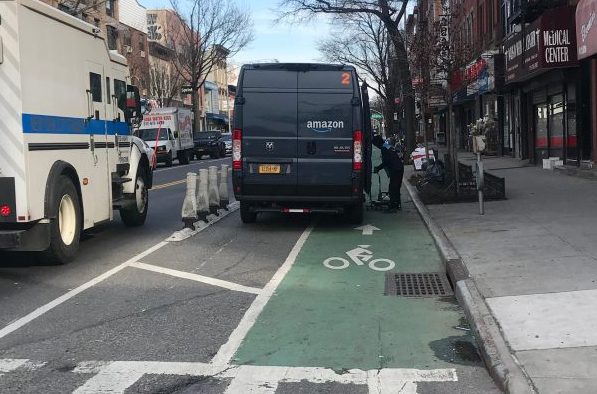
- Blocked Infrastructure: Vans routinely obstruct critical public infrastructure, including dedicated bike lanes, public transit bus lanes, and crosswalks—forcing cyclists and pedestrians into dangerous mixed-traffic lanes.
- Hydrant Obstruction: Impatient parking in front of fire hydrants leaves neighborhoods vulnerable in the event of an emergency.
Despite spanning every corner of the city, the distribution of tickets highlights how urban density and narrow commercial corridors exacerbate the conflict between delivery logistics and everyday city life.
Official Statements and Political Battlegrounds
The release of the mapping tool has intensified an already bitter political feud between Amazon corporate leadership, progressive city legislators, and labor organizers.
Council Member Tiffany Cabán and Labor Advocates
For proponents of the Delivery Protection Act, the bill is not merely about traffic tickets; it is a vital labor and public safety reform. The legislation aims to create a comprehensive licensing system for last-mile delivery operators, mandate rigorous safety training for drivers, establish protections against unfair termination, and—most crucially—hold parent corporations directly liable for the behavior of their delivery fleets.
"Companies like Amazon are using subcontractors to shield themselves from their responsibility to keep workers and New Yorkers writ large safe," Council Member Cabán asserted in a public statement. "That’s why I’m proud to be the lead sponsor of the Delivery Protection Act, which would create a licensing system for last-mile deliveries, force companies to take responsibility for their drivers, protect against unfair retaliation and firing of workers, and require real training for workers."
Amazon’s Corporate Defense
In sharp contrast, Amazon has pushed back aggressively against the narrative that its operations are inherently dangerous or systematically non-compliant. Leigh Ann Gullett, a corporate spokesperson for Amazon, issued a formal statement defending the company’s safety record and emphasizing the independence of its delivery partners:
"Safe and responsible delivery practices are always a top priority. Delivery Service Partners are local, independent businesses, responsible for their own operations and for following the traffic and parking laws in the communities where they operate, including addressing any citations," Gullett stated.
The corporate spokesperson further argued that the 14,290 recorded infractions represent a "tiny fraction" of the millions of packages successfully delivered across the city, asserting that the data "does not suggest a systemic issue."
Furthermore, Amazon pointed to its investments in alternative urban delivery models—such as human-powered and electric cargo bike programs and on-foot delivery hubs—as tangible proof of the company’s commitment to reducing vehicular congestion and acting as a "good neighbor" within New York City communities.
Critics, however, remain deeply skeptical of these defenses. Urban planners and labor organizers point out that threatening to scale back sustainable initiatives like e-cargo bikes in retaliation for worker-protection legislation is a hardball negotiation tactic that punishes the city for demanding basic accountability.
Future Outlook: The Road Ahead for Urban Logistics and Regulation
As the political showdown over the Delivery Protection Act continues to unfold within the New York City Council, the implications extend far beyond the five boroughs. Major metropolitan areas across the United States are grappling with the exact same logistical paradox: how to satisfy an insatiable consumer appetite for rapid home delivery without sacrificing pedestrian safety, street infrastructure, and labor standards.
If the New York City Council successfully passes Cabán’s legislation over Amazon’s heavy lobbying opposition, it could establish a monumental regulatory precedent nationwide. Forcing multi-national e-commerce giants to absorb their last-mile workforce directly would dismantle the subcontracting shield that has long insulated corporations from the externalities of their business models.
However, formidable challenges remain. Amazon’s $5 million lobbying expenditure signals that the retail giant is prepared to wage an exhaustive legal and political war to protect its profit margins and operational flexibility. Whether the city’s political leadership can withstand this corporate pressure—and whether data tools like Amazon Delivers Dangers can permanently alter public perception—will determine the future balance of power between Silicon Valley logistics algorithms and the safety of urban streetscapes.
For the millions of New Yorkers navigating congested corridors, blocked bike lanes, and speeding delivery vans on a daily basis, the stakes could not be higher. The debate is no longer just about the speed of a package arrival; it is about reclaiming the safety, livability, and accountability of the public commons.